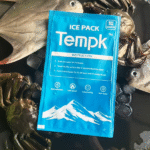
water injection ice pack recyclable bulk purchase can be an excellent answer when you need chilled shipping support that balances performance, Dokumentation, and supply efficiency. It works best when you treat it as part of the complete thermal system: Karton, Isolierung, Nutzlast, Spurzeit, und Handhabungsbedingungen. Der Stärkste 2026 programs combine flat-pack efficiency, validierte Verpackungen, and cleaner sustainability communication instead of chasing the cheapest quote alone. This optimized guide pulls those ideas together so you can choose, prüfen, and buy with fewer surprises.
Dieser Artikel wird antworten
- how to decide whether water injection ice pack recyclable bulk purchase is the right cold chain strategy
- how to design a pack-out that protects product and margin
- which validation and compliance steps deserve priority
- how to compare suppliers using total program value
- Wie 2026 market and sustainability trends should shape your decision
Why is water injection ice pack recyclable bulk purchase a serious strategy, not just a low-cost item?
The best water injection ice pack recyclable bulk purchase strategy starts with route reality, not product marketing. You need to know the payload temperature limit, Umgebungseinflüsse, order profile, and warehouse workflow before you lock the pack format. When those pieces are clear, water injection packs can deliver a strong mix of storage efficiency, Kostenkontrolle, and reliable chilled protection. When they are not clear, even a good pack becomes a bad program.
The advantage of this format is operational as much as thermal. Because the pack ships flat, you can stage more units in less space, fill only what is needed, and align freezer work with actual order demand. That works especially well for contract purchasing for repeat chilled lanes across one or more sites. But high performance still depends on disciplined filling, freezer conditioning, und Validierung auf Systemebene.
A fast self-check before you buy
Ask four questions. Can the product tolerate cooling near the melting point of ice? Does the warehouse have the labor and freezer capacity to fill and condition packs consistently? Is the route short enough for a water-based chilled buffer, or do you need tighter control? Do you need documented sustainability claims for customers or auditors? Those answers usually point to the right next step.
| Frage | Wenn ja | Wenn nein | Decision hint |
|---|---|---|---|
| Do you have space and labor to fill packs on site? | Water injection packs become very efficient | Prefilled or outsourced kitting may be easier | Compare labor cost with inbound freight savings |
| Is your product sensitive to freezing near the melting point of ice? | Move toward PCM or stronger separation from payload | Water-based cooling may be enough | Use product stability data, keine Annahmen |
| Is route time longer than one day in hot weather? | Increase insulation quality and validate pack count | A lighter pack-out may be enough | Test summer and shoulder-season lanes separately |
| Do you report on packaging sustainability? | Ask for material disclosure and disposal guidance | Focus first on thermal fit and damage reduction | Good sustainability claims need evidence |
Praktische Tipps und Empfehlungen
- Define the product temperature window first: do not choose coolant before you know what the payload can safely tolerate.
- Audit staging workflow: flat packs save space only if filling and freezing are operationally realistic.
- Treat sustainability as a verified outcome: Produktschutz, packaging weight, and disposal clarity must all be considered together.
Beispiel für reale Welt: A shipper considering three coolant formats chose water injection packs after mapping its routes, freezer capacity, and order peaks. The pack was not the coldest option, but it was the best fit for the total workflow.
How do you design the right pack-out for water injection ice pack recyclable bulk purchase?
Designing the right pack-out means balancing coolant mass, Isolierung, and product protection. Für viele Käufer, the temptation is to increase pack size immediately. A better path is to validate the smallest system that safely holds the target range. That keeps freight, Kondensation, and cold-shock risk under control. It also makes scaling easier across seasons.
Start with a pack-size shortlist, then pair each option with the intended carton and liner. Test against realistic payload weight and starting temperature. Pay close attention to pack placement. The same amount of cooling mass can behave very differently when it is placed at the top, Seiten, unten, or wrapped around the payload. A good design is uniform, wiederholbar, and easy for line staff to build correctly.
How to right-size the system
For short lanes, medium-size flat packs often give the best mix of freeze speed and hold time. For longer lanes, insulation quality may matter more than simply adding more coolant. Für temperaturempfindliche Güter, spacing between coolant and payload can be as important as the coolant itself. The design question is not How much cold can we add? It is What is the least-complex design that stays in spec?
| Packformat | Typical role | Cooling behavior | Was es für Sie bedeutet |
|---|---|---|---|
| 100 Zu 150 ml | Small parcel or accessory item | Fast freezing, Kürzer | Best for light payloads and short lanes where too much cold can become a risk |
| 200 Zu 300 ml | General chilled parcel | Balanced hold and handling ease | Often the most flexible range for routine e-commerce and B2B shipping |
| 400 Zu 500 ml | Heavier chilled loads | Longer hold with more thermal mass | Useful when route time or payload heat load is higher |
| 750 ml and above | Large boxes or grouped cartons | Highest cooling mass, slowest freeze | Best only when testing shows the lane truly needs that much coolant |
Praktische Tipps und Empfehlungen
- Prototype with two or three pack sizes only: too many variants slow down learning.
- Use placement diagrams in the SOP: consistency on the line is part of thermal performance.
- Check product presentation after arrival: Feuchtigkeit, crushed cartons, or cold spots can damage customer experience even when temperature passes.
Beispiel für reale Welt: A buyer improved summer performance by upgrading the liner and adjusting pack placement while keeping the same water injection pack size and total coolant count.
How do you validate water injection ice pack recyclable bulk purchase for compliance and route risk?
Validation is where the theory becomes a shipping standard. Best practice for temperature control reinforces the same idea: packaging performance should be demonstrated under realistic conditions and documented clearly. That matters for healthcare, but the principle is equally useful for food, Schönheit, and premium consumer goods. A documented pack-out creates confidence across QA, Beschaffung, und Operationen.
Your validation should test worst-case lanes, saisonale Bedingungen, and the exact pack placement your team will use in production. It should also look for overcooling, not only warming. A water-based pack that protects one product may be too cold for another if direct contact is not managed. That is why logger placement and product stability knowledge belong in the same discussion.
What should trigger revalidation?
Revalidate after material changes, carton changes, Routenänderungen, major carrier changes, or new payload profiles. Do the same when complaints cluster in a season or lane family. Change control is one of the most overlooked parts of cold chain packaging. The pack-out that passed last year is only approved for the conditions you actually tested.
| Document or check | Warum ist es wichtig | What to ask the supplier | Praktischer Nutzen |
|---|---|---|---|
| Specification sheet | Confirms size, fill volume, Filmstruktur, and tolerances | Ask for dimensions, material layers, and seal design | You can compare quotations on a like-for-like basis |
| Safety statement or SDS | Supports safe handling and internal review | Ask whether the coolant and film are clearly disclosed | QA and EHS approval usually moves faster |
| Validation plan | Shows how the pack will be tested in route conditions | Ask for lane assumptions and acceptance criteria | You avoid buying a pack that only works on paper |
| QC and lot traceability | Helps with incoming inspection and complaint handling | Ask for batch coding and inspection records | Problems can be isolated without halting the whole program |
| Material disclosure and recycling guidance | Supports waste claims and end-of-life communication | Ask what can be sorted, getrennt, and recycled by region | You reduce greenwashing risk and customer confusion |
Praktische Tipps und Empfehlungen
- Place one logger near the payload core and one near the coldest likely point: it reveals both warm and cold risk.
- Repeat critical tests: stable results matter more than one excellent single run.
- Keep change history: future approvals move faster when previous decisions are easy to trace.
Beispiel für reale Welt: A regulated shipper avoided a launch delay because its packaging file already documented the approved pack-out, Logger -Standorte, and revalidation triggers after a liner change.
How should you compare suppliers for water injection ice pack recyclable bulk purchase?
A strong supplier for water injection ice pack recyclable bulk purchase should help you buy with less uncertainty, not just offer a lower price. Das bedeutet klare Vorgaben, responsive technical support, stable production quality, realistische Lieferzeiten, and honest claim language. When the supplier can explain how the pack works in your route instead of only naming a product line, the sourcing conversation becomes much stronger. That support has real value.
Use a weighted supplier scorecard that includes thermal fit, Dokumentationsqualität, defect history, Änderungskontrolle, sustainability evidence, und kommerzielle Zuverlässigkeit. If the program involves branding, add print control and artwork approval. If it involves regulated lanes, add audit support and validation responsiveness. Scoring these factors together protects you from short-sighted buying.
Which procurement questions reveal the best supplier?
Ask how the supplier defines tolerances for size, fill volume, und Siegelqualität. Ask what happens if a raw material changes. Ask how they support route qualification. Ask how they handle claims. Ask how they document sustainability or safety statements. Those questions uncover whether the supplier is managing a process or merely moving product.
| Option | Beste Passform | Haupteinschränkung | Best buying use |
|---|---|---|---|
| Water injection ice pack | Chilled lanes with on-site filling | Needs a filling and freezing step | When storage efficiency and lower inbound freight matter |
| Vorgefüllte Gelpackung | Fast deployment with minimal handling | More inbound cube and weight | When labor simplicity matters more than warehouse density |
| PCM-Paket | Tighter temperature bands | Higher unit cost and more careful set-point selection | When product stability is stricter than simple ice behavior |
| Trockeneis | Frozen lanes and very low temperature needs | Dangerous-goods controls and overcooling risk | When the payload must stay frozen, not merely chilled |
Praktische Tipps und Empfehlungen
- Review sample-to-production consistency: the best sample means little if volume quality drifts.
- Ask for lot traceability: it speeds complaint handling and internal approvals.
- Contract change notification: surprise material changes create expensive re-testing.
Beispiel für reale Welt: A buyer chose a supplier with slightly higher pricing because the supplier offered stronger batch traceability, schnellere Korrekturmaßnahmen, and better technical support during validation.
What does the future of water injection ice pack recyclable bulk purchase look like in 2026 und darüber hinaus?
The future of water injection ice pack recyclable bulk purchase is not about one miracle material. It is about better system choices. Market research and industry guidance point to growing demand for documented, lower-waste, and easier-to-scale cold chain packaging. Recyclability pressure, growth in reusable programs, and tighter healthcare expectations are all pushing buyers toward better packaging governance. That trend will continue.
In praktischer Hinsicht, buyers will keep using water injection packs where flat-pack efficiency and chilled performance make sense. They will step up to reusable systems where return loops work, and to PCM where temperature control must be tighter. The winners will be the teams that understand when to use each option, not the teams that try to force one format into every lane. Flexibility backed by validation is becoming the new standard.
How should you prepare for the next two years?
Build a packaging roadmap. Identify which routes are stable enough for optimization, which claims need evidence, which supplier changes would force revalidation, and where digital tracking can improve decision speed. If you do that now, your coolant strategy will support both service and sustainability instead of becoming a recurring emergency topic.
| 2026 signal | What is changing | Why buyers care | Ihr nächster Schritt |
|---|---|---|---|
| Recyclability pressure | PPWR and brand goals push clearer end-of-life design | Packaging now affects compliance and sustainability reporting | Document material choices and disposal guidance early |
| Validation discipline | Healthcare and premium brands expect route-based proof | A cheaper pack is not cheaper if it fails on lane | Run hot and cold lane tests before broad rollout |
| System buying | Buyers compare full thermal systems, not single components | Karton, Isolierung, and coolant strongly interact | Evaluate total pack-out performance rather than unit price alone |
| Flexible sourcing | Teams want flat-pack efficiency and faster replenishment | Inventory cube and lead time now influence packaging choice | Align freezer capacity, staging labor, and order peaks with pack design |
Praktische Tipps und Empfehlungen
- Review packaging annually by lane family: packaging programs age faster than many teams realize.
- Keep a tiered coolant strategy: Wasserinjektion, wiederverwendbare Formate, and PCM each have a role.
- Use sustainability and compliance reviews as design inputs: they should shape the pack, not only describe it after launch.
Beispiel für reale Welt: A shipper built a tiered roadmap that kept water injection packs for routine chilled lanes, piloted reusable formats on closed loops, and reserved PCM for the narrowest temperature-sensitive routes.
When should you keep water injection ice pack recyclable bulk purchase, and when should you step up to reusable or PCM systems?
Water injection ice packs are strongest in chilled shipping, but they are not the answer to every lane. When the product only needs a short or medium chilled window, water-based cooling is often simple and cost-effective. When the product must avoid freezing or hold a narrow set point, PCM packs usually offer better control. When the payload must stay frozen, dry ice may still be necessary despite its extra transport controls.
Flat water injection packs remain highly relevant for many chilled routes because they combine operational efficiency with straightforward thermal behavior. Trotzdem, some programs should graduate to reusable shippers, higher-performance insulation, or PCM-based systems. The best decision usually comes from route economics, Produktempfindlichkeit, and the strength of your return logistics.
When should you move up to PCM or down to a simpler pack?
If your payload tolerates a cold buffer near the melting point of ice and the lane is short, a water injection pack may be enough. If the payload is sensitive to freezing or needs a more stable band such as 5 C, 15 C, oder kontrollierte Raumtemperatur, a PCM system is safer. For very light and short lanes, you may even reduce pack count rather than buy a larger pack. Für gefrorene Fahrspuren, dry ice is often the right tool, but the added handling rules should be built into the cost model. The most efficient packaging is the one that matches the route with the least complexity.
| Option | Beste Passform | Haupteinschränkung | Best buying use |
|---|---|---|---|
| Water injection ice pack | Chilled lanes with on-site filling | Needs a filling and freezing step | When storage efficiency and lower inbound freight matter |
| Vorgefüllte Gelpackung | Fast deployment with minimal handling | More inbound cube and weight | When labor simplicity matters more than warehouse density |
| PCM-Paket | Tighter temperature bands | Higher unit cost and more careful set-point selection | When product stability is stricter than simple ice behavior |
| Trockeneis | Frozen lanes and very low temperature needs | Dangerous-goods controls and overcooling risk | When the payload must stay frozen, not merely chilled |
Praktische Tipps und Empfehlungen
- Use product stability data first: never assume a payload can tolerate direct contact with near-zero surfaces.
- Compare whole-system performance: Kühlmittel, Isolierung, Kartongröße, and pack placement all interact.
- Document exceptions: if one SKU or lane needs PCM while others do not, write that into the pack-out SOP.
Beispiel für reale Welt: A temperature-sensitive program kept water injection packs for short regional lanes, then added PCM inserts only on long summer routes where tighter control paid for itself.
2026 integrated trend view
In 2026, the conversation around water injection ice pack recyclable bulk purchase is wider than simple cooling time. Cost control is still important, but packaging governance and sustainability claims are now part of the buying conversation. Industry reporting and policy direction point to the same pattern: cold chain packaging is becoming more strategic. Buyers want solutions that are easier to explain to auditors, easier to handle in the warehouse, and better aligned with sustainability goals.
Neueste Entwicklungen auf einen Blick
- Recyclability and end-of-life communication are becoming standard procurement questions, not niche extras.
- Route validation is moving earlier in the sourcing cycle, especially for healthcare and premium consumer goods.
- System optimization is replacing component shopping as buyers compare carton, Liner, Kühlmittel, and labor together.
- Sustainability claims are being tested more carefully, which makes supplier disclosure more valuable.
- Procurement teams are increasingly combining cost, Einhaltung, and operations into one packaging scorecard.
- Flat-pack efficiency continues to matter as cold chain volumes grow across food, Gesundheitspflege, and premium consumer goods.
European recyclability rules are raising the importance of material clarity and component separation. Healthcare guidance continues to reinforce validated packaging and monitoring for time- und temperaturempfindliche Produkte. That mix of regulation, service expectations, and cost pressure is why procurement teams are rethinking coolant format choices instead of buying on habit.
Internal SEO page ideas
- Internal page idea: water injection ice pack recyclable bulk purchase specification checklist
- Internal page idea: water injection ice pack recyclable bulk purchase vs PCM comparison
- Internal page idea: validated cold chain packaging workflow
- Internal page idea: insulated box and coolant pack-out calculator
- Internal page idea: route qualification and summer shipping guide
Häufig gestellte Fragen
How many water injection ice pack recyclable bulk purchase units should you use per box?
There is no safe universal count. Start with payload weight, Isolierung, Transitzeit, and ambient stress, dann validieren. A route test costs less than a spoilage event.
Is water injection ice pack recyclable bulk purchase better than a prefilled gel pack?
It is often better for storage density and upstream freight efficiency. Prefilled gel packs still make sense when labor simplicity matters more than space and inbound cost.
Can water injection ice pack recyclable bulk purchase replace PCM packs?
Sometimes for short chilled lanes, aber nicht immer. If the product is sensitive to freezing or needs a tighter temperature band, PCM usually offers safer control.
What documents should a supplier provide for water injection ice pack recyclable bulk purchase?
Ask for a clear specification sheet, material and safety information, traceability details, and a validation approach that matches your route and product type.
How should you make sustainability claims for water injection ice pack recyclable bulk purchase?
Use evidence, keine Slogans. Document the material structure, disposal route, and market limits so your claims stay accurate and defensible.
What is the biggest buying mistake with water injection ice pack recyclable bulk purchase?
Choosing by piece price alone. The expensive mistake is usually weak route fit, inconsistent filling, poor seal quality, or missing documentation.
Zusammenfassung und Empfehlungen
The most effective water injection ice pack recyclable bulk purchase program is built on five choices: the right temperature logic, the right pack size, the right insulation, the right validation file, and the right supplier controls. Get those choices right and you can improve storage efficiency, shipment consistency, and buying confidence at the same time.
Begin with a route review, shortlist the smallest pack-out that can pass validation, document every claim, and score suppliers on total program value. Then update the program by season and by lane family instead of assuming one design fits every order. Ask for a route review, a sample plan, and a specification check before scaling the order.
Über Tempk
Und Tempk, we help buyers move from generic packaging choices to route-aware cold chain decisions. Our work focuses on practical specification control, custom options, bulk supply reliability, and real communication between procurement, Qualitätssicherung, und Operationen. That combination makes it easier to choose the right coolant solution and scale it with fewer surprises.
Nächster Schritt: review your current shipper, define the temperature risk you need to solve, and request a validation-oriented sample plan.