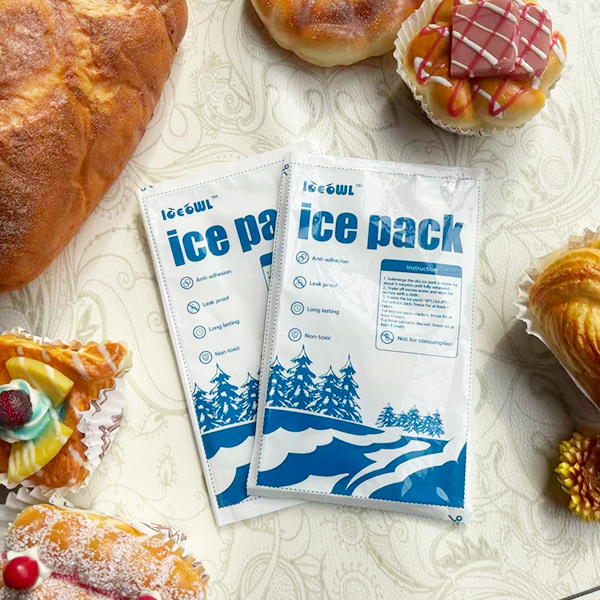
How to Choose a Distributor Dry Ice Pack for Cheese Logistics
A cheese shipment does not need the coldest refrigerant available. It needs a stable, repeatable environment that matches the producer’s specification without freezing the product, wetting its packaging, or creating avoidable handling risk. That principle should guide any search for a distributor bolsa de hielo seco para la logística del queso. First clarify the name: real dry ice is solid carbon dioxide, while a hydrate “dry ice pack” is a water-activated sheet that is frozen like another reusable coolant. Then evaluate the cheese, ruta, aislamiento, colocación del paquete, operating site, y controles de proveedores juntos. The complete packout, not the branded pack, determines the result.
Write a Cheese-and-Route Brief
Start with the cheese. Record the style, moisture level or relevant composition description, rind and maturation condition, formato de embalaje, dimensiones de la caja, masa de carga útil, and susceptibility to freezing, aplastante, olor, o condensación. The manufacturer’s approved storage and transport condition should be the source of the temperature requirement. Fresco, suave, duro, shredded, and processed cheeses should not be assigned one universal setting.
Define the sales condition at arrival. Food safety is fundamental, but commercial quality includes texture, superficie, aroma, condición de la etiqueta, remaining shelf life, y presentación al por menor. A packout that protects temperature while crushing tubs or soaking cartons has not met the user requirement.
Map the route from controlled storage to the receiver’s refrigerator or cold room. Include assembly time, puesta en escena del muelle, recogida del transportista, centros, recorrido de línea, inspection or customs, última milla, entrega desatendida, y desempacando. Note normal duration, retrasos creíbles, exposición estacional, modo de envío, y días de envío. A predictable weekend hold may be better solved by scheduling than by adding refrigerant.
Document origin and destination capability. Can the packing site hydrate and freeze sheets consistently at peak volume? Does it have clean conditioned-pack storage? Can the receiver retrieve a logger and quarantine a questionable delivery? Packaging must be executable by the least-equipped site in the planned network.
Choose the Refrigerant by Failure Mode
True dry ice is solid CO2. It provides a very cold source and changes directly into gas. For cheese intended to remain refrigerated, that cold can create a serious lower-limit risk, particularly at direct contact points. Solid carbon dioxide also requires ventilation, gas release from the package, manipulación protectora, and applicable air-transport controls. It should be selected only when the cheese condition and tested system justify it.
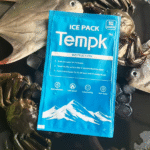
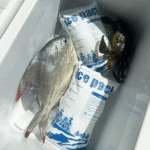
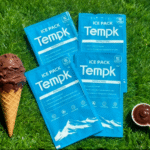
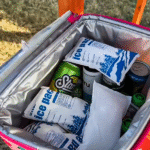
A water-activated hydrate sheet arrives flat and dry, absorbe agua, and is frozen before packout. Multiple cells can distribute thermal mass and bend around product cases. This may be useful for parcel geometry and pre-use storage, but activation and conditioning introduce process variation. The word “dry ice” in the commercial name does not make the sheet CO2, define a hold time, or prove food suitability.
Pre-filled paquetes de gel reduce activation steps, while rigid ladrillos de hielo offer fixed geometry. Purpose-formulated phase-change materials can target a defined transition region. Each format trades storage, mano de obra, espacio de carga útil, área de contacto, fuga, and conditioning requirements. Compare them against likely failures:
| Likely failure | Design response to examine | Se requiere evidencia |
|---|---|---|
| Cheese warms at a lid corner | Better insulation joint or redistributed coolant | Temperature map under a justified ambient profile |
| Product freezes beside a pack | Milder coolant condition, buffer, or changed placement | Cold-point data using representative cheese packs |
| Labels and cartons become wet | control de fugas, transatlántico, capa absorbente, or condensation plan | Packout trial through packing and receipt |
| Soft units deform | Structural tray and coolant restraint | Mechanical handling check with full load |
| Packout varies by worker | Simpler count, orientación, and visual instruction | Repeated pack builds by routine operators |
| Delay exceeds thermal margin | Schedule change, cambio de ruta, or qualified contingency | Route data and controlled extended challenge |
This failure-led method stops the team from treating coolant quantity as the only design lever. Sometimes a lid detail, dispatch schedule, or structural insert fixes the real problem with less material.
Engineer the Space Between Coolant and Cheese
Heat crosses the outer carton and insulation through broad faces, esquinas, articulaciones, y aberturas. The refrigerant absorbs that energy, but it creates a gradient inside. The surfaces nearest a frozen pack are initially colder; locations near heat leaks become warmer later. Both extremes need to remain acceptable.
Direct contact increases conductive heat transfer. For a freeze-sensitive cheese, use a designed carton wall, espaciador, or buffer to separate refrigerant from the retail pack. Specify its material and position in the bill of materials. A loose sheet of cardboard added by one packer is not equivalent to a controlled spacer, particularly when moisture can soften it.
Headspace changes internal air movement and useful payload volume. Too much void may allow coolant to slide or require unnecessary thermal capacity. Overpacking can crush the cheese or block the intended arrangement. Develop fixed load patterns for common order sizes, including the lowest and highest payloads that will be offered.
Manage moisture without sealing a new problem into the box. Confirm pack seam integrity, protect corrugated structures from leakage, and consider condensation when cold products meet humid air. An absorbent pad can catch liquid but may also alter thermal contact. Test the actual retail labels, tejido, mangas, and dividers because presentation materials can behave differently when cold and damp.
Precondition cheese according to the approved process. A passive package should not be expected to pull a warm load down uniformly. Set a maximum packing-bench exposure and coordinate coolant retrieval so neither component waits unnecessarily.
Prove the Exact Configuration
Qualification begins with a controlled bill of materials and packing drawing. Identify carton, aislamiento, transatlántico, modelo y cantidad de refrigerante, buffer, divisor, material a cargar, cheese load, maderero, y cierre. Record the preparation state of the payload and each coolant. The test report should allow another trained person to rebuild the configuration.
Select ambient challenges that answer the route question. ISTA 7E profiles can be used for parcel thermal testing and comparison. Actual lane data may reveal local hub dwell, exposición a domicilio, or winter cold that a general profile does not capture. Explain the basis for each challenge and do not extend a pass to untested routes automatically.
Place calibrated sensors at likely warm and cold positions. A center-only probe can miss freezing beside a pack and warming near a lid. Specify whether a sensor measures air, a product surface, or a simulant. Review each location against the acceptance criteria; do not rely on an average that hides a local failure.
Evaluate realistic load extremes and operating variation. A nearly empty box has less thermal mass; a full box may change airflow. Different packers can hydrate, drenar, orient, and close the system differently. Pilot the procedure with routine operators and update the instruction when they encounter ambiguity.
Shipment trials can confirm handling and handoffs after controlled testing. Instrument them and document delays rather than calling an uneventful delivery proof. Qualification evidence remains linked to the exact components and process. A change in sheet, aislamiento, carga, buffer, or route should trigger documented assessment and, where risk requires, pruebas adicionales.
Herramientas útiles para tomar decisiones
Comprueba los detalles antes de elegir el embalaje.
Estas herramientas rápidas pueden ayudarle a comparar el riesgo de la ruta, necesidades de dimensionamiento, opciones de refrigerante, y detalles del embalaje antes de solicitar una cotización.
Referencia del material aislante
Compare opciones de materiales aislantes para diferentes necesidades de embalaje de la cadena de frío.
Comparar materialesCalculadora de bolsa de hielo
Estimación de la cantidad de bolsas de hielo en gel para envíos refrigerados y planificación práctica de rutas.
Estimar las bolsas de hieloRevestimiento de caja & Dimensionamiento de la cubierta de paleta
Lógica de tamaño de revestimiento de cajas y cubiertas de paletas para proyectos de embalaje aislado.
Estimar el tamañoTurn Distributor Claims Into Purchasing Controls
The request for quotation should ask for a technical identity, not just a trade name. Specify whether the offered item is hydrate, gel, PCM, rigid ice, o CO2 sólido. Request dimensions and tolerances, cell or container layout, masa relevante, materiales, activation and conditioning instructions, condiciones de almacenamiento, visual defect criteria, codificación de lotes, y embalaje de cartón.
Review material documentation for the intended food-use scenario and destination. Normally the coolant remains outside sealed cheese packaging, but leakage, impresión, and surface cleanliness still matter. A “food-grade” statement should be supported in a defined scope. It should not imply direct contact permission everywhere.
Connect samples to production orders. The quote and purchase code should identify the same revision used in testing. Ask how changes to film, medio absorbente, patrón de sello, llenar, dimensiones, sitio, or preparation instructions are communicated. Establish incoming checks and a complaint process that captures model, lote, fotos, and activation records.
Commercial evaluation comes after configuration control. Discuss order quantities, muestras, pronóstico, embalaje de producción, planificación del tiempo de entrega, y continuidad. Calculate total site cost using measured inputs: precio unitario, volumen entrante, trabajo de activación, capacidad del congelador, tiempo de embalaje, outbound box impact, pérdidas, regresa, y eliminación. Avoid unsupported cost-saving percentages.
For alternate supply, compare critical attributes and test evidence. Two sheets of the same outer dimensions can absorb different water, bend differently, or create different contact. Emergency substitution should require technical and quality review.
Operate, Recibir, and Improve
For hydrate packs, a work instruction should cover clean activation, drenaje, loading into the freezer, preparación, segregación, e inspección. Freezer airflow and batch size can affect consistency. Label conditioned inventory by model and status, and reject leakage, contaminación, costuras débiles, or abnormal cells.
Packing instructions should be visual and brief. Show each layer, orientación del refrigerante, recuento de productos, spacer position, ubicación del registrador, y cierre. Record the packout revision and any required lot information. If actual dry ice is used, keep its trained handling and transport documentation distinct from ordinary coolant-pack work.
Al recibir, inspect outer condition, humedad, sello, product packaging, refrigerante, and monitoring status. Move cheese promptly into its defined storage. When criteria are not met, segregate the load and follow the approved food-safety and quality process. Whether a pack remains frozen is supporting observation, not a release decision.
Review delivery performance periodically. Trend warm alarms, cold-side quality defects, fugas, paquetes triturados, late routes, and packing deviations. A pattern near one corner may suggest a thermal bridge. Repeated label damage may require moisture management. Frequent late-Friday failures point to scheduling. Give the distributor lot-specific evidence when the coolant is suspected.
Environmental Claims Need a Complete Boundary
Right-sizing can reduce carton, aislamiento, refrigerante, y espacio vacio, but each load format needs tested spacing. Flat hydrate sheets can reduce inbound and warehouse volume before they are activated. That is a concrete logistics property, not proof of lower total environmental impact.
A fair comparison includes material production, carga entrante, agua de activación, energía helada, peso de salida, successful reuse, transporte de regreso, limpieza, daño, pérdida de producto, y fin de vida. Use operating data from the actual route. A theoretically reusable pack may be a poor choice in an open consumer network with few returns, while the same pack can work well in a controlled dairy-to-restaurant loop.
Design a reuse process before claiming the benefit. Quarantine returns, inspect for leakage and contamination, clean according to material instructions, secarlos y guardarlos, recondition them, and define retirement. Count successful uses rather than promised cycles. For single-use routes, seek the least material that still protects food and commercial quality.
Disposal and recycling claims should reflect local infrastructure and the full construction. Multilayer films and absorbent contents may not enter ordinary collection. Give users accurate material information and avoid a broad recyclable claim unsupported in the destination.
Preguntas frecuentes
What should a cheese producer test first?
Begin with the most relevant load extremes and seasonal route challenge. Map warm and cold points using the actual retail packaging, aislamiento, refrigerante, y espaciadores. Also inspect condensation, etiquetas, aplastante, y movimiento. A thermal pass that damages saleable presentation is not a complete pass. Include routine packers in the trial.
Does a hydrate dry ice pack require dangerous-goods labels?
Not merely because of its name. Y 1845 applies to carbon dioxide, sólido. Confirm the actual composition from the specification. If the refrigerant is true dry ice, follow applicable carrier and mode requirements; if it is a water-based hydrate sheet, use the safety and shipping information for that material.
Can one packout cover every cheese order size?
Probablemente, pero no se debe suponer. Different payload masses and void volumes produce different thermal behavior and movement. Modular configurations can cover several order sizes if each defined load pattern is tested and operators can identify the correct version reliably. Keep each version clearly coded.
Should the temperature logger touch the cheese?
Placement depends on the monitoring objective and mapping data. A device may be attached to a representative product pack or placed at a mapped location, but direct contact can change response. Define the method, keep it consistent, and do not place the logger beside coolant merely because it is convenient.
Conclusión
Choosing a distributor dry ice pack for cheese logistics starts with the cheese maker’s limits and the route’s failure modes. Identify the refrigerant correctly, design the thermal and physical interfaces, qualify the exact configuration, and bind production supply to a controlled specification. A repeatable origin process and disciplined receiving routine preserve that evidence in daily operation. Environmental improvement then comes from measured right-sizing, compact pre-use storage, viable reuse, and honest end-of-life information rather than from a single material claim.
Acerca de Tempk
Tempk describes its hydrate coolant-sheet range as water-activated, flat before preparation, and freezer-conditioned for use in insulated cold-chain packouts. We can help cheese logistics teams discuss cell layout, ajuste de sábana, activation at scale, formato personalizado, sample handling, and repeat-order details. The cheese owner remains responsible for setting product criteria and proving the complete packaging and route under its food-safety and quality system.
Bring Tempk your cheese profile, order-size matrix, datos de ruta, insulation drawing, and site workflow when requesting a sample configuration for controlled evaluation.