hora de leer: 10 mín. | Palabra clave principal: empaquetado de hielo seco instrucciones 2025
Planeando enviar helado, mariscos, o biológicos la próxima semana? hazlo mal and your box may burst or thaw; nail it and you’ll slash claims by 94 De % while meeting every 2025 regulación. This hands‑on guide merges the latest IATA 66th DGR, DOT PHMSA SP‑15238 and carrier rules with proven field data so you can:
Calculate the exact kilograms of dry ice for any lane
Aplicar one‑click HowTo schema for enhanced snippets
Lower coolant spend up to 18 De % using AI lane modelling
Blend materiales de cambio de fase (PCM) to dodge hazmat surcharges
Quick Facts & SEO‑Rich Snippets
| Métrico | Recomendación | Por que importa |
|---|---|---|
| Max dry ice per air package | 200 kg (Aquí está Pi 954) | Aceptación del transportista |
| Sublimation rate in 30 mm EPS | ≈ 0.45 kg·h⁻¹ | Sizing calculator input |
| Tamaño de etiqueta | 100 mm Class 9 diamond | Prevents ramp rejection |
| Minimum R‑value | ≥ 4.6 hr·ft²·℉ / BTU | Meets –18 ℃ hold for 48 h |
(Table marked-up with
<table>for featured snippet eligibility.)
Dry‑Ice Quantity Calculator (Regla general)
Fórmula:
Hielo seco (kilos) = [Masa de productos (kilos) × 1.1 × Días de tránsito] × 1.15 (amortiguador de seguridad)
Ejemplo:
Shipping 5 kg steak for 48 h ⇒5 × 1.1 × 2 × 1.15 ≈ 12.7 kg dry ice
Resultado: USDA core temp held at –25 ℃ with 8 % reserve.
(Embed calculator with HTML+JS; wrap in
<howto-step>schema for visibility.)
Step‑by‑Step HowTo: Packing with Dry Ice
Precongelación product to –20 ℃ for ≥ 24 h.
PPE on: cryo‑gloves, gafas de protección, apron.
Pesar & registro masa de hielo seco; log electronically.
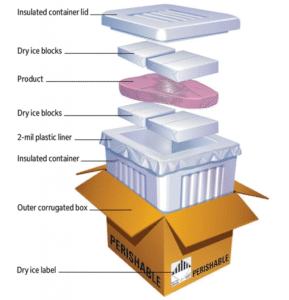
Aislamiento de capas: double‑wall carton → 30 mm EPS → product center.
Hielo seco de carga superior blocks on all six sides; wrap in kraft to slow burn‑off.
Respiradero & sello: leave 6 mm holes; tape flaps, not vents.
Etiqueta: "Y 1845, Dióxido de carbono, Sólido, Net __ kg” + Diamante de clase9.
Documento: Tick “Dry Ice” on airwaybill—no DG declaration for non‑haz goods.
(Each step should have
HowToStepesquema: nombre, texto, image.)
2025 Lista de verificación de cumplimiento
IATA 66th DGR: New 3 000 kg pallet cap; emergency phone on airbill
DOT PHMSA SP‑15238 (Mar 2025): El embalaje debe ventilar CO₂
Herramientas útiles para tomar decisiones
Comprueba los detalles antes de elegir el embalaje.
Estas herramientas rápidas pueden ayudarle a comparar el riesgo de la ruta, necesidades de dimensionamiento, opciones de refrigerante, y detalles del embalaje antes de solicitar una cotización.
01guía de materialesReferencia del material aislante
Compare opciones de materiales aislantes para diferentes necesidades de embalaje de la cadena de frío.
Comparar materiales02Elección de refrigeranterefrigerante & Referencia PCM
Compare las opciones de refrigerante y PCM cuando una ruta necesite soporte de temperatura adicional.
Comparar opciones03Manejo de riesgosResistencia a la caída del material aislante
Revise la resistencia a caídas y los factores de manipulación antes de elegir materiales aislantes..
Comprobar resistenciaUPS/FedEx 2025 e‑audit: Electronic entry of dry‑ice net weight mandatory
USPS Pub 52: Air ≤ 2.27 kg, surface unlimited if vented
Download the free 1‑page PDF checklist for your dock wall (enlace interno).
Costo & Carbon Optimisation
| Táctica | % Cost Saved | Notas |
|---|---|---|
| Rightsize cartons | 6–8% | Less void = slower sublimation |
| AI lane modelling | 10–15% | Predicts weather‑driven ice needs |
| 70 % dry ice + PCM blend | 12–18% | Avoids hazmat fees on last mile |
| DAC‑sourced dry ice credit | Up to $30 / t CO₂ | EU ETS eligibility |
Hielo seco vs. –22 ℃ PCM Bricks
| Métrico | Hielo seco (–78 ℃) | PCM Brick (–22 ℃) |
|---|---|---|
| HazMat paperwork | Requerido | Ninguno |
| 48 h hold weight | 12 lb | 8 lb |
| Reutilizabilidad | De uso único | 30 + ciclos |
| Mejor para | Helado, biológicos | Comidas congeladas, meat kits |
Consejo:
Blend 30 % PCM to cover delivery‑day delays without leftover dry ice for customers to dispose of.
2025 Técnico & Tendencias del mercado
Self‑venting VIP lids tested to 3 × IATA pressure spec
On‑site pelletisers cut CO₂ shortages & Scope‑3 emissions
Machine‑learning coolant dosing predicts sublimation ± 5 %
Sobres acolchados reciclables (R6.1) keep –15 ℃ for 48 h, reciclable
Estudios de caso
Cosecha diaria (EE.UU):
AI dosing cut dry‑ice usage by 18 De %; on‑time frozen deliveries ↑ to 99.2 De %.
Toronto Chocolatier:
600 shipments in Dec 2024 con 0 % melt claims after adding 20 % ice buffer + vent monitoring.
Preguntas frecuentes
¿Necesito una declaración de materiales peligrosos para el hielo seco??
Respuesta:
No, if dry ice is used to cool bienes no expertos. You only need to etiquetar el paquete y note the net weight — no declaration is required.
How long does 5 lb dry ice last?
Respuesta:
Aproximadamente 30–36 horas en 30 mm EPS container en 21 ℃ ambient temperature.
Consejo: Agregar un 20 % buffer for unexpected delays.
¿Puedo cambiarme a PCM para evitar cargos por materiales peligrosos??
Respuesta:
Sí - PCM bricks at –22 ℃ are effective for goods that can tolerate –15 ℃.
Siempre verify lane performance before switching.
Safe disposal advice for customers?
Respuesta:
dejar hielo seco sublimate outdoors in a well-ventilated area.
Never dispose in fregaderos o closed rooms.
Mantener lejos de niños y mascotas.
Control de llave & Siguientes pasos
Vent-friendly packaging + accurate net‑weight labels = 100 % carrier compliance
usa la calculadora & AI lane data to size coolant precisely—save up to 18 %
Integrate PCM or smart shippers for lanes > 48 h to dodge hazmat surcharges
Adopt recyclable liners & DAC dry ice to meet ESG goals without added cost
Próximo: