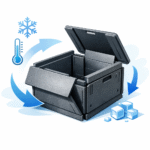
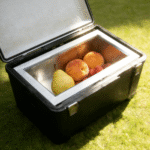
When you ship sensitive product, insulation is only one part of the protection story. An eco-friendly insulated box for meat matters because raw meat, portioned cuts, ready-to-cook packs, and chilled protein shipments can lose value fast when temperature abuse above 40°F or purge leakage and odor happens. Keep chilled meat at or below 40°F / 4°C and design pack-outs so product stays out of the danger zone during the full shipping window. FAO reported in 2026 eso 526 millones de toneladas de alimentos, acerca de 12% of the global total, are lost or wasted because of insufficient refrigeration, which turns packaging quality into a waste-reduction decision, not just a freight decision. You are not only buying insulation thickness. estas ganando tiempo, consistencia, and fewer expensive surprises at destination. This guide explains how to compare design, validación, supplier fit, and sustainability without getting trapped by marketing language.
What this article will help you solve
• How eco-friendly insulated box for meat should be matched to route length, carga útil, and sustainable meat shipping box needs
• ¿Qué materiales, inserciones, and refrigerants make recyclable insulated meat packaging or similar formats more practical
• que pruebas, estándares, and supplier evidence matter for food safety expectations, cold holding discipline, and route validation
• Cómo reducir el desperdicio, costo de flete, and repacks while improving fiber-based cold chain box for meat decisions
What makes the best eco-friendly insulated box for meat in 2026?
Para la mayoría de los compradores, the decision becomes clearer when you look at the shipment as a whole. When you ship raw meat, portioned cuts, ready-to-cook packs, and chilled protein shipments, the box must protect product quality against time, manejo, and temperature drift. With eco-friendly insulated box for meat, you do not only risk a warm delivery. You risk food safety, purga, olor, reduced shelf life, and a customer who never orders again. The right design buys you usable thermal time, better pack stability, and fewer receiving disputes. It also gives your team a repeatable packing method instead of a guess that changes by season.
That is why experienced teams start with the real lane, no es la foto del catalogo. They look at starting product temperature, parcel or pallet dwell time, delivery geography, and how the receiver will unload and inspect the shipment. For raw meat, portioned cuts, ready-to-cook packs, and chilled protein shipments, the best design usually combines recyclable outer fiberboard, moisture-managed liners, and a pack-out that minimizes wasted air while keeping the product stable in transit. Para muchos compradores, the big improvement comes from right-sizing and pack discipline rather than simply adding more insulation or more refrigerant.
How much hold time, estructura, and workflow fit do you need?
Hold time should be treated as a route-specific result, not a universal promise. A shipment that works for a 24-hour regional lane may fail on a 48-hour parcel route with hot depot exposure. FAO reported in 2026 eso 526 millones de toneladas de alimentos, acerca de 12% of the global total, are lost or wasted because of insufficient refrigeration, which turns packaging quality into a waste-reduction decision, not just a freight decision. If you ask for one thing from a supplier, ask how the system performs under a realistic worst-case profile for your product.
| Shipment profile | Typical transit goal | Recommended packaging focus | Lo que significa para ti |
| Local chilled meat route | 12-24 horas | fiberboard insulated box + paquetes de gel | Cuts plastic use while keeping short routes practical |
| Regional parcel shipment | 24-48 horas | high-density liner + right-sized refrigerant | Improves food safety margin on variable parcel lanes |
| Premium gift meat box | 48-72 horas | multi-layer pack-out + tamper-evident closure | Protects temperature and customer unboxing experience |
Consejos prácticos que puedes utilizar inmediatamente
• Consejo 1: Use a leak-resistant primary wrap before placing meat inside the insulated shipper.
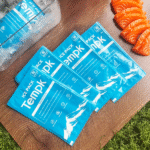
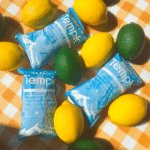
• Consejo 2: Use preconditioned gel packs matched to the real route duration, not the promised carrier window.
• Consejo 3: Use a small air gap and divider board to reduce direct contact damage and improve pack stability.
Ejemplo: Consider a export carton consolidation for premium cuts. The biggest improvement usually does not come from adding more material. It comes from matching box size, refrigerant position, and handling instructions to the real route.
How do you choose structure, refrigerante, y tamaño de la caja?
The best eco-friendly insulated box for meat in 2026 is rarely the thickest or the most heavily marketed option. It is the design that matches product sensitivity, ruta realidad, warehouse workflow, and post-delivery disposal. That means you should lock the target temperature band, longest likely transit profile, acceptable excursion window, and receiving process before you compare materials.
Once those factors are clear, the structure decision becomes much easier. You can size the cavity around the real product footprint, choose the refrigerant plan, and decide whether the outer format should prioritize stacking, parcel handling, or end-user unboxing. This is where many optimized programs win margin: by removing wasted air, extra filler, and unnecessary refrigerant.
Which design variables should you lock first?
The design variables to lock first are product starting condition, cavity geometry, refrigerant placement, integridad del cierre, and the work instructions your pack team will follow. When those five items are controlled, material selection becomes a sharper and more honest decision.
• Definir el carril: write down the real transit promise, not the ideal carrier promise.
• Definir la carga útil: include product count, unit weight, and how much empty space remains after packing.
• Define the work method: use a repeatable sequence so eco-friendly insulated box for meat performs like the qualified design.
¿Qué materiales, pruebas, and standards matter most?
The material and test conversation should start with function. What thermal margin do you need? What handling damage do you expect? How easy does the box need to be to assemble and dispose of? Una vez que esas respuestas sean claras, materials can be judged on whether they help the shipment succeed, not just whether they sound advanced.
For optimized programs, the most useful comparison includes thermal behavior, moisture stability, crush strength, dimensional efficiency, and end-of-life practicality. For raw meat, portioned cuts, ready-to-cook packs, and chilled protein shipments, the best design usually combines recyclable outer fiberboard, moisture-managed liners, and a pack-out that minimizes wasted air while keeping the product stable in transit. When teams compare materials across those five factors, weak options usually reveal themselves quickly.
What validation approach gives buyers real confidence?
The validation approach matters just as much as the material choice. Lab data, simulated parcel profiles, and limited field trials should work together so you do not overtrust a design that only performs under perfect conditions.
How do you balance compliance, costo, y sostenibilidad?
In an optimized review, tests and standards are used to reduce uncertainty. That is why buyers often ask about USDA refrigeration guidance, FDA Food Code cold holding expectations, ASTM D3103 thermal testing, and ISTA 7E parcel thermal profiles when they review packaging options. They help you understand whether a design is thermally capable, mechanically durable, and suitable for the compliance expectations around your product.
The most useful evidence stack is layered. Start with laboratory thermal data, add handling or distribution simulation, then confirm the design on real qualification lanes. That three-part approach reduces the risk of selecting a box that performs well in one environment but not in the network you actually use.
How do you avoid good-looking but weak packaging decisions?
Buyers gain real confidence when suppliers can explain assumptions, límites, and corrective options. That is more valuable than a single headline test number with no context.
What supplier checklist helps you avoid bad fits?
Balancing compliance, costo, and sustainability is easier when you stop treating them as separate topics. A well-chosen insulated shipper can reduce excursion risk, cut dimensional freight, and simplify disposal at the same time. A poorly chosen one can make all three worse.
The strongest supplier checklist asks about route profile, condición del producto, método de embalaje, seasonal assumptions, disposal path, and documentation support in one conversation. That integrated view helps you avoid impressive-looking packaging that does not fit your actual operation.
Which questions reveal whether a supplier really understands your lane?
The best supplier questions are usually the simplest. What lane was this validated for? What happens in summer? What changes if my payload drops? What if I need easier disposal? Those questions reveal real expertise quickly.
Quick self-check before you buy
Before you approve any eco-friendly insulated box for meat design, run a short self-check. The goal is to catch mismatch early, before packaging reaches routine use. If your team can answer the questions below clearly, supplier conversations become faster and qualification work becomes more useful.
• Pregunta 1: What is the real maximum transit profile, including handoff and dwell time?
• Pregunta 2: What product condition enters the box at pack-out, and how consistent is that step?
• Pregunta 3: What disposal route will the receiver actually use after unpacking?
• Pregunta 4: What evidence would prove the packaging is fit for your hardest likely lane?
2026 developments and trends for eco-friendly insulated box for meat
The newest shift is not one single material breakthrough. It is the combination of regulation, complejidad de la ruta, and buyer scrutiny. In this category, buyers now want lower plastic use without losing hold time. Al mismo tiempo, retailers are asking for cleaner disposal stories. The result is that validated parcel testing matters more as DTC meat volumes spread across more lanes. EPA’s latest packaging materials data still shows a strong recovery story for paper and paperboard packaging overall, with corrugated boxes maintaining particularly high recycling rates compared with many other packaging streams. Como resultado, buyers are asking for better evidence, cleaner material stories, and packaging that stays workable for warehouse teams.
Últimos desarrollos de un vistazo
• Desarrollo 1: Buyers now want lower plastic use without losing hold time.
• Desarrollo 2: Retailers are asking for cleaner disposal stories.
• Desarrollo 3: Validated parcel testing matters more as dtc meat volumes spread across more lanes.
There is also a stronger expectation that packaging should support operational resilience. That means better route testing, instrucciones de trabajo más claras, and faster redesign cycles when channels change. FAO reported in 2026 eso 526 millones de toneladas de alimentos, acerca de 12% of the global total, are lost or wasted because of insufficient refrigeration, which turns packaging quality into a waste-reduction decision, not just a freight decision. Para equipos de adquisiciones, el mensaje es claro: choose designs that are easy to validate, fácil de explicar, and realistic for the markets you serve.
Preguntas frecuentes
Can an eco-friendly insulated box for meat really replace foam?
Sí, in many lanes it can, but only if the box, transatlántico, refrigerante, and pack-out are validated together. The safe choice is a tested system, ni una sola reclamación material.
How long should an eco-friendly insulated box for meat hold temperature?
That depends on meat load, temperatura inicial, perfil de ruta, y refrigerante. Many buyers target 24 a 72 horas, then validate worst-case summer and shoulder-season lanes.
Is curbside recyclability enough for meat packaging?
No por sí solo. You also need leak management, food-contact suitability where relevant, fuerza de compresión, and a disposal process that is realistic for your customer.
What is the biggest mistake in meat cold chain packaging?
Using a strong box with an unbalanced pack-out. Too little refrigerant, demasiado espacio de cabeza, or poor sealing can erase the benefit of better insulation.
Resumen y próximos pasos
The most reliable path is to match the box, refrigerante, flujo de trabajo, and validation plan to the actual shipment. For eco-friendly insulated box for meat, the most practical priorities are clear: definir la ruta, match the cavity to the payload, validate the pack-out, and choose materials that support both performance and disposal reality. If you keep those points in view, you are far more likely to reduce claims, encoger, and avoidable freight waste.
A practical next move is to define the product condition at pack-out, the expected route profile, and the acceptable excursion window. Una vez que estén claros, box selection becomes much easier. That process helps you move from a generic packaging purchase to a packaging system that supports quality, cumplimiento, y confianza del cliente.
Acerca de Tempk
Y tempk, we focus on insulated packaging for temperature-sensitive shipping. We design box systems around product risk, longitud de ruta, método de embalaje, and handling reality, so you can choose a solution that is practical for cold chain use instead of just attractive on paper. We build projects around product condition, tiempo de espera objetivo, riesgo de ruta, and operational repeatability so you can choose a format that makes sense in the field.
If you are comparing eco-friendly insulated box for meat options now, a clear route brief and a sample qualification plan are the best next steps. They make supplier conversations faster, more technical, and more useful.