Cómo especificar cubiertas de paletas aisladas para pescado desde el envío hacia atrás
No comience un proyecto de cubierta de paletas de pescado comparando capas de papel de aluminio.. Comience al recibir: ¿En qué condiciones deben estar los mariscos?, ¿Qué evidencia apoyará la aceptación?, y qué eventos de exposición podrían amenazar ese resultado? Cobertores de palets aislados para peces se puede diseñar como una barrera secundaria que ralentice el flujo de calor durante esos eventos. No refrigeran la carga., pescado frío y caliente, reemplace el hielo o un paquete de refrigerante calificado, crear un control HACCP, o calificar cada ruta.
Trabajar hacia atrás desde la decisión de recepción crea una especificación.. Conecta el análisis de peligros de los productos del mar., estado del producto, paleta, activo refrigerado, datos de ruta, construcción de cubierta, escucha, y procedimiento del operador. Cada conexión debe ser explícita antes de que la cobertura gane un lugar en el envío de rutina..
Decisión 1: Definir el estado de llegada aceptable
Redactar declaraciones de aceptación separadas para la seguridad alimentaria., calidad, y condición física. La declaración de seguridad alimentaria debe provenir del análisis de peligros y del plan HACCP del procesador responsable.. La declaración de calidad puede incluir la temperatura específica del producto., estado congelado, hielo restante, criterios sensoriales o de vida útil, y requisitos del cliente. La aceptación física puede abordar los sellos., integridad del envase al vacío, cajas de cartón, vidriado, fuga, contaminación, y etiquetas.
Esta separación evita un error común: utilizando una lectura de registrador central como respuesta a cada pregunta. Un rastro de temperatura puede respaldar una evaluación de tiempo y temperatura. No puede mostrar si una bolsa de vacío tiene fugas., una caja se derrumbó, o el agua de deshielo contaminó el palet. Las observaciones físicas no pueden reconstruir una historia de temperatura invisible.
Los procesadores de productos pesqueros de los Estados Unidos cubiertos por 21 Parte CFR 123 debe realizar un análisis de peligros e implementar un plan HACCP cuando sea razonablemente probable que ocurran peligros para la seguridad alimentaria.. La Guía de controles y peligros del pescado y los productos pesqueros de la FDA proporciona- e información de control de peligros específicos. Especies formadoras de histamina, productos refrigerados cocidos, mariscos crudos listos para comer, y el pescado envasado con oxígeno reducido puede requerir diferentes estrategias. Un fabricante de cubiertas para pallets nunca debe asignar el límite crítico.
El Código Alimentario de la FDA es un contexto útil para el comercio minorista y el servicio de alimentos, incluyendo el mantenimiento en frío del control de tiempo/temperatura para la seguridad de los alimentos, pero es un código modelo y no una especificación universal internacional para paletas de pescado.. Exportar, al por mayor, tratamiento, y los productos especializados pueden seguir otros controles validados y reglas jurisdiccionales. Documentar qué autoridades y especificaciones del cliente se aplican.
Decisión 2: Identificar la brecha térmica, Minuto a Minuto
Dividir el carril en segmentos controlados y expuestos.. Los segmentos controlados pueden incluir una cámara fría., congelador, camión frigorífico, o contenedor motorizado. Los segmentos expuestos incluyen puesta en escena., cargando, cross-docking, inspección, acumulación de carga aérea, aduanas, conexión de energía, descarga, y recibiendo.
Para cada segmento expuesto, duración de la captura, temperatura ambiente sombreada, radiación directa, flujo de aire del viento o del ventilador, contacto con el suelo, posición de la puerta, y cualquier apertura de la tapa. Utilice datos de rutina y un caso de retraso creíble.. Evite diseñar solo para el viaje promedio. Una conexión perdida o una cola en el muelle pueden dominar el riesgo incluso cuando la mayor parte de la ruta está bien controlada..
Luego, indique el trabajo de la portada en un lenguaje mensurable.. Por ejemplo: “Reducir la ganancia de calor en los paquetes superiores y exteriores de una plataforma de pescado congelado durante la transferencia desde almacenamiento en frío a un contenedor de exportación motorizado, incluyendo un retraso de energía definido”. Esta declaración identifica la ubicación, estado del producto, evento, y objetivo. No promete que la cubierta pueda mantener una condición congelada ilimitada..
Si la exposición es causada por una falla del proceso reparable, corregirlo primero. Estancia en el muelle más corta, un vehículo preenfriado, mejor disciplina en la puerta, puesta en escena motorizada, o una cita revisada puede superar el aislamiento adicional. La cubierta debe agregar resiliencia después de que el proceso primario sea sólido..
Decisión 3: Elija la fuente primaria de frío
El aislamiento reduce la tasa de transferencia de calor.; no elimina el calor entrante indefinidamente. Definir la fuente que establece y mantiene la condición del producto..
Para pescado fresco, el enfriamiento aprobado puede depender del hielo, agua de mar refrigerada, refrigeración mecánica, u otro método controlado. Las orientaciones de la FAO insisten sistemáticamente en el enfriamiento rápido y el uso adecuado del hielo en muchos sistemas de pescado fresco. Aplique una cubierta solo después de que el producto alcance su condición aprobada, a menos que el proceso validado incluya explícitamente la cubierta durante el enfriamiento..
Para mariscos envasados refrigerados, El sistema primario suele ser el almacenamiento y transporte refrigerados., potencialmente respaldado por una disposición de refrigerante calificado para segmentos expuestos. Los refrigerantes necesitan una colocación deliberada. Excesivamente paquetes fríos puede crear congelación local, mientras que las mochilas insuficientes o mal distribuidas pueden dejar zonas cálidas. La condensación y la compatibilidad del paquete pertenecen al diseño..
Para pescado congelado, El congelador y el vehículo o contenedor refrigerado mantienen la condición de congelación especificada para el producto.. Una cobertura puede moderar la exposición a transferencias cortas. No debe utilizarse para planificar un viaje largo sin alimentación..
Dónde se aplica la norma de transporte sanitario de la FDA, Las partes cubiertas tienen responsabilidades relacionadas con las prácticas sanitarias., equipo de transporte adecuado, y control adecuado de la temperatura de los alimentos que lo necesitan por seguridad. Un palé cubierto dentro de un vehículo inadecuado o mal utilizado sigue siendo un envío inadecuado.
Decisión 4: Diseñar la interfaz física
Mida la plataforma terminada en su configuración aprobada más grande. incluir voladizo, correas, envoltura elástica, tableros de esquina, forma superior, etiquetas, desagües, respiraderos, y entradas de montacargas. Registre las cargas aprobadas más baja y más alta si se espera que una familia de cubiertas se ajuste a varias alturas..
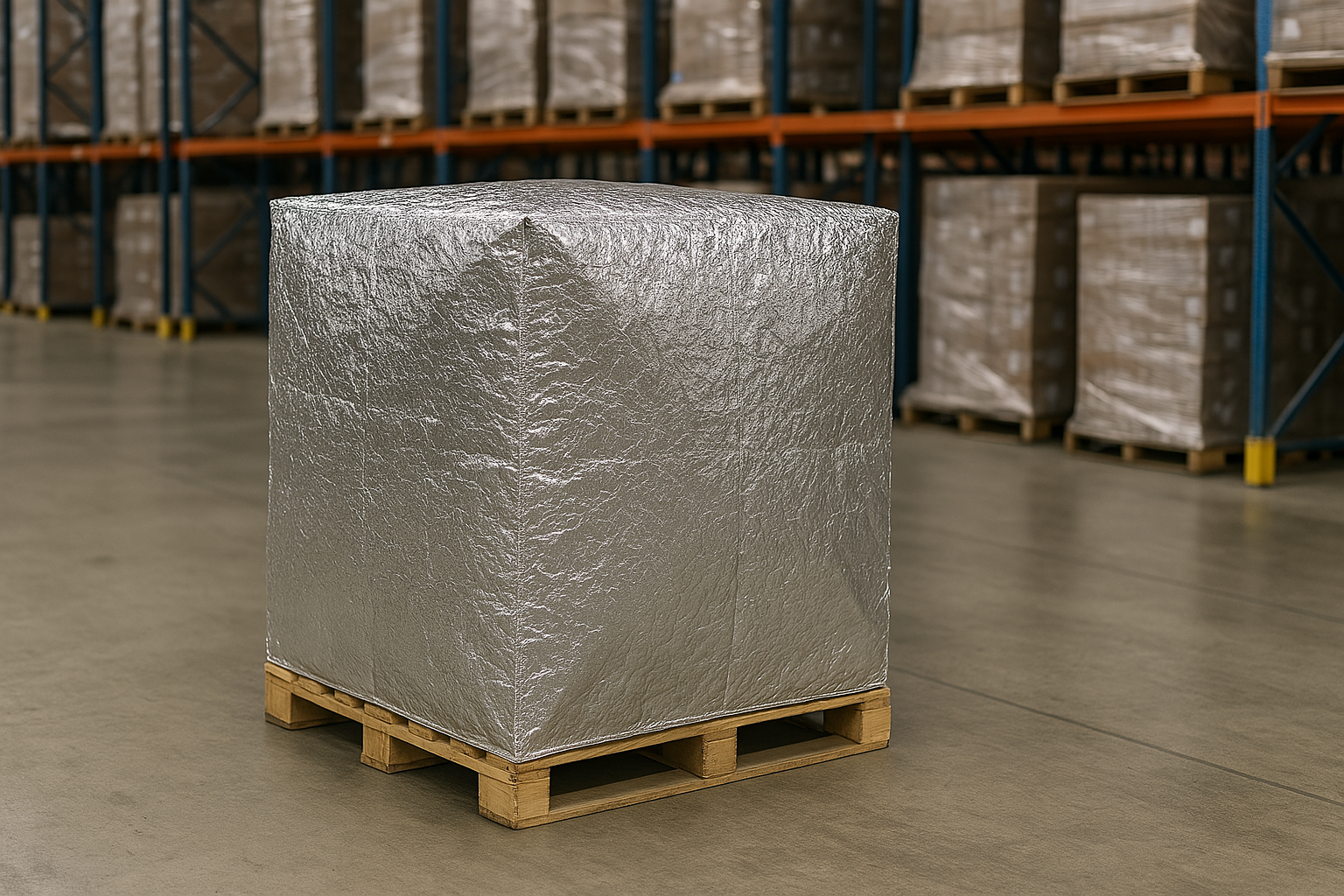
la superficie exterior, aislamiento, cara interior, costuras, cierres, y base cada uno realiza un trabajo diferente. Un exterior reflectante puede reducir el intercambio radiante cuando está expuesto y en condiciones adecuadas.. El núcleo de aislamiento resiste la conducción y el movimiento interno del aire.. Los cierres limitan el intercambio de aire incontrolado. Las costuras y las esquinas comprimidas son puentes térmicos.. La base puede admitir aire., recoger agua, o conducir el calor desde el suelo.
Diseñe deliberadamente el comportamiento frente a la humedad. El pescado fresco helado puede generar agua de deshielo. Los pallets congelados pueden condensarse cuando se exponen al aire húmedo. Una falda larga puede tocar suelos sucios.; una base sellada puede acumular agua; una capa porosa puede retener olores o contaminación. Acordar drenaje, eliminación, limpieza, el secado, y almacenamiento con saneamiento y operaciones..
La funda normalmente se encuentra fuera de los paquetes de envío sellados.. Si pudiera entrar en contacto con peces expuestos, hielo que entra en contacto con el pescado, o una superficie de contacto con alimentos, Revisar el material para el uso previsto.. "Impermeable,” “no tóxico,”o “logística de alimentos” no sustituye a una determinación de contacto con alimentos.
| Interfaz | Pregunta de especificación | Evidencia de aprobación |
|---|---|---|
| Sobre de palet | ¿La cubierta se ajusta a todas las alturas aprobadas sin aplastarse ni dejar grandes espacios?? | Estudio dimensional y tolerancias de producción. |
| Flujo de aire refrigerado | ¿La cubierta impedirá el enfriamiento necesario o bloqueará la circulación del vehículo?? | Prueba de plan de carga con la cubierta instalada |
| Humedad y drenaje. | ¿A dónde irá la condensación o el agua derretida?? | Revisión de saneamiento y observación del manejo húmedo. |
| Etiquetas y recepción de acceso | ¿Puede el personal identificar, inspeccionar, y abrir la carga correctamente? | Fotografías de prueba operativa y SOP. |
| Reutilizar superficie | ¿Se puede limpiar la unidad?, seco, inspeccionado, y almacenado? | Procedimiento aprobado y criterios de jubilación |
La tabla fuerza las decisiones térmicas y sanitarias en la misma revisión del diseño.. Una cubierta no debe pasar porque la curva de su cámara se ve bien mientras el manejo del agua o el flujo de aire siguen sin resolverse..
Decisión 5: Cree pruebas que reflejen el envío
Iniciar el protocolo con la declaración de uso y los criterios de aceptación.. Identificar producto o sustituto justificado, embalaje, tipo de palet, revisión de portada, condición inicial, fuente primaria de frío, perfil ambiental, carga solar si es relevante, flujo de aire, duración, aberturas, y retrasar. Utilice cubiertas representativas de la producción y defina cuántas tiradas se necesitan para el riesgo y la variabilidad..
Coloque los sensores según las rutas de calor.. Un sensor superior puede mostrar la exposición radiante; Los sensores de borde y esquina inferior pueden revelar fugas de aire.; un sensor de base puede revelar la conducción del suelo; el núcleo proporciona una referencia de respuesta lenta. Los sensores ambientales y del vehículo describen el desafío. Los sensores del producto o paquete describen la respuesta.. Ningún punto representa toda la paleta.
Herramientas útiles para tomar decisiones
Comprueba los detalles antes de elegir el embalaje.
Estas herramientas rápidas pueden ayudarle a comparar el riesgo de la ruta, necesidades de dimensionamiento, opciones de refrigerante, y detalles del embalaje antes de solicitar una cotización.
Selector de embalaje
Compare las opciones de embalaje aislado por producto, ruta, y necesidad de temperatura.
encontrar embalajeCalculadora de hielo seco
Calcule las necesidades de hielo seco para envíos congelados o ultrafríos antes de empacar.
Estimar hielo secoCalculadora de bolsa de hielo
Estimación de la cantidad de bolsas de hielo en gel para envíos refrigerados y planificación práctica de rutas.
Estimar las bolsas de hieloRegistrar la identidad del sensor, estado de calibración o verificación, exactitud, intervalo de registro, ubicación, método de archivo adjunto, y tiempo sincronizado. Conservar los datos sin procesar y documentar las desviaciones. Informar sólo la precisión que admiten los instrumentos..
Utilice un control cuando responda la pregunta.. Un palé descubierto puede mostrar una protección incremental durante una prueba de desarrollo seguro. La cobertura actualmente aprobada puede servir de referencia para una revisión propuesta.. Para una prueba operativa, aberturas de puertas de registro, eventos de refrigeración, retirada de la cubierta, y ubicación para que el rastro térmico tenga contexto.
La calificación es la conclusión documentada de que la evidencia total respalda un uso definido.. No es una propiedad inherente al aislamiento.. El alcance debe nombrar la familia de productos., gama de paletas, ruta o perfil, temporada cuando sea relevante, construcción de cubierta, instalación, refrigeración primaria, y criterios de aceptación. Los cambios fuera de ese alcance requieren evaluación.
Decisión 6: Conecte la cubierta a HACCP y registros de calidad
Decidir si se están monitoreando los datos relacionados con la cobertura, verificación, soporte de validación, o información general de calidad. Estos términos tienen diferentes roles.. Bajo HACCP para productos del mar, Los registros de seguimiento muestran si un punto de control crítico se mantuvo bajo control.; verificación comprueba que el sistema funciona según lo previsto; La validación o respaldo científico establece que las medidas de control pueden controlar el peligro.. El procesador responsable debe asignar esos roles..
Un registrador de palés puede ser valioso sin ser un registro HACCP. Si el negocio lo hace parte de un control crítico, El plan necesita procedimientos definidos., frecuencia, persona responsable, revisión de registros, comprobaciones de calibración o precisión, desviaciones, y acciones correctivas según corresponda. No agregue un registrador a los materiales de marketing y asuma que cumple con estos elementos..
La recepción debe tener una ruta de escalada. El receptor debe saber interpretar los registros del vehículo., datos de palet, medidas del producto, y observaciones físicas. Una alarma debería activar la evaluación aprobada., no aceptación o rechazo automático a menos que el plan lo indique explícitamente. Preservar la trazabilidad entre el palet., cubrir, maderero, envío, y mucho.
Para mariscos importados en los Estados Unidos, Las obligaciones del importador bajo el marco HACCP de productos del mar pueden agregar registros y consideraciones de pasos afirmativos.. Los carriles globales también involucran requisitos de destino y especificaciones del cliente.. Mantenga el registro de portada conectado a, pero distinto de, el expediente regulatorio más amplio.
Decisión 7: Haga que la repetición sea segura, Comprable, y responsable
Convierta la configuración aprobada en una breve, visual, POE controlado. Muestra el número de pieza y la revisión de la cubierta correctos., orientación, gama de paletas, secuencia de aplicación, cierres, zona de etiqueta, ubicación del sensor, inspección, eliminación, y almacenamiento. Incluir condiciones de parada para liberación en caliente., tamaño incorrecto, lágrimas, costuras abiertas, aislamiento triturado, interior mojado o contaminado, olor, moho, identidad perdida, y reparaciones no aprobadas.
Capacite a las personas que realmente trabajan en el muelle y obsérvelas durante los primeros envíos.. Compruebe si los guantes de cámara frigorífica pueden operar el cierre., la cubierta se engancha en las esquinas, El personal ingresa a los carriles para montacargas., y la unidad terminada se adapta al vehículo y al equipo terminal.. Ajustar el diseño o método de trabajo antes de escalar.
Al recibir, cuatro decisiones separadas: condición del marisco, condición del paquete, condición de la cubierta, y la integridad de los datos. Un producto puede ser aceptable mientras que una funda reutilizable debe retirarse. Una funda sólida no rescata los mariscos dañados. Documentar cada resultado.
El control de cambios debe incluir película exterior., aislamiento, revestimiento interior, adhesivo, puntadas, cinta de costura, cierre, dimensión, sitio de producción, material de reparación, altura del palet, paquete de producto, vehículo, ruta, y fuente primaria de frío. Las adquisiciones deben requerir notificación antes de cambios de proveedor.. La calidad y la seguridad alimentaria deciden si la revisión, pruebas dirigidas, o es necesaria una recalificación.
Preguntas de compra que exponen propuestas débiles
Solicite al proveedor que proporcione las condiciones completas detrás de cualquier reclamo térmico.. cual palet, carga útil, temperatura inicial, perfil ambiental, sensores, duración, aberturas, y se utilizaron criterios de aceptación? ¿Se incluyó la radiación directa?? ¿Estaba seca la funda?? ¿Había una almohadilla base presente?? ¿Se repitieron los resultados??
Pregunte cómo se controlan las unidades de producción con respecto a la unidad probada.. Dimensiones, construcción de capas, espaciado de costura, lugar de cierre, y las sustituciones materiales pueden importar. Solicite una comparación de muestra con producción y un plan de inspección entrante.
Pregunte cómo afectan la humedad y la limpieza a la funda.. ¿Qué química y método están aprobados?? como se seca? ¿Qué daños provocan reparación o jubilación?? ¿Qué sucede después del contacto con mariscos filtrados o agua de deshielo?? Evite un recuento de reutilización fijo no admitido.
Finalmente, Pregunta cómo funciona la propuesta con el activo frigorífico., plan de seguridad alimentaria, método de recepción, y red al final de su vida útil. Un precio unitario bajo puede verse compensado por una aplicación lenta, flujo de aire bloqueado, trabajo de limpieza, flete de regreso, o cubiertas perdidas.
La sostenibilidad es un requisito de diseño, No es una etiqueta
Definir la función que se compara: Una paleta de pescado entregada en las condiciones aprobadas a través de una ruta específica.. Compare opciones desechables y reutilizables con la misma función. Incluye material y fabricación., peso y volumen de la carga, limpieza, el secado, regresa, refacción, pérdidas, vida útil real, y eliminación o reciclaje.
Los carriles de circuito cerrado pueden facilitar la reutilización porque se planifican las devoluciones y se puede centralizar la inspección.. Las rutas de exportación unidireccionales pueden favorecer un diseño más ligero si la recuperación no es realista. Las cubiertas multicapa pueden funcionar bien pero ser difíciles de reciclar; Las estructuras más simples pueden mejorar las opciones al final de su vida útil, pero pueden cambiar la durabilidad o el aislamiento.. Pruebe la compensación en lugar de asumir que gana la característica que suena más ecológica.
El desperdicio de producto pertenece a la evaluación., pero use datos medidos. Si una cubierta reduce las desviaciones de temperatura o el marisco rechazado en una ruta, documentar la línea de base y el resultado. No asigne un porcentaje de ahorro de residuos sin pruebas.
Conclusión: La especificación en una frase
Un programa defendible se puede resumir de esta manera: utilizar una revisión controlada de la cubierta en un producto pesquero y una paleta definidos, después del enfriamiento aprobado, durante eventos expuestos identificados, con refrigeración adecuada, manipulación higiénica, monitoreo mapeado, criterios de aceptación, un operador SOP, y control de cambios documentado.
Las cubiertas aislantes para paletas para pescado son valiosas precisamente porque su función es limitada y comprobable.. Retardan el flujo de calor. El sistema HACCP de la empresa alimentaria, refrigeración, método de enfriamiento aprobado, saneamiento, archivos, y personal calificado protegen la cadena de suministro de productos del mar en su conjunto.
Acerca de Tempk
Tempk es Shanghai Tempk Industrial Co., Ltd. embalaje de cadena de frío marca. Las páginas de productos incluyen cubiertas térmicas para palets, embalaje aislado y cajas, refrigerantes, y PCM; Las páginas de soluciones describen la revisión del paquete., planificación de posiciones de registradores, y soporte del plan de validación. Podemos colocar esas capacidades alrededor de una paleta de pescado definida por el cliente., método de enfriamiento primario, y desafío de ruta para apoyar una discusión estructurada sobre embalaje. El procesador u otra empresa alimentaria responsable todavía posee el análisis de peligros., Controles APPCC, saneamiento, criterios del producto, y decisiones de liberación, y no se debe presentar una funda como refrigeración..
Comparte el requisito de llegada., geometría de la paleta, fuente de enfriamiento, reglas de higiene, y peor exposición creíble. Tempk puede analizar qué debería incluir una comparación controlada antes de cualquier implementación más amplia..