Cubiertas aislantes para palés para distribución farmacéutica: Un marco de implementación
La pregunta útil no es "¿Cuántas horas mantiene esta cubierta la temperatura?"?" sino "¿A qué exposición se enfrentará esta paleta?, y qué evidencia demuestra que el proceso puede manejarlo?" Fundas aislantes para palets para la distribución farmacéutica puede ralentizar el cambio térmico en los muelles, rampas, cruces, retenciones aduaneras, y entrega final. son pasivos, protección secundaria: refrigeración no activa, un sistema de autocalificación, o un sustituto del seguimiento, calificación de carril, procedimientos, documentación, o revisión de calidad.
Con ese límite claro, la adquisición puede comparar características, Los ingenieros pueden probar la configuración completa., las operaciones pueden aplicarlo consistentemente, y la calidad puede decidir si la evidencia es suficiente.
Dale a la portada un trabajo claro
Comience con una declaración de uso previsto de una oración.. Debe nombrar el grupo de productos., configuración de paleta, segmento de carril, desafío ambiental, controles primarios, y función de cubierta. Por ejemplo:
La cubierta está destinada a reducir la tasa de intercambio térmico alrededor de una configuración de paleta definida durante los traspasos al aire libre y no controlados entre instalaciones controladas aprobadas y vehículos en rutas aéreas seleccionadas..
Esta declaración evita deliberadamente prometer la temperatura o duración de un producto.. Pertenecen a criterios de calificación respaldados por información de producto y ruta.. También deja claro que las instalaciones y el transporte controlados siguen siendo el entorno principal.
Ahora escribe las exclusiones.. La cubierta no está destinada a reemplazar un vehículo con temperatura controlada., agregar refrigerante no aprobado, proteger una carga mixta incompatible, justificar un retraso aduanero indefinido, o liberar producto después de una excursión. Puede que no sea adecuado para la recogida de palés parciales., transporte incontrolado de varios días, o un pallet fuera del sobre dimensional aprobado. Las exclusiones no son una debilidad; previenen la deriva operativa.
Las condiciones farmacéuticas requeridas deben provenir de la información del producto aprobado., instrucciones del fabricante, conocimiento de estabilidad, acuerdo de calidad, y requisitos de mercado aplicables. No existe una gama única para todos los medicamentos. Los límites de almacenamiento y transporte pueden diferir., y la sensibilidad al congelamiento puede ser crítica incluso en un carril que el personal describe casualmente como “frío”. Por lo tanto, el uso previsto debe hacer referencia a una categoría o requisito de producto aprobado., no es una afirmación genérica como "para productos farmacéuticos".
Cree un presupuesto de exposición puerta a puerta
Un mapa de ruta suele mostrar ciudades y tramos de transporte.. Un presupuesto de exposición muestra cada intervalo durante el cual la plataforma puede estar fuera de su entorno controlado primario.. Iniciar el cronómetro en la primera salida del almacenamiento aprobado y detenerlo solo cuando la carga ingrese al almacenamiento aprobado en el destino.. Divida el viaje en la puesta en escena, movimiento del muelle, cargando, transporte local, transferencia de centro, actividad delantal, movimiento de aeronaves o de línea, aduanas, recargando, entrega final, y recibiendo.
Para cada intervalo, registro:
duración planificada y creíble del retraso;
perfil de temperatura ambiente e incertidumbre estacional;
exposición solar, viento, precipitación, y contacto superficial cuando sea relevante;
si el palet está en una posición controlada, temperatura modificada, o espacio incontrolado;
quién tiene la custodia y quién puede abrir o quitar la tapa;
disponibilidad de almacenamiento temporal adecuado;
Monitoreo y datos de hitos que pueden confirmar lo sucedido.;
desencadenante de escalada si la suposición falla.
Este ejercicio a menudo revela que el tramo de transporte más largo no es el factor de diseño.. Un palé puede pasar horas en un compartimiento de avión o en un vehículo controlado, pero enfrentar un desafío mayor durante una breve espera bajo el sol.. En cambio, una transferencia de muelle ligeramente desafiada puede no justificar una cobertura si un tramo de carretera posterior no controlado es demasiado severo para la protección secundaria pasiva. El presupuesto de exposición muestra si una cobertura cierra una brecha real o simplemente crea tranquilidad.
Las buenas prácticas de distribución de la UE respaldan esta visión basada en el riesgo. Requiere que se mantengan las condiciones requeridas del producto., riesgo de ruta para guiar los controles de temperatura, Atención a la descarga y al almacenamiento en tránsito., Equipo adecuado y calificado cuando sea necesario., escucha, y procedimientos para excursiones. Asimismo, la guía modelo de la OMS trata el perfil de temperatura de transporte como una secuencia de condiciones y duraciones ambientales previstas y proporciona orientación técnica sobre el perfil de ruta y la calificación de los contenedores de envío..
No conviertas una previsión meteorológica en un perfil de calificación. Los datos meteorológicos pueden informar un estudio, pero no capta el sol sobre una superficie metálica, fuga impulsada por el viento, un plato de muelle calentito, una cama de rodillos en frío, prácticas operativas de terminales, o transferencia de custodia retrasada. Utilice observaciones de ruta, escucha, información de las instalaciones, casos estacionales, y supuestos conservadores justificados para crear el desafío.
Definir la configuración controlada
El objeto de prueba y el objeto comprado deben tener la misma configuración controlada. Anote cada componente y condición que afecte la respuesta térmica.:
Material y dimensiones de la paleta.;
patrón de caso, altura de carga, rango de masa, vacíos, y envoltura elástica;
Producto o simulante justificado y su condición inicial.;
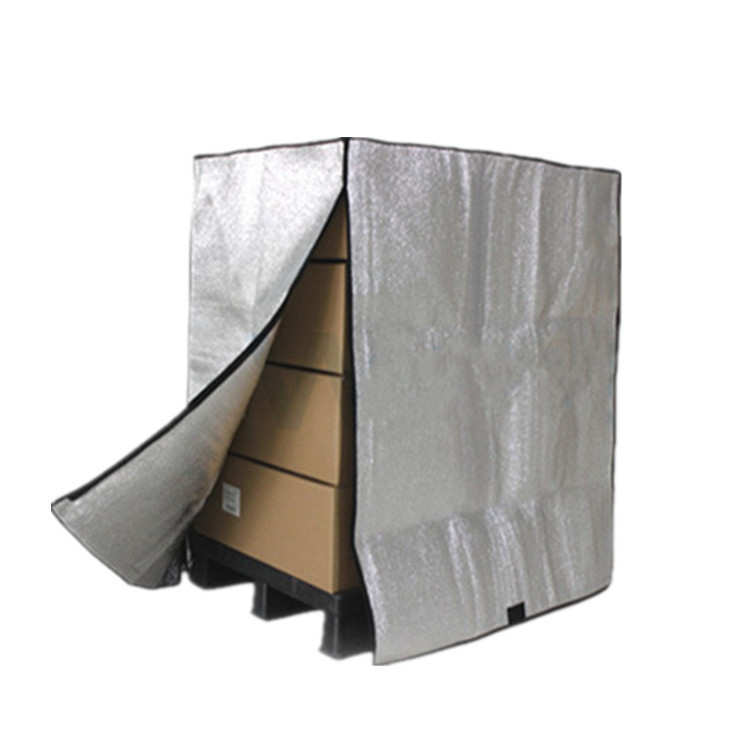
Construcción y orientación de la cubierta superior y lateral.;
almohadilla base, palet aislado, o ausencia explícita de aislamiento inferior;
cierres, se superpone, correas, paneles de acceso, y sellos;
etiquetas de manipulación y almacenamiento;
tipos de registradores, posiciones, ajustes, y método de activación;
solicitud, apertura, recierre, y procedimiento de eliminación.
La base merece su propia línea.. Una cubierta de cinco lados deja un camino a través del palet y la superficie de soporte.. Si la calificación utiliza una plataforma base, las operaciones deben utilizar la misma base especificada. Si el proceso real no tiene base, las pruebas no deberían agregar silenciosamente uno. La misma lógica se aplica a la envoltura estirable., voladizo de paleta, y lagunas en los casos.
El ajuste es un atributo controlado, no es una preferencia cosmética. Una cubierta corta puede exponer el borde inferior.; una cubierta apretada puede abrirse en las esquinas; uno de gran tamaño puede crear pliegues, interferir con el acceso de montacargas, o arrastrarse por el agua. Defina la envolvente interna utilizable y las tolerancias dimensionales utilizando palets de producción reales., incluyendo variación esperada y protuberancias.
El cierre también es parte del límite térmico.. La configuración debe mostrar qué solapa se superpone a qué, cómo se enganchan las cremalleras o las secciones de velcro, donde se sientan las correas, y cómo se ve un estado cerrado aceptable. Una fotografía o un dibujo lineal en las instrucciones de trabajo pueden marcar la diferencia entre una configuración cualificada y una aproximación del operador..
Haga coincidir las funciones del material con la exposición
La pila de capas debe responder al presupuesto de exposición en lugar de seguir una jerarquía genérica de "más capas, mejor". El calor atraviesa el palet cubierto por radiación., convección, y conducción.
Una superficie metálica de baja emisividad puede reducir el intercambio radiante, que puede ser útil bajo exposición solar o a superficies calientes cercanas. La emisividad es una propiedad de la superficie que describe la capacidad de emitir radiación térmica.. El resultado depende de la superficie acabada., orientación, espacio adyacente, limpieza, y daño. No detiene el calor transportado por el aire o transferido por contacto.. La reflectividad por sí sola no puede respaldar una afirmación de duración.
La capa aislante resiste el flujo de calor a través de las caras anchas.. Las características relevantes pueden incluir la identidad material., espesor, densidad o estructura, conductividad térmica en las condiciones indicadas, comportamiento de compresión, y respuesta a la humedad. Una prueba de material plano ayuda a caracterizar la capa pero no representa las costuras., esquinas, cierres, la base, o un palet completo. Pregunte cómo el proceso de conversión controla el espesor., vinculación, y continuidad.
Las costuras y penetraciones pueden comportarse como puentes térmicos o vías de fuga.. cosido, soldado, grabado, o construcciones adheridas requieren control e inspección del proceso. Las bolsas y aberturas no deben interrumpir la envoltura protectora sin evaluación.. El plegado repetido puede concentrar el daño en lugares predecibles, por lo que los diseños reutilizables necesitan criterios de inspección vinculados a esos modos de falla.
La humedad combina preocupaciones térmicas y de protección del producto.. La resistencia a la lluvia no demuestra control del vapor, y un resultado de material laminar no prueba las costuras terminadas. La condensación puede quedar atrapada contra las cajas., El líquido de limpieza puede permanecer dentro de las capas., y la suciedad puede cambiar una superficie reflectante. Definir el manejo de la exposición húmeda, limpieza, el secado, segregación, y rechazo en lugar de confiar en la palabra "impermeable".
Crear una cadena de evidencia, No es un certificado de prueba
La cadena de evidencia más útil conecta el requisito del producto con la ruta., el camino hacia el perfil del desafío, el perfil a la configuración probada, y la configuración probada para la producción y operaciones de rutina..
| Decisión | evidencia requerida | propietario típico | No evitar |
|---|---|---|---|
| que hay que proteger? | Condiciones del producto aprobado, sensibilidades, y lógica de aceptación | Calidad del producto | Aplicar una gama a cada producto farmacéutico |
| ¿Dónde está el riesgo?? | Perfil de ruta, mapa de entrega, casos estacionales y de retraso | Logística y calidad | Utilizando el tiempo total de tránsito o el clima de la ciudad únicamente |
| cual es el sistema? | Lista de materiales controlada, sobre de palet, detalles de cierre y base | Ingeniería de embalaje | Calificar un prototipo que se diferencia de la producción |
| ¿Funciona?? | Protocolo aprobado, sensores calibrados, datos sin procesar, desviaciones, y reportar | Equipo de clasificación | Tratar un cupón de material o un envío como prueba |
| ¿Puede permanecer en control?? | Notificación de cambio de proveedor, cheques entrantes, capacitación, escucha, revisar | Calidad y operaciones | Ignorar la deriva después del lanzamiento |
Esta tabla es también un mapa de responsabilidades.. Ningún documento del proveedor puede responder a todas las filas porque el transportista posee el conocimiento del producto., la red logística, y decisiones finales de calidad. Un proveedor puede proporcionar diseño., material, producción, e información de prueba, pero el sistema de calidad del cliente debe decidir la aplicabilidad..
Herramientas útiles para tomar decisiones
Comprueba los detalles antes de elegir el embalaje.
Estas herramientas rápidas pueden ayudarle a comparar el riesgo de la ruta, necesidades de dimensionamiento, opciones de refrigerante, y detalles del embalaje antes de solicitar una cotización.
Selector de embalaje
Compare las opciones de embalaje aislado por producto, ruta, y necesidad de temperatura.
encontrar embalajeResistencia a la caída del material aislante
Revise la resistencia a caídas y los factores de manipulación antes de elegir materiales aislantes..
Comprobar resistenciaRevestimiento de caja & Dimensionamiento de la cubierta de paleta
Lógica de tamaño de revestimiento de cajas y cubiertas de paletas para proyectos de embalaje aislado.
Estimar el tamañoLa orientación técnica de la OMS describe el diseño, operacional, y calificación de desempeño para contenedores de transporte. Esas etapas ofrecen una disciplina útil.. Durante la calificación del diseño, los equipos revisan los requisitos, riesgos, dibujos, materiales, cierres, y evidencia preliminar. Los desafíos de calificación operativa definen configuraciones bajo casos cálidos y fríos aprobados, incluyendo carga útil y límites de condiciones iniciales. La calificación del desempeño demuestra que la producción cubre, operadores capacitados, procedimientos reales, y los carriles representativos trabajan juntos.
Los recursos de ISTA pueden respaldar la planificación de pruebas, pero el alcance importa. Estándar ISTA 20 es un proceso para la calificación de contenedores de envío aislados utilizado con perfiles ISTA 7E, mientras que ISTA identifica 7E con sistemas de entrega de paquetería. Una cubierta de paleta que se mueve a través de carga unificada puede necesitar una prueba diferente o personalizada justificada por su entorno de distribución.. Es posible que también sea necesario combinar las pruebas térmicas con una evaluación mecánica del manejo., vibración, compresión, y estabilidad de carga. No basta con nombrar un estándar; el procedimiento, objeto de prueba, laboratorio, perfil, y el reclamo resultante debe alinearse.
Monitoreo del diseño en torno a las decisiones
El seguimiento debe informar a la organización si los supuestos se cumplieron y qué hacer si no se cumplieron.. No es un accesorio agregado después de la calificación..
Los sensores ambientales pueden caracterizar el desafío alrededor del palet. Los sensores de carga útil pueden mostrar la respuesta térmica en posiciones seleccionadas. Un registrador cerca del exterior puede reaccionar rápidamente; uno en lo profundo de una carga densa puede responder lentamente. La calificación debería utilizar suficientes sensores., colocado a través de una justificación documentada, para identificar ubicaciones vulnerables y de respuesta lenta. El monitoreo de rutina puede utilizar un plan justificado diferente cuando su propósito está claramente definido..
Revisar la precisión calibrada del registrador, rango de medición, respuesta, intervalo de grabación, control de reloj, configuración de alarma, idoneidad de la batería, integridad de los datos, y flujo de trabajo de recuperación. Evite copiar configuraciones de otro carril sin considerar la duración del viaje y las necesidades de decisión.. La guía de la OMS aborda el monitoreo de contenedores de envío pasivos y activos, revisión de llegada, calibración, archivos, y sistemas de seguimiento del transporte. El PIB de la UE también hace hincapié en el mantenimiento y calibración de los equipos de seguimiento y los procedimientos de excursión..
El sitio receptor necesita una ruta de datos viable. Definir quién detiene o lee el dispositivo, qué software y permisos se requieren, cómo se manejan las zonas horarias, donde se conserva el archivo, y que desencadena la cuarentena. Una alarma de temperatura no destruye automáticamente el producto., y la ausencia de una alarma no soluciona un paquete no válido. La eliminación pertenece al proceso de calidad aprobado utilizando la información relevante del producto..
Para carga aérea, El seguimiento va de la mano con el manejo correcto y la comunicación.. Las Regulaciones de Control de Temperatura de la IATA abordan el transporte farmacéutico e incluyen la etiqueta Sensible al Tiempo y la Temperatura.. Verificar la edición actual, Reglas gubernamentales y del transportista., información de reserva, marcas, y requisitos sobre mercancías peligrosas, según corresponda. La portada no debe ocultar etiquetas esenciales., y las etiquetas no deben confundirse con protección física.
Convierta la muestra aprobada en una implementación controlada
Bloquear la especificación de suministro
La ampliación es un traspaso de alto riesgo. La muestra analizada por ingeniería puede haber sido fabricada con una lámina particular., núcleo aislante, adhesivo, patrón de costura, cierre, y nivel de atención. La compra de producción necesita una especificación que haga que esos atributos sean repetibles..
Crear dibujos aprobados y una lista de materiales.. Definir dimensiones internas y tolerancias., identidades de capa, atributos críticos de construcción, ubicaciones de costura y cierre, marcas de orientación, limpieza, etiquetado, embalaje para la entrega, y cualquier trazabilidad requerida. Acordar cómo materia prima, formulación, revestimiento, adhesivo, proceso, herramienta, subcontratista, o los cambios en el sitio de fabricación se comunicarán y evaluarán antes del suministro..
La inspección entrante debe verificar los atributos vinculados al ajuste., cierre, integridad, y limpieza. Las verificaciones periódicas pueden ser apropiadas para características que no se pueden probar en todas las unidades.. Mantenga una referencia de producción controlada en lugar de depender de una muestra de sala de exposición no medida. Si el proveedor indica un resultado térmico, solicitar el protocolo y reportar contexto: perfil de prueba, carga útil, condición inicial, montaje completo, ubicaciones de sensores, duración, criterios, desviaciones, y revisión de la unidad.
En los Estados Unidos, Las regulaciones actuales sobre buenas prácticas de fabricación requieren condiciones de almacenamiento adecuadas y procedimientos escritos de almacenamiento y distribución.. La orientación de la FDA en contextos de productos específicos refuerza la protección durante el almacenamiento, manejo, y envío según las condiciones etiquetadas. Estos principios respaldan especificaciones y procedimientos controlados.; no crean un estado universal de "aprobado por la FDA" o "cumple con la FDA" para una cubierta de paleta.
Hacer que los traspasos sean reproducibles
La cobertura tendrá éxito o fracasará en manos del personal de almacén y de tierra.. Entrena con un palet real y observa la tarea.. ¿Pueden los operadores identificar la revisión correcta?? ¿Pueden una o dos personas colocarlo de forma segura sin arrastrarlo?? ¿Las esquinas son obvias?? ¿Se puede llegar a todos los cierres?? ¿Las etiquetas permanecen visibles?? ¿Están despejadas las aberturas para montacargas?? ¿Se puede restaurar la cubierta después de la inspección??
Escriba el contrato de entrega en instrucciones de trabajo y acuerdos de calidad.:
quien aplica y verifica la cobertura;
cuando comienza el reloj de exposición o la permanencia controlada;
quién puede abrirlo y bajo qué condiciones;
cómo se mantiene la protección temporal durante la inspección;
cómo se restablece y registra el cierre correcto;
que hacer con mojado, rasgado, desaparecido, o unidades contaminadas;
dónde se puede mover un palet retrasado;
quién revisa los datos de seguimiento y decide su disposición.
Considere un envío que llega a la aduana con una solapa inferior desprendida después de la inspección.. La primera pregunta no es si el material todavía parece reflectante.. El personal necesita saber cuánto tiempo estuvo abierto el palé., las condiciones ambientales, si la base permaneció protegida, lo que muestra el registrador, si había almacenamiento controlado disponible, y qué función de calidad es propietaria de la decisión. Un proceso maduro puede reconstruir esos hechos. Un inmaduro se tapa la solapa y sigue sin constancia.
Elija el modelo de reutilización con datos operativos
Tanto las fundas de un solo uso como las reutilizables pueden ser válidas. La red de rutas determina cuáles se pueden controlar y cuáles pueden tener el mejor perfil medioambiental..
Un programa reutilizable necesita logística inversa, puntos de recogida, identificación de activos cuando esté justificado, limpieza, el secado, inspección, reglas de reparación, almacenamiento, gestión de pérdidas, y jubilación. La calificación debe tener en cuenta la condición en la que se permite que una unidad regrese al servicio.. Evite prometer un número fijo de viajes sin pruebas; Los historiales de daños y manipulación varían..
Un programa de un solo uso evita la devolución y la renovación, pero transfiere la responsabilidad de eliminación al receptor.. Preguntar si la construcción multicapa se puede separar y si realmente existe una recuperación adecuada en los mercados de destino.. “Reciclable” en teoría no garantiza la recuperación en la práctica.
Pruebe cualquiera de los modelos con resultados mensurables. Para reutilizar, seguimiento de devoluciones, Giro de vuelta, distancia de transporte y cubo, limpieza, daño, rechazo, y viajes reales. Para un solo uso, rastrear el consumo de material, daño, recibiendo carga, y rutas de eliminación reales. Incluir el rendimiento de protección del producto en la comparación.. Prevenir una pérdida relacionada con la temperatura es parte de la gestión ambiental, por lo que la reducción de material no debe debilitar el control calificado.
Utilice una puerta Pasa/No pasa antes del lanzamiento
Un carril está listo sólo cuando las siguientes afirmaciones pueden responderse con evidencia controlada:
Se aprueban las condiciones del producto y el proceso de decisión de excursión..
La función prevista y las exclusiones de la cobertura son explícitas..
El perfil de ruta incluye entregas., estacionalidad, retrasos, y radiante relevante, aire, humedad, y exposiciones superficiales.
La paleta exacta, base, cubrir, cierre, etiquetas, y se define la configuración de monitoreo.
La calificación respalda el ámbito operativo aprobado y los criterios de aceptación..
Las unidades de producción están vinculadas al diseño probado a través de especificaciones., control entrante, y cambiar notificación.
El personal puede postularse, inspeccionar, abierto, restaurar, y retire la cubierta siguiendo las instrucciones aprobadas..
Los datos de seguimiento se pueden recuperar, retenido, y actuó al recibirlo.
Las contingencias identifican el almacenamiento seguro, contactos de escalada, y acciones de desviación.
El ciclo de vida de un solo uso o reutilizable se puede operar según lo diseñado..
Un “no” no siempre significa abandonar la portada. Puede significar estrechar el carril, mejorar un cierre, agregando una base, revisando el plan de seguimiento, asegurar el espacio central controlado, ejecutando otro caso de calificación, o elegir en su lugar control activo o pasivo basado en refrigerante. La puerta evita que el volumen de adquisiciones supere el conocimiento de calidad.
Conclusión: Coloque la cubierta en su lugar adecuado
Una cubierta térmica para palés es valiosa cuando ralentiza la transferencia de calor a través de una exposición definida que el sistema logístico primario no puede eliminar.. Su rendimiento proviene de la configuración completa.: adaptar, superficie de baja emisividad cuando sea relevante, capa aislante, costuras, cierres, base, condición de humedad, carga útil, temperatura inicial, y acciones del operador. Su credibilidad proviene de los datos de ruta., una prueba aprobada, consistencia de producción, escucha, archivos, y control de cambios.
Utilice un contenedor o vehículo activo cuando se requiera regulación eléctrica. Utilice un sistema pasivo calificado a base de refrigerante cuando el carril exija una reserva térmica cerrada. Mejorar las instalaciones o entregarlas cuando el verdadero problema sea evitable.. Una cobertura debe resolver su riesgo asignado, no ocultar una brecha en la cadena de frío.
Acerca de Tempk
Tempk, Shanghai Tempk Industrial Co., Ltd. embalaje de cadena de frío marca, liza cubiertas térmicas para palets, embalaje aislado y cajas, refrigerantes, y PCM en sus páginas oficiales de productos. Sus páginas de soluciones describen la revisión del paquete., planificación de la posición del registrador, y soporte del plan de validación. Podemos usar ese alcance definido para analizar la implementación de una cubierta de paleta desde el uso previsto hasta la geometría de carga., exposición de ruta, y un esquema de evaluación. Límites de productos farmacéuticos, aprobación del protocolo, procedimientos operativos, controles de proveedores, manejo de desviaciones, y las decisiones de liberación siguen regidas por el sistema de calidad del cliente..
Proporcionar la declaración de uso previsto., sobre de palet, casos de desafío estacional, restricciones de base y cierre, y evidencia requerida. Tempk luego puede discutir una ruta de revisión de muestras enfocada.