Cómo conseguir una bolsa de hielo seco del fabricante para el transporte de flores
La bolsa de hielo seco del fabricante más útil para el transporte de flores rara vez es una bolsa independiente. Es un componente controlado en una receta de transporte de flores.: especies y madurez, preenfriamiento, estrategia de humedad, cartón y respiraderos, identidad del refrigerante, barreras, disposición de carga útil, cronograma de ruta, escucha, y recibiendo. El hielo seco común puede ser innecesario o dañino. Una sábana hidratada, gel, o PCM puede encajar, pero sólo dentro de un arreglo probado. El objetivo de abastecimiento no es demostrar que un paquete "mantiene las flores frescas". Se trata de crear una ruta repetible que proteja del calor una carga de flores definida., espeluznante, congelación, pérdida de agua, condensación, etileno, y daño físico.
Escriba un pasaporte floral antes que una especificación de embalaje.
Un pasaporte de producto condensa los requisitos biológicos que debe cumplir el embalaje. Debe ser lo suficientemente breve para que lo utilicen adquisiciones y operaciones., pero lo suficientemente preciso como para evitar una suposición de temperatura universal.
Registro:
Especies, cultivar donde material, fuente, y madurez de la cosecha
Provenir, racimo, manga, y geometría de cabeza de flor
Seco, hidratado, o formato de envío a base de agua
Estado de preenfriamiento y transporte verificado.
Sensibilidad al frío y al congelamiento
Preocupaciones por la pérdida de agua y la humedad libre
Sensibilidad al etileno y productos incompatibles.
Orientación, curvatura, y riesgos de fricción
Defectos de aceptación observables en el momento de la recepción y después del acondicionamiento.
La guía de almacenamiento del USDA informa que muchas flores cortadas convencionales comúnmente se manipulan entre 0 °C y 1 °C con alta humedad relativa.. Las rosas son un ejemplo bien documentado en la guía de UC Davis. Esa misma fuente del USDA identifica el anturio, ave del paraíso, jengibre, algunas orquídeas, y muchas plantas de follaje tropical son sensibles al frío por debajo de aproximadamente 10°C. UC Davis recomienda condiciones sustancialmente más cálidas para el anturio y advierte contra el enfriamiento previo con cargas de flores comunes.
Estos no son dos extremos de una “gama de flores”. Son recetas biológicas diferentes. Un ramo mixto que contenga un tallo tropical no puede seguir automáticamente el entorno de la rosa.. El propietario del producto debe decidir si todos los componentes comparten una ventana compatible., si la ruta debe ser acortada, o si los artículos necesitan un embalaje separado.
El pasaporte también debe identificar cuándo se juzgará la calidad.. Los daños y enfermedades por frío pueden hacerse visibles sólo después de que las flores se calientan o se encuentran en el comercio minorista.. Una inspección en muelle por sí sola puede pasar por alto el defecto que importa comercialmente.
Cree un reloj de carril en lugar de utilizar el tiempo de tránsito programado
El tránsito de los transportistas es sólo una parte de la exposición de las flores. Construya un reloj de carril desde el momento en que las flores abandonan su estado poscosecha hasta que el destinatario responsable lo restablece..
Incluir:
Tiempo entre cosecha y preenfriamiento.
Calificación, amontonamiento, funda, y tratamiento
Enfriamiento después del embalaje
Puesta en escena de la estación de carga
Espera de recogida del vehículo o del transportista
Manejo de aeropuerto o depósito
Seguridad, fitosanitario, e inspección aduanera
Transferir centros y conexiones perdidas
Puesta en escena del importador y manejo mayorista.
Exposición de vehículos y puertas de la última milla
Tiempo antes de desempacar y rehidratar
Para cada etapa, registrar las condiciones ambientales esperadas y adversas, orientación, acceso a refrigeración, y quien controla el paquete. Agregue una asignación de retraso basada en el servicio y la ruta en lugar de una preferencia de marketing..
El reloj del carril a menudo revela que la solución principal está operativa.. Recogida más temprana, un muelle refrigerado, ventilaciones de preenfriamiento alineadas, un vuelo diferente, o un tiempo de visita más corto puede reducir el riesgo de manera más efectiva que el refrigerante adicional. El embalaje no debe utilizarse para ocultar lagunas evitables en el proceso..
Los planes de seguimiento pertenecen al mismo reloj.. Decidir dónde se activa el registrador, cómo se vincula a la caja, quien lo lee, y cuando los datos estén disponibles. Un monitor es evidencia, no enfriando. Su ubicación debería provenir del mapeo térmico más que de la conveniencia..
Elija una arquitectura térmica sin el nombre del refrigerante
Antes de solicitar muestras, comparar arquitecturas sin lenguaje de marca o categoría.
| Ruta y estado del producto. | Arquitectura que vale la pena evaluar | Por qué puede encajar | Limitación importante |
|---|---|---|---|
| Flores templadas preenfriadas en carril refrigerado continuamente | Caja protectora ventilada o envase aislado con poco o ningún refrigerante suplementario | Mantiene el flujo de aire y reduce el peso innecesario o la humedad. | La refrigeración y las entregas deben ser fiables. |
| Flores templadas preenfriadas con huecos cálidos incontrolados. | gel acondicionado, PCM, o paquetes de hidratos en una disposición pasiva calificada | Agrega refrigeración almacenada a través de la puesta en escena y la última milla | Contacto directo, manchas frías, hidratación, y el movimiento debe ser controlado |
| Flores tropicales sensibles al frío | Transporte controlado con aislamiento o calentador, a menudo sin refrigerante congelado | Protege contra cámaras frigoríficas o corrientes de aire frío, así como contra el calor externo. | Se deben definir los límites de especies y la exposición a cargas mixtas. |
| Orden mixta de congelados y flores. | Zonas calificadas separadas o paquetes separados | Evita que una zona de refrigerante congelado determine la condición de la flor | Los sistemas multizona añaden complejidad y pérdida de volumen utilizable |
| Hielo seco real justificado por otra carga útil | Sistema de hielo seco ventilado con aislamiento de flores probado independientemente | Puede soportar un envío especializado de múltiples temperaturas. | Frío extremo, liberación de gas, normas sobre mercancías peligrosas, y la fragilidad del material aumentan el riesgo |
La tabla no selecciona un producto.. Limita lo que se debe probar. Un fabricante debería poder explicar por qué la arquitectura propuesta se ajusta a una fila y dónde no encaja..
El hielo seco común es dióxido de carbono sólido a aproximadamente -78,5°C a presión atmosférica.. No es un punto de ajuste normal para flores refrigeradas.. El dióxido de carbono sólido puede congelar el tejido, causar quemaduras por frio, y liberar gas que debe escapar del paquete.. Un inserto compatible con bajas temperaturas puede gestionar la posición o la separación, pero no convierte el hielo seco en un refrigerante de flores seguro.
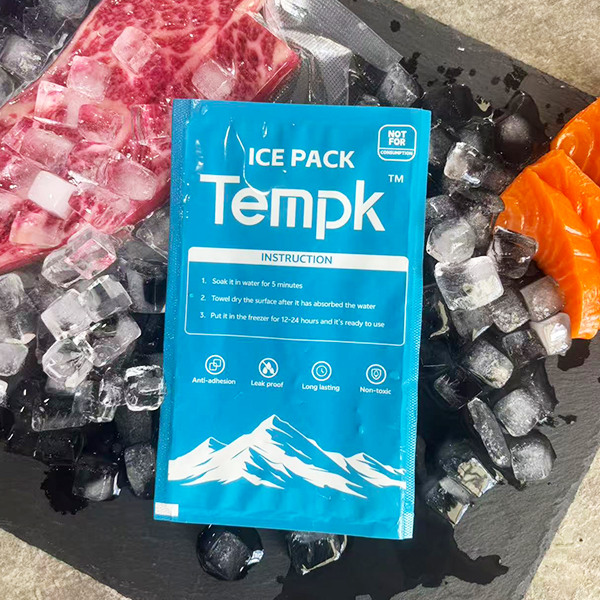
Una lámina de hidrato comienza seca o compacta., absorbe agua, y esta congelado. No es dióxido de carbono sólido.. Sus variables de control son la captación de agua., drenaje, masa hidratada, congelación, integridad de la película o de la costura, y moderación. Un paquete de gel o PCM tiene diferente composición y comportamiento de fase.. Requerir una identidad material exacta para cada muestra.
Trate el preenfriamiento como un paso de liberación.
Inmediato, El preenfriamiento apropiado es uno de los controles más estrictos de la calidad de las flores.. La guía del USDA y la FAO explica que eliminar el calor del campo reduce la respiración y otros procesos de deterioro. El enfriamiento por aire forzado se utiliza con frecuencia para los cartones de flores porque puede hacer pasar aire frío a través de los racimos empaquetados..
Convierta el preenfriamiento en un paso de lanzamiento con registros definidos:
Método de enfriamiento aprobado para la especie.
Disposición de ventilación y apilamiento de cajas de cartón
Ubicación de muestreo de temperatura del producto
Objetivo y tolerancia
Hora de finalización
Tiempo máximo de puesta en escena antes del cierre definitivo
Acción cuando el producto no alcanza el objetivo
No utilices la temperatura de la hielera como sustituto de la temperatura de las flores.. Racimos densos, mangas, papel, y la geometría del cartón puede retrasar el centro. A remitente pasivo cargado de flores cálidas puede mostrar una condición mixta durante horas.
La excepción tropical debe seguir siendo visible. Un proceso creado para rosas puede dañar las flores de anturio o jengibre. En una envasadora multiproducto, codificación de colores, zonas de almacenamiento separadas, y las comprobaciones de separación de líneas pueden evitar que se utilice la receta incorrecta.
Las rejillas de ventilación crean un compromiso técnico. Aceleran el enfriamiento por aire forzado, pero pueden admitir el calor ambiental más tarde y eliminar el material estructural de la caja.. Un diseño puede colocar el cartón de flores ventilado dentro de un sobreenvase aislado., utilizar solapas que se puedan cerrar, o confiar en un transportista refrigerado. El estado elegido durante cada etapa de carril debe ser explícito.
hacer humedad, condensación, y controles separados de ventilación
La alta humedad relativa ayuda a limitar la pérdida de agua de las flores. El agua libre en los pétalos o en los tableros de fibra puede dañar la calidad y el embalaje.. La ventilación puede eliminar el calor de la respiración y el etileno, pero también puede aumentar la pérdida de humedad o la entrada de calor.. Una característica del material no puede optimizar las tres automáticamente.
Crear un mapa de humedad:
¿Por dónde entra el agua al sistema??
¿Los tallos se envían en agua?, gel, envoltura, o seco?
¿La lámina de hidrato está completamente drenada??
¿Dónde podría haber una fuga de refrigerante o acumularse agua derretida??
¿Qué superficies se enfrían lo suficiente como para que se produzca condensación??
¿Puede el líquido llegar a las cabezas de las flores?, costuras de cartón, etiquetas, o adhesivos?
¿Cómo se seca el paquete?, drenar, o absorber agua incidental?
Para rosas y otras flores sensibles a Botrytis, la temperatura estable y los pétalos secos son especialmente importantes. Película perforada, papel absorbente, y los revestimientos pueden controlar la pérdida de agua o la condensación, pero también influyen en el flujo de aire y la velocidad de enfriamiento.. Pruebe la combinación completa.
La ventilación tiene un cuarto significado si hay dióxido de carbono sólido presente.. La ventilación con hielo seco libera gas dióxido de carbono para evitar la acumulación de presión. La ventilación de las flores gestiona el entorno de las plantas.. El diseño debe satisfacer ambas funciones sin confundirlas..
La revisión del etileno debe identificar la sensibilidad del producto y las fuentes de ruta.. Las flores sensibles no deben compartir el almacenamiento incontrolado con productos maduros o desechos vegetales contaminados.. Las bajas temperaturas pueden reducir la producción de etileno y la sensibilidad de muchas flores., pero no puede justificar el enfriamiento de una especie tropical.
Ingeniero de barreras de contacto y restricciones de movimiento.
Las lesiones por frío a menudo comienzan en un punto de contacto.. Un paquete congelado que toca una funda puede enfriar un grupo de pétalos o tallos muy por debajo del promedio del cartón.. Un paquete suelto puede moverse después de pasar la estación de embalaje..
Una barrera confiable tiene:
Herramientas útiles para tomar decisiones
Comprueba los detalles antes de elegir el embalaje.
Estas herramientas rápidas pueden ayudarle a comparar el riesgo de la ruta, necesidades de dimensionamiento, opciones de refrigerante, y detalles del embalaje antes de solicitar una cotización.
Resistencia a la caída del material aislante
Revise la resistencia a caídas y los factores de manipulación antes de elegir materiales aislantes..
Comprobar resistenciaSelector de embalaje
Compare las opciones de embalaje aislado por producto, ruta, y necesidad de temperatura.
encontrar embalajeRevestimiento de caja & Dimensionamiento de la cubierta de paleta
Lógica de tamaño de revestimiento de cajas y cubiertas de paletas para proyectos de embalaje aislado.
Estimar el tamañoCobertura total de la posible zona de contacto.
Material y espesor conocidos
Posición fija después de golpes y vibraciones.
Suficiente resistencia mecánica en frío y mojado.
Sin bordes afilados que dañen las flores.
Compatibilidad con flujo de aire y carga útil utilizable
No especifique una distancia de separación universal. El rendimiento depende del estado y la masa del refrigerante., conductividad de barrera, carga de flores, duración, exposición ambiental, y geometría. Establecer el acuerdo mediante mapeo y pruebas..
El movimiento de las flores también merece un control específico del producto. Los tallos largos pueden deslizarse longitudinalmente. Las cabezas pueden golpear el extremo del cartón. Las espádices pueden perforar las espatas vecinas de anthurium. Los picos verticales pueden curvarse si se mantienen horizontalmente bajo ciertas condiciones.. El transportista debe sujetar el producto sin comprimir los pétalos ni bloquear el preenfriamiento..
El refrigerante cambia la carga mecánica.. Una mochila rígida puede actuar como un impactador. Las sábanas hidratadas pueden volverse pesadas y flexibles.. Un panel PCM puede consumir espacio en las paredes laterales y empujar los racimos hacia adentro. Utilice componentes comerciales finales durante las pruebas de distribución..
Solicite al fabricante un archivo de reclamo a evidencia
En lugar de recopilar certificados desconectados, crear un registro de reclamaciones. Cada reclamo debe nombrar su alcance., evidencia, y limitación.
Ejemplos:
Afirmar: el paquete es resistente a fugas. La evidencia debe identificar la formulación., película, sello, preparación, método de prueba, acondicionamiento, y criterios de aceptación. Es posible que una prueba de sellado a temperatura ambiente no represente un producto congelado., paquete vibrado.
Afirmar: el cargador mantiene la temperatura. La evidencia debe identificar el rango, perfil ambiental, definición de duración, temperatura inicial del producto, carga útil, refrigerante, ubicaciones de sensores, y huellas completas.
Afirmar: la caja protege las flores. La evidencia debe definir los criterios de daño físico., carga, orientación, compresión, choque, vibración, condición de humedad, e inspección posterior a la prueba.
Afirmar: el producto es reutilizable. La evidencia debe definir la limpieza., el secado, inspección, condicionamiento repetido, criterios de jubilación, y el número de ciclos realmente evaluados. No inferir reutilización indefinida.
Afirmar: el diseño es sostenible. La evidencia puede incluir masa de material verificada., contenido, reutilizar resultados, cubo, contexto de reciclabilidad, o reducción medida del daño a las flores. Evite afirmaciones amplias que no tengan límites del sistema.
El archivo también debe contener dibujos., lista de materiales, información de seguridad, clasificación de transporte, instrucciones de preparación, características críticas de producción, trazabilidad del lote, y contactos de control de cambios.
Calificar temperatura y protección física juntas
Un programa de calificación sólido utiliza la configuración comercial prevista y criterios de aceptación predeterminados..
Los desafíos térmicos deben incluir perfiles ambientales cálidos y fríos representativos., cargas florales mínimas y máximas, temperatura especificada del producto en la carga, preparación de refrigerante, mapas de sensores completos, y duración justificada. ISTA 7E puede proporcionar perfiles térmicos para paquetes; los datos de carril pueden soportar desafíos adicionales o diferentes.
Las pruebas físicas deben reflejar el modo de distribución.. ISTA 3A está diseñado para envíos de paquetes individuales y evalúa la respuesta del producto empaquetado a los peligros generales de los paquetes.. ASTM D4169 ofrece un enfoque estructurado para el desempeño de la unidad de envío. Paleta, carga aérea, camión, y los sistemas de entrega local pueden requerir otros procedimientos. Las normas proporcionan métodos, no límites de calidad de las flores.
La secuencia importa. Un evento de compresión o vibración puede mover el refrigerante antes de la exposición térmica.. La alta humedad puede debilitar el tablero de fibra antes de apilarlo.. En cambio, Los componentes profundamente acondicionados pueden volverse quebradizos ante una caída.. Elija una secuencia que represente la ruta o evalúe explícitamente las interacciones.
Definir controles de flores inmediatos y retrasados:
Temperatura en cada ubicación mapeada
Roto, doblado, o tallos desplazados
Moretones en pétalos y brácteas
Punción, fricción, y daños en la manga
Mojada, condensación, y ablandamiento de cartón
Síntomas de escalofrío o congelamiento después de que las flores vuelven a su condición de exhibición
Comportamiento de apertura e hidratación bajo método de calidad aprobado por el comprador.
No inventes una promesa universal de vida en florero. Si el rendimiento del jarrón es parte de la aceptación, utilizar un control, Protocolo apropiado para cada especie y establecer sus limitaciones..
Ejemplo práctico: escalando tres recetas de exportación
Imaginemos que un exportador vende rosas., anturios tropicales, y cajas de eventos mixtas. Adquisiciones quiere un refrigerante personalizado para simplificar los pedidos.
Los pasaportes florales demuestran que una receta térmica no sería segura. A las rosas se les asigna un proceso de casi congelación con preenfriamiento rápido por aire forzado. Los anturios reciben una condición más cálida, aislamiento del aire frío de carga mixta, y protección individual contra pinchazos. Se revisan cajas de eventos mixtos composición por composición; Los ramos incompatibles se rediseñan o se envían con un servicio más corto..
El fabricante propone una lámina de hidrato para rosas y una revestimiento aislado sin refrigerante congelado para anturios. El nombre del producto de la hoja contiene "hielo seco,"Pero su especificación confirma que se activa con agua y no contiene dióxido de carbono sólido.. El exportador define la masa de hidratación., tiempo de drenaje, disposición del congelador, y un canal lateral restringido.
La calificación encuentra que la caja de cartón rosa pasa un perfil cálido cuando está llena pero se vuelve demasiado fría al lado de la hoja con una carga mínima.. Se evalúan una barrera y una configuración de refrigerante inferior., seguido de repetidas pruebas térmicas y de vibración.. Para anturios, Las pruebas se centran en la exposición externa al frío., fricción, y pinchar. La receta para eventos mixtos se publica solo para combinaciones de flores aprobadas..
En la línea de juicio, Los trabajadores confunden dos transatlánticos similares.. El exportador añade la identificación de la pieza., puesta en escena separada, y un escaneo contra la receta. Las especificaciones de producción y la notificación de cambios se agregan al acuerdo de compra..
El ejemplo es hipotético.. Muestra que la estandarización puede provenir de un sistema de control compartido incluso cuando los paquetes físicos difieren..
Convierta la muestra exitosa en un acuerdo de fabricación
Aprobar dibujos y especificaciones para características críticas para el rendimiento.. Dependiendo del sistema, estos pueden incluir:
Formulación de refrigerante o calidad del material.
Masa seca y preparada
Película, costuras, tapa, o cierre
Método de acondicionamiento y comportamiento de fases.
Material de aislamiento y geometría
Espesor y cobertura de la barrera.
Cartón y comportamiento frente a la humedad
Dimensiones y ubicación de la ventilación
Dimensiones exteriores e interiores utilizables.
Imprimir, etiqueta, y ubicación del código de lote
Definir controles de muestra a producción. Una muestra hecha a mano puede diferir de una troquelada., termosellado, o pieza comercial moldeada. Revisar las primeras unidades de producción comparándolas con medidas aprobadas y criterios funcionales..
El control de cambios debe cubrir la materia prima., formulación, proveedor, equipo, estampación, configuración del proceso, dimensiones, sitio de producción, y cambios en los métodos de prueba que pueden afectar el rendimiento. El fabricante debe notificar antes de la implementación cuando el acuerdo así lo requiera.. Luego, el comprador documenta si no se realizó ninguna acción., verificación limitada, o la recalificación es apropiada.
Utilice los datos de quejas y seguimiento como retroalimentación. Excursiones de tendencia por ruta., estación, envasador, lote de componentes, carga útil, y ubicación del fallo. Una tendencia creciente hacia el lado cálido puede indicar una puesta en escena o un aislamiento; una tendencia fría localizada puede indicar un condicionamiento o un movimiento de barrera; El aplastamiento puede indicar humedad., apilado, o variación del tablero.
Requisitos de transporte aéreo cuando el refrigerante es hielo seco real
El dióxido de carbono sólido requiere una revisión separada para mercancías peligrosas. Los criterios de aceptación actuales de la IATA utilizan la identificación ONU 1845 y los nombres de envío “Dióxido de carbono, sólido” o “Hielo seco”. El paquete debe soltar gas.. Información de cantidad neta aplicable, marcas, etiquetas, documentación, aceptación del transportista, límites de aeronaves, Variaciones del operador, y se deben verificar los requisitos nacionales para el envío..
El personal también necesita procedimientos seguros de almacenamiento y manipulación.. El dióxido de carbono puede acumularse en espacios mal ventilados, y el hielo seco puede causar congelación. Una calificación de calidad de las flores no reemplaza los controles de mercancías peligrosas o de seguridad en el lugar de trabajo..
Si el pack propuesto es una lámina de polímero hidratado, No aplique las normas sobre hielo seco únicamente por su nombre comercial.. Obtener la clasificación real de seguridad y transporte.. Si el sistema contiene hielo seco común, no lo escondas detrás del término genérico “paquete de enfriamiento."
Preguntas frecuentes
¿Cuál es el primer documento que debe enviar un fabricante de envases de flores??
Enviar un resumen de especies y rutas.: nombres de flores y madurez, condiciones de preenfriamiento y transporte aprobadas, sensibilidad al frío y al etileno, estilo de envío seco o húmedo, dimensiones de la caja y la carga útil, carga mínima y máxima, traspasos, duración prevista más retraso, escucha, y criterios de daño. Solicite al proveedor que identifique el refrigerante y proponga una configuración completa.
¿Puede un tiempo de espera prolongado compensar un preenfriamiento deficiente??
No confiable. Un cargador pasivo generalmente ralentiza la transferencia de calor.; Es posible que no elimine el calor del campo de manera uniforme en zonas densas., flores cálidas. El refrigerante extra congelado puede crear congelación local mientras el centro permanece caliente. Trate el preenfriamiento como un paso de liberación controlada y pruebe el paquete desde su temperatura inicial de producto especificada..
¿Deberían los envases de flores maximizar la humedad relativa??
La alta humedad relativa a menudo reduce la pérdida de agua, pero el agua libre y la condensación no controladas pueden promover enfermedades y debilitar el embalaje.. El diseño correcto equilibra la retención de humedad, ventilación, y manejo de líquidos para la especie y ruta.. Inspeccionar el pétalo real, manga, transatlántico, y humectación del cartón durante la calificación.
¿Es el dióxido de carbono sólido adecuado para las flores tropicales??
Es difícil de justificar porque las flores tropicales pueden sufrir daños por debajo de los 10°C, mientras que el hielo seco es mucho más frío.. Un sistema aislado especializado necesitaría evidencia sólida de que la zona de flores nunca se acerca al umbral de enfriamiento y que se cumplen todos los controles de liberación y transporte de gas.. El aislamiento sin refrigerante congelado puede ser más apropiado para algunos riesgos de carga mixta fría.
¿Cómo se debe probar la carga útil mínima??
Utilice la carga de flores comercial más pequeña permitida, con su control de vacío real, mangas, barrera, refrigerante, y posición del registrador. Una carga ligera puede enfriarse más rápido, moverse más, o dejar el refrigerante más cerca de las flores.. Compárelo con la carga máxima según perfiles cálidos y fríos relevantes y secuencias de manipulación física..
¿Qué cambios deberían desencadenar una revisión del embalaje??
Revisar los cambios en la formulación del refrigerante., película, hidratación, llenar masa, grado PCM, aislamiento, divisor, cartón, patrón de ventilación, dimensiones, cierre, proceso o sitio de producción, carga útil, ruta, preenfriamiento, y monitoreo. Utilice una evaluación de riesgos documentada para decidir si se deben realizar verificaciones de especificaciones., pruebas limitadas, o se necesita una recalificación completa.
¿Puede un fabricante garantizar la vida útil del florero??
Una garantía universal sería inapropiada. El rendimiento del jarrón depende de la especie., cultivar, madurez, condiciones previas a la cosecha, tratos, historial de temperatura, calidad del agua, manejo, y atención al por menor. Un fabricante puede respaldar una prueba de paquete definida; El propietario de la flor debe establecer y verificar cualquier método de vida en florero y reclamar.
Fuente del sistema de control, luego seleccione los componentes
El transporte confiable de flores proviene de una cadena de controles alineados: un pasaporte de especie, reloj de carril, liberación de preenfriamiento, refrigerante identificado, plan de humedad y ventilación, embalaje restringido, calificación relevante para la ruta, operadores capacitados, escucha, recepción, y control de cambios del fabricante.
Ese sistema de control puede utilizar una lámina de hidratos., gel, PCM, Hielo seco ordinario en una rara arquitectura justificada., o sin refrigerante suplementario. Se vuelve defendible sólo cuando la configuración final protege la flor real y puede reproducirse a escala de producción..
Acerca de Tempk
Tempk proporciona hidratar bolsas de hielo seco, bolsas de hielo en gel, bolsas aisladas y cajas, y embalaje personalizado con control de temperatura. Podemos revisar la flor indicada por el comprador., ruta, formato de refrigerante, carga útil utilizable, y ejemplos de requisitos para enmarcar una discusión sobre embalaje. Porque las especies de flores y las condiciones de distribución difieren, La idoneidad final debe permanecer ligada al informe de manejo del comprador., pruebas representativas, controles de línea, y proceso de gestión del cambio. Evitamos tratar un refrigerante suelto como prueba de una protección total de las flores..
Envía a Tempk tus pasaportes florales, reloj de carril, cargar configuraciones, y evidencia de prueba requerida para comparar muestras prácticas de empaques antes del abastecimiento de producción.