A Six-Gate Plan for Buying Candy Cold Packs
A manufacturer dry ice pack for candy logistics should pass a sequence of evidence gates before a buyer approves bulk supply. The process begins by identifying what the product actually contains, then defines the candy and lane, designs the complete packout, verifies the manufacturer and packing operation, and releases only the tested configuration. This prevents a common procurement error: comparing unit prices while the material identity, exposición de verano, separación de alimentos, conditioning work, peso dimensional, and acceptance criteria remain undefined.
Start with a stop-or-release rule
The procurement team should agree that a promising sample is not a released shipping system. Each gate needs an owner, evidencia requerida, decisión, and documented exception process.
| Puerta | Decisión | Evidencia mínima | Condición de parada |
|---|---|---|---|
| 1. Identidad | Do we understand the cooling component? | Medio, construcción, masa, dimensiones, acondicionamiento, safety and transport status | “Dry ice pack” remains the only material description |
| 2. Product envelope | Do we know what the candy can tolerate? | Product-family limits, modos de falla, condición inicial, primary-package requirements | A universal candy temperature is copied from a brochure |
| 3. Lane and economics | Is the commercial route defined? | Perfil estacional, duración, demora, servicio, manejo, final dimensions and cost model | The request specifies only “two days” and candy weight |
| 4. Diseño de embalaje | Is there a reproducible complete system? | Dibujo, lista de materiales, colocación de refrigerante, barrera contra la humedad, cierre, plan de sensores | Coolant count is stated without position or condition |
| 5. Qualification and scale | Does evidence represent production and distribution? | Thermal and physical tests, pilotos, full-batch operations trial, separación de alimentos | Only an empty-box or bench-top demonstration is available |
| 6. Release and control | Can both parties hold the approved state? | Especificación, acceptance plan, trazabilidad, aviso de cambio, capacity and nonconformance process | Supplier changes can occur without review |
The gate record should distinguish a conditional pass from a full pass. Por ejemplo, a prototype may pass a summer thermal screen but remain conditional until vibration and destination warm-up are assessed. Procurement should not convert that conditional result into an unrestricted purchase specification.
Assign cross-functional owners. Product quality defines candy limits and investigates bloom. Packaging engineering owns system design. Operations proves conditioning and pack-line execution. Regulatory or food-safety personnel review sanitary responsibilities, estado de contacto, y requisitos del mercado. Logistics defines actual lanes and carrier constraints. Procurement evaluates capacity, términos comerciales, y control de cambios. The manufacturer provides controlled components and declared assumptions.
Gates 1 y 2: identify coolant and candy limits
Puerta 1: establish exact identity and intended function
The keyword “dry ice pack” can point to two fundamentally different categories.
El verdadero hielo seco es dióxido de carbono sólido. It changes directly from solid to gas at about −78°C under atmospheric conditions. The gas expansion means the package must vent; a hermetically sealed enclosure is unsafe. Workers need controls for cold contact and carbon-dioxide accumulation. Materials and candy close to the dry ice can experience extremely low local temperatures. Current transport and carrier rules must be checked, especially for air service, where the program may need UN1845 identification, nombre de envío adecuado, masa neta de hielo seco, package marks, and operator-specific acceptance.
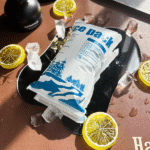
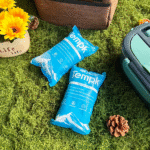
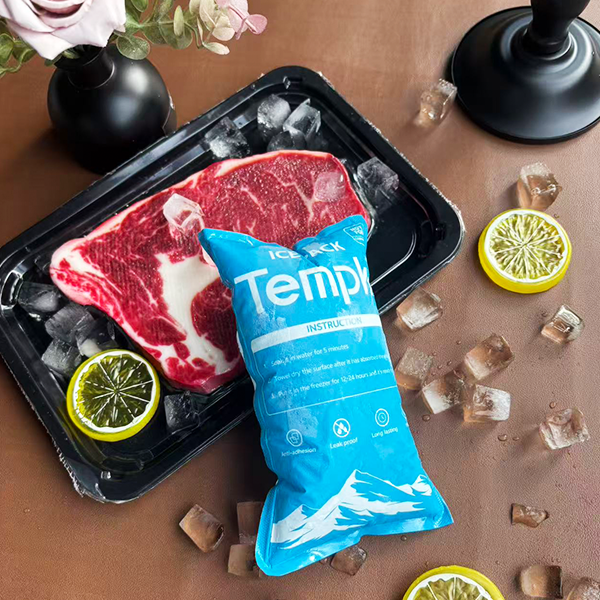
A hidratar la bolsa de hielo seco is a water-activated cold sheet. It is supplied dry, absorbs water into internal cells, y se congela antes de su uso. It contains no solid carbon dioxide merely because “dry ice” appears in its commercial name. It does not inherit UN1845 requirements on that name alone. Its operational risks are different: variable activation, insufficient draining, carga del congelador, local ice-temperature contact, fuga, and wetting of corrugated or gift packaging.
Other candidates should remain in the decision:
prefilled paquetes de gel, which remove hydration work but use more inbound and freezer space;
rígido ladrillos de hielo, which provide fixed geometry but can add pressure and reverse-logistics needs;
formulated phase-change packs, which may buffer a candy-specific range;
insulation-only packouts for short controlled lanes;
logistics changes such as faster service, shipment-day restrictions, or controlled pickup.
Require the manufacturer to complete an identity sheet. It should state product name and code, actual medium category, construcción de película o carcasa, absorbent or fill category, dimensiones y tolerancias, dry and ready-to-pack mass, seal or cell pattern, almacenamiento, activation and conditioning method, intended contact status, marcado de lote, recuento de casos, y criterios de rechazo.
For solid carbon dioxide, the sheet becomes a route and safety dossier rather than an ordinary reusable component specification. Define supplier location, received form, expected handling loss, storage method, ventilación, peso, equipo de proteccion, tiempo de embalaje, diseño de ventilación, marcas, documentación, aprobación del transportista, y procedimiento de emergencia.
Al final de la puerta 1, everyone should be able to answer, en lenguaje sencillo, “What absorbs the heat, what phase change occurs, how cold can the interface become, and what must the packer do before shipment?” If the answer depends on a trade name, detener.
Puerta 2: approve the candy and moisture envelope
Create product families only when their risks are genuinely similar. A grouping based on retail department or box size is not enough.
Para cada familia, record formulation category, chocolate type, revestimiento, centro, inclusiones, primary wrap, cartón al por menor, geometría, masa, espacio para la cabeza, and pack orientation. Define the approved starting condition and limits for product temperature, exposición a la humedad, presión, vibración, y recuperación. List observable release criteria.
A practical defect register may include:
| Defecto | Questions for the product owner | Logistics control to evaluate |
|---|---|---|
| Melting or deformation | Which component softens first: caparazón, centro, inclusion, or adhesive? | Exposición al calor, condición inicial del producto, aislamiento, servicio, coolant buffering |
| Floración gorda | Was temper stable? Can fats migrate from nuts or fillings? What cycling matters? | Reduce qualified temperature cycling; inspect after recovery; preserve production records |
| Floración de azúcar | Can the primary pack admit moisture? How is cold product opened at destination? | Barrera de humedad, coolant drainage, dew-point-aware warm-up, receiver instruction |
| Sticky or set gummies | Is the product sensitive to heat, humedad, frío, o presión? | Product-specific buffering, diseño del separador, mixed-assortment rules |
| Cracks and scuffs | Are shells brittle when cold? Can packs or dividers move? | Fixed coolant pocket, amortiguación, pruebas de distribución, controlled headspace |
| Wet or distorted gift box | Can condensation or leakage reach paperboard? | Forro sellado, separación física, drain standard, recovery procedure |
| Odor or taint | que peliculas, llena, cargoes, or cleaning chemicals are relevant? | Material review, sealed primary pack, vehicle and packing-area sanitation |
Chocolate bloom deserves two lines because the corrective action differs. Sugar bloom can follow when water condenses on chocolate, dissolves surface sugar, and then evaporates. Fat bloom involves fat crystal behavior and may relate to temper, historial de temperatura, or migration of fats from a filling or inclusion. A white surface is not a complete diagnosis.
Use dew point as an operational concept. When cold product or packaging is below the dew point of surrounding air, water can condense. The system may need an intact primary wrap, revestimiento interior sellado, fixed separation from coolant, controlled warm-up while the liner stays closed, and instructions about when to open. More coolant is not automatically safer; it can increase the temperature difference that drives condensation.
Food safety and commercial quality should be labeled correctly. En los Estados Unidos, sanitary-transport requirements apply to covered activities and address suitable equipment, operaciones sanitarias, archivos, and certain training responsibilities. Adequate temperature control is required where safety depends on it. Many candy-cooling specifications are intended to protect quality rather than meet one universal food-safety temperature. Filled or specially handled products can have different assessments. The responsible regulatory and quality teams should determine coverage and controls.
Puerta 2 passes only when the buyer owns a product-specific envelope and inspection method. The cold-pack manufacturer may help design to those limits, but it should not invent them.
Puerta 3: define the lane and total delivered economics
Turn the route into an engineering and purchasing brief:
origen, destination group, y nivel de servicio;
order cutoff, tiempo de embalaje, levantar, and promised delivery;
actual transit distribution, not only the nominal service;
fines de semana, vacaciones, conexiones perdidas, and reship rules;
seasonal origin and destination conditions;
hot hub, vehículo, loading-dock, armario, or porch exposure;
external cold exposure in winter;
orientación, gotas, vibración, compresión, y apilamiento;
receiver availability and warm-up practice;
mode and carrier restrictions for solid carbon dioxide.
An applicable recognized parcel thermal profile can create a consistent laboratory challenge. Ista 7e, Por ejemplo, provides heat and cold exposure profiles for parcel embalaje termico. The team should still justify the chosen profile against its lanes and perform real shipments. Un perfil estándar es una referencia, no es una promesa universal.
Build at least a base summer profile, a justified delay profile, and a winter or cold-transition assessment where relevant. If the company ships to a wide geography, segment lanes into a small number of validated bands. Define who assigns the band and what happens when conditions fall outside it.
Procurement should compare total delivered cost at this gate, even before the final design:
Materiales: refrigerante, aislamiento, caja exterior, revestimiento de humedad, separadores, relleno de vacíos, cinta, etiquetas, impresión, estampación, y sensores.
Preparación: agua de hidratación, soak and drain labor, energía del congelador, bastidores, puesta en escena, templado, dry-ice loss, equipo de proteccion, inspección, y unidades rechazadas.
Fulfillment: cosecha, asamblea, line space, capacitación, tiempo de ciclo, pack errors, and seasonal overtime.
Transporte: actual weight, peso dimensional, nivel de servicio, manejo especial, oversize conditions, dry-ice acceptance, and destination surcharges under current tariffs.
Falla: pérdida de producto, reemplazos, reembolso, second freight movement, servicio al cliente, desecho, and brand harm.
Recuperación: return shipment, limpieza, el secado, inspección, activos perdidos, redacción, and retirement where reuse is intended.
Dimensional weight must use the final external carton and the carrier’s current rule for the selected service. Do not freeze a historic divisor into a multiyear business case. A thick liner can reduce coolant demand but increase billed volume. A faster service may support a smaller carton. A low-cost cold pack may require more freezer labor. Puerta 3 should preserve these interactions rather than rank components on unit price alone.
La sostenibilidad utiliza el mismo límite del sistema. Compare a successful delivery of acceptable candy. incluir embalaje, activación, cold energy, outbound volume, daño, reemplazo, logística inversa, and actual end-of-life options. A dry hydration sheet may save inbound space; a gel pack may reduce activation errors; a brick may work in a closed return loop. None earns a universal environmental claim without evidence and a declared boundary.
Puerta 4: design a reproducible packout
A complete packout specification names every layer and position. It should contain:
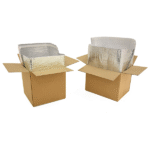
outer carton code and closure;
material aislante, espesor, articulaciones, y ajuste de la tapa;
inner moisture liner and seal method;
coolant code, cantidad, condición, orientación, and pocket;
physical separators and minimum clearance from candy;
candy family, retail-case pattern, y condición inicial;
Herramientas útiles para tomar decisiones
Comprueba los detalles antes de elegir el embalaje.
Estas herramientas rápidas pueden ayudarle a comparar el riesgo de la ruta, necesidades de dimensionamiento, opciones de refrigerante, y detalles del embalaje antes de solicitar una cotización.
Comprobador de riesgos de ruta
Revise las condiciones del carril antes de seleccionar el embalaje para requisitos operativos reales..
Comprobar riesgo de rutaRevestimiento de caja & Dimensionamiento de la cubierta de paleta
Lógica de tamaño de revestimiento de cajas y cubiertas de paletas para proyectos de embalaje aislado.
Estimar el tamañoSelector de embalaje
Compare las opciones de embalaje aislado por producto, ruta, y necesidad de temperatura.
encontrar embalajerelleno de vacíos, divisores, y control de movimiento;
etiquetas, marcas, posiciones de los sensores, and gross dimensions.
Prototype more than one architecture. Compare top-only, lado, or distributed pack placement when relevant. Include buffered contact and no-direct-contact versions. A coolant that performs well above a dense chocolate load may create a cold zone when wrapped around a light gift assortment. Design around heat entry and product risk, not symmetry.
Moisture barriers need their own verification. Check primary-wrap seals, secondary-liner closure, cold flexibility, punción, olor, ink transfer, and water-vapor protection. Keep water-based packs outside the primary food package and in a fixed compartment. Test foreseeable leakage and pack movement. “Non-toxic” fill is not permission for uncontrolled direct food contact.
Food-contact statements should identify the exact material and intended use. Packaging substances can include films, revestimientos, adhesivos, colorantes, y otros componentes. If a coolant or separator might directly or incidentally contact candy, the buyer needs documentation relevant to that contact type, alimento, temperatura, duración, y mercado. The safest ordinary arrangement is intact primary food packaging plus maintained separation.
Conditioning is part of the architecture. For hydrate sheets, define water quality as appropriate, método de activación, acceptable ready mass or fill, tiempo de drenaje, patrón de rejilla, carga del congelador, phase-state check, allowed tempering, tiempo de puesta en escena, y rechazo. For gel and phase-change packs, define freezer arrangement, punto final, condición de la superficie, cycling or age limits where supported, y puesta en escena. For solid carbon dioxide, define received form, packed net mass, provisión por pérdidas, colocación, gas vent, and pack-line controls.
The visual instruction should show the final sequence and common errors. Barriers cannot be optional, and packers should not improvise when a product case is shorter or an assortment changes. The order-management or warehouse system should map each qualified candy and lane group to an exact packout code.
Puerta 5: qualify the system and prove scale
Qualification should answer three different questions: Does the component meet its specification? Does the packout protect the candy? Can normal operations reproduce it?
Begin with incoming component checks for identity, dimensiones, masa, sello, fuga, olor, activación, freeze response, imprimir, código de lote, y recuento de cajas. Then instrument the complete packout. Place calibrated sensors at likely warm locations, the payload center, and cold interfaces near coolant. Document accuracy, intervalo, adjunto, and any product simulant.
Use actual candy or a justified equivalent for screening, followed by representative saleable product for release. An empty box does not reproduce payload heat capacity, flujo de aire, geometría, presión del paquete, o comportamiento de la humedad.
Thermal exposure should include the lane profile and delay. Physical testing should address distribution hazards because drops, vibración, compresión, and inversion can move coolant, puncture a pack, open an insulation joint, or scuff candy. Inspeccionar:
product temperatures against the approved envelope;
derretido, deformed, agrietado, raspado, pegajoso, or set pieces;
shell and center condition for filled candy;
sugar and fat bloom indicators after recovery;
primary seal and retail-carton integrity;
mojada, condensación, fuga, y olor;
posición del separador, insulation joints, y cierre exterior.
Then conduct instrumented lane pilots through the intended service. Include challenging destinations and realistic receivers. A parcel that passes when collected immediately may fail after a porch dwell. A cold arrival may appear acceptable before condensation develops. Use a defined warm-up and delayed inspection.
Scale testing is mandatory for hydrate and frozen components. Load the freezer as it will be loaded during peak production. Check center and edge racks. Time soaking, drenaje, congelación, puesta en escena, cosecha, y embalaje. Measure water on the floor, wet corrugated, operator reach, errores, y rendimiento. Confirm that temporary staff can follow the work instruction.
Manufacturer capability is part of Gate 5. Review forecast process, sample and production lead times, normal and peak capacity, controles de materias primas, trazabilidad del lote, inspección, nonconformance response, business continuity, almacenamiento, recuento de embalaje, and pallet configuration. Treat order minimum and customization as supplier-specific commercial facts to confirm, afirmaciones no genéricas.
Hypothetical filled-chocolate release
A candy company wants to ship dark-chocolate shells with a soft nut filling on a two- to three-day summer parcel lane. The current large shipper uses gel packs against two retail-box faces. Complaints include edge cracking, pale surfaces, and high freight cost.
Puerta 1 confirms that a proposed “capa de hielo seco” is a water-activated hydrate pack, no dióxido de carbono. The company retains a phase-change pack and the current gel as comparison candidates.
Puerta 2 separates shell cracking, floración de azúcar, y flor gorda. Quality confirms the filling can contribute to fat migration and defines product-specific limits. Packaging finds that paquetes fríos sometimes press against the gift box. Receiving tests show condensation when the inner liner is opened immediately in humid air.
Puerta 3 maps a severe summer lane and a one-day delay. Finance finds that the current carton often bills by dimensional weight. Faster service on selected zones becomes a candidate because it may allow a smaller packout.
Puerta 4 creates three systems with fixed coolant channels, separadores secos, a sealed inner liner, and no direct pack-to-retail-box contact. The packout drawing sets product orientation and sensor positions.
Puerta 5 tests heat exposure, demora, vibración, gota, and warm-up. One design is thermally acceptable but makes the shell brittle at a side position. Another uses a smaller carton and buffered phase-change pack; it passes the defined conditions and lowers billed volume on modeled routes. A hydrate version also passes but needs more drain and freezer capacity than the facility can supply during the promotion.
The team selects the smaller phase-change configuration for the launch and retains the hydrate design as a possible future lane option after operations investment. The decision is based on candy condition, escala, and delivered cost—not a claim that one coolant is always superior.
Puerta 6: liberar, monitor, and control change
The release package should contain:
approved manufacturer and component code;
controlled specification and reference sample where useful;
packout drawing and bill of materials;
candy and lane applicability matrix;
conditioning and packing instruction;
qualification and pilot reports;
product and package acceptance criteria;
incoming and in-process inspection plan;
lot traceability and record-retention rules;
no conformidad, queja, and corrective-action process;
manufacturer change-notification agreement;
requalification decision tree;
capacity and approved-substitution plan.
Define critical changes broadly enough to protect system evidence: fill or absorbent, film resin or gauge, caparazón, tinta, adhesivo, patrón de sello, dimensiones, masa, equipo, process parameter, raw-material source, sitio de fabricación, aislamiento, barrera, caja de cartón, candy formulation, paquete primario, servicio, o ruta. Not every change requires a full test, but every critical change requires documented assessment.
Monitor operational leading indicators such as ready-to-pack mass, freezer endpoint, tiempo de puesta en escena, pack placement errors, cartones mojados, and component leakage. Track outcome indicators by product, carril, and packout code: melt or deformation, grieta, arrastrar, pegajosidad, bloom classification, condensación, el tiempo de entrega, reemplazo, actual and dimensional weight, y costo.
Use complaint photos cautiously. A pale chocolate surface cannot by itself distinguish sugar bloom from fat bloom. Retrieve lot, temperamento, formulación, maderero, ruta, humedad, y recibir evidencia. Correct the mechanism rather than simply adding another frozen pack.
Define a seasonal review before the hottest and coldest shipping periods. Confirmar las reglas del transportista, rate logic, pack materials, manufacturer capacity, freezer or hydration throughput, instrucciones de trabajo, sensores, alternativas aprobadas, and customer guidance. Solid-carbon-dioxide requirements should be rechecked against current mode and carrier acceptance.
The final release statement should be narrow: the named packout protects the named candy family under the tested conditions and acceptance criteria. It should not promise a universal duration, cantidad, or temperature for all candy shipments.
Preguntas frecuentes
What is the first document to request from a manufacturer?
Request a controlled product specification that identifies the actual medium and construction, dimensiones, ready mass, acondicionamiento, intended contact status, marcado de lote, almacenamiento, y criterios de aceptación. Then request system evidence relevant to your application, not just a component claim.
Can a hydrate cold sheet replace solid dry ice one for one?
No. Water ice and solid carbon dioxide have different phase behavior, interface temperatures, gas production, cambio masivo, controles de seguridad, and transport status. Redesign and qualify the whole packout.
What should stop a bulk purchase?
Stop if material identity is vague, candy limits are missing, performance is based on an empty box, coolant touches retail packaging without control, production conditioning has not been demonstrated, critical changes require no notice, or cost ignores final freight dimensions.
How can buyers prevent sugar bloom after delivery?
Use effective primary and secondary moisture barriers, isolate wet or frozen components, avoid unnecessarily cold product surfaces, and validate a closed-liner warm-up procedure for the destination humidity. Investigate actual bloom rather than treating every pale surface the same.
Does a food-contact statement eliminate the need for separation?
No. Documentation must match the material and intended contact condition. Physical separation also protects against liquid, presión, olor, and package damage. An intact primary package and fixed coolant pocket remain prudent controls.
When is requalification needed?
Use a documented risk assessment. Changes to thermal medium, masa, dimensiones, película, sello, acondicionamiento, aislamiento, caja, barrera, dulce, paquete primario, carril, servicio, or facility can affect performance. Significant changes usually require testing proportionate to their impact.
Acerca de Tempk
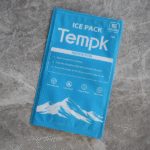
Tempk supplies water-activated hydrate cold sheets, paquetes de gel, ladrillos de hielo, cajas aisladas, and related temperature-control packaging components. Tempk’s hydrate pack absorbs water and is frozen before use; no es dióxido de carbono sólido. Buyers can bring product limits, datos de carril, dimensiones del paquete, operations capacity, and volume forecasts to discuss appropriate sample formats and qualification inputs.
The procurement objective is a controlled system that protects the candy, stays dry and sanitary, can be built at peak volume, and has defensible delivered economics. The six-gate record makes that objective auditable from sample through change control.
CTA: Send Tempk your candy-family matrix, embalaje primario, lane and delay profile, dibujo de cartón, límites de calidad, pack-line capacity, pronóstico, and current claims data to begin a gated cold-pack evaluation.