A pharmaceutical 2–8°C packout test case is only useful when you read it as scoped evidence, not as a promise. Tempk’s published reference cases state a simple result — for example, a 2–8°C configuration that maintained its range for more than 50 hours under a 36°C ambient profile — and the real work is deciding whether your payload, caja, coolant and route match the case that produced that number. This article reads one published 2–8°C reference case the way a cold chain planner should: profile first, packout second, then ambient assumptions, evidencia registradora, receiving checks and the limitations you must close with your own sample testing.
What the reference case actually states
Tempk publishes its pharmaceutical packout reference tests on the Soluciones de envasado de cadena de frío farmacéutica. page. Two of them sit closest to an ordinary refrigerated lane:
- 2–8 ° C / 48h / ambiente alto. Resultado observado: maintained 2–8°C for more than 50 hours under a 36°C ambient profile. The page positions it for refrigerated medicines, vaccines and diagnostics facing hot-season road or express exposure.
- 2–8 ° C / 72h / ambiente alto. Resultado observado: maintained 2–8°C for more than 77 hours under a 35°C ambient profile. The page positions it for longer refrigerated lanes, ventanas de entrega de fin de semana o riesgo de tránsito en temporada cálida.
The page labels these as reference examples for packout selection, No es una garantía universal para cada carga útil o ruta.. Read the claim literally: this configuration, under the stated ambient profile, stayed in range for at least that long. It does not say that any 2–8°C box holds for 50 horas en verano.
Read the shipment profile before the number
The duration is the last thing to trust and the first thing to quote, so start with what the case assumes. A 2–8°C refrigerated profile carries two opposite risks: heat exposure and freezing injury. The same page lists the decision points a buyer is expected to confirm — 24h, 48h or 72h or longer hold time, and whether the lane faces hot-season or winter exposure.
Translate that into your own shipment before you compare anything:
- Alcance objetivo y regla de excursión: 2–8°C with a defined acceptance rule and a named release decision.
- Carga útil: real product or a simulated load of the same mass and volume.
- Temperatura inicial: product already conditioned to its storage range when it enters the packout.
- Planned transit and dwell: booked hours plus realistic delay, traspaso, customs and receiving.
If your lane is materially longer, hotter or colder than the case profile, the published number is a starting point for a design discussion — nothing more.
Packout components behind the result
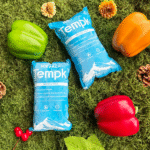
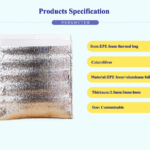
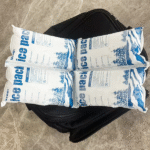
The site groups the recommended packout direction for a 2–8°C refrigerated lane as an cargador aislado — EPS, EPP or a caja más fresca — combined with paquetes de gel, Ladrillos PCM y capas separadoras.. Those four elements are what produced the published result, so they are the variables you must reproduce.
- Remitente: the thermal envelope that sets the base hold window.
- Medios de enfriamiento: conditioned gel packs and PCM bricks matched to the target range.
- Capas separadoras: the barrier that stops cold reaching the payload directly.
- Loading method: a fixed, repeatable order that every operator follows.
A result is only transferable if the shipper family, coolant type and coolant quantity travel with it.
Conditioning and separation are part of the evidence
The disclaimer on the page is explicit that performance depends on preconditioning and handling, not only on the bill of materials. Two packouts with identical components can land at different results if one coolant charge left the freezer fully solid and the other was conditioned and staged to a documented state. Separator placement matters the same way: cold that reaches a freeze-sensitive medicine too quickly can cause freezing injury even while the box is technically «in range» at the logger.
When you read a case, ask what conditioning the coolant received and how the payload chamber was built. If those details are not published for a case, treat the case as an indicative benchmark rather than a repeatable recipe.
Herramientas útiles para tomar decisiones
Comprueba los detalles antes de elegir el embalaje.
Estas herramientas rápidas pueden ayudarle a comparar el riesgo de la ruta, necesidades de dimensionamiento, opciones de refrigerante, y detalles del embalaje antes de solicitar una cotización.
Revestimiento de caja & Dimensionamiento de la cubierta de paleta
Lógica de tamaño de revestimiento de cajas y cubiertas de paletas para proyectos de embalaje aislado.
Estimar el tamañoGenerador de listas de verificación de cumplimiento
Cree una lista de verificación práctica para la revisión del embalaje, envío, y documentación.
Crear lista de verificaciónComprobador de riesgos de ruta
Revise las condiciones del carril antes de seleccionar el embalaje para requisitos operativos reales..
Comprobar riesgo de rutaAmbient profile versus route reality
The published cases are labelled with their ambient conditions — 36°C high ambient, 35°C high ambient — and that label is the most transferable part of the case. A declared ambient profile is a test condition; a route is a sequence of conditions. A parcel that passes through a warm vehicle, a sorting hub, an unshaded dock and a weekend dwell does not experience a constant 36°C.
Before you reuse a case, map the route assumptions it implies onto your own lane and screen the result with the comprobador de riesgo de ruta. Treat that screen as a planning-level view, not a qualification.
What a logger can and cannot show
A temperature logger inside the payload chamber shows the temperature history at one point in the packout. No lo hace, por sí mismo, show that the whole payload stayed in range, and it does not replace a test. What a logger contributes to a case reading is confirmation that the recorded trace matches the claimed profile and duration, and that the sensor sat in a position that represents payload risk rather than the air next to a coolant surface.
Practical evidence to look for: sensor identity and calibration status, posición del sensor, the recorded trace, and the raw data behind the summary. Where the case is published as a summary only, the raw trace is what your own sample test must produce.
Receiving checks when the parcel lands
A reference case protects nothing by itself; the receiving step is where the shipment is accepted or queried. A workable receiving check covers:
- The logger trace, downloaded and compared against the 2–8°C acceptance rule.
- Packout integrity — seal, cierre, coolant state and any visible moisture or condensation.
- Payload condition and the product’s own inspection requirements.
- A deviation note if the trace, kit or timing departs from the approved configuration.
Keep the trace with the shipment record so that the receiving decision is documented and comparable across lanes.
Limitations and what to confirm before bulk procurement
The published cases are reference examples, no es una garantía, and the page says why: final shipment performance depends on payload, tamaño de la caja, medios de enfriamiento, preacondicionamiento, perfil ambiental, retraso en la ruta, handling frequency and opening. That sentence is the checklist of everything your own test has to control.
Antes de comprometerte con el volumen, confirm that your configuration has been reproduced with your payload, el tamaño de tu caja, your coolant charge and conditioning, your ambient profile, your worst-case route delay and your handling and opening pattern — then lock the shipper SKU, cantidad de refrigerante, loading map and logger position in the specification. Tempk validation and packout testing guide describes the testing side of that work, y el embalaje personalizado de cadena de frío path covers turning a proven sample into a repeatable program.
Read every published case as the beginning of your evidence file: a defensible starting configuration, a stated ambient condition, and a duration that your own sample testing has to confirm.