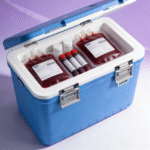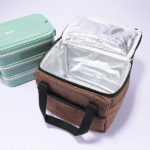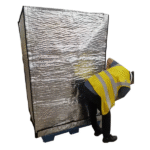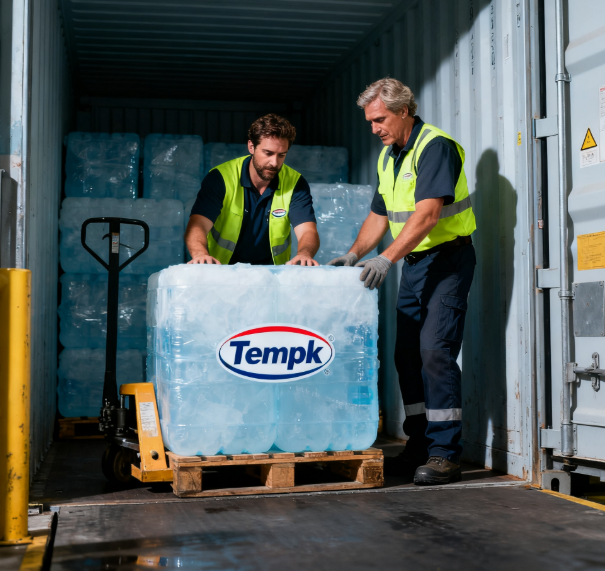
Pharmaceutical insulated embalaje de envío must be selected as part of a complete packout. El aislamiento ralentiza la transferencia de calor, but it does not define the product temperature range, supply refrigeration, prevent freezing or prove a hold time on its own. A reliable specification combines the insulated enclosure with the payload, refrigerante, acondicionamiento, separadores, cierre, sensor layout and ambient profile that will be tested.
This guide is for buyers comparing package formats and supplier evidence. It focuses on the engineering and qualification questions that should be answered before samples or routine orders are approved.
Define the thermal mission before comparing materials
Start with the approved product requirement and intended route. Record the target range, upper and lower limits, sensibilidad a la congelación, permitted exposure rules, carga útil mínima y máxima, condición inicial, total time from packout closure to unpacking and the seasonal conditions to be represented.
The required condition is product-specific. Guía de la OMS para el tiempo- and temperature-sensitive pharmaceutical products provides a distribution framework but notes that local legislation and regulations take precedence. Asimismo, EU Good Distribution Practice expects the defined transport conditions to protect product quality; it does not designate one material aislante or one universal package.
Compare package formats by function and trade-off
| Formato | Useful characteristics | Questions to resolve before selection |
|---|---|---|
| Insulated liner in a corrugated carton | Flexible sizing, flat storage and straightforward one-way distribution | Liner closure, costuras, manejo de la humedad, compresión, coolant contact and repeatability |
| Molded EPS shipper | Established thermal insulation, lightweight construction and many standard sizes | fragilidad, ruta de eliminación, tolerancia dimensional, payload fit and whether the tested density and wall geometry match production |
| Molded EPP container | Durable structure and potential suitability for reusable loops | Método de limpieza, logística de devolución, hinge and closure wear, dimensional drift and reuse inspection criteria |
| VIP-based shipper | High thermal resistance in a relatively thin wall | Panel edge losses, protección contra pinchazos, colocación del panel, volumen utilizable, inspection and replacement criteria |
| Bolsa térmica aislada | Convenient handling for short or controlled operations | Fuga de cierre, compresión, orientación, frecuencia de apertura, payload support and realistic exposure duration |
Material names are not performance grades. Two EPS boxes can differ in wall thickness, densidad, joints and internal geometry. Two VIP systems can differ in panel layout, edge bridging and protection. Ask for the exact bill of materials and drawing used in the test, then compare it with the production unit.
Separate external dimensions from usable payload space
External size affects freight and storage. Internal cavity size determines whether the product, refrigerante, separators and sensors can be packed without compression or unwanted contact. Usable payload volume is smaller than the empty internal volume once coolant and protective layers are installed.
For an RFQ, provide the primary-package dimensions, shipping orientation, unidades por transportista, payload mass and any required spacing. Ask the supplier to return a packout drawing that shows:
• Internal cavity dimensions and tolerances. • Product position and minimum clearance. • Coolant type, tamaño, cantidad y ubicación. • Separator or buffer layers. • Sensor positions. • Closure sequence and any void-fill material. • Gross packed dimensions and weight.
The drawing should be reviewed by the people who will pack the shipment. A concept that works in a chamber but is difficult to assemble consistently can fail as an operating process.
Integrate the coolant without creating a new risk
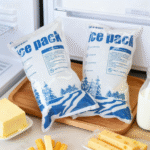
El contenedor aislado reduce el flujo de calor; the coolant manages the thermal load. paquetes de gel, bolsas de hielo a base de agua, materiales de cambio de fase y hielo seco behave differently and must be matched to the product and route. Coolant state and conditioning method matter as much as nominal formulation.
Para cargas útiles sensibles a la congelación, direct contact with frozen media can create local cold spots even when the average air temperature appears acceptable. Use a defined conditioning process, separation layers and sensor positions that can detect both warm and cold risk. Do not solve a warm-excursion concern simply by adding more frozen coolant without testing the effect on the payload zone.
Dry ice introduces additional hazards and transport requirements. Para envíos aéreos, confirm the current carrier, embalaje, ventilación, calificación, documentation and quantity rules. The IATA Temperature Control Regulations cover temperature-sensitive healthcare cargo, while dangerous-goods requirements and carrier variations must be reviewed separately where dry ice is used.
Qualify the completed shipping system
WHO defines a shipping system as all components of the completed package, including the outer container, ancillary packaging and temperature-stabilizing medium. Its technical guidance on qualifying passive shipping containers emphasizes a written user requirement and documented configuration, acondicionamiento, loading and monitor locations.
Herramientas útiles para tomar decisiones
Comprueba los detalles antes de elegir el embalaje.
Estas herramientas rápidas pueden ayudarle a comparar el riesgo de la ruta, necesidades de dimensionamiento, opciones de refrigerante, y detalles del embalaje antes de solicitar una cotización.
Referencia del material aislante
Compare opciones de materiales aislantes para diferentes necesidades de embalaje de la cadena de frío.
Comparar materialesGenerador de lista de cumplimiento
Cree una lista de verificación práctica para la revisión del embalaje, envío, y documentación.
Crear lista de verificaciónCalculadora de acumuladores de frío
Estimación de la cantidad de bolsas de hielo en gel para envíos refrigerados y planificación práctica de rutas.
Estimar las bolsas de hielo| Qualification input | What the report should show | Por que importa |
|---|---|---|
| Perfil ambiental | Time-temperature sequence, tolerances and justification | Determines the thermal challenge represented by the test |
| Carga útil | Minimum and maximum load, thermal mass and starting condition | Payload mass and geometry change the internal response |
| Configuración del embalaje | Exact shipper, refrigerante, separadores, quantities and assembly | Prevents a result from being detached from its configuration |
| Sensores | Tipo, estado de calibración, locations and recording interval | Shows where hot and cold risk was assessed |
| Criterios de aceptación | Product-zone limits and treatment of brief excursions | Defines what pass or fail means before testing begins |
| Replication and deviations | Número de carreras, results and documented exceptions | Shows consistency and prevents selective reporting |
Estándar ISTA 20 and Standard 7E offer a process and thermal-profile framework for contenedores de transporte aislados utilizado en la entrega de paquetes. Use them when they fit the distribution model and quality plan. A development profile or supplier comparison is not automatically the same as qualification for a specific product and lane.
Challenge both hot and cold conditions
Summer heat is only one risk. A packout that performs well in a hot profile can overcool a sensitive product in winter or during low-payload use. The test plan should reflect the intended operating range, including relevant hot and cold profiles, cargas mínimas y máximas, expected delay and the full closure-to-opening duration.
If a single configuration cannot cover the intended seasonal envelope, define separate summer and winter packouts rather than hiding the difference. Separate configurations need distinct part lists, etiquetas, conditioning instructions and training so operators can select the correct version.
Revisar la evidencia del proveedor, not just the brochure
Ask for a dossier that allows the quality and engineering teams to reconstruct the claim:
• Drawing and controlled bill of materials. • Material specifications and production tolerances. • Test protocol and complete report. • Ambient profile and chamber-control records. • Payload definition and starting conditions. • Coolant conditioning and packout instructions. • Sensor calibration and placement. • Raw data, deviations and conclusion. • Lot traceability and inspection plan. • Change-notification process for materials, dimensiones, suppliers or manufacturing methods.
A chart showing an internal temperature is not enough if the payload, sensor locations or external profile are missing. Asimismo, a component datasheet cannot establish route performance for the assembled package.
Plan the operating life of reusable packaging
PPE reutilizable, plastic or VIP-based containers need defined cleaning, devolver, criterios de inspección y retiro. Qualification of a new container does not prove unlimited reuse. Incluye flete de devolución, limpieza, almacenamiento, losses and replacement in the economic comparison, and assign inspection records at each handoff.
Control the changes that can invalidate the result
Review changes to insulation, geometría, refrigerante, carga útil, cierre, sensores, ruta, profile or instructions. The responsible quality team should determine whether documented assessment, verification or requalification is required.
Specify a controlled configuration, not a generic box
A strong technical specification names the product requirement, ruta, rango de carga útil, empacar, evidencia, operating method and change-control terms. Give competing suppliers the same inputs, then compare evidence and operating fit rather than material labels or unsupported duration claims.
Preguntas frecuentes
Which insulation material is best for pharmaceutical shipping?
There is no universally best material. EPS, PPE, revestimientos aislados and vacuum insulated panels differ in thermal resistance, espesor de pared, durabilidad, costo, espacio de carga útil, disposal or return requirements and production tolerances. Selection should be based on the complete tested configuration and intended route.
Does an internal temperature chart prove that a shipper is qualified?
No por sí solo. The evidence should identify the ambient profile, duración, carga útil, condiciones iniciales, acondicionamiento del refrigerante, empacar, ubicaciones de sensores, criterios de aceptación, deviations and exact bill of materials.
Can one insulated shipper be used in every season?
Only when the intended seasonal envelope and payload range are covered by appropriate evidence. Some operations need separate summer and winter configurations with controlled part lists and instructions.
References and further reading
• 21 CFR 211.142 Warehousing procedures • 21 CFR 211.150 Distribution procedures • EU Guidelines on Good Distribution Practice • WHO model guidance for storage and transport of time and temperature sensitive pharmaceutical products • WHO transport route profiling guidance • ISTA Standard 20 and Standard 7E information • IATA Temperature Control Regulations