


No cargue productos calientes
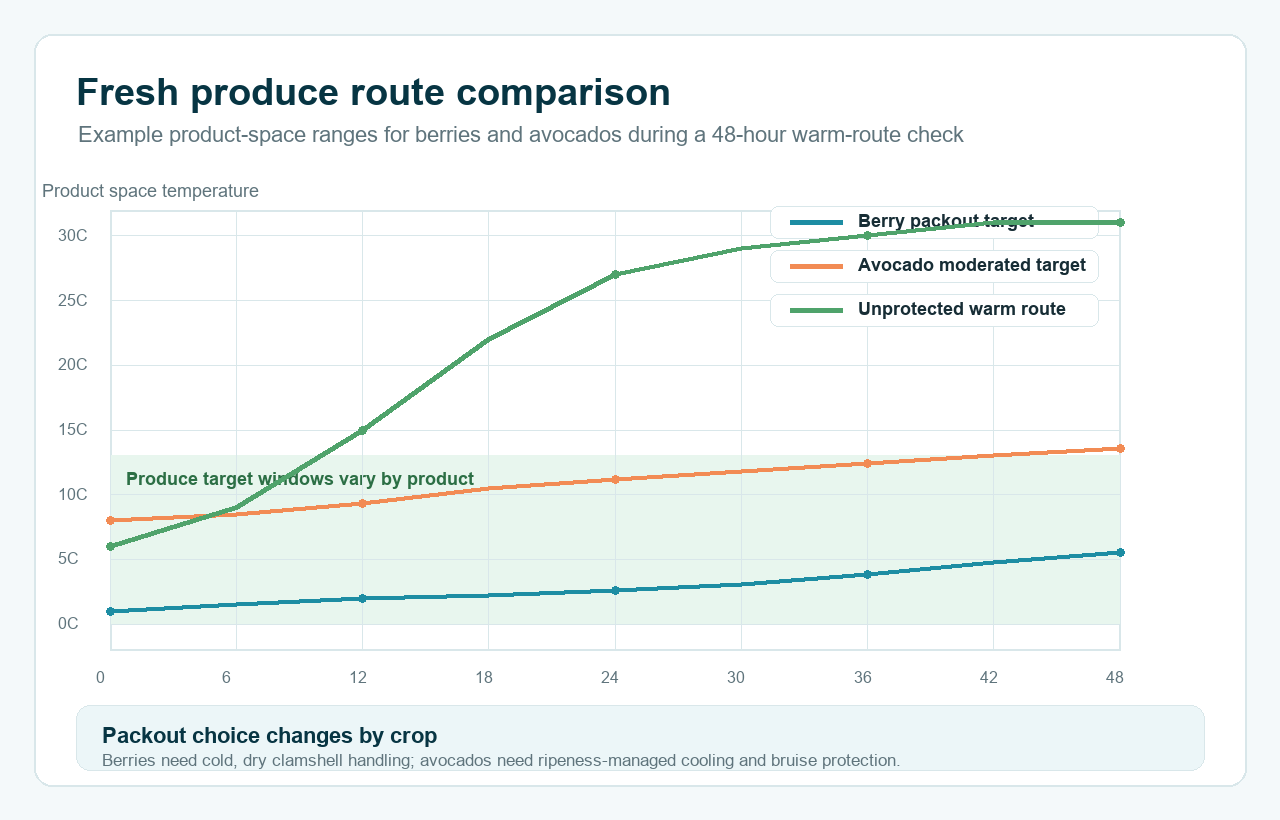
Los paquetes de gel adicionales no pueden corregir completamente la fruta caliente. El producto preenfriado reduce la carga de calor y mantiene estable la línea fría.
frutas & Cadena de frío de verduras
Los envíos de productos frescos necesitan más que aire frío. Un paquete práctico debe controlar el preenfriamiento., humedad, flujo de aire, compresión, condensación, y tiempo de ruta sin congelar el producto ni dañar los paquetes minoristas.
Decisiones de categoría
Los envases de frutas y verduras fracasan por diferentes motivos. Las bayas se magullan y gotean, los arándanos pierden floración y firmeza, Los aguacates necesitan control de madurez., y los champiñones o los espárragos pueden dañarse por la humedad y los errores en el flujo de aire.. El mejor paquete se basa en la sensibilidad a la temperatura del producto., tasa de respiración, formato de paquete, y recibir cheques.
Los paquetes de gel adicionales no pueden corregir completamente la fruta caliente. El producto preenfriado reduce la carga de calor y mantiene estable la línea fría.
Utilice almohadillas absorbentes, bolsas de revestimiento, y espacios de flujo de aire para evitar marcas de deshidratación y condensación..
Los paquetes congelados pueden aplanar las almejas, marcar fruta, o bloquear las ventilaciones cuando la carga útil no sea compatible.
Los controles de llegada deben incluir firmeza., sequedad, moretones, filtración, floración, condición del tallo, y resistencia del cartón.
Rutas de productos de alto valor
Estas páginas ofrecen consejos sobre el embalaje a nivel de producto., rangos de arranque del refrigerante, requisitos de preenfriamiento, y verificaciones de validación para las tres rutas de productos ya integradas en este grupo de soluciones.
Los envíos de envase tipo concha preenfriados se centran en los hematomas, fugas, condensación, y mantenimiento en frío sin contacto de congelación.
Ver solución de fresa baya pequeñaPaquetes tipo almeja ventilados que protegen la floración, firmeza, flujo de aire, y presentación seca al por menor.
Ver solución de arándanos Sensible a la madurezRutas con temperatura controlada y enfocadas a la madurez, moretones, riesgo de lesiones por frío, y soporte de cartón.
Ver solución de aguacatePlanificación de ruta
El mismo transportista puede funcionar de manera diferente cuando la carga útil es una cubierta de baya ventilada., un cartón de aguacate maduro, o una bandeja de champiñones con alto contenido de humedad. Utilice estas opciones de ruta como punto de partida antes de probar el producto.
| Condición de envío | Dirección típica del paquete | Dirección del refrigerante | Que verificar |
|---|---|---|---|
| Entrega refrigerada el mismo día Producto preenfriado, ruta corta por la ciudad, tiempo de atraque limitado | Revestimiento de cartón aislado o caja de embalaje compacta de EPS con divisores de producto y almohadilla absorbente | Paquetes de gel acondicionado en las paredes laterales o en la esquina superior, protegido lejos de las rejillas de ventilación tipo almeja | Temperatura del centro del producto, sequedad del paquete, hematomas de bayas, espacio libre de ventilación, y estado restante del refrigerante |
| Ruta de paquetería nocturna Exposición del depósito, calor de furgoneta, 18-36h ventana de entrega | Caja aislada de EPP o EPS, bolsa de revestimiento, cartón exterior más fuerte, y bolsillos fijos para refrigerante | Paquetes de gel o PCM refrigerado seleccionados por rango objetivo, masa de carga útil, tamaño de la caja, y condiciones ambientales | Punto más cálido de la carga útil, riesgo de punto frío cerca del refrigerante, condensación, y compresión de paquetes minoristas |
| Ruta con clima cálido o propensa a retrasos Ambiente alto, riesgo de retención de fin de semana, traspaso más largo | Aislamiento más grueso, mayor margen de refrigerante, maderero, y espacio libre reducido dentro del cargador | Disposición del refrigerante perimetral con divisores.; Evite agregar peso congelado directamente sobre el producto. | Temperatura máxima, riesgo de congelación, recuperación de humedad, fuerza del cartón, y defectos de llegada específicos del producto |
Guías de productos de apoyo
Estas guías de apoyo ayudan a los compradores a comparar los riesgos de los productos agrícolas cercanos sin tener que convertir cada producto en una página de solución separada..
Enlaces internos útiles
Compartir tipo de producto, Temperatura de la pulpa o del producto en el momento del embalaje., formato de paquete, peso de carga útil, duración de la ruta, rango ambiental de verano, y recibir cheques. Tempk puede ayudar a elegir el transportista, disposición del refrigerante, capas de buffer, y plan de validación.
Solicite una revisión del empaque de productos agrícolasSoporte de paquete personalizado
Para tamaños de cartón fijos, límites de carga útil, requisitos de marca, carriles estacionales, o objetivos de validación, Tempk puede adaptar esta solución a un paquete de cadena de frío personalizado.