


El requisito del producto es lo primero.
El paquete debe construirse alrededor del producto.'s rango etiquetado y el remitente'plan de calificación de ruta.
Paquetes farmacéuticos refrigerados
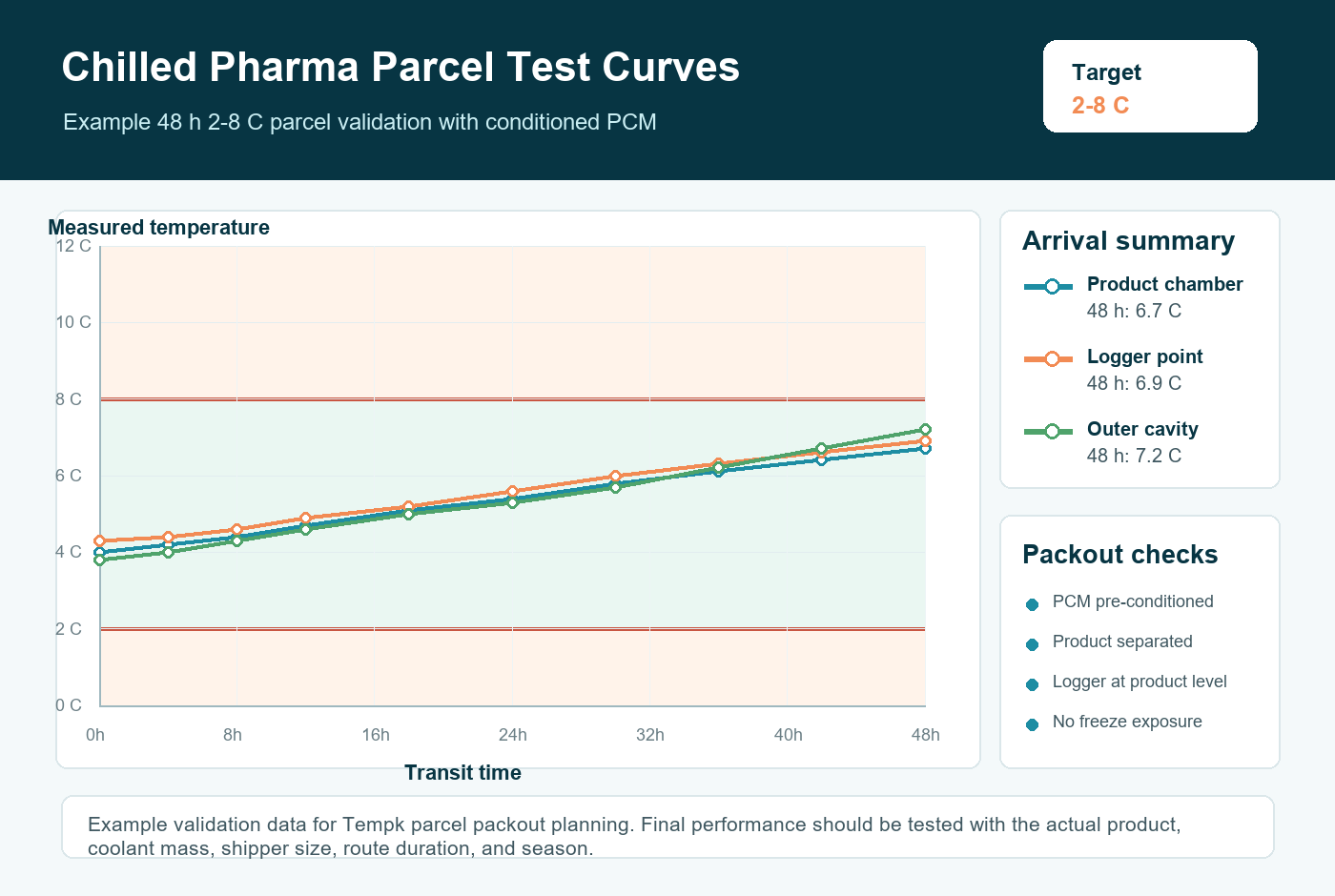
Los paquetes farmacéuticos refrigerados necesitan una cámara de producto controlada, no solo una caja fría. El embalaje debe seguir al producto.'s rango de almacenamiento etiquetado, Proteger tanto contra excursiones cálidas como contra contacto de congelación., y dar al receptor pruebas claras de su aceptación..
Riesgo del producto
El paquete correcto debe proteger el producto real y la decisión de recepción., no sólo muestra un rastro de registrador en frío. Estos riesgos determinan el aislamiento., elección de refrigerante, posición del refrigerante, soporte interior, y controles de validación.
El paquete debe construirse alrededor del producto.'s rango etiquetado y el remitente'plan de calificación de ruta.
Los paquetes de gel congelados duros colocados cerca del producto pueden crear un riesgo de congelación local incluso cuando el rastro promedio parece aceptable..
La caja puede permanecer en un mostrador de recepción antes de la inspección., por lo que el plan de validación debe incluir un tiempo de transferencia realista.
Los cartones y viales pequeños tienen poca masa térmica y necesitan una cuidadosa separación del refrigerante..
Recomendación basada en ruta
Estos son puntos de partida prácticos para la planificación de muestras.. Masa refrigerante final, espesor de aislamiento, y el soporte interno debe validarse con la carga útil real, ruta, servicio de mensajería, y recibir estándar.
| Condición de envío | Paquete Tempk recomendado | Dirección inicial del refrigerante | Posición del refrigerante | Que validar |
|---|---|---|---|---|
| Mensajería controlada el mismo día 8-18h ruta, ambiente debajo 22 do, traspaso directo | Transportista calificado de EPS o EPP, cámara de producto, bolsillos material de cambio de fase acondicionados, divisor, y registrador | Acerca de 0.5-1.0 kg total de material de cambio de fase acondicionado o paquetes de gel para un pequeño 0.5-2 kg de carga útil. Siga el rango etiquetado y califique con la carga útil real. | Bolsillos laterales o bolsillo en la tapa con divisor probado; Nunca coloque paquetes congelados directamente contra la caja del producto.. | Punto de producto más cálido, punto de producto más frío, retraso del receptor, aplastamiento de cartón, y recuperación del registrador |
| Ruta de paquetería nocturna 18-36h ruta, manejo de depósito, ambiente 22-30 do | Transportista EPP o EPS, aislamiento más grueso, cámara de producto fija, material de cambio de fase acondicionado, transatlántico, y registrador | Acerca de 1.0-2.0 kg de material de cambio de fase acondicionado total para una prueba de paquete pequeño. Aumentar sólo después de comprobar el riesgo de puntos fríos.. | Dos posiciones laterales o material de cambio de fase perimetral con buffer orientado hacia el producto; registrador cerca del producto, no contra el refrigerante. | 2-8 traza C, riesgo de contacto congelado, estabilidad de la cámara del producto, recibo retrasado, y condición del cartón exterior |
| Ruta con clima cálido o propensa a retrasos 30-35 ambiente C, 36-48h riesgo, fin de semana o retraso en la recepción posible | Transportador EPP/EPS de mayor rendimiento, mayor margen de aislamiento, diseño material de cambio de fase calificado, cámara de producto, y registrador | Acerca de 2.0-3.5 kg total de material de cambio de fase acondicionado para pruebas extendidas de paquetes pequeños. Confirmar carga útil, tamaño del listón, nivel de servicio, y criterios de aceptación antes de escalar. | material de cambio de fase perimetral con divisores y sin contacto directo; agregue posiciones de registrador para puntos cálidos y fríos. | Margen de excursión cálido, temperatura más baja del producto, retraso en la recepción, compresión de cartón, y aceptación documentada |
La masa refrigerante es un punto de partida., no es una garantía. Ajustar por temperatura del producto en el embalaje., peso de carga útil, tamaño del listón, material aislante, acondicionamiento del refrigerante, duración de la ruta, perfil ambiental, manejo del transportista, y recibir cheques. Más refrigerante puede provocar congelación, daño por presión, embalaje mojado, o manipulación insegura del hielo seco cuando la separación y las instrucciones son incorrectas.
Estructura de embalaje
Los paquetes de paquetes necesitan soporte de producto, separación de refrigerante, y recibir claridad antes de que se cierre el remitente. Comience con la carga útil y los criterios de aceptación., luego dimensione el aislamiento y el refrigerante.
Proceso de embalaje
Un transportista más fuerte ayuda, pero condición de carga, separación de refrigerante, soporte interior, y recibir instrucciones generalmente deciden si el paquete es aceptado.
Utilice las reglas de alcance y receptor etiquetadas antes del diseño del paquete. No generalices un producto's carril a otro.
Utilice el mismo método de acondicionamiento durante la validación y el envío en vivo..
Evite que la carga útil se deslice hacia el refrigerante durante la manipulación de paquetes.
Verificar el registro del registrador, condición del cartón del producto, tiempo de transferencia, y cualquier escenario de apertura retrasada.
Cuándo cambiar el diseño
Aumentar el espesor del buffer, cambiar el acondicionamiento del material de cambio de fase, o aleje el refrigerante de la cámara del producto.
Aumentar el margen de aislamiento, ajustar la masa del material de cambio de fase, acortar el nivel de servicio, o reducir el retraso en la recepción.
Mejorar la resistencia del cartón exterior, soportes internos, y espacio libre de la cámara del producto.
Recursos relacionados
Compartir el rango etiquetado, tamaño del paquete del producto, peso de carga útil, duración de la ruta, perfil ambiental, nivel de servicio, y recibir flujo de trabajo. Tempk puede ayudar a elegir el aislamiento, acondicionamiento del material de cambio de fase, disposición de la cámara, y pasos de validación.
Solicite una revisión del paquete del paqueteSoporte de paquete personalizado
Para tamaños de cartón fijos, límites de carga útil, requisitos de marca, carriles estacionales, o objetivos de validación, Tempk puede adaptar esta solución a un paquete de cadena de frío personalizado.