


Plumas de insulina
Los envíos de plumas de insulina necesitan manipulación refrigerada teniendo en cuenta primero la etiqueta del producto, sin congelación, cajas protegidas, and simple evidencia de recepción for farmacia or entrega domiciliaria.
Los medicamentos sensibles a la temperatura deben planificarse desde la etiqueta del producto. Para muchos medicamentos refrigerados, el paquete debe proteger una ruta de 2-8°C, prevenir la congelación, support cartón pequeños or pens, proteger etiquetas, y hacer que el registro de temperatura de recepción sea fácil de revisar.
Los paquetes de medicamentos suelen ser pequeños, por lo que algunos acumuladores de gel refrigerante congelados pueden enfriar demasiado la carga útil si tocan el cartón. Tempk diseña el cargador en torno al refrigerante acondicionado, elección de PCM, capa amortiguadoras, soporte para bolígrafo o vial, duración de la ruta, and the evidencia de recepción the farmacia, clínica, o necesidades de servicio al paciente.
Los envíos de plumas de insulina necesitan manipulación refrigerada teniendo en cuenta primero la etiqueta del producto, sin congelación, cajas protegidas, and simple evidencia de recepción for farmacia or entrega domiciliaria.
Las plumas GLP-1 son pequeñas, Paquetes de alto valor donde el contacto directo con el paquete de gel, espera en entrega, y el aplastamiento del cartón puede convertirse en riesgos mayores que la temperatura bruta del transportista.
Los envíos de inyecciones de fertilidad necesitan un cuidadoso soporte para viales o jeringas, 2-8control de °C, no exposición a congelación, and clear entrega timing for clínica or entrega al paciente.
| Ruta del producto | Intención de temperatura | Configuración de embalaje | Rango preliminar de refrigerante | Consultar al recibir |
|---|---|---|---|---|
| Paquete de farmacia o DTC de plumas de insulina, 8-24 h | Utilice los requisitos de la etiqueta del producto; commonly refrigerated 2-8°C and evitar congelación. | EPP pequeño o cartón aislado, cartónes de plumas in a cavidad central, acumuladores acondicionados or 5 C PCM separado por placa separadora. | Acerca de 0.6-1.6 acumuladores acondicionados en kg o PCM para un 0.5-3 L medicamento payload. | Registrador mínimo y máximo, sequedad del cartón, movimiento de la pluma, claridad de la etiqueta, and espera en entrega. |
| Paquete domiciliario de plumas GLP-1, 12-36 h | Ruta de 2-8 °C según la etiqueta del producto con fuerte prevención de congelación para cargas útiles pequeñas. | Bandeja interior rígida, funda para etiqueta/documento, center cavidad de carga, Refrigerante acondicionado en laterales/superior con capa amortiguadora.. | Acerca de 0.8-2.4 acumuladores acondicionados en kg o PCM para un 0.5-3 carga útil, ajustado por ruta y temporada. | Temperatura mínima, aplastamiento de cartón, contacto directo con el refrigerante, espera en la puerta, y estado refrigerante restante. |
| Entrega de inyecciones de fertilidad a clínica o paciente, 8-24 h | Generalmente se planifica entre 2 y 8 °C cuando la etiqueta del producto requiere refrigeración.; proteger del congelamiento y los golpes. | Soporte para vial o jeringa, inserto vertical/divisor donde sea necesario, Transportador de cartón aislado o EPP., refrigerante acondicionado separado del producto. | Acerca de 0.5-1.8 kg acumuladores acondicionados or PCM for small vial or jeringa payloads. | tiempo de transferencia, grabadora de discos, soporte vial/jeringa, cartón condition, y cualquier riesgo bajo cero. |
Estos son rangos de planificación para la discusión del embalaje, no criterios de liberación del medicamento. La configuración final debe seguir la etiqueta aprobada, el tamaño del embalaje, el recuento de carga, la duración de ruta, el perfil ambiental, el requisito de monitoreo y el procedimiento interno de calidad.
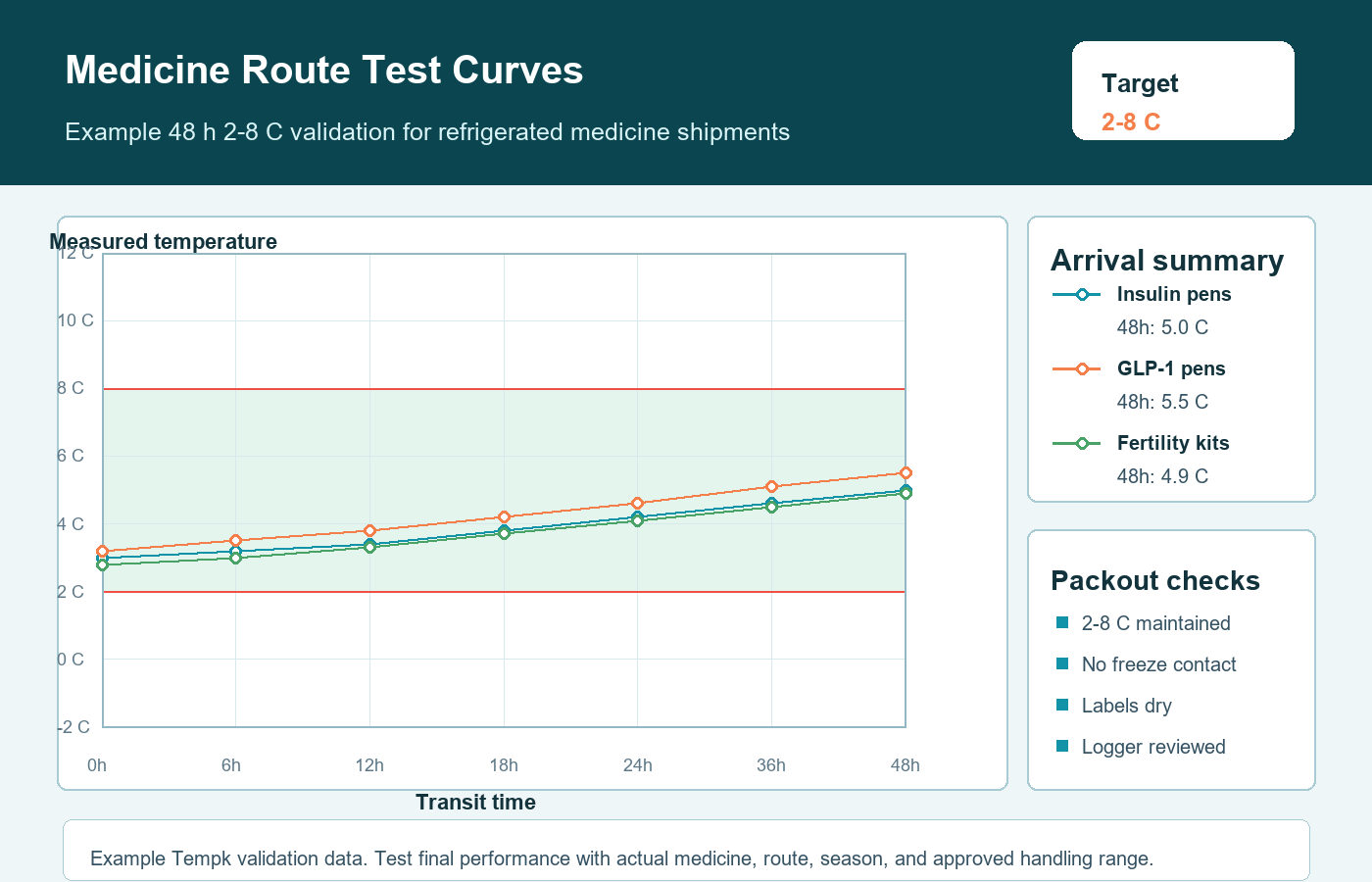
Utilice la curva de validación al recibir notas. En envíos de medicamentos, la temperatura mínima y el riesgo de contacto directo con el refrigerante pueden importar tanto como la temperatura final de llegada.
Estos artículos respaldan los carriles de medicamentos relacionados y al mismo tiempo mantienen manejable la estructura de la solución..
Use esta guía como referencia enfocada de configuración para medicamentos sin añadir otra página de solución dedicada.
Use esta guía como referencia enfocada de configuración para medicamentos sin añadir otra página de solución dedicada.
Use esta guía como referencia enfocada de configuración para medicamentos sin añadir otra página de solución dedicada.
Use esta guía como referencia enfocada de configuración para medicamentos sin añadir otra página de solución dedicada.
Utilice estas páginas para comparar las opciones de refrigerante, riesgo de ruta, y aislamiento antes de la ejecución de validación.
Los envíos de medicamentos no deben usar una receta fija de caja para todos los productos. Comience con control de 2-8°C para medicamentos refrigerados, con alternativas de temperatura ambiente controlada solo cuando la etiqueta lo permita, luego separe los productos por carga de calor, resistencia del embalaje, y como son recibidos. Para programas mixtos, Tempk suele comparar una ruta local corta, una ruta de paquetería nocturna, y la temporada más calurosa esperada antes de confirmar el transportista.
Utilice un transportista de paquetes calificado, pestaña del sistema, cierre a prueba de manipulaciones, y entrega respaldada por registrador. El plan de refrigerante debe empezar con acumuladores de gel de grado farmacéutico o PCM seleccionados para evitar excursiones cálidas y exposición a congelación. Cuando la carga útil tiene cartones minoristas delicados, textura suave, material vivo, o documentación médica, Proteja la carga útil primero y luego agregue capacidad de enfriamiento.. Si el envío se retrasa en embalaje, entrega, aduanas o transferencia de muelle, se debe revisar de nuevo el perfil de ruta en lugar de solo aumentar el peso del refrigerante.
La validación debe incluir control mínimo y temperatura máxima., entrega al paciente time, y estado del cartón al recibirlo. Una prueba útil registra el punto de carga útil más cálido, el punto más frío cerca del refrigerante, y la condición de recepción después de la manipulación. Esto da al equipo operativo una instrucción práctica de configuración, no solo una gráfica de temperatura.
Custom configuración de embalaje support
Para tamaños de cartón fijos, límites de carga útil, requisitos de marca, carriles estacionales, o objetivos de validación, Tempk can adapt this solution into a custom cold-chain configuración de embalaje.
Comparte la temperatura de la etiqueta del producto., recuento de carga útil, dimensiones del cartón, duración de la ruta, condición ambiental, entrega entrega, and controles de recepción. Tempk puede ayudar a comparar el aislamiento, acumuladores acondicionados, PCM, capa amortiguadoras, inserciones, y colocación del registrador.
Solicitar una revisión de configuración