


Riesgo de aceptación de cambios de permanencia cálida
Las comidas deben salir de la producción refrigeradas y permanecer frías durante la clasificación., entrega, y exposición a domicilio.
Cajas refrigeradas para entrega de comida
Las cajas de entrega de comidas necesitan control de temperatura fría y una llegada lista para el cliente. El paquete debe contener condiciones de refrigeración seguras para los alimentos., proteger bandejas y salsas, gestionar la condensación, y sobreviva a la puerta de su casa sin etiquetas mojadas ni embalajes aplastados.
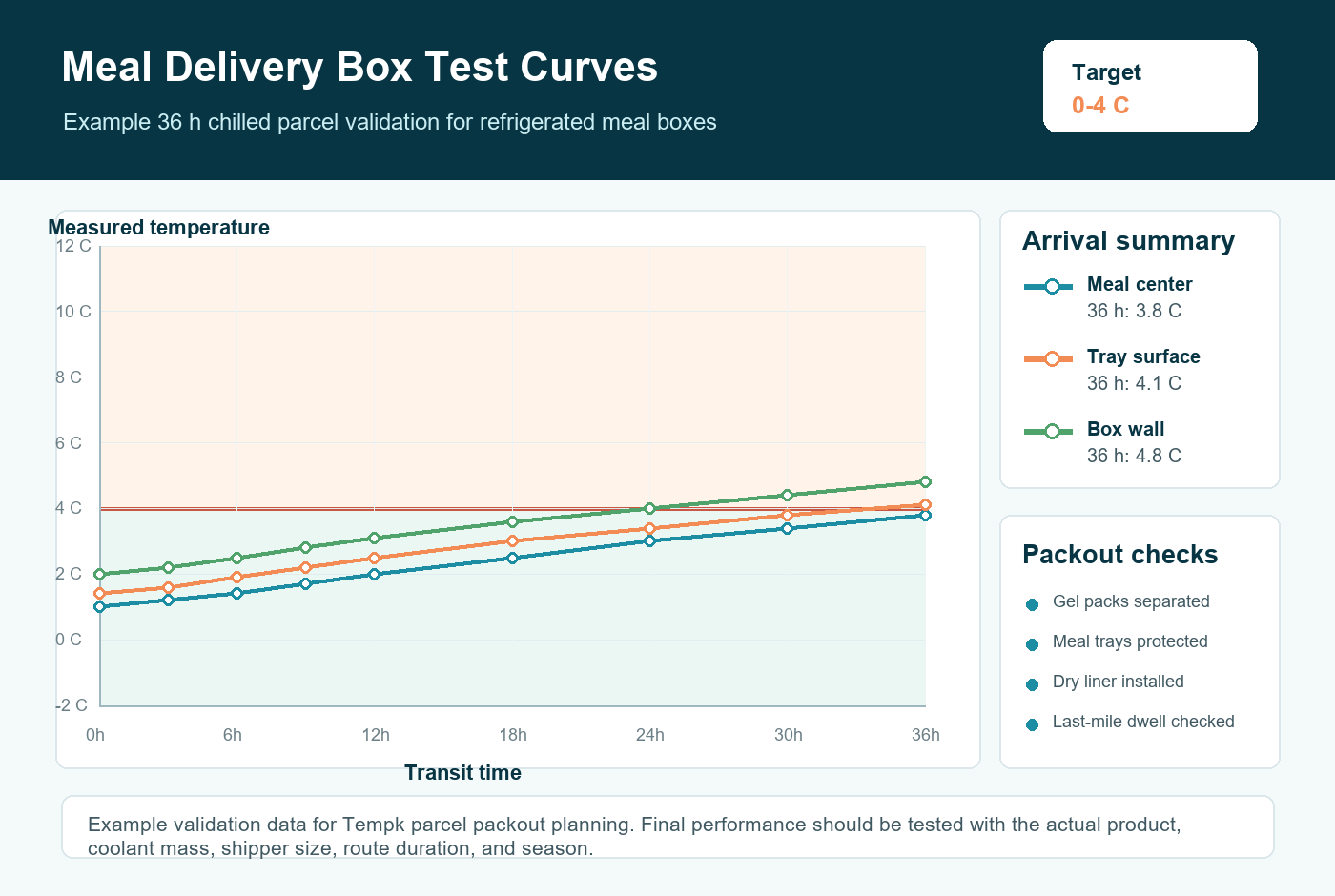
Riesgo del producto
El paquete correcto debe proteger el producto real y la decisión de recepción., no sólo muestra un rastro de registrador en frío. Estos riesgos determinan el aislamiento., elección de refrigerante, posición del refrigerante, soporte interior, y controles de validación.
Las comidas deben salir de la producción refrigeradas y permanecer frías durante la clasificación., entrega, y exposición a domicilio.
Un producto frío aún puede ser rechazado cuando las etiquetas, mangas, o las tarjetas de recetas están mojadas.
Los paquetes de gel colocados directamente sobre las bandejas pueden aplastar las tapas, romper sellos, o forzar fugas de salsa.
Ensaladas, salsas, comidas cocinadas, y producir necesitan separación para que un artículo no dañe a otro.
Recomendación basada en ruta
Estos son puntos de partida prácticos para la planificación de muestras.. Masa refrigerante final, espesor de aislamiento, y el soporte interno debe validarse con la carga útil real, ruta, servicio de mensajería, y recibir estándar.
| Condición de envío | Paquete Tempk recomendado | Dirección inicial del refrigerante | Posición del refrigerante | Que validar |
|---|---|---|---|---|
| Entrega de comida el mismo día 8-18h ruta, ambiente debajo 22 do, breve estancia en la puerta | Revestimiento de cartón aislado o cargador compacto de EPS, soporte para bandeja de comida, almohadilla absorbente, bolsa de revestimiento, y paquetes de gel | Acerca de 0.5-1.0 kg total de paquetes de gel para un 1-3 kg de carga útil de comida refrigerada. Utilice la calculadora para conocer el peso real de la comida y el tiempo de ruta. | Colocación del paquete de gel en la pared lateral o en la esquina superior con divisor; Mantenga los paquetes congelados duros fuera de las tapas y etiquetas de las bandejas.. | Temperatura de la comida, sello de bandeja, condensación, sequedad de la etiqueta, y condición de desembalaje del cliente |
| Paquete de comida para pasar la noche 18-36h ruta, manejo de depósito, ambiente 22-30 do | Transportista EPS o EPP, bolsa de revestimiento, divisor de bandeja, capa absorbente, bolsillos de refrigerante fijos, y cartón exterior más fuerte | Acerca de 1.0-2.0 kg total de paquetes de gel o material de cambio de fase refrigerado para un paquete de comida pequeño. Ajustar por masa de carga útil, densidad de comida, y volumen de caja. | Dos bolsillos laterales o lateral más superior con amortiguador corrugado y capa de humedad. | comida más caliente, puntos de contacto fríos, salsa gotea, deformación de la bandeja, y humectación del cartón |
| Ruta con clima cálido o propensa a retrasos 30-35 ambiente C, 36-48h riesgo, exposición prolongada a domicilio | Transportador de EPS/EPP más grueso, mayor margen de refrigerante, soporte de bandeja reforzado, capa absorbente, y registrador de rutas | Acerca de 2.0-3.5 Paquetes de gel en kg totales o material de cambio de fase para pruebas extendidas de paquetes pequeños. Se debe combinar más refrigerante con una separación de bandejas más fuerte. | Refrigerante perimetral con divisores en los lados orientados al producto; No apile paquetes pesados directamente sobre las bandejas de comida.. | Temperatura máxima del producto, recuperación de condensación, presión de la bandeja, condición de la etiqueta, y margen de permanencia a domicilio |
La masa refrigerante es un punto de partida., no es una garantía. Ajustar por temperatura del producto en el embalaje., peso de carga útil, tamaño del listón, material aislante, acondicionamiento del refrigerante, duración de la ruta, perfil ambiental, manejo del transportista, y recibir cheques. Más refrigerante puede provocar congelación, daño por presión, embalaje mojado, o manipulación insegura del hielo seco cuando la separación y las instrucciones son incorrectas.
Estructura de embalaje
Los paquetes de paquetes necesitan soporte de producto, separación de refrigerante, y recibir claridad antes de que se cierre el remitente. Comience con la carga útil y los criterios de aceptación., luego dimensione el aislamiento y el refrigerante.
Proceso de embalaje
Un transportista más fuerte ayuda, pero condición de carga, separación de refrigerante, soporte interior, y recibir instrucciones generalmente deciden si el paquete es aceptado.
No cargar comidas calientes e intentar compensar con más compresas de gel.
Proteger las tapas, salsas, etiquetas, y componentes frescos por contacto directo congelado.
Utilice bolsas de revestimiento y capas absorbentes para que el unboxing se mantenga limpio..
Pruebe la ruta con retrasos de entrega realistas e inspeccione el estado de la bandeja, no sólo el registrador.
Cuándo cambiar el diseño
Mejorar el diseño del revestimiento, material absorbente, y acondicionamiento del refrigerante antes de agregar más aislamiento.
Reducir la presión de carga superior, mover los paquetes de gel a los bolsillos laterales, y agregar soporte para bandeja.
Aumentar el margen de aislamiento, ajustar la masa de refrigerante, reducir los vacíos del transportista, o acortar el nivel de servicio.
Recursos relacionados
Compartir tipo de comida, tamaño de la bandeja, peso de carga útil, objetivo helado, duración de la ruta, rango ambiental, formato de embalaje, y requisitos de recepción del cliente. Tempk puede ayudar a elegir el aislamiento, diseño del paquete de gel, soporte de bandeja, y pasos de validación.
Solicite una revisión del paquete del paqueteSoporte de paquete personalizado
Para tamaños de cartón fijos, límites de carga útil, requisitos de marca, carriles estacionales, o objetivos de validación, Tempk puede adaptar esta solución a un paquete de cadena de frío personalizado.