Bulk dry ice pack for chocolate shipping: A Route-Ready Sourcing Framework
Le bon volume paquet de glace sec for chocolate shipping is not the sheet with the boldest duration claim. It is the component that fits a defined payload, forfait isolé, itinéraire, operating process, et décision d'acceptation, with evidence that remains valid at production scale. Buyers should separate hydration sheets from solid carbon dioxide, protect against both warming and overcooling, and approve the complete system rather than the coolant in isolation.
This framework is designed for a chocolate brand, confectionery producer, fulfillment operator, distributeur, or bulk packaging buyer that needs to move from search term to controlled purchase. It combines product fit, conception thermique, qualité des matériaux, supplier governance, qualification, opérations, et coût total livré. The outcome is a specification and packout that can be defended, taught, répété, et amélioré.
Define the Finished Chocolate's Quality Window
A sound sourcing decision separates three questions that are often mixed together: what condition the payload requires, what cooling medium can support that condition, and what evidence proves the assembled packout on the intended route. Starting with a product name reverses that logic. Starting with the payload and decision criteria makes the supplier comparison useful.
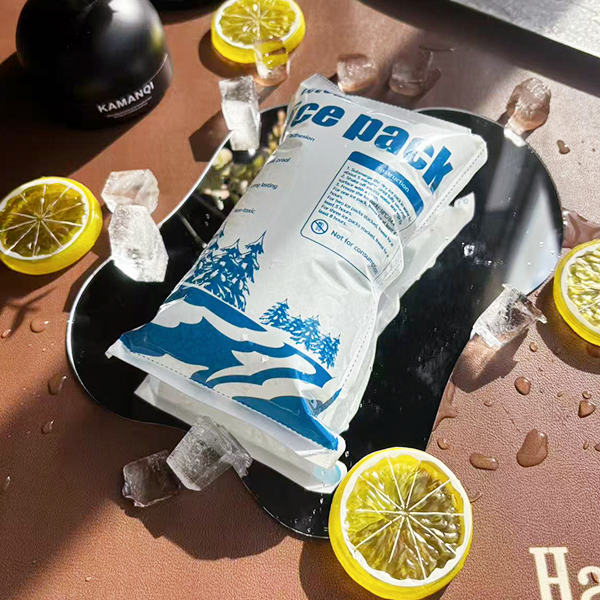
A hydration dry ice pack is a water-activated cell sheet that is frozen before use. It can provide broad, flexible cooling around chocolate, but it remains one component of the shipping system. It should not be treated as solid carbon dioxide, comme un expéditeur qualifié par lui-même, or as evidence of a universal duration. The goal is to limit heat and temperature cycling while protecting crystal structure, état de surface, arôme, emballage de vente au détail, and the parcel from condensation.
The final selection must connect composition, comportement thermique, intégrité matérielle, isolation, géométrie de la charge utile, conditionnement, exposition par voie, surveillance, and operating control. When actual solid carbon dioxide is proposed, its separate safety and transport requirements enter the plan. When a water-based sheet is proposed, classify and approve that product from its own documentation.
Chocolate damage is often blamed on one hot afternoon, but the visible defect can begin with repeated warming and cooling, poor air space, direct frozen contact, or condensation at unpacking. Barres, truffes, chocolats, coated pieces, and compound coatings do not behave identically. A bulk purchase should be built around the finished product's quality specification and the seasonal route, not around the assumption that maximum cooling creates maximum protection.
Write a one-page shipment requirement before contacting suppliers. Include product identity and condition, paquet principal, dimensions et masse de la charge utile, dispatch temperature, upper and lower acceptance limits, route and handovers, exposition saisonnière, isolation, processus de réception, monitoring decision, planned volume, and applicable quality or market requirements. Mark unknowns for the pilot.
Separate product-safety limits from quality preferences and packaging-damage limits. They may lead to different sensor positions and actions. The receiver should know which observation or data set triggers acceptance, prise, enquête, or disposition. A thermal design cannot be optimized until the decision rule is clear.
Choose Insulation, Liquide de refroidissement, and Buffer Together
Compare technologies against the requirement. Hydration sheets offer flat pre-activation storage, broad surface coverage, and flexible cell geometry. Packs de gel can be easier to deploy in some chilled parcels. PCM can be selected around a narrower phase-change condition. Solid carbon dioxide supports appropriate deep-frozen uses but has distinct handling and transport controls. Active equipment may be justified on high-risk complex lanes.
Within chocolate, product and route cases still need segmentation. The table shows why a single catalog SKU cannot be assumed to serve every case.
| Product or route case | Main exposure or failure | Useful design response | Assumption to avoid |
|---|---|---|---|
| Solid bars and tablets | Ramollissement, edge damage, floraison, and wrapper scuffing | Use even buffered cooling and strong carton support | Avoid a frozen sheet printing its pattern through thin packs |
| Truffles and pralines | Sensitive fillings, fat migration, écrasement, and aroma loss | Use the finished-product specification and gentle immobilization | The shell and filling may set different limits |
| Chocolate-coated snacks | Coating rub, fissuration, and mixed-product thermal behavior | Control movement and temperature together | A cold pack does not solve abrasion |
| Gift boxes and premium assortments | Presentation, condensation, odeur, and complex geometry | Use spacers and an opening or acclimation instruction | The warmest and most visible pieces may be in different locations |
Choose the simplest technology that creates an adequate, demonstrated margin without introducing a larger cold-side, humidité, manutention, or compliance risk. If two options appear viable, compare them through the same payload, profil, acceptance rule, and total-cost boundary.
Design for Heat, Mouvement, and Humidity
Build the architecture from outside to inside: outer carton or reusable container, isolation, liner or vapor control where needed, emplacement du liquide de refroidissement, tampon, payload holder, product packages, headspace management, positions des capteurs, fermeture, et étiquettes. Every layer should have a job. Removing or moving a layer after qualification is a design change, not a harmless packing preference.
Route analysis should explicitly challenge treating bloom as a simple maximum-temperature problem, putting frozen cells directly against thin gift cartons, packing warm chocolate and expecting the coolant to pull it down, opening a very cold parcel immediately in humid air, and using one summer packout for every chocolate format and destination. Use alternatives such as insulation and reflective barriers without coolant on mild lanes, conditioned gel packs for moderate seasonal heat, phase change media selected around a validated chocolate condition, et actif transport à température dirigée for high-value or highly sensitive loads where they solve the exposure more directly. Par exemple, better vehicle control may be more effective on a dense route, while a parcel network may need stronger passive protection at walls and handovers.
Application-specific technical considerations include Chocolate quality depends on its fat crystal system, recette, caractère, inclusions, and thermal history., A hydrate sheet absorbs heat as frozen water warms and changes phase, while a buffer controls the surface heat flux into the retail pack., Broad coverage can reduce warm wall zones, but a fully wrapped parcel may trap moisture or interfere with structural supports., Temperature cycling can matter even when a single reading never appears extreme, so the data review should include the profile shape., and Dew point and acclimation should be considered when cold chocolate meets humid receiving air. Convert each material consideration into a drawing feature, contrôle des fournisseurs, operating step, inspection, or protocol variable. Otherwise it remains an observation that cannot protect routine shipments.
Score Bulk Suppliers on Repeatability
Use decision gates to compare manufacturers. This keeps procurement from awarding on unit price before composition, preuve, contrôle de production, and scale have been reviewed.
| Porte de décision | Condition de réussite | Panneau d'avertissement |
|---|---|---|
| Ajustement de l'application | The supplier asks about chocolate, charge utile, itinéraire, isolation, et limites d'acceptation | A pack count is offered from keyword or carton size alone |
| Spécification | Dimensions, matériels, activation, tolérances, and intended use are written | The sample is treated as the entire specification |
| Preuve | Test conditions and system boundaries are disclosed | Component claims are presented as universal packout performance |
| Contrôle de qualité | Traçabilité des lots, inspection, non-conformité, and change notification are defined | Substitution is allowed without buyer review |
| Échelle | Capacité, emballage en carton, hypothèses de délais, and peak planning are discussed | Only nominal monthly output is discussed |
| Soutien | Production-representative samples and a route trial plan are available | The buyer is urged to skip the pilot |
After the initial screen, request production-representative samples and a written specification. Review the manufacturer's proposed tolerances, méthodes d'essai, identification du lot, gestion des non-conformités, échantillons conservés, complaint response, and notice period for change. Define who owns tooling, œuvres d'art, and approval of custom cell patterns or packaging.
Commercial terms should make assumptions visible. Confirm quotation unit, dry or activated condition, quantité de cartons, palettisation, minimum order, lead-time basis, sample status, freight term, documentation, and peak capacity without turning any unverified figure into a performance promise. Compare landed and operating cost under the same scope.
Qualify the Full Customer Experience
Qualification starts with an approved protocol and ends with a controlled report, dessin, spécification, et instruction de travail. Test the intended payload or a justified surrogate, real insulation and coolant, defined conditioning, assembly variation, a representative or risk-based ambient profile, appropriate duration, and pre-agreed acceptance criteria. Include physical inspection and receiving behavior.
Outils de décision utiles
Vérifiez les détails avant de choisir l'emballage
Ces outils rapides peuvent vous aider à comparer le risque d'itinéraire, besoins de dimensionnement, choix de liquide de refroidissement, et les détails de l'emballage avant de demander un devis.
Générateur de liste de contrôle de conformité
Créer une liste de contrôle pratique pour l'examen des emballages, expédition, et documentation.
Construire une liste de contrôleLiquide de refroidissement & Référence PCM
Comparez les options de liquide de refroidissement et de PCM lorsqu'un itinéraire nécessite une prise en charge supplémentaire de la température.
Comparez les optionsVérificateur de risque d'itinéraire
Examinez les conditions des pistes avant de sélectionner l'emballage en fonction des exigences opérationnelles réelles..
Vérifier le risque d'itinérairePlace loggers at expected warm and cold risk locations. A center-only map can miss wall heat and frozen contact. Define accuracy, état d'étalonnage, interval, synchronization, start and stop logic, data ownership, and treatment of anomalies. Repeat the test sufficiently to understand system variation rather than selecting one favorable run.
Operationalize these controls: Condition chocolate to the approved dispatch state before packing., Hydrate and freeze sheets with a documented method and sufficient rack spacing., Utiliser des manches, séparateurs, or air gaps to prevent direct frozen contact and movement., Select seasonal packout variants through clear route criteria, not operator judgment alone., and Give receivers a practical opening instruction when humidity and condensation are material risks. Training should include wrong-component prevention, freeze-status checks, damaged-sheet rejection, route-variant selection, and deviation escalation. Observe actual operators during launch; ambiguity often appears only at production speed.
Apply the relevant claim boundaries as well. Chocolate is food, so materials, sanitaire, prévention des contaminations, and transport responsibilities remain relevant even where the main objective is appearance and texture., The product's internal quality specification should control thermal decisions because there is no single universal shipping range for every chocolate recipe and format., and If the coolant is water activated rather than solid carbon dioxide, verify its actual classification and carrier acceptance instead of applying rules based only on the name. When product, charge utile, liquide de refroidissement, isolation, conditionnement, itinéraire, transporteur, saison, site, enregistreur, or supplier material changes, let the quality team determine whether document review, confirmation testing, or requalification is needed.
Optimize Cost Per Saleable Arrival
Calculate cost per successful shipment, not price per dry sheet. Include inbound freight and cube, stockage, hydration water, travail, drainage, freezer energy and capacity, supports, tampons, isolation, temps de montage, surveillance, rejette, fuite, produit endommagé, service client, élimination, retours, and the cost of a failed or delayed delivery. State which items are measured and which are assumptions.
Preventing a premium assortment from becoming unsaleable can carry more value than a small reduction in packaging mass.
Flat sheets may improve inbound cube, while freezer energy, eau, tampons, élimination, retravailler, and reshipment belong in the same calculation.
Seasonal right-sizing can reduce overpacking if the variants are qualified and operationally controlled.
Optimize in controlled steps. Remove excess headspace, improve insulation fit, ajuster le placement du liquide de refroidissement, create qualified seasonal variants, simplify operator motions, or improve receiving timing before reducing thermal margin without evidence. Track product acceptance, excursions, dommage, plaintes, pack loss, travail, and energy by route family.
A stable program does not mean a frozen design. It means changes are proposed with a reason, evaluated against the system boundary, tested when necessary, approuvé, documenté, qualifié, and traced. That discipline allows cost and sustainability improvement without turning the live distribution network into an uncontrolled experiment.
Questions fréquemment posées
Will colder packs always prevent chocolate bloom?
Non. Bloom can relate to formulation, caractère, humidité, and thermal cycling. Very cold contact or rapid transitions may introduce other problems. Use the finished-product specification and test the complete parcel through shipping and receiving conditions.
Can a frozen cell sheet touch a chocolate gift box?
Direct contact may create cold spots, condensation, éraflure, or visible cell impressions through thin packaging. Test a sleeve, entretoise, coussin ondulé, or controlled air gap while checking both thermal performance and presentation.
How should a summer packout be tested?
Use production-representative chocolate, the intended retail and emballage d'expédition, liquide de refroidissement conditionné, realistic headspace, and a justified ambient profile. Monitor likely warm walls and cold contact points, then inspect bloom, forme, wrappers, odeur, humidité, and presentation after acclimation.
What bulk quality controls matter most?
Buyers commonly need dimensions, water uptake consistency, intégrité des coutures, contrôles de fuite, propreté, odeur, print and lot traceability, nombre de cartons, et notification de changement. The exact acceptance plan should be agreed before production.
Is a hydrate dry ice pack solid carbon dioxide?
A hydration sheet normally describes a water-activated frozen coolant, but names in the market are inconsistent. Confirm the composition and safety information. Solid carbon dioxide is a distinct material with separate handling and transport requirements.
Approve a Controlled System, Not an Isolated Claim
The best sourcing outcome links six decisions: l'exigence de charge utile, cooling technology, pack architecture, manufacturer controls, preuve de qualification, et processus opérationnel. If any link is missing, the buyer is relying on an assumption that may fail at scale or on a different route.
Pour le chocolat, the practical next step is to document the product, itinéraire, charge utile, isolation, dispatch and receiving conditions, exposition saisonnière, et les besoins en preuves. Use that brief to compare production samples and design a trial. Only then freeze the commercial specification and rollout plan.
À propos du tempk
Tempk provides water-activated cell sheets and related emballage chaîne du froid support for food, fruit de mer, échantillons médicaux, et autres envois sensibles à la température. Pour le chocolat, Tempk can review payload and route inputs, propose sheet and cell formats, discuss material and print options, and prepare samples for packout trials. The final shipping configuration should be approved from the customer's product requirements and evidence on the complete insulated system, with production and change controls aligned before scale-up.
Send Tempk your chocolate shipment brief and expected order scale to discuss coolant-sheet options, custom cell geometry, production samples, and a route-based packout review.