Un plan à six portes pour acheter des packs froids de bonbons
UN fabricant de pack de glace carbonique pour la logistique des bonbons doit passer une séquence de contrôles de preuves avant qu'un acheteur n'approuve l'approvisionnement en gros. Le processus commence par identifier ce que contient réellement le produit, puis définit les bonbons et la voie, conçoit le pack complet, vérifie le fabricant et l’opération d’emballage, et publie uniquement la configuration testée. Cela évite une erreur courante en matière d'approvisionnement: comparer les prix unitaires tandis que l'identité matérielle, exposition estivale, séparation des aliments, travaux de conditionnement, poids volumétrique, et les critères d'acceptation restent indéfinis.
Commencez par une règle d'arrêt ou de libération
L'équipe d'approvisionnement doit convenir qu'un échantillon prometteur n'est pas un système d'expédition validé. Chaque porte a besoin d'un propriétaire, preuves requises, décision, et processus d'exception documenté.
| Grille | Décision | Preuve minimale | Condition d'arrêt |
|---|---|---|---|
| 1. Identité | Comprenons-nous le composant de refroidissement? | Moyen, construction, masse, dimensions, conditionnement, statut de sécurité et de transport | La « banquise sèche » reste la seule description matérielle |
| 2. Enveloppe du produit | Savons-nous ce que les bonbons peuvent tolérer? | Limites des familles de produits, modes de défaillance, condition de départ, exigences du paquet principal | Une température universelle des bonbons est copiée à partir d'une brochure |
| 3. Voie et économie | La route commerciale est-elle définie? | Profil saisonnier, durée, retard, service, manutention, dimensions finales et modèle de coût | La demande précise uniquement « deux jours » et le poids des bonbons |
| 4. Conception de l'emballage | Existe-t-il un système complet reproductible? | Dessin, nomenclature, placement du liquide de refroidissement, barrière contre l'humidité, fermeture, plan de capteur | Le nombre de liquides de refroidissement est indiqué sans position ni condition |
| 5. Qualification et échelle | Les preuves représentent-elles la production et la distribution? | Tests thermiques et physiques, pilotes, essai d'opérations par lots complets, séparation des aliments | Seule une démonstration en boîte vide ou sur table est disponible |
| 6. Libération et contrôle | Les deux parties peuvent-elles détenir l'état approuvé? | Spécification, plan d'acceptation, traçabilité, avis de changement, processus de capacité et de non-conformité | Des changements de fournisseur peuvent survenir sans examen |
L'enregistrement de la porte doit distinguer une passe conditionnelle d'une passe complète.. Par exemple, un prototype peut passer un écran thermique d'été mais reste conditionnel jusqu'à ce que les vibrations et l'échauffement de destination soient évalués. L'approvisionnement ne doit pas convertir ce résultat conditionnel en une spécification d'achat sans restriction.
Attribuer des propriétaires interfonctionnels. La qualité du produit définit les limites des bonbons et étudie la floraison. L’ingénierie de l’emballage est responsable de la conception des systèmes. Les opérations prouvent le conditionnement et l’exécution de la ligne de conditionnement. Le personnel chargé de la réglementation ou de la sécurité alimentaire examine les responsabilités sanitaires, statut du contact, et les exigences du marché. La logistique définit les voies réelles et les contraintes des transporteurs. Les achats évaluent la capacité, conditions commerciales, et changer de contrôle. Le fabricant fournit des composants contrôlés et des hypothèses déclarées.
Portes 1 et 2: identifier les limites de liquide de refroidissement et de bonbons
Grille 1: établir l'identité exacte et la fonction prévue
Le mot-clé « banquise » peut désigner deux catégories fondamentalement différentes..
La vraie neige carbonique est du dioxyde de carbone solide. Il passe directement du solide au gaz à environ −78°C dans des conditions atmosphériques.. La dilatation du gaz signifie que le colis doit s'aérer; une enceinte hermétiquement fermée est dangereuse. Les travailleurs ont besoin de contrôles contre le contact froid et l’accumulation de dioxyde de carbone. Les matériaux et les bonbons proches de la neige carbonique peuvent subir des températures locales extrêmement basses.. Les règles de transport et de transporteur en vigueur doivent être vérifiées, spécialement pour le service aérien, où le programme peut nécessiter une identification UN1845, Nom d'expédition approprié, masse nette de glace sèche, marques de colis, et acceptation spécifique à l'opérateur.
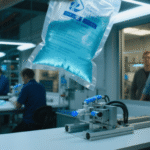
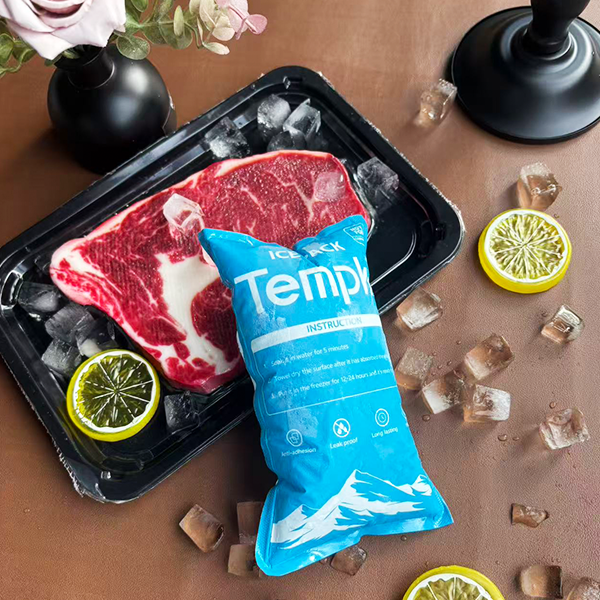
UN hydrater un sac de glace carbonique est une feuille froide activée par l'eau. Il est fourni sec, absorbe l'eau dans les cellules internes, et est congelé avant utilisation. Il ne contient pas de dioxyde de carbone solide simplement parce que le terme « neige carbonique » apparaît dans son nom commercial.. Il n'hérite pas des exigences UN1845 sur ce seul nom. Ses risques opérationnels sont différents: activation variable, drainage insuffisant, charge du congélateur, contact local pour la température des glaces, fuite, et mouillage des emballages en carton ondulé ou cadeaux.
Les autres candidats devraient rester dans la décision:
prérempli packs de gel, qui suppriment le travail d'hydratation mais utilisent plus d'espace entrant et de congélation;
rigide briques de glace, qui fournissent une géométrie fixe mais peuvent ajouter de la pression et des besoins de logistique inverse;
packs à changement de phase formulés, qui peut tamponner une plage spécifique aux bonbons;
packs d'isolation uniquement pour les voies contrôlées courtes;
changements logistiques tels qu'un service plus rapide, restrictions relatives aux jours d'expédition, ou ramassage contrôlé.
Exiger du fabricant qu'il remplisse une fiche d'identité. Il doit indiquer le nom et le code du produit, catégorie moyenne actuelle, construction de film ou de coque, catégorie absorbante ou de remplissage, dimensions et tolérances, masse sèche et prête à emballer, motif de joint ou de cellule, stockage, méthode d'activation et de conditionnement, statut du contact prévu, marquage des lots, nombre de cas, et critères de rejet.
Pour le dioxyde de carbone solide, la fiche devient un dossier d'itinéraire et de sécurité plutôt qu'une spécification de composant réutilisable ordinaire. Définir l'emplacement du fournisseur, formulaire reçu, perte de manutention attendue, méthode de stockage, ventilation, pesée, équipement de protection, temps d'emballage, conception de ventilation, marques, documentation, approbation du transporteur, et procédure d'urgence.
Au bout de la porte 1, tout le monde devrait pouvoir répondre, en langage clair, « Ce qui absorbe la chaleur, quel changement de phase se produit, à quel point l'interface peut-elle devenir froide, et que doit faire l'emballeur avant l'expédition?» Si la réponse dépend d'un nom commercial, arrêt.
Grille 2: approuver l'enveloppe de bonbons et d'humidité
Créez des familles de produits uniquement lorsque leurs risques sont véritablement similaires. Un regroupement basé sur le rayon de vente ou la taille des cartons ne suffit pas.
Pour chaque famille, catégorie de formulation d'enregistrement, type de chocolat, revêtement, centre, inclusions, emballage primaire, carton de vente au détail, géométrie, masse, espace de tête, et l'orientation du paquet. Définir les conditions de départ approuvées et les limites de température du produit, exposition à l'humidité, pression, vibration, et récupération. Répertorier les critères de publication observables.
Un registre pratique des défauts peut inclure:
| Défaut | Questions pour le propriétaire du produit | Contrôle logistique à évaluer |
|---|---|---|
| Fusion ou déformation | Quel composant ramollit en premier: coquille, centre, inclusion, ou adhésif? | Exposition à la chaleur, état initial du produit, isolation, service, tampon de liquide de refroidissement |
| Floraison grasse | Son humeur était-elle stable? Les graisses peuvent-elles migrer des noix ou des garnitures? Ce qui compte pour le cyclisme? | Réduire les cycles de température qualifiés; inspecter après récupération; conserver les registres de production |
| Floraison de sucre | Le pack primaire peut-il admettre de l'humidité? Comment le produit froid est-il ouvert à destination? | Barrière d'humidité, vidange du liquide de refroidissement, échauffement tenant compte du point de rosée, instruction du récepteur |
| Gommes collantes ou figées | Le produit est-il sensible à la chaleur, humidité, froid, ou pression? | Mise en mémoire tampon spécifique au produit, conception du séparateur, règles d'assortiment mixte |
| Fissures et éraflures | Les coquilles sont-elles cassantes à froid? Les paquets ou les séparateurs peuvent-ils bouger? | Poche de liquide de refroidissement fixe, amorti, tests de distribution, espace libre contrôlé |
| Coffret cadeau mouillé ou déformé | La condensation ou les fuites peuvent-elles atteindre le carton? | Doublure scellée, séparation physique, norme de vidange, procédure de récupération |
| Odeur ou souillure | Quels films, remplit, cargaisons, ou des produits chimiques de nettoyage sont pertinents? | Examen du matériel, emballage primaire scellé, assainissement des véhicules et de la zone d'emballage |
Chocolate bloom mérite deux lignes car l’action corrective diffère. La floraison du sucre peut suivre lorsque l'eau se condense sur le chocolat, dissout le sucre en surface, puis s'évapore. La prolifération de graisse implique le comportement des cristaux de graisse et peut être liée au tempérament., historique de la température, ou migration de graisses d'une garniture ou d'une inclusion. Une surface blanche n'est pas un diagnostic complet.
Utiliser le point de rosée comme concept opérationnel. Lorsque le produit ou l'emballage froid est inférieur au point de rosée de l'air ambiant, l'eau peut se condenser. Le système peut avoir besoin d'un emballage primaire intact, doublure intérieure scellée, séparation fixe du liquide de refroidissement, échauffement contrôlé pendant que la doublure reste fermée, et des instructions sur le moment d'ouvrir. Plus de liquide de refroidissement n'est pas automatiquement plus sûr; cela peut augmenter la différence de température qui entraîne la condensation.
La sécurité alimentaire et la qualité commerciale doivent être correctement étiquetées. Aux États-Unis, les exigences sanitaires en matière de transport s'appliquent aux activités couvertes et concernent les équipements appropriés, opérations sanitaires, enregistrements, et certaines responsabilités de formation. Un contrôle adéquat de la température est requis lorsque la sécurité en dépend. De nombreuses spécifications relatives au refroidissement des bonbons visent à protéger la qualité plutôt que de respecter une température universelle de sécurité alimentaire.. Les produits remplis ou spécialement manipulés peuvent avoir des évaluations différentes. Les équipes responsables de la réglementation et de la qualité doivent déterminer la couverture et les contrôles.
Grille 2 ne passe que lorsque l'acheteur possède une enveloppe spécifique au produit et une méthode d'inspection. Le fabricant de packs de froid peut aider à concevoir en fonction de ces limites, mais il ne faut pas les inventer.
Grille 3: définir la voie et l'économie totale livrée
Transformez le parcours en brief d’ingénierie et d’achat:
origine, groupe de destination, et niveau de service;
date limite de commande, temps d'emballage, ramasser, et livraison promise;
répartition réelle du transit, pas seulement le service nominal;
week-end, vacances, connexions manquées, et règles de réexpédition;
conditions saisonnières d'origine et de destination;
point chaud, véhicule, quai de chargement, casier, ou exposition porche;
exposition externe au froid en hiver;
orientation, gouttes, vibration, compression, et empilage;
disponibilité du récepteur et pratique d'échauffement;
restrictions relatives aux modes et aux transporteurs pour le dioxyde de carbone solide.
Un profil thermique de colis reconnu et applicable peut créer un défi de laboratoire cohérent. Ista 7e, Par exemple, fournit des profils d'exposition à la chaleur et au froid pour les colis emballage thermique. L'équipe doit encore justifier le profil choisi par rapport à ses voies et effectuer de véritables expéditions. Un profil standard est une référence, pas une promesse universelle.
Construisez au moins un profil d’été de base, un profil de retard justifié, et une évaluation hivernale ou de transition froide le cas échéant. Si l'entreprise expédie dans une vaste zone géographique, segmenter les voies en un petit nombre de bandes validées. Définir qui attribue la bande et ce qui se passe lorsque les conditions ne s'y appliquent pas.
Les achats doivent comparer le coût total livré à cette porte, avant même la conception finale:
Matériels: liquide de refroidissement, isolation, boîte extérieure, doublure anti-humidité, séparateurs, remplissage de vide, ruban adhésif, étiquettes, impression, outillage, et capteurs.
Préparation: eau d'hydratation, tremper et égoutter le travail, énergie du congélateur, supports, mise en scène, trempe, perte de glace carbonique, équipement de protection, inspection, et unités rejetées.
Accomplissement: cueillette, assemblée, espace de ligne, entraînement, temps de cycle, erreurs de pack, et heures supplémentaires saisonnières.
Fret: poids réel, poids volumétrique, niveau de service, manipulation spéciale, conditions surdimensionnées, acceptation de la glace carbonique, et suppléments de destination selon les tarifs actuels.
Échec: perte de produit, remplaçants, remboursement, deuxième mouvement de fret, service client, élimination, et préjudice à la marque.
Récupération: expédition de retour, nettoyage, séchage, inspection, biens perdus, refrection, et la retraite là où la réutilisation est prévue.
Le poids volumétrique doit utiliser le carton externe final et la règle en vigueur du transporteur pour le service sélectionné. Ne figez pas un diviseur historique dans une analyse de rentabilité pluriannuelle. Une doublure épaisse peut réduire la demande en liquide de refroidissement mais augmenter le volume facturé. Un service plus rapide peut prendre en charge un carton plus petit. Une compresse froide à faible coût peut nécessiter plus de travail de congélation. Grille 3 devrait préserver ces interactions plutôt que de classer les composants uniquement en fonction du prix unitaire.
La durabilité utilise la même frontière du système. Comparez une livraison réussie de bonbons acceptables. Inclure l'emballage, activation, énergie froide, volume sortant, dommage, remplacement, logistique inversée, et les options réelles de fin de vie. Une feuille d'hydratation sèche peut économiser de l'espace entrant; un pack de gel peut réduire les erreurs d'activation; une brique peut fonctionner dans une boucle de retour fermée. Aucune ne peut prétendre à une revendication environnementale universelle sans preuves et sans frontière déclarée..
Grille 4: concevoir un emballage reproductible
Une spécification d'emballage complète nomme chaque couche et position. Il devrait contenir:
code et fermeture du carton extérieur;
matériau isolant, épaisseur, articulations, et ajustement du couvercle;
doublure intérieure anti-humidité et méthode de scellement;
code liquide de refroidissement, quantité, condition, orientation, et poche;
séparateurs physiques et dégagement minimum des bonbons;
famille de bonbons, modèle de caisse de vente au détail, et condition de départ;
Outils de décision utiles
Vérifiez les détails avant de choisir l'emballage
Ces outils rapides peuvent vous aider à comparer le risque d'itinéraire, besoins de dimensionnement, choix de liquide de refroidissement, et les détails de l'emballage avant de demander un devis.
Liquide de refroidissement & Référence PCM
Comparez les options de liquide de refroidissement et de PCM lorsqu'un itinéraire nécessite une prise en charge supplémentaire de la température.
Comparez les optionsOutil d’évaluation du risque d’itinéraire
Examinez les conditions des pistes avant de sélectionner l'emballage en fonction des exigences opérationnelles réelles..
Vérifier le risque d’itinéraireSélecteur d’emballage
Comparez les options d'emballage isotherme par produit, itinéraire, et besoin de température.
Trouver un emballageremplissage de vide, séparateurs, et contrôle des mouvements;
étiquettes, marques, positions des capteurs, et dimensions brutes.
Prototyper plusieurs architectures. Comparer uniquement en haut, côté, ou placement de packs distribués le cas échéant. Inclut les versions à contact tamponné et sans contact direct. Un liquide de refroidissement qui fonctionne bien au-dessus d'une charge de chocolat dense peut créer une zone froide lorsqu'il est enroulé autour d'un assortiment de cadeaux légers.. Conception autour de l’entrée de chaleur et des risques liés aux produits, pas de symétrie.
Les barrières contre l'humidité nécessitent leur propre vérification. Vérifier les joints de l'enveloppe primaire, fermeture du revêtement secondaire, flexibilité à froid, ponction, odeur, transfert d'encre, et protection contre la vapeur d'eau. Conservez les emballages à base d'eau à l'extérieur de l'emballage alimentaire principal et dans un compartiment fixe.. Testez les fuites prévisibles et les mouvements du pack. Le remplissage « non toxique » n'autorise pas le contact direct et incontrôlé avec les aliments..
Les déclarations relatives au contact alimentaire doivent identifier le matériau exact et l'utilisation prévue. Les substances d'emballage peuvent inclure des films, revêtements, adhésifs, colorants, et d'autres composants. Si un liquide de refroidissement ou un séparateur peut entrer en contact directement ou accidentellement avec des bonbons, l'acheteur a besoin de documents pertinents pour ce type de contact, nourriture, température, durée, et le marché. L'arrangement ordinaire le plus sûr est un emballage alimentaire primaire intact et une séparation maintenue.
Le conditionnement fait partie de l'architecture. Pour les feuilles hydratées, définir la qualité de l’eau de manière appropriée, méthode d'activation, masse ou remplissage prêt acceptable, temps de vidange, modèle de crémaillère, chargement du congélateur, vérification de l'état de phase, trempe autorisée, temps de mise en scène, et le rejet. Pour packs de gel et de changement de phase, définir la disposition du congélateur, point final, état de surface, cyclisme ou limites d'âge là où elles sont prises en charge, et mise en scène. Pour le dioxyde de carbone solide, définir le formulaire reçu, masse nette emballée, allocation pour perte, placement, évent de gaz, et contrôles des lignes de conditionnement.
L'instruction visuelle doit montrer la séquence finale et les erreurs courantes. Les barrières ne peuvent pas être facultatives, et les emballeurs ne doivent pas improviser lorsqu'une caisse de produit est plus courte ou qu'un assortiment change. Le système de gestion des commandes ou d'entrepôt doit mapper chaque groupe de bonbons et de couloirs qualifié à un code d'emballage exact..
Grille 5: qualifier le système et prouver son ampleur
La qualification doit répondre à trois questions différentes: Le composant répond-il à ses spécifications? L'emballage protège-t-il les bonbons? Les opérations normales peuvent-elles le reproduire?
Commencez par vérifier l'identité des composants entrants, dimensions, masse, joint, fuite, odeur, activation, geler la réponse, imprimer, code de lot, et nombre de cartons. Puis instrumentez le pack complet. Placez les capteurs calibrés dans des endroits probablement chauds, le centre de charge utile, et interfaces froides à proximité du liquide de refroidissement. Exactitude des documents, intervalle, pièce jointe, et tout simulant de produit.
Utilisez de vrais bonbons ou un équivalent justifié pour le dépistage, suivi d'un produit commercialisable représentatif pour la sortie. Une boîte vide ne reproduit pas la capacité thermique de la charge utile, flux d'air, géométrie, pression du colis, ou comportement à l'humidité.
L'exposition thermique doit inclure le profil de la voie et le retard. Les tests physiques doivent tenir compte des risques de distribution car les chutes, vibration, compression, et l'inversion peut déplacer le liquide de refroidissement, percer un paquet, ouvrir un joint d'isolation, ou érafler les bonbons. Inspecter:
températures du produit par rapport à l'enveloppe approuvée;
fondu, déformé, fissuré, éraflé, collant, ou des coups de pied arrêtés;
état de la coque et du centre des bonbons fourrés;
indicateurs de sucre et de graisse après récupération;
intégrité du sceau primaire et du carton de vente au détail;
mouiller, condensation, fuite, et odeur;
position du séparateur, joints d'isolation, et fermeture extérieure.
Effectuez ensuite des pilotes de voie instrumentés tout au long du service prévu.. Incluez des destinations difficiles et des récepteurs réalistes. Un colis qui passe lorsqu'il est collecté immédiatement peut échouer après un séjour sur le porche. Une arrivée de froid peut paraître acceptable avant que de la condensation ne se développe. Utiliser un échauffement défini et une inspection différée.
Les tests de tartre sont obligatoires pour les composants hydratés et congelés. Chargez le congélateur tel qu'il sera chargé pendant les pics de production. Vérifiez les supports centraux et latéraux. Temps de trempage, évacuation, gel, mise en scène, cueillette, et emballage. Mesurer l'eau sur le sol, ondulé humide, portée de l'opérateur, erreurs, et débit. Confirmer que le personnel temporaire peut suivre les instructions de travail.
La capacité du fabricant fait partie de Gate 5. Examiner le processus de prévision, délais d'échantillonnage et de production, capacité normale et maximale, contrôles des matières premières, traçabilité des lots, inspection, réponse de non-conformité, continuité des activités, stockage, nombre d'emballages, et configuration des palettes. Traitez le minimum de commande et la personnalisation comme des faits commerciaux spécifiques au fournisseur à confirmer, pas d'allégations génériques.
Libération hypothétique de chocolat fourré
Une entreprise de confiserie souhaite expédier des coques de chocolat noir fourrées aux noix sur deux- au couloir de parcelles d'été de trois jours. Le grand expéditeur actuel utilise des packs de gel contre deux faces de boîtes de vente au détail. Les plaintes incluent des fissures sur les bords, surfaces pâles, et coût de transport élevé.
Grille 1 confirme qu’un projet «calotte glaciaire sèche" est un pack d'hydrates activé par l'eau, pas de dioxyde de carbone. La société retient un pack à changement de phase et le gel actuel comme candidats de comparaison.
Grille 2 sépare les fissures de la coque, floraison de sucre, et grosse floraison. La qualité confirme que le fourrage peut contribuer à la migration des graisses et définit des limites spécifiques au produit. L'emballage constate que packs froids parfois appuyer contre le coffret cadeau. Les tests de réception montrent de la condensation lorsque la doublure intérieure est ouverte immédiatement dans l'air humide.
Grille 3 cartographie une voie d'été sévère et un retard d'un jour. Les Finances constatent que le carton actuel est souvent facturé en fonction de son poids volumétrique.. Un service plus rapide sur des zones sélectionnées devient un candidat car il peut permettre un packout plus petit.
Grille 4 crée trois systèmes avec des canaux de liquide de refroidissement fixes, séparateurs secs, une doublure intérieure scellée, et aucun contact direct entre l'emballage et la boîte de vente au détail. Le dessin d'emballage définit l'orientation du produit et la position des capteurs..
Grille 5 teste l'exposition à la chaleur, retard, vibration, baisse, et échauffement. Une conception est thermiquement acceptable mais rend la coque cassante en position latérale. Un autre utilise un carton plus petit et un pack à changement de phase tamponné; il satisfait aux conditions définies et réduit le volume facturé sur les itinéraires modélisés. Une version hydratée est également acceptable, mais nécessite une capacité de drainage et de congélation supérieure à celle que l'installation peut fournir pendant la promotion..
L'équipe sélectionne la configuration à changement de phase la plus petite pour le lancement et conserve la conception des hydrates comme option de voie future possible après l'investissement opérationnel.. La décision est basée sur l'état des bonbons, échelle, et le coût à la livraison – il ne s'agit pas d'affirmer qu'un liquide de refroidissement est toujours supérieur.
Grille 6: libérer, moniteur, et contrôler le changement
Le package de version doit contenir:
fabricant approuvé et code de composant;
spécification contrôlée et échantillon de référence lorsque cela est utile;
dessin d'emballage et nomenclature;
matrice d'applicabilité des bonbons et des pistes;
instructions de conditionnement et d'emballage;
rapports de qualification et de pilotage;
critères d'acceptation des produits et des emballages;
plan d'inspection à l'entrée et en cours de fabrication;
traçabilité des lots et règles de conservation des enregistrements;
non-conformité, plainte, et processus d'action corrective;
accord de notification de changement de fabricant;
arbre de décision de requalification;
capacité et plan de substitution approuvé.
Définir les changements critiques de manière suffisamment large pour protéger les preuves du système: remplissage ou absorbant, film de résine ou jauge, coquille, encre, adhésif, modèle de sceau, dimensions, masse, équipement, paramètre de processus, source de matière première, site de fabrication, isolation, barrière, carton, formulation de bonbons, pack primaire, service, ou itinéraire. Tous les changements ne nécessitent pas un test complet, mais chaque changement critique nécessite une évaluation documentée.
Surveiller les indicateurs opérationnels avancés tels que la masse prête à emballer, point final du congélateur, temps de mise en scène, erreurs de placement des packs, cartons humides, et fuite de composants. Suivre les indicateurs de résultats par produit, voie, et le code d'emballage: fusion ou déformation, fissure, érafler, caractère collant, classification de la floraison, condensation, Délai de livraison, remplacement, poids réel et dimensionnel, et coûter.
Utilisez les photos de plainte avec prudence. Une surface chocolat pâle ne peut pas à elle seule distinguer la floraison sucrée de la floraison grasse.. Récupérer un lot, caractère, formulation, enregistreur, itinéraire, humidité, et recevoir des preuves. Corriger le mécanisme plutôt que simplement ajouter un autre pack congelé.
Définir une revue saisonnière avant les périodes d'expédition les plus chaudes et les plus froides. Confirmer les règles du transporteur, logique de taux, matériaux d'emballage, capacité du fabricant, débit de congélation ou d'hydratation, instructions de travail, capteurs, alternatives approuvées, et l'accompagnement du client. Les exigences en matière de dioxyde de carbone solide doivent être revérifiées par rapport au mode actuel et à l'acceptation du transporteur..
La déclaration de version finale doit être étroite: l'emballage nommé protège la famille de bonbons nommée dans les conditions testées et les critères d'acceptation. Il ne faut pas promettre une durée universelle, quantité, ou température pour toutes les expéditions de bonbons.
Questions fréquemment posées
Quel est le premier document à demander à un fabricant?
Demander une spécification de produit contrôlé qui identifie le support réel et la construction, dimensions, masse prête, conditionnement, statut du contact prévu, marquage des lots, stockage, et critères d'acceptation. Demandez ensuite des preuves système pertinentes pour votre application, pas seulement une réclamation de composant.
Une feuille froide hydratée peut-elle remplacer la neige carbonique solide, une pour une?
Non. La glace d'eau et le dioxyde de carbone solide ont un comportement de phase différent, températures d'interface, production de gaz, changement de masse, contrôles de sécurité, et statut de transport. Refonte et qualification de l'ensemble du pack.
Qu'est-ce qui devrait arrêter un achat groupé?
Arrêtez si l’identité matérielle est vague, les limites des bonbons manquent, la performance est basée sur une boîte vide, le liquide de refroidissement touche l'emballage de vente au détail sans contrôle, le conditionnement de la production n’a pas été démontré, les changements critiques ne nécessitent aucun préavis, ou le coût ignore les dimensions finales du fret.
Comment les acheteurs peuvent-ils empêcher la floraison du sucre après la livraison?
Utiliser des barrières contre l’humidité primaires et secondaires efficaces, isoler les composants humides ou gelés, éviter les surfaces de produits inutilement froides, et valider une procédure de réchauffement en doublure fermée pour l'humidité de destination. Enquêter sur la floraison réelle plutôt que de traiter chaque surface pâle de la même manière.
Une déclaration de contact alimentaire élimine-t-elle le besoin de séparation?
Non. La documentation doit correspondre au matériau et aux conditions de contact prévues. La séparation physique protège également contre les liquides, pression, odeur, et dommages au colis. Un emballage primaire intact et une poche de liquide de refroidissement fixe restent des contrôles prudents.
Quand la requalification est-elle nécessaire?
Utiliser une évaluation des risques documentée. Modifications du fluide thermique, masse, dimensions, film, joint, conditionnement, isolation, boîte, barrière, bonbons, pack primaire, voie, service, ou l'installation peut affecter les performances. Les changements importants nécessitent généralement des tests proportionnés à leur impact.
À propos du tempk
Tempk fournit des feuilles froides d'hydrates activés par l'eau, packs de gel, briques de glace, boîtes isolées, et composants d'emballage à contrôle de température associés. Le pack d'hydrates de Tempk absorbe l'eau et est congelé avant utilisation; ce n'est pas du dioxyde de carbone solide. Les acheteurs peuvent apporter des limites de produits, données de voie, dimensions de l'emballage, capacité opérationnelle, et les prévisions de volume pour discuter des formats d'échantillons appropriés et des intrants de qualification.
L'objectif de l'approvisionnement est un système contrôlé qui protège les bonbons, reste sec et hygiénique, peut être construit au volume maximal, et a des résultats économiques défendables. L'enregistrement à six portes rend cet objectif vérifiable depuis l'échantillon jusqu'au contrôle des modifications..
CTA: Envoyez à Tempk votre matrice de famille de bonbons, emballage primaire, profil de voie et de retard, dessin de carton, limites de qualité, capacité de la ligne de conditionnement, prévision, et les données actuelles sur les réclamations pour commencer une évaluation fermée des packs froids.