Mis à jour en décembre 2025
Maintenir l’intégrité des produits dans la chaîne du froid ne consiste pas seulement à garder les articles au froid. Vous avez également besoin d’emballages capables de résister aux produits chimiques, humidité et manipulation brutale sans ajouter de poids inutile. Polypropylène expansé résistant aux produits chimiques (EPP) boîtes d'isolation offrent cette rare combinaison de protection thermique, durabilité et inertie chimique. Dans un monde où les vaccins, biologique, les aliments périssables et les appareils électroniques délicats doivent traverser les continents, choisir le bon récipient isolé a un impact direct sur les bénéfices et la sécurité des patients. Cet article, mis à jour avec 2025 connaissances, explique pourquoi Boîtes EPP démarquez-vous et comment les utiliser pour booster vos performances logistiques.
Cet article répondra
Qu'est-ce qui donne Boîtes d'isolation en EPP leur résistance chimique et leur pouvoir isolant? Comprendre la microstructure et les propriétés des matériaux qui assurent la sécurité de votre envoi.
Comment les boîtes EPP se comparent-elles à d'autres matériaux comme le PSE, EPE et refroidisseurs traditionnels? Découvrez où le EPP excelle et quand les alternatives échouent.
Quels facteurs devez-vous prendre en compte lors de la sélection et de l'entretien des boîtes EPP résistantes aux produits chimiques? Découvrez des directives pratiques et des conseils d'entretien pour maximiser la durée de vie et les performances du boîtier..
Quelles industries bénéficient le plus des emballages EPP résistants aux produits chimiques? Découvrez les applications réelles dans le secteur pharmaceutique, logistique alimentaire, électronique et plus.
Quelles sont les dernières 2025 tendances Emballage de la chaîne du froid et technologie EPP? Découvrez les prévisions du marché, initiatives et innovations en matière de développement durable telles que les systèmes d'isolation hybrides et les capteurs IoT.
Qu'est-ce qui donne aux boîtes d'isolation EPP leur résistance chimique et leur pouvoir isolant?
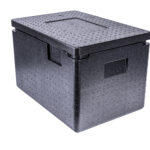
Polypropylène expansé (EPP) les boîtes doivent leur résistance chimique et leur isolation thermique exceptionnelles à une structure en billes à cellules fermées et à la nature inerte du polypropylène. Chaque boîte est moulée à partir de millions de minuscules perles fusionnées sous pression de vapeur pour former une coque rigide.. Contrairement aux mousses à cellules ouvertes qui absorbent les liquides, La matrice cellulaire non poreuse de l'EPP bloque l'humidité et les produits chimiques, résister aux huiles, acides et solvants. Cette structure scellée emprisonne également les poches d'air, donnant au EPP une faible conductivité thermique et une isolation exceptionnelle. Même les températures extrêmes ne compromettent pas son intégrité – la plage d'utilisation va de –40 °C to +110 °C et les points de fusion dépassent 160 °C.
Développer la science
À la base, Le EPP est un polymère technique tridimensionnel fabriqué en pré-expansant de la résine de polypropylène en perles qui sont ensuite moulées en forme. Ce processus crée un réseau interne de cellules d'air fermées séparées par de fines parois en polymère.. Parce que les chaînes polymères sont hydrophobes et chimiquement inertes, agents corrosifs courants comme huiles, les graisses et la plupart des acides ou solvants ne peuvent pas les décomposer. Entre-temps, les vides entre les cellules assurent l'isolation thermique, un peu comme des milliers de minuscules flacons Thermos. La densité peut être réglée entre 15 et 100 kg/m³ pour équilibrer le poids et la force, donner aux concepteurs la flexibilité de répondre aux divers besoins d'expédition.
EPP propose également résilience et récupération de forme: compresser la mousse, et il revient sans déformation permanente. En effet, les billes fusionnées peuvent absorber l’énergie d’impact puis reprendre leur forme originale.. Cette propriété est inestimable lorsque les colis subissent des vibrations, chutes ou pressions d'empilement. Combiné avec 100% Recyclabalité, Le EPP est à la fois durable et durable, permettant aux boîtes d'être réutilisées pendant des centaines de cycles.
Microstructure et chimie des polymères
Le secret du EPP réside à l’échelle microscopique. Chaque perle contient des poches de gaz encapsulées par de fines parois de polypropylène. Quand les perles fusionnent, le réseau de verrouillage forme un treillis rigide qui résiste aux attaques chimiques et empêche la pénétration des liquides. Contrairement à certaines mousses qui reposent sur des agents gonflants avec des compromis environnementaux, le polypropylène est un polymère d'hydrocarbure stable. Il ne réagit pas avec l'eau, la plupart des alcalis ou des acides, et maintient les propriétés mécaniques sur une large plage de températures. Sa structure hydrophobe repousse l'humidité, ce qui signifie que même une exposition prolongée à la condensation ou aux déversements n'entraîne que absorption d'humidité ci-dessous 0.3% en volume. C'est des ordres de grandeur inférieurs à ceux du polystyrène expansé conventionnel. (PSE) ou mousses de polyuréthane, qui peut absorber les liquides et se dégrader avec le temps.
| Propriété | Valeurs typiques | Sens pratique |
| Densité | 15–100 kg/m³ | Ajustez le poids et la force pour les charges légères ou lourdes |
| Température de service | –40 °C à +110 °C | Convient aux conditions de congélation et à la stérilisation thermique |
| Point de fusion | >160 °C | Les boîtes restent stables lorsqu'elles sont exposées à l'eau bouillante ou à la stérilisation |
| Absorption de l'humidité | <0.3% | Résiste à la pénétration de l'eau et conserve l'isolation |
| Résistance chimique | Résiste aux huiles, acides, solvants | Transporte en toute sécurité des matières dangereuses ou corrosives |
| Recyclabalité | 100% | Les boîtes peuvent être retraitées et réutilisées, soutenir l’économie circulaire |
Mesures de performances thermiques et chimiques
Du point de vue des performances, un Boîte d'isolation EPP c'est comme une chambre climatique personnelle. Le la mousse à cellules fermées limite le transfert de chaleur, en veillant à ce que les températures internes restent comprises entre 2 et 8 °C ou –18 °C pendant 72 à 96 heures sans électricité. Parce que le matériau n'absorbe pas l'humidité, il y a peu de risque de croissance bactérienne ou de contamination. La résistance chimique signifie que même si un flacon fuit ou si un pack de gel se brise, la mousse ne se dégradera pas et ne dégagera pas d’odeurs. Le EPP peut résister à des nettoyages répétés avec des détergents et des désinfectants doux, ce qui le rend idéal pour les produits pharmaceutiques, expéditions de biotechnologie et de produits chimiques.
Conseils pratiques pour des expéditions plus sûres
Utilisez des parois épaisses et des couvercles bien ajustés: Les boîtes EPP plus résistantes avec une épaisseur de paroi de 35 à 50 mm offrent des temps de maintien plus longs et une meilleure protection contre les déversements de produits chimiques. Un couvercle hermétique minimise encore davantage l’échange d’air.
Boîtes de mise en ligne pour risques extrêmes: Pour les substances hautement corrosives ou glace carbonique, ajouter une doublure interne ou un confinement secondaire pour protéger la boîte et respecter la réglementation.
Nettoyer avec des détergents doux: Pour prolonger la vie, laver les boîtes avec de l'eau tiède et un détergent doux après chaque utilisation. Évitez les solvants agressifs qui pourraient attaquer les joints ou les étiquettes..
Surveiller le contenu: Placer des indicateurs de température ou d’humidité à l’intérieur de la boîte. De nombreux conteneurs EPP modernes intègrent Capteurs IoT pour envoyer des alertes en temps réel si les conditions s'écartent des points de consigne.
Étude de cas: Un distributeur régional de vaccins a été confronté à des pertes répétées lorsque des fuites de produits chimiques provenant des flacons de vaccins ont corrodé les refroidisseurs standards et compromis les charges utiles.. Après le passage aux boîtes EPP résistantes aux produits chimiques, ils ont maintenu une température de 2 à 8 °C pendant 80 heures et élimination de la détérioration. Sur 12 mois, ils ont déclaré des économies de USD 1.2 millions et amélioration de la disponibilité des vaccins.
Comment les boîtes EPP résistantes aux produits chimiques se comparent-elles aux autres matériaux d'isolation?
Toutes les glacières ne sont pas égales. Lorsque l'on compare le EPP à des matériaux comme le polystyrène expansé (PSE), polyéthylène expansé (EPE) et glacières métalliques traditionnelles, L'EPP offre systématiquement une combinaison plus forte de durabilité, résistance chimique et contrôle de la température. Le PSE peut fournir une bonne isolation à faible coût, mais il manque de solidité et absorbe l'humidité, conduisant à une contamination. L'EPE est flexible et moins cher mais se déforme facilement sous charge et offre une résistance chimique limitée. Les refroidisseurs rigides en métal ou en plastique ont des coques solides mais une mauvaise isolation à moins qu'ils ne soient associés à des inserts en mousse.
Avantages à long terme et rentabilité
Bien que le coût initial d'un boîtier EPP puisse être plus élevé que celui d'une glacière jetable EPS, le coût total de possession raconte une autre histoire. Les conteneurs EPP peuvent être réutilisés des centaines de fois sans perdre leur intégrité structurelle, ce qui réduit considérablement les coûts de lecture. Leur l'inertie chimique signifie qu'aucun agent de nettoyage chimique n'est requis, réduisant les dépenses de maintenance et l’impact environnemental. Ils maintiennent également la température plus longtemps, réduire la quantité de glace ou packs de gel nécessaire. En revanche, Les conteneurs EPS se fissurent souvent après quelques utilisations et ne peuvent pas être désinfectés efficacement. Sur une année complète d'expéditions hebdomadaires, une boîte EPP coûte généralement moins de la moitié du montant d'une série de boîtes EPS jetables.
Propriétés comparatives du EPP, EPS et EPE
| Fonctionnalité | EPP | PSE | EPE | Refroidisseurs métalliques/durs |
| Résistance aux chocs | Haut, reprend sa forme après déformation | Faible, se casse facilement | Modéré | Très élevé |
| Résistance chimique | Résiste aux huiles, acides, solvants | Pauvre, se dissout dans de nombreux solvants | Modéré | Cela dépend de la doublure |
| Absorption d'eau | <0.3% | Jusqu'à 4% | 1–2% | Très faible |
| Isolation thermique | Excellent | Bien | Modéré | Équitable |
| Réutiliser les cycles | 200–500+ | 1–5 | 10–20 | 50–100 |
| Recyclabalité | Entièrement recyclable | Difficile | Limité | Recyclable mais lourd |
| Poids | Très léger | Lumière | Très léger | Lourd |
| Coût typique par utilisation | Faible (réparti sur de nombreuses utilisations) | Haut (à usage unique) | Moyen | Moyen |
Trouver le matériau adapté à vos besoins
Lorsque vous expédiez des produits de grande valeur, marchandises sensibles à la température, EPP offre une fiabilité et une résilience inégalées. Si vous avez uniquement besoin d'un envoi aller simple pour des marchandises non critiques, Le PSE pourrait suffire en raison de son faible coût initial. L'EPE flexible est utile pour l'amorti mais n'a pas la résistance structurelle pour les expéditions volumineuses. Les glacières métalliques fonctionnent bien pour le camping et la pêche, mais nécessitent souvent de lourdes charges de glace et n'offrent pas de résistance chimique.. For most professional chaîne du froid applications—particularly where chemical exposure or reuse is expected—EPP is the safest longterm choice.
Comment sélectionner et entretenir des boîtes d'isolation EPP résistantes aux produits chimiques
Choisir la bonne boîte EPP consiste à faire correspondre les exigences du produit avec les capacités du conteneur. Facteurs tels que la durée de l'expédition, fragilité, la conformité réglementaire et la logistique de retour influencent votre choix. Vous trouverez ci-dessous des directives pratiques de sélection et d’entretien qui garantissent la pérennité de votre investissement..
Outils de décision utiles
Vérifiez les détails avant de choisir l'emballage
Ces outils rapides peuvent vous aider à comparer le risque d'itinéraire, besoins de dimensionnement, choix de liquide de refroidissement, et les détails de l'emballage avant de demander un devis.
Référence du matériau isolant
Comparez les choix de matériaux d'isolation pour différents besoins d'emballage de la chaîne du froid.
Comparez les matériauxLiquide de refroidissement & Référence PCM
Comparez les options de liquide de refroidissement et de PCM lorsqu'un itinéraire nécessite une prise en charge supplémentaire de la température.
Comparez les optionsSélecteur d'emballage
Comparez les options d'emballage isotherme par produit, itinéraire, et besoin de température.
Trouver un emballageFacteurs clés à considérer
Durée d'expédition et plage de température: Déterminer combien de temps le produit doit rester dans une plage de température spécifique. Les murs en EPP de plus forte densité retiennent le froid plus longtemps, tandis que les parois plus fines minimisent le poids. Les séparateurs isolés ou les panneaux sous vide peuvent prolonger les temps de rétention pour les expéditions dépassant 96 heures.
Fragilité du produit: Flacons fragiles, les produits biologiques ou électroniques nécessitent des inserts souples, séparateurs ou amortisseurs. L’absorption d’énergie du EPP réduit les dommages causés par les vibrations, mais vous pouvez ajouter des inserts en mousse pour une protection supplémentaire.
Logistique de retour: Si vous envisagez de réutiliser la boîte, concevez-le pour un nettoyage et un retrait faciles des étiquettes. Envisagez des conceptions pliables ou emboîtables pour réduire le volume du fret de retour.
Conformité réglementaire: Les expéditions pharmaceutiques nécessitent souvent un emballage validé avec cartographie des températures. Assurez-vous que votre conteneur EPP a été qualifié pour votre produit et votre destination..
Nettoyage et désinfection: Entretenir les boîtes en les nettoyant avec un détergent doux et de l'eau après chaque utilisation. Vérifiez périodiquement les fissures, joints déformés ou dégradés et remplacer les unités endommagées.
Choisir la bonne boîte pour différents produits
| Catégorie de produit | Durée (heures) | Caractéristiques EPP recommandées | Pourquoi ça compte |
| Vaccins & Biologique | 48–96 | Murs épais, poches pour enregistreur de données, inserts validés | Maintenir 2 à 8 °C, protéger des fuites de produits chimiques et des chocs |
| Aliments surgelés & Glace | 24–72 | Couvercle hermétique, coutures étanches, doublure de qualité alimentaire | Empêcher la fonte, bloque les odeurs et résiste aux graisses |
| Produits frais & Kits de repas | 12–36 | Épaisseur de paroi moyenne, packs de glace réutilisables, séparateurs | Gérer l’humidité et prévenir les ecchymoses |
| Électronique sensible & Piles | 48–120 | Doublure antistatique, EPP résistant aux acides, inserts en mousse | Protéger contre les fuites et les impacts mécaniques |
| Laboratoire & Échantillons chimiques | 72+ | Double confinement, doublure intérieure résistante aux produits chimiques | Protégez-vous contre les déversements de solvants et maintenez la température |
Meilleures pratiques de maintenance
Inspecter avant chaque expédition: Cherchez des fissures, déformations ou joints compromis qui pourraient réduire l’isolation ou le confinement des fuites.
Nettoyer rapidement: Rincer et laver les boîtes après chaque utilisation avec une solution détergente douce. Évitez les lavages à haute pression qui pourraient forcer l’eau à pénétrer dans les coutures; plutôt, essuyer avec un chiffon et laisser sécher à l'air.
Enregistrer les cycles d'utilisation: Suivez le nombre de fois que chaque boîte a été utilisée. Après 200 à 300 cycles, vérifier la déformation rémanente à la compression et les performances d'isolation; retirer les boîtes montrant une usure excessive.
Conserver correctement: Conservez les boîtes au sec, zone ombragée. Évitez d'empiler des charges lourdes dessus pendant de longues périodes pour préserver la mémoire de forme..
Accessoires de mise à niveau: Remplacer les joints, joints et loquets si nécessaire. Consider adding smart temperature indicators or IoT monitors to ensure compliance with strict chaîne du froid regulations.
Où sont utilisées les boîtes EPP résistantes aux produits chimiques?
Les boîtes EPP sont des héros méconnus dans de nombreux secteurs. Leur combinaison unique d'inertie chimique, leur stabilité thermique et leur durabilité les rendent adaptés à des industries bien au-delà de la livraison alimentaire de base. Voici quelques secteurs clés bénéficiant de cette technologie:
Expéditions pharmaceutiques et biotechnologiques
Vaccins, anticorps monoclonaux, les thérapies géniques et les kits de diagnostic exigent un contrôle précis de la température et une stérilité. La surface non poreuse du EPP résiste à la contamination, alors que sa capacité à conserver le contenu entre 2 et 8 °C ou dans des plages de congélation jusqu'à 96 heures assure la puissance. La résistance chimique est vitale lors du transport de formulations à base de solvants ou de produits de nettoyage, prévenir la dégradation des emballages et la contamination croisée. De nombreux distributeurs pharmaceutiques choisissent les boîtes EPP pour leur réutilisation et leur facilité de validation, ce qui réduit les coûts globaux de la chaîne d’approvisionnement.
Logistique alimentaire et commerce électronique
La croissance rapide des services d'épicerie et de kits repas en ligne signifie que les produits périssables doivent arriver frais. Les boîtes en EPP conservent les fruits de mer, produits laitiers et produire du froid sans ajouter de poids significatif. Leur structure scellée bloque les graisses, huiles et acides présents dans les aliments, prévenir les odeurs et les taches. Pour les restaurants et les fournisseurs de kits repas, Les boîtes EPP réutilisables réduisent les déchets d'emballage et s'alignent sur les initiatives de développement durable. Ils isolent également des températures extérieures chaudes lors des livraisons estivales..
Électronique, Batteries et composants automobiles
Batteries lithium-ion, les cartes de circuits imprimés et les appareils électroniques de grande valeur sont sensibles à la fois aux variations de température et à l'exposition aux produits chimiques. La résistance aux chocs de l’EPP absorbe les chocs pendant le transport, tandis que son inertie chimique protège des fuites d'électrolyte ou des flux corrosifs. Les fournisseurs automobiles utilisent des conteneurs EPP pour expédier les gonfleurs d'airbags et les modules au lithium, car la mousse peut résister aux huiles et aux liquides de frein sans se dégrader.. Cela réduit le risque d'accident et garantit que les composants arrivent en état de fonctionnement..
Transport d'échantillons chimiques et de laboratoire
Les laboratoires et les fabricants de produits chimiques déplacent des échantillons contenant des acides, solvants ou réactifs susceptibles de dégrader rapidement les emballages standards. Les boîtes EPP offrent un système de double protection: la mousse résiste aux attaques chimiques, et les cellules fermées empêchent les infiltrations, protéger les manipulateurs et préserver l’intégrité des échantillons. De nombreux conteneurs EPP ont des canaux intégrés pour la glace carbonique ou les packs de gel, permettant un transport sûr des réactifs sensibles à la température. Lorsqu'il est doublé d'un confinement secondaire, ils sont conformes à la réglementation sur les matières dangereuses.
| Industrie | Exigences clés | Comment les boîtes EPP fonctionnent |
| Pharmaceutique & Biotechnologie | Contrôle précis de la température, stérilité, sécurité chimique | Le EPP maintient des températures stables pendant 72 à 96 heures et résiste aux solvants |
| Frais & Aliments surgelés / Kits de repas | Rétention au froid, hygiène, résistance aux odeurs | Les cellules fermées bloquent les graisses et les odeurs; les boîtes sont faciles à nettoyer |
| Électronique & Automobile | Protection contre les chocs, résistance aux fuites chimiques, stabilité de la température | L'EPP absorbe les chocs et résiste aux huiles et aux acides de batterie |
| Chimique & Échantillons de laboratoire | Confinement des réactifs dangereux, le respect des normes de sécurité | L'inertie chimique et les revêtements secondaires de l'EPP protègent contre les déversements |
| Exécution du commerce électronique | Poids léger, réutilisabilité, potentiel de marque | Les boîtes EPP peuvent être personnalisées et réutilisées pour des centaines d'envois |
2025 Tendances: What Does the Future Hold for EPP chaîne du froid Packaging?
The rapid growth of global chaîne du froids and advances in materials technology are transforming the emballage isolé paysage. Dans 2025, le marché des caissons isolants en EPP est estimé à environ USD 2 milliards et devrait croître à 7% chaque année à travers 2033. Entre-temps, le plus large refroidisseur le marché devrait atteindre USD 8.1 milliards 2025, and the chaîne du froid packaging industry overall could exceed USD 89.84 milliards 2034. Voici les principales tendances qui façonnent cette croissance:
Aperçu des derniers progrès
Systèmes d'isolation hybrides: Combinaison de EPP avec des panneaux d'isolation sous vide (Vips) ou les matériaux à changement de phase prolongent les temps de maintien au-delà 120 heures tout en gardant un poids faible. Ceci est essentiel pour les régions éloignées et les vols long-courriers.
Surveillance compatible IoT: Les boîtiers EPP intelligents sont désormais équipés de capteurs intégrés qui transmettent la température, données d'humidité et de choc en temps réel, permettant une intervention proactive si un envoi s'écarte de sa plage de sécurité.
Chaînes d'approvisionnement circulaires: De plus en plus d'entreprises adoptent programmes en boucle fermée, collecte des boîtes EPP usagées pour le nettoyage, rénovation et redéploiement. Cela réduit les déchets et démontre la responsabilité de l’entreprise.
Informations sur le marché et la réglementation
Les facteurs qui motivent l’adoption du EPP comprennent des réglementations strictes sur la distribution des vaccins et des produits biologiques, l'expansion de services d'épicerie et de kits repas en ligne, et la nécessité de minimiser les déchets. Les gouvernements renforcent les règles sur plastiques à usage unique, inciter les entreprises à se tourner vers les emballages EPP réutilisables. En plus, les mesures de durabilité influencent désormais les décisions d'approvisionnement, avec de nombreux organismes privilégiant les matières recyclables. Géographiquement, North America and Europe currently dominate the EPP chaîne du froid market, mais l'Asie-Pacifique est la région qui connaît la croissance la plus rapide en raison de l'augmentation des investissements dans les soins de santé et de l'adoption du commerce électronique..
Questions fréquemment posées
- À quels types de produits chimiques les boîtes EPP peuvent-elles résister?
Le EPP résiste aux huiles, graisses, alcools, la plupart des acides et de nombreux solvants. Il n'est pas affecté par l'eau ou les alcalis faibles, ce qui le rend adapté au transport de produits pharmaceutiques, produits chimiques et batteries. Évitez l'exposition à des acides oxydants très forts ou à des solvants halogénés., ce qui peut dégrader lentement le polymère en cas de contact prolongé. - Combien de temps les boîtes EPP peuvent-elles maintenir une température stable?
Avec un bon conditionnement et le bon nombre de compresses froides, Les boîtes EPP peuvent maintenir une température de 2 à 8 °C ou de –18 °C pendant 72–96 heures. Utiliser des murs plus épais, les panneaux à vide ou les matériaux à changement de phase haute performance peuvent prolonger les temps de maintien au-delà de quatre jours. - Les boîtes EPP résistantes aux produits chimiques sont-elles sans danger pour le contact alimentaire?
Oui. L'EPP de qualité alimentaire est approuvé pour le contact direct avec les aliments. Sa structure à cellules fermées empêche l'absorption des graisses, huiles et odeurs, assurer des livraisons propres et hygiéniques. Vérifiez toujours que la boîte est certifiée alimentaire et nettoyez-la entre les utilisations.. - Combien de fois puis-je réutiliser une boîte EPP?
La plupart des boîtes EPP peuvent être réutilisées entre 200 et 500 fois sans perte significative de performances. Le suivi des cycles d'utilisation et l'inspection des boîtes pour déceler tout dommage vous aideront à déterminer quand les mettre au rebut. - Comment recycler les emballages EPP?
Le EPP est 100% recyclable. Contactez votre fournisseur ou un recycleur spécialisé pour collecter les cartons usagés. De nombreux prestataires logistiques proposent des programmes de reprise dans lesquels les boîtes sont broyées en granulés et retraitées en de nouveaux produits.. - Les boîtes en EPP sont-elles plus chères que les glacières en PSE ou en carton?
Le coût initial des boîtes EPP est plus élevé, mais leur longue durée de vie et leur réutilisabilité les rendent moins chers en termes de livraison.. Ils réduisent également le besoin d’emballages secondaires externes et réduisent les coûts d’élimination des déchets., améliorer le retour sur investissement à long terme.
Résumé et recommandations
Chemicalresistant EPP insulation boxes are redefining chaîne du froid logistics. Leur construction en mousse à cellules fermées offre une faible conductivité thermique, absorption élevée des chocs et résistance aux huiles, acides et solvants. Contrairement aux boîtes EPS jetables, Les boîtes EPP sont durables et entièrement recyclables, économiser des coûts sur des centaines d'expéditions. Ils fonctionnent de manière fiable entre –40 °C et +110 °C, maintenir la stabilité de la température pendant des jours, et protéger les biens fragiles des chocs.
Pour tirer parti de ces avantages, sélectionnez une boîte EPP qui correspond aux exigences thermiques et chimiques de votre produit, et concevoir un programme de maintenance pour prolonger sa durée de vie. Intégrez des capteurs de température et envisagez des conceptions hybrides avec des VIP pour des temps de maintien prolongés. Adopter une stratégie de reverselogistics pour récupérer et recycler les cartons, aligner les objectifs de durabilité. Lorsque vous combinez ces pratiques, Les boîtes EPP peuvent offrir une protection supérieure, réduire les déchets et améliorer la satisfaction des clients.
À propos du Tempk
Le Tempk est un leader des solutions d'emballage de la chaîne du froid. Nos boîtes isolantes EPP sont conçues pour la performance et la durabilité, combinant une mousse EPP haute densité avec un moulage de précision pour des joints étanches et une isolation efficace. Nous proposons des conteneurs prévalidés pour les produits pharmaceutiques, expéditions de produits biologiques et alimentaires, ainsi que des conceptions personnalisables pour les applications électroniques et industrielles. En mettant l'accent sur la qualité, conformité réglementaire et chaînes d’approvisionnement circulaires, nous aidons les entreprises à expédier des marchandises sensibles à la température en toute sécurité tout en réduisant leur impact sur l'environnement. Pour plus d'informations ou pour demander un échantillon, contact us and discover how EPP packaging can transform your chaîne du froid operations.