PliableEPPInsulationBox: Votre guide 2025 sur l’efficacité de la ColdChain
La boîte pliable EPPinsulation devient rapidement la star de la logistique sous chaîne du froid. Dans les premières phrases, c'est clair pourquoi: ce conteneur léger mais robuste peut contenir des vaccins, kits de fruits de mer ou de repas à 2–8°C ou −18°C pendant 72 à 96 heures lorsqu'ils sont associés à des panneaux isolés sous vide ou à des matériaux à changement de phase. Dans 2025 le marché du polypropylène expansé (PPE) la mousse seule est évaluée à environ 2,2 milliards de dollars et devrait plus que doubler d'ici 2035-un témoignage de la polyvalence du matériau. Cet article explique pourquoi les boîtes pliables en PPE sont importantes, comment ils sont fabriqués, où ils s'intègrent dans votre entreprise et quelles tendances surveiller.
Cet article répondra:
Pourquoi les boîtes isolantes pliables en EPP surpassent les glacières traditionnelles et comment ils maintiennent la température jusqu'à 72 à 96 heures.
Ce qui rend le PPE spécial-sa structure cellulaire fermée, résistance aux chocs, isolation thermique et recyclabilité.
Comment sont fabriquées et personnalisées les boîtes pliables en EPP, y compris le mécanisme de pliage et l'intégration des couleurs.
Où utiliser ces boîtes: médicaments, livraison de nourriture, électronique, loisirs automobiles et de plein air.
2025 tendances et aperçus du marché comme le 8.6 % TCAC pour la mousse EPP, innovations dans les qualités haute densité, Mandats de surveillance et de durabilité de l’IoT.
Pourquoi choisir une boîte isolante pliable en EPP pour l'efficacité de la chaîne du froid?
Une boîte isolante pliable en EPP combine une isolation supérieure, conception durable et peu encombrante pour maintenir les marchandises dans des plages de température strictes tout en réduisant le coût total de possession. Contrairement au polystyrène expansé à usage unique (PSE) glacières, la mousse EPP à cellules fermées emprisonne les poches d'air qui ralentissent le transfert de chaleur et bloquer la chaleur 30 % plus efficacement. Les murs mesurent généralement environ 1.5 pouces d'épaisseur, permettre aux vaccins ou aux fruits de mer de rester à l'intérieur 2–8°C ou −18°C jusqu'à 72 heures et jusqu'à 96 heures avec les inserts avancés. Des tests en laboratoire montrent qu'un conteneur EPP peut résister à 500+ réutiliser les cycles sans perdre la forme, réduisant les déchets d'emballage et les délais de récupération à environ 18 mois.
Explication élargie
La polyvalence d’EPP vient de son structure de perles à cellules fermées qui fournit une absorption d'énergie, résistance aux chocs multiples, isolation thermique, flottabilité et résistance chimique. Chaque perle est fusionnée lors du moulage du coffre à vapeur, formant une mousse légère qui résiste à l'eau et aux solvants. Cette résilience permet à la boîte de protéger les produits délicats des chocs et des variations de température tout en restant facile à manipuler.. Par rapport aux refroidisseurs EPS, Les boîtes EPP sont à propos 50 % plus léger et plus absorbant les chocs. Ces caractéristiques réduisent les coûts de transport et permettent une manutention manuelle sans casse. La version pliable va plus loin: il s'effondre à plat ou s'emboîte pour économiser jusqu'à 60 % espace de stockage, rendre la logistique des retours et l’entreposage plus efficaces. Parce que le PPE est 100 % recyclable et ne supporte pas la croissance microbienne, le matériau est conforme aux mandats de durabilité et aux réglementations relatives au contact alimentaire.
En termes d'économie, une box EPP coûte plus cher à l'avance (environ USD 80 par rapport au dollar américain 25 pour un refroidisseur EPS) mais s'amortit rapidement grâce à la réutilisation. Un distributeur pharmaceutique sauvé USD 1.2 millions de dollars de pertes liées à la détérioration des vaccins après le passage aux conteneurs EPP, tandis qu'un exportateur de fruits de mer a réduit les expéditions rejetées de 15 % à 0.3 %. La durabilité des charnières des caisses pliables en PPE permet des milliers de cycles d'ouverture et de fermeture sans échec, assurer une fiabilité à long terme.
Comprendre le PPE: La science des matériaux derrière la boîte pliable
La mousse EPP commence sous forme de billes de polypropylène solides combinées à des agents gonflants. Pendant pré-expansion, la chaleur de la vapeur fait se dilate comme du pop-corn, définir leur densité finale. Les perles sont alors conditionné dans des silos pour que la pression interne se stabilise. Dans le étape de moulage et de fusion, les billes conditionnées sont injectées pneumatiquement dans un moule en aluminium et exposées à de la vapeur à haute pression; cela les amène à se dilater à nouveau et à fusionner aux points de contact. Après refroidissement, la boîte est éjectée et tout excédent de matière est coupé. Ce processus crée une cohésion, structure à cellules fermées à la fois légère et extrêmement résistante. Pour obtenir un design pliable, les fabricants ajoutent géométries de charnières et lignes de pliage qui préservent l’intégrité thermique tout en permettant d’aplatir la boîte. Des entreprises telles que l'ICEE ont démontré charnières qui gèrent 20 kg par 100 mm et peut être ouvert des milliers de fois sans se casser. Le résultat est un contenant réutilisable qui combine la résistance mécanique de la mousse rigide avec la commodité d'une caisse pliable..
| Comparaison | PliableEPPBox | Boîte EPS | Implication pratique |
| Temps de maintien de la température | Maintient 2–8°C ou −18°C pendant 72 à 96 heures lorsqu'il est associé à des inserts | Typiquement 24–48 heures | Des temps de maintien plus longs réduisent les packs de gel et permettent un acheminement flexible. |
| Réutilisabilité | 500+ cycles avec nettoyage | Souvent à usage unique | Les boîtes réutilisables réduisent les coûts à long terme et les déchets mis en décharge. |
| Poids | À propos 50 % plus léger que EPS | Plus lourd | Un poids réduit réduit les coûts de transport et facilite la manutention. |
| Absorption des chocs | Réformes après impact | Sujet aux fissures | Les produits sont mieux protégés; Moins de détérioration. |
| Recyclabalité | 100 % recyclable et réutilisable | Difficile de recycler | Favorise la durabilité et réduit les frais d’élimination. |
| Coût initial | ~USD 80 par boîte | ~USD 25 par boîte | Un coût initial plus élevé est amorti grâce à la réutilisation et à une moindre détérioration. |
Astuces et conseils pratiques
Livraisons locales (< 24 heures): Pour les livraisons le jour même, une boîte isolante pliable en EPP assure la tranquillité d'esprit en cas de retard. Pré-refroidissez vos marchandises et incluez des packs de gel pour prolonger le temps de conservation.
Expéditions à travers le pays (48–72 heures): Utilisez des boîtes EPP à parois épaisses (≥1,5 pouces) combiné avec de la neige carbonique ou des panneaux isolés sous vide pour maintenir des températures gelées.
Systèmes en boucle fermée: Suivez les déplacements de chaque boîte et planifiez le nettoyage après chaque utilisation. Plier la boîte à plat permet d'économiser jusqu'à 60 % espace de stockage et simplifie la logistique de retour.
Nettoyage: Rincez la boîte à l'eau tiède, eau savonneuse et séchage à l'air. Évitez les frottements abrasifs; inspecter régulièrement les joints et les charnières. La surface non poreuse empêche la croissance bactérienne.
Surveillance en temps réel: Intégrez des capteurs IoT ou des enregistreurs de données Bluetooth pour enregistrer la température interne et l'emplacement. Cela vous aide à intervenir avant les excursions et prouve le respect des directives des bonnes pratiques de distribution..
Exemple de cas: Un distributeur pharmaceutique éliminé USD 1.2 millions de dollars de pertes liées à la détérioration des vaccins dans 18 mois après avoir adopté les conteneurs pliables en PPE. De la même manière, un exportateur de fruits de mer a réduit les expéditions rejetées de 15 % à 0.3 % en passant à l'EPP, démontrant des économies de coûts tangibles et des améliorations de la qualité.
Comment les boîtes PPE pliables servent différentes industries
Produits pharmaceutiques et biotechnologie: Ces secteurs exigent un contrôle précis des températures et le respect des Bonnes Pratiques de Distribution. (PIB). Les directives réglementaires recommandent de conserver les vaccins entre 2 et 8 °C dans des réfrigérateurs de qualité pharmaceutique et entre -50 °C et -15 °C dans des congélateurs.. Boîtes PPE avec les matériaux à changement de phase peuvent maintenir ces plages jusqu'à 72 à 96 heures, et leur mousse à cellules fermées s'intègre facilement aux enregistreurs de données et aux trackers IoT. La résilience de l’EPP protège également les produits biologiques fragiles et réduit les excursions thermiques.
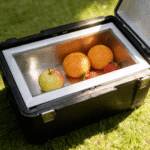
Kits repas et livraison d'épicerie: Alors que le commerce électronique est en plein essor, les clients attendent du frais, nourriture d'origine locale livrée rapidement. Les conteneurs EPP gardent les produits et les kits de repas au frais assez longtemps pour la logistique du dernier kilomètre, prendre en charge plusieurs cycles de réutilisation et plier à plat pour un retour efficace. Leur légèreté réduit la fatigue du coursier, et la résistance aux chocs de la mousse protège les fruits et fruits de mer délicats. Les boîtes pliables en EPP sont également utilisées pour les activités de plein air, le camping et les pique-niques parce qu'ils sont léger, isolé thermiquement et hygiénique.
Transport médical et pharmaceutique: Au-delà des vaccins, les boîtes pliables en EPP contiennent des échantillons de sang, insuline et thérapies géniques. Leur résistance à l'humidité et aux produits chimiques et les surfaces non poreuses empêchent la contamination. La capacité de maintenir −70°C à −80°C lorsqu'ils sont associés à des matériaux à changement de phase appropriés, ils conviennent à l'ultra chaîne du froid. En Allemagne, la demande de conteneurs thermiques à base de PPE a augmenté 21 % année après année après que l’Agence européenne des produits chimiques a réaffirmé la conformité du PPE au contact alimentaire.
Emballage électronique et industriel: Les composants électroniques sensibles nécessitent une protection contre la température et les chocs.. Dans 2025, LG Electronics a signalé un 35 % réduction des bris d'écran OLED après avoir adopté l'emballage en mousse EPP. Loop Industries a étendu l'utilisation du PPE dans ses conteneurs logistiques réutilisables en raison de la capacité du matériau à résister à des chargements répétitifs.. Une boîte pliable en EPP fait office de mini-réfrigérateur portable et d'amortisseur, garder les appareils dans des plages de sécurité pour 24–72 heures avec des packs de gel.
Composants automobiles et industriels: La mousse EPP haute densité est en tête de la croissance du marché en raison de sa résistance supérieure, isolation thermique et résistance aux chocs. Les constructeurs automobiles comme Stellantis intègrent l'EPP dans les tableaux de bord et les pare-chocs pour réduire la masse et atteindre les objectifs d'émissions., tandis que Hyundai l'utilise dans les sièges des véhicules électriques pour améliorer la résistance aux chocs et la recyclabilité.. Les conteneurs pliables en EPP sont également utilisés pour transporter des pièces automobiles telles que des étriers de frein et des rétroviseurs., les protégeant des vibrations et de l’humidité.
Options de conception et de personnalisation
Les fabricants proposent une personnalisation approfondie pour garantir que votre boîte isolante pliable en EPP correspond à votre produit et à votre marque.. Les pigments de couleur peuvent être ajoutés directement aux perles brutes, création couleurs complètes qui ne s'écailleront pas et ne se décoloreront pas. Les boîtes peuvent être moulées avec votre logo et dimensionnées aux dimensions exactes, et les poignées ou charnières peuvent être conçues pour une utilisation ergonomique. Les modèles avancés intègrent antistatique, qualités dissipatives ou conductrices pour l'emballage électronique ou qualités à faibles émissions pour minimiser les composés organiques volatils dans les intérieurs automobiles. Lors du choix d'une boîte, considérer son densité (15–200g/L), l'épaisseur de la paroi et si vous avez besoin de fonctionnalités optionnelles telles que Protection ESD. Les murs à plus haute densité offrent plus de résistance et d'isolation mais augmentent légèrement le poids.
Pliage et entretien faciles
Les boîtes pliables en PPE utilisent des géométries de charnières techniques qui garantissent que la mousse se plie le long de lignes prédéterminées sans se casser.. Le La conception ICEE ColdFold® permet d'ouvrir et de fermer les boîtes des milliers de fois tout en maintenant des joints étanches qui empêchent les fuites d'air. Le pliage permet d'économiser jusqu'à 60 % de l'espace—important lors du retour de conteneurs vides ou du stockage d'une capacité supplémentaire. Lors du pliage ou du dépliage, suivez les instructions du fabricant pour éviter de tordre la charnière; une manipulation appropriée prolonge la durée de vie de la boîte. Après chaque utilisation, laver la boîte avec un détergent doux et laisser sécher; le résistant à l'humidité, la surface non poreuse décourage la croissance des bactéries et des moisissures. Pour applications médicales ou alimentaires, un nettoyage périodique à la vapeur permet de stériliser la boîte sans dégrader le matériau.
2025 Derniers développements et tendances en matière d'emballages pliables en EPP
Aperçu de la tendance
L’industrie de la mousse EPP entre dans une période d’expansion rapide. Dans 2025 le marché mondial de la mousse EPP est évalué à 2,2 milliards de dollars et devrait atteindre 5,1 milliards de dollars d'ici 2035, représentant un taux de croissance annuel composé de 8.6 %. La croissance est tirée par la demande croissante d’allégement automobile, biens de consommation, emballage électronique et emballage industriel. La mousse EPP haute densité domine le marché en raison de sa résistance supérieure et résistance aux chocs, tandis que le PPE poreux gagne en popularité dans l'insonorisation et l'isolation CVC..
Aperçu des dernières innovations
Intégration automobile: Stellaire 2024 un rapport sur le développement durable confirme l'utilisation du PPE dans les tableaux de bord et les pare-chocs pour atteindre les objectifs de réduction des émissions de CO₂ de l'UE. Hyundai annoncé en janvier 2025 que l'EPP a été déployé dans les systèmes de sièges des véhicules électriques pour la résistance aux chocs et la recyclabilité.
Emballage électronique: Bulletin trimestriel de LG Electronics (Février 2025) a noté que l'incorporation de mousse EPP dans les modules de transport OLED réduisait la casse de l'écran de 35 %. Loop Industries a étendu l'utilisation du PPE à l'ensemble de ses conteneurs logistiques réutilisables pour soutenir les objectifs de zéro déchet.
Conformité contact alimentaire: En décembre 2024, l’Agence européenne des produits chimiques a réaffirmé la conformité de l’EPP aux normes REACH relatives au contact alimentaire, incitant un 21 % hausse des ventes de conteneurs thermiques EPP en Allemagne.
Efficacité de fabrication: JSP Corporation a lancé une ligne de production EPP de nouvelle génération en avril 2025 que temps d'expansion des billes réduit de 18 %, réduire la consommation d'énergie. Kaneka Corporation a ouvert une installation dédiée au PPE au Texas en février 2025 pour localiser l’offre et répondre à la demande croissante en Amérique du Nord.
Durabilité et recyclage: Bien que la volatilité des prix des matières premières et le recyclage post-consommation limité restent des défis, les entreprises développent des technologies de recyclage chimique et des modèles en boucle fermée qui devraient mûrir d’ici 2027. La capacité des boîtes EPP à être réutilisées des centaines de fois et entièrement recyclées réduit l'empreinte carbone et soutient les objectifs de développement durable de l'entreprise..
Qualification emballage: Des solutions système pré-qualifiées testées selon la norme européenne AFNOR NF S99 700 garantissent qu'une thermobox peut maintenir 2–8 °C pour 24, 48, 96 ou même 120 heures. Ces tests simulent les conditions estivales et hivernales pour vérifier les performances.
Aperçu du marché et préférences des consommateurs
Les clients apprécient de plus en plus réutilisation, conception légère et faible impact environnemental lors de la sélection d'un emballage isotherme. Les secteurs pharmaceutiques et biotechnologiques utilisent généralement 24emballage d'une heure avec des plages de 2 à 8 °C ou de 15 à 25 °C, mais la demande de 48solutions d'une heure et plus est en hausse. Les acheteurs évaluent des facteurs tels que la durée du transport, conditions climatiques, plage de température requise, solutions jetables ou réutilisables, volume de charge utile et durabilité. Les marchés en pleine croissance des kits repas et de la livraison de courses privilégient également les boîtes pliables en PPE qui permettent de gagner de la place., réduire la fatigue des coursiers et prendre en charge plusieurs cycles de réutilisation. Entre-temps, les cadres réglementaires tels que le GDP européen et le cGMP de la FDA mettent l'accent sur l'emballage validé et la surveillance en temps réel, pousser les fabricants à intégrer des capteurs et des enregistreurs de données. Initiatives de durabilité, comme la réduction de l’empreinte carbone et les taxes sur les emballages plastiques, motiver davantage le passage du PSE à usage unique au PPE réutilisable.
Questions fréquemment posées
Q1: Combien de temps une boîte isolante pliable en EPP peut-elle maintenir la température?
Avec des matériaux à changement de phase ou des packs de gel appropriés, une boîte pliable en EPP peut conserver le contenu à l'intérieur 2–8°C ou −18°C pendant 72 à 96 heures. Les boîtes pliantes standard durent 24 à 72 heures pour les appareils électroniques ou les aliments frais.
Q2: Une boîte EPP est-elle plus écologique qu'une glacière EPS?
Oui. Le PPE est 100 % recyclable et réutilisable. Une seule boîte peut gérer 500+ cycles, réduire les déchets et réduire l’empreinte carbone. Le PSE est difficile à recycler et souvent utilisé une seule fois.
Q3: Comment nettoyer et entretenir une boîte pliable en EPP?
Nettoyer la boîte à l'eau tiède, eau savonneuse et laisser sécher à l'air. Évitez les outils abrasifs qui pourraient endommager la mousse. La surface non poreuse résiste à la croissance microbienne, et vous pouvez stériliser la boîte à la vapeur pour des applications médicales. Inspectez régulièrement les charnières et les joints et pliez/dépliez conformément aux directives du fabricant..
Q4: Puis-je personnaliser la couleur, taille ou caractéristiques d'une boîte EPP?
Absolument. Les fabricants peuvent mélanger des pigments dans les perles brutes pour produire couleurs complètes qui ne s'écailleront pas et ne se décoloreront pas. Les boîtes peuvent être moulées en différentes tailles, densités et formes, avec options de protection ESD ou de qualités conductrices. Poignées, les charnières et les logos peuvent être intégrés dans le moule.
Q5: Quelle est la différence entre les boîtes EPP et EPS?
Les boîtes EPP sont plus léger, plus résistant aux chocs et plus flexible, leur permettant de se plier sans se casser. Les boîtes en PSE offrent une isolation thermique légèrement meilleure mais se fissurent sous des contraintes répétées et sont généralement à usage unique. La durabilité et la réutilisabilité du PPE offrent une meilleure valeur à long terme malgré un coût initial plus élevé.
Résumé et recommandations
La boîte isolante pliable en PPE est plus qu'une tendance; c’est un atout stratégique pour la logistique de la chaîne du froid. Principaux à retenir:
Isolation supérieure & réutilisation: La structure cellulaire fermée de l'EPP maintient les marchandises dans des plages de température strictes pendant 72–96 heures, et sa durabilité permet 500+ réutiliser les cycles.
Conception peu encombrante: Les boîtes pliables économisent jusqu'à 60 % espace de stockage et faire tester les charnières pendant des milliers de cycles.
Versatilité: Les boîtes pliables en EPP servent aux produits pharmaceutiques, livraison de nourriture, électronique, marchés automobiles et extérieurs.
Personnalisation & conformité: Les boîtes peuvent être personnalisées en couleur, densité et caractéristiques, et ils s'intègrent facilement aux enregistreurs de données pour répondre aux exigences GDP et cGMP.
Durabilité & économie: Le PPE est entièrement recyclable. Des coûts initiaux plus élevés sont récompensés par une réduction des déchets et de la détérioration; des études de cas montrent des économies significatives.
Étapes suivantes
Évaluez vos besoins en chaîne du froid: Cartographier les durées d'expédition, plages de température et logistique de retour. Déterminez si vous avez besoin de 24 heures, 48performances d'une heure ou de 96 heures et sélectionnez l'épaisseur de boîte appropriée et les matériaux à changement de phase.
Mettre en œuvre un programme pilote: Commencez avec une petite flotte de boîtes pliables en EPP, intégrer des enregistreurs de données et surveiller les performances sur plusieurs cycles. Utilisez les données résultantes pour optimiser les quantités et l'acheminement des packs de gel.
Formez votre équipe: Former le personnel au pliage approprié, procédures d'emballage et de nettoyage. Un entretien régulier prolonge la durée de vie de la boîte et protège votre investissement.
Plan de recyclage en fin de vie: Collaborez avec des recycleurs ou des fournisseurs locaux pour garantir que les boîtes retirées sont transformées en de nouveaux produits., boucler la boucle.
Rester informé: Suivre les évolutions réglementaires, mandats de durabilité et nouveaux matériaux (Par exemple, EPP poreux ou haute densité) pour maintenir la compétitivité de vos opérations de chaîne du froid.
À propos du tempk
Tempk est un leader de l'industrie des solutions d'emballage pour la chaîne du froid. Nous sommes spécialisés dans les boîtes isothermes réutilisables et écologiques, blocs de glace et sacs thermiques, proposer des produits pour la livraison de nourriture, médicaments, transport médical et plus. Notre les boîtes isolantes pliables en EPP maintiennent la température jusqu'à 96 heures et peut résister à des centaines de voyages, offrant une valeur et une durabilité exceptionnelles. Avec des capacités de conception avancées, notamment des couleurs personnalisées, densités et suivi intégré : nous aidons les entreprises à respecter les normes strictes en matière de PIB et de BPF tout en réduisant les déchets. Notre R&L'équipe D innove continuellement pour améliorer les performances d'isolation et rationaliser la fabrication pour réduire la consommation d'énergie.. Nous vous invitons à explorer nos solutions et à nous rejoindre pour construire une chaîne du froid plus résiliente et durable..
Prochaine étape: Contactez nos spécialistes pour discuter de vos défis en matière de chaîne du froid et obtenir une recommandation sur mesure pour les boîtes isolantes pliables en EPP.. Que vous expédiiez des vaccins à travers les continents ou que vous livriez des repas frais localement, nous pouvons vous aider à atteindre la fiabilité, durabilité et économies de coûts.