# Compact Heavy-duty Conteneur de stockage en PPE: Guide de sélection pratique pour les acheteurs B2B
Selecting a compact heavy-duty EPP storage container should start with the product, l'itinéraire, et les points de transfert plutôt que le nom du matériel seul. Le PPE est un candidat sérieux pour les emballages isothermes réutilisables, mais le choix final dépend de l'espace interne, comportement du couvercle, nettoyage, plan de refroidissement, logistique de retour, et des preuves des conditions auxquelles vous vous attendez. Le but n’est pas d’acheter la boîte la plus impressionnante sur le papier; il s'agit d'en choisir un qui fonctionne de manière répétée dans votre propre processus.
**Note de l'acheteur:** Traitez le nom du produit comme le début de la spécification, pas la fin. La bonne décision vient de l'ajustement de l'itinéraire, ajustement de la charge utile, ajustement de manipulation, et la documentation est adaptée.
## Définir le parcours avant de comparer les cartons
The strongest way to evaluate a compact heavy-duty EPP storage container is to map the route first. Notez où le produit est emballé, combien de temps ça attend, qui le porte, combien de fois le couvercle est ouvert, si du liquide de refroidissement ou des inserts sont utilisés, et que se passe-t-il après la livraison. Cette feuille de route vous indique si la boîte a besoin d'une meilleure séparation, empilement plus fort, un couvercle plus serré, nettoyage plus facile, tare inférieure, ou des preuves plus solides de la performance thermique.
This approach matters because a small container may look efficient but fail if wall strength, ajustement du couvercle, comportement de la pile, or handling surfaces are not matched to real use. Quand le problème est correctement nommé, la sélection des produits devient plus pratique. Soit la boîte prend en charge le flux de travail réel, soit elle ne le prend pas en charge.. Un bel échantillon qui ne correspond pas à la charge utile, exposition par voie, nettoyage, ou la gestion des retours ne devrait pas passer à l'achat en gros sans changements.
## Quelle contribution du PPE à la décision
Pourquoi le PPE est utilisé pour ce type de box
Polypropylène expansé, généralement abrégé en EPP, est une mousse à billes à cellules fermées en polypropylène. Il est apprécié dans les emballages de transport car il allie légèreté et absorption des chocs., isolation thermique, résistance à l'eau, résistance chimique, et un rapport résistance/poids élevé. Ces propriétés le rendent utile pour les boîtes réutilisables, inserts moulés, conteneurs de manutention sous chaîne du froid, emballage de protection, et les systèmes de livraison confrontés à des manipulations manuelles répétées. For a compact heavy-duty EPP container, ces atouts sont importants car le conteneur est censé faire face à des mouvements répétés, pas seulement une durée de conservation dans un seul entrepôt. Le PPE peut protéger les marchandises fragiles, réduire le poids porté par les chauffeurs ou les cueilleurs, et fournissent une isolation utile lorsque le bon couvercle, liquide de refroidissement, et le plan de chargement sont utilisés.
Une manière pratique d’évaluer le matériau consiste à se demander quel mode de défaillance vous essayez de réduire.. Si la casse est le problème, regardez la force des coins et le support interne. Si la dérive de température est le problème, regarde l'ajustement du couvercle, volume de liquide de refroidissement, et l'exposition de l'itinéraire. Si le nettoyage est le problème, regarder les surfaces, rainures, étiquettes, et si le liquide peut s'accumuler dans les espaces difficiles d'accès. Le matériel aide, mais la forme finie décide de son utilité.
## Où s'adapte ce format, et où être prudent
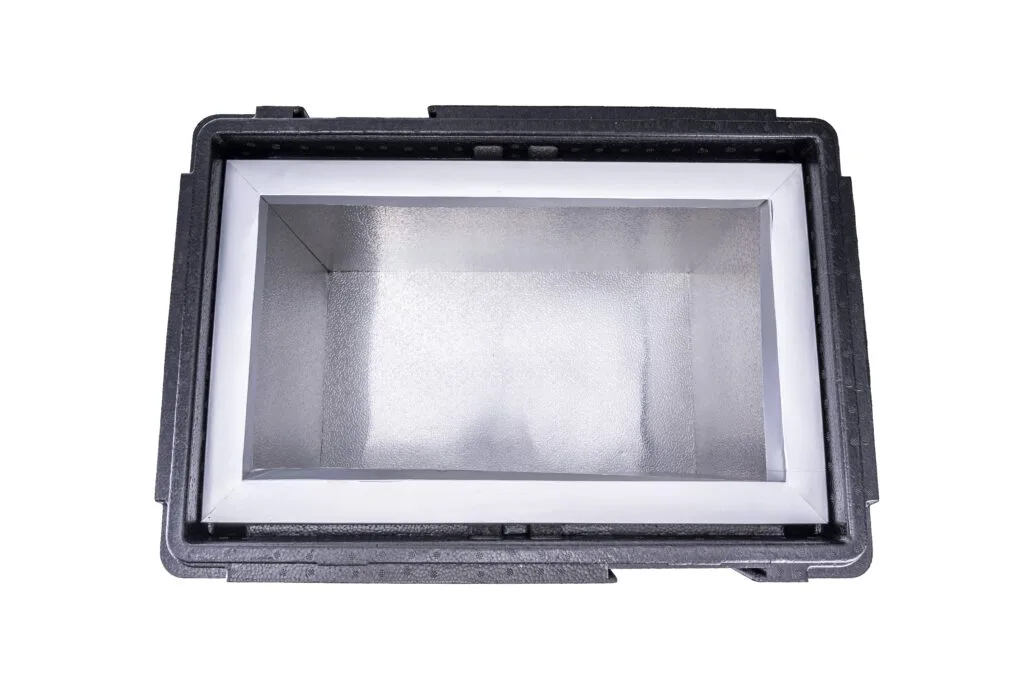
This format is usually a good candidate for dense warehouses, service vehicles, small-batch chilled goods, des pièces de rechange, or reusable tote programs that need impact resistance without excess tare weight. It is less suitable for large payloads, long open-loop shipments, or products that require a qualified thermal shipper with specific coolant data. Ces limites devraient faire partie de la conversation d'achat car le PPE n'est pas un matériau magique. Il fournit une base utile pour les, isolé, emballage résistant aux chocs, mais la boîte finie doit toujours correspondre au produit et au processus.
Si l'envoi est sensible à la température, construire la décision autour d'un paquet complet. Le pack comprend la boîte, couvercle, liquide de refroidissement, charge de produit, séparateurs ou doublures, préconditionnement, exposition par voie, et critères de réception. Si l'envoi est sensible à l'hygiène, construire la décision autour du statut de contact, emballage primaire, nettoyage, séchage, et inspection. Si l'envoi est sensible aux produits chimiques, construire la décision autour de l'examen de la compatibilité et de la sécurité.
Ne confondez pas l’isolation avec un système de contrôle de température qualifié
Une boîte EPP est un élément d'emballage isotherme ou protecteur, pas une garantie automatique du respect de la température. La protection contre la température dépend de la charge utile, ajustement du couvercle, configuration du liquide de refroidissement ou du PCM, modèle de chargement, temps de parcours, exposition ambiante, et comment la boîte est ouverte ou manipulée lors de la livraison. Pour les envois réglementés ou à haut risque, les acheteurs devraient demander des preuves de test qui correspondent à l'utilisation prévue plutôt que de se fier à une allégation générique de durée de conservation.
For storage or non-food transport, la même logique s'applique. The box can slow thermal exchange and reduce impact, but it cannot create a controlled environment by itself. If the product has a required temperature range or documented handling condition, define that condition first, then ask whether the container has been evaluated under comparable conditions.
## Tableau de décision pour l'approbation des échantillons
| Zone de décision | Pourquoi cela affecte les performances | Contrôle pratique |
|-|-|-|
| Produit et charge utile | La boîte doit correspondre au produit, pas seulement la capacité du catalogue. | Utilisez de vrais packs de produits et du liquide de refroidissement lors des tests d'échantillons. |
| Exposition de l'itinéraire | Portes ouvertes, temps d'attente, et les transferts entraînent un risque thermique. | Cartographiez l'itinéraire avant d'accepter une réclamation de temps d'attente. |
| Réutilisation et nettoyage | Une boîte réutilisable n’est utile que si elle peut revenir propre et intacte. | Définir le lavage, séchage, inspection, et critères de départ à la retraite. |
| Preuve du fournisseur | Les réclamations doivent être liées aux conditions et aux détails de l'article fini. | Demander une documentation correspondant à l'utilisation prévue. |
| Ajustement opérationnel | Les travailleurs décident si une boîte réussit dans son utilisation quotidienne. | Vérifier le confort de manipulation, empilement, étiquetage, et empreinte de stockage. |
Utilisez ce tableau lors de l'examen des échantillons et à nouveau avant la première commande groupée. Le but n’est pas de créer de la paperasse pour le plaisir. L’objectif est d’empêcher qu’un échantillon attractif soit approuvé avant d’avoir été testé par rapport à la manière dont votre équipe l’utilisera réellement..
## Documentation et réclamations à vérifier
Documentation depends on the application
A reusable storage or transport container may need different documentation depending on what it carries. Food-contact use, logistique médicale, chemical storage, internal warehouse handling, and retail delivery all create different evidence needs. Buyers should avoid asking for a single certificate that supposedly covers every use. A better approach is to define the application first and then request the relevant material statement, finished article declaration, conseils de nettoyage, et informations sur les tests.
Outils de décision utiles
Vérifiez les détails avant de choisir l'emballage
Ces outils rapides peuvent vous aider à comparer le risque d'itinéraire, besoins de dimensionnement, choix de liquide de refroidissement, et les détails de l'emballage avant de demander un devis.
Calculateur de banquise
Estimation de la quantité de pain de glace pour les expéditions réfrigérées et planification pratique des itinéraires.
Estimer les packs de glaceLiquide de refroidissement & Référence PCM
Comparez les options de liquide de refroidissement et de PCM lorsqu'un itinéraire nécessite une prise en charge supplémentaire de la température.
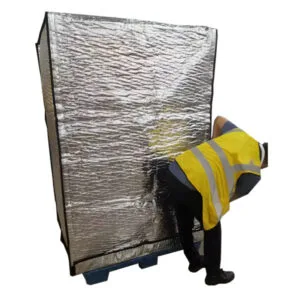
Comparez les optionsDoublure de boîte & Dimensionnement des couvertures de palettes
Vérifiez la logique de dimensionnement du revêtement de boîte et du couvercle de palette pour les projets d'emballage isotherme.
Dimensionnement estiméPour une utilisation sous chaîne du froid, documentation should describe the full packout when temperature claims are involved. That includes the box, couvercle, liquide de refroidissement ou PCM, charge utile, méthode de préconditionnement, profil d'exposition ambiante, et critères d'acceptation. Sans ces détails, a stated hold time is only a starting point for discussion, not proof that the container will protect your product in a different route.
Les allégations de performance thermique doivent être traitées comme conditionnelles. Une box testée avec une seule charge utile, une disposition du liquide de refroidissement, une méthode de préconditionnement, et un profil ambiant peut fonctionner différemment lorsque l'itinéraire change. ISTA 7E est souvent utilisé comme référence pour les emballages de transport thermique dans les environnements de livraison de colis, mais cela ne remplace pas l'évaluation spécifique à chaque voie pour chaque expédition.
## Comment exécuter un exemple de test utile
A useful sample test for a compact heavy-duty EPP storage container should include real goods, vitesse de chargement normale, travailleurs normaux, et le plan de refroidissement ou d'insert prévu. Ne testez pas uniquement une boîte vide. La manipulation des boîtes vides peut masquer des problèmes d’équilibre, fermeture du couvercle, volume utilisable, condensation, et le mouvement des produits. Si la boîte sera empilée, tester les boîtes remplies. S'il sera nettoyé, laver et sécher avant de prendre une décision. Si la boîte sera retournée, testez également le processus de retour vide.
Enregistrez ce que votre équipe apprend dans un langage simple. Le couvercle s'est-il fermé facilement? Les étiquettes sont-elles restées lisibles? Les travailleurs ont-ils trop rempli le conteneur? La condensation s'est-elle accumulée? La boîte s'adapte-t-elle à l'étagère du véhicule, panier, ou support de stockage? L'article fini respectait-il les règles d'hygiène, contact alimentaire, ou exigence de compatibilité? Ces réponses deviennent plus utiles qu'une liste générique de fonctionnalités car elles reflètent votre propre itinéraire.
## Questions des acheteurs qui évitent les inadéquations
Des contrôles d'approvisionnement qui changent le choix final
For a compact heavy-duty EPP storage container, une discussion utile avec le fournisseur doit passer rapidement du nom du produit aux conditions de travail. Demandez comment la boîte se comporte lorsqu'elle est remplie de la manière dont votre équipe la remplira réellement. Le premier échantillon doit être chargé avec de vrais cartons, bouteilles, plateaux, produire des paquets, ou des articles de stockage. Si l'échantillon est testé vide, vous en apprendrez peu sur la gestion de l'équilibre, fermeture du couvercle, condensation, ou interférence interne.
Les questions les plus importantes pour ce sujet sont spécifiques: external footprint versus internal usable space; corner strength after repeated handling; whether heavy-duty means thicker walls or higher-density molded EPP; comportement d'imbrication ou d'empilement; cleaning process for repeated storage use. Ces questions sont plus utiles que de demander si le produit est simplement solide., vert, ou de qualité alimentaire. Ils obligent le fournisseur et l'acheteur à définir l'usage prévu, les preuves nécessaires, et les limites du produit avant de passer une commande groupée.
Si l'achat sera répété dans plusieurs départements, conserver l'échantillon approuvé comme référence. Vérifier si les unités de production correspondent à l'échantillon sous forme moulée, ajustement du couvercle, position du diviseur ou de l'insert, état de surface, couleur, et zone d'étiquetage. Une petite modification de conception peut affecter l'empilage, nettoyage, ou volume utilisable même lorsque le matériau reste en PPE. Les équipes d'approvisionnement doivent également se demander comment le fournisseur communique les modifications après approbation., notamment pour les systèmes réutilisables qui peuvent rester en service pendant une longue période.
## Un exemple opérationnel réaliste
Exemple pratique: où la décision change souvent
Par exemple, a regional warehouse wants a container that can be lifted by hand, stacked in limited space, and reused without cracking after repeated loading. Un conteneur isotherme standard peut sembler acceptable jusqu'à ce que l'acheteur charge de vrais produits et remarque que le volume utilisable est réduit par les séparateurs., packs de gel, hauteur de la bouteille, ou des formes de produits inégales. La bonne réponse n’est pas de choisir automatiquement la plus grande case possible. Le surdimensionnement augmente l’espace aérien, empreinte du véhicule, et gérer le fardeau. La meilleure approche consiste à tester la plus petite boîte pouvant contenir la charge utile réelle., fermer correctement, et laisser suffisamment de place pour le liquide de refroidissement ou l'insert de protection prévu.
## Réutilisation, durabilité, et planification de la retraite
Empilage, stockage, et le coût caché de l'air
L’empilage a une valeur au-delà des photos soignées de l’entrepôt. Quand les cartons s’empilent en toute sécurité, les équipes peuvent organiser des itinéraires plus rapidement, utiliser l'espace du fourgon de manière plus prévisible, et réduire les dommages causés par les charges coulissantes. Mais l'empilabilité doit être vérifiée avec de vraies boîtes remplies, pas seulement avec des échantillons vides. Un couvercle qui s'empile bien lorsqu'il est vide peut se déformer, glisser, ou masquer les étiquettes lorsque la boîte est lourde, humide, ou partiellement chargé. L'interface de la pile doit prendre en charge la manière dont vos travailleurs construisent et décomposent réellement les charges..
Le PPE peut être réutilisé plusieurs fois s’il reste propre, structurellement intact, et renvoyé par une boucle contrôlée. Il est également en principe recyclable sous forme de polypropylène., mais le succès du recyclage dépend de la collecte locale, tri, niveau de contamination, et si un acheteur a accès à un canal de reprise ou de traitement approprié. Pour les équipes achats, la durabilité doit être mesurée par les conditions réelles d’utilisation, pas seulement par une étiquette matérielle. A compact heavy-duty EPP storage container should therefore be evaluated through a reuse plan: à qui appartient la boîte, qui le nettoie, comment les dommages sont enregistrés, comment les unités retirées sont collectées, et si la voie du recyclage peut gérer les PPE dans la pratique.
## FAQ
FAQ
### Is a compact heavy-duty EPP storage container enough for cold-chain shipping?
Cela peut faire partie d'un emballage chaîne du froid système, mais cela ne suffit pas à lui seul pour chaque expédition. Vous devez encore définir la condition de température requise, durée de l'itinéraire, exposition ambiante, charge utile, plan de refroidissement ou PCM, et recevoir des chèques. Pour les produits à haut risque ou réglementés, demander des preuves de test qui reflètent les conditions complètes du colis et de l'itinéraire.
### Que doivent vérifier les acheteurs dans une boîte EPP empilable?
Vérifiez l'interface d'empilement avec les cases remplies, pas seulement avec des échantillons vides. Vérifier la solidité du couvercle, alignement de base, visibilité de l'étiquette, risque de glissade, et comment les boîtes se comportent dans les véhicules ou les zones de transit. Si la boîte sera lavée à plusieurs reprises, confirmer si les performances d'empilage restent acceptables après le nettoyage et le séchage.
### Quels documents dois-je demander à un fournisseur?
Demander l'identification du matériel, déclarations de contact alimentaire ou de compatibilité des articles finis, le cas échéant, contexte du test thermique si la performance est revendiquée, conseils de nettoyage, et confirmation que les unités de production correspondront à l'échantillon approuvé. Pour les produits sensibles à la température, demander des détails sur l'emballage plutôt qu'un numéro de temps d'attente générique.
Conclusion
A compact heavy-duty EPP storage container should be selected for a defined job, pas uniquement pour une étiquette de matériau. Commencez par la charge utile, itinéraire, risque de température ou de manipulation, méthode de nettoyage, et plan de retour. Évaluez ensuite les avantages matériels du PPE, conception moulée, détails du couvercle ou du séparateur, comportement de la pile, et preuves du fournisseur. La décision d'achat la plus solide est généralement celle qui transforme de vagues affirmations en vérifications pratiques avant une commande groupée..
À propos du tempk
Tempk est la marque d'emballages pour chaîne du froid de Shanghai Tempk Industrial Co., Ltée. Nous aidons les acheteurs avec des choix d'emballages pratiques à travers packs de glace en gel, Packs PCM, doublures et sacs isolés, Boîtes EPP, Glacières médicales VIP, couvertures thermiques de palettes, et matériels associés pour la chaîne du froid. Pour les décisions d’emballage EPP, notre rôle est de vous aider à faire correspondre le format du conteneur, méthode de refroidissement, exposition par voie, charge utile, et plan de réutilisation avant de passer des échantillons à des commandes plus importantes.
Partagez votre type de produit, longueur de l'itinéraire, charge utile, condition requise, et plan de réutilisation avec Tempk. We can help you compare whether a compact heavy-duty EPP storage container or another cold-chain packaging format is the better starting point for sample review.