Dairy pallets need a different chaîne du froid plan from parcel dairy shipments. Une seule caisse de lait ou de yaourt peut être protégée par un expéditeur isolé, mais une palette dépend de rangement froid discipline, débit d'air de la remorque, géométrie des palettes, motif d'enveloppement, exposition au quai, et placement de l'enregistreur. La principale défaillance n’est souvent pas le noyau de la palette. C'est le bord supérieur, le coin face à la porte, la couche inférieure exposée à un quai chaud, ou une position de charge mixte à côté de produits ayant une odeur plus forte ou des exigences de température différentes.
Données de planification du stockage frigorifique des palettes de produits laitiers
| Plage cible typique | 0-4 C pour la distribution de palettes de produits laitiers réfrigérés; appliquer le cahier des charges du producteur laitier lorsqu'il est plus strict. |
|---|---|
| Contrôle de l'humidité | Protéger les cartons, plateaux ondulés, étiquettes, et les caisses extérieures contre la condensation pendant le transfert au quai et le déchargement de la remorque. |
| Pré-refroidissement | Produit pré-refroidi, base de palette, et zone de préparation avant l'emballage. Un noyau de palette chaud est difficile à retirer après le chargement. |
| Pression d'emballage | Utiliser l'empilement de colonnes, planches de coin, et la résistance de la caisse vérifie afin que les couches inférieures ne s'écrasent pas sous le film étirable et à la hauteur de la palette. |
| Liquide de refroidissement ou protection thermique | Privilégiez le transport réfrigéré. Couvoirs de palette thermique, doublures sèches, ou l'assistance au gel peut prendre en charge un court séjour au quai, ne remplace pas une remorque froide. |
| Durée du transport | Mieux géré avec un entreposage frigorifique validé, contrôle de transfert quai-remorque, et surveillance continue de la température des remorques pour chaque voie. |
| Pertes communes | Bords de palettes chauds, cas humides, niveaux inférieurs effondrés, coloration des étiquettes, mauvaise odeur, et contamination de charges mixtes provenant de fruits de mer ou de viande adjacents. |
| Ajustement de l'emballage Tempk | Housse de palette thermique, revêtement de palette, protection des coins, diviseur isolé, enregistreur de zone de produit, et un rapport de validation d'itinéraire. |
Pourquoi les palettes de produits laitiers ont besoin de leur propre validation
Les palettes laitières sont denses, sensible à l'humidité, et souvent expédié dans des cartons de vente au détail ou des plateaux en carton ondulé. Si le produit quitte la chambre froide trop chaud, le noyau de la palette peut rester au-dessus de la cible après le chargement. Si la palette est trop serrée, le flux d'air de la remorque peut contourner la zone de produit et laisser le centre lent à récupérer. Si le film étirable emprisonne la condensation, le carton peut ramollir et les étiquettes peuvent se tacher avant la réception.
La palette doit être construite à partir de produit froid dans une zone de stockage froide. Les cas doivent être alignés dans des colonnes stables, avec planches d'angle ou support de bord lorsque la charge est haute. Le film étirable doit stabiliser la palette sans bloquer chaque chemin de circulation d'air. Pour palettes laitières mixtes, éloignez les liquides sujets aux fuites des cartons secs et séparez les aliments à forte odeur. Quand le transfert à quai est inévitable, utiliser une limite de séjour planifiée et traiter couvertures thermiques de palettes comme aide à une courte exposition, ne remplace pas la manutention réfrigérée.
Outils de décision utiles
Vérifiez les détails avant de choisir l'emballage
Ces outils rapides peuvent vous aider à comparer le risque d'itinéraire, besoins de dimensionnement, choix de liquide de refroidissement, et les détails de l'emballage avant de demander un devis.
Calculateur de banquise
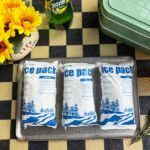
Estimation de la quantité de pain de glace pour les expéditions réfrigérées et planification pratique des itinéraires.
Estimer les packs de glaceRéférence du matériau isolant
Comparez les choix de matériaux d'isolation pour différents besoins d'emballage de la chaîne du froid.
Comparez les matériauxLiquide de refroidissement & Référence PCM
Comparez les options de liquide de refroidissement et de PCM lorsqu'un itinéraire nécessite une prise en charge supplémentaire de la température.
Comparez les optionsApproche Tempk recommandée
Tempk définirait normalement les positions des enregistreurs avant le test: noyau de palette, bord supérieur, bord inférieur, et le côté face à la porte de la remorque. La validation doit enregistrer la température de départ du produit, temps de préparation en chambre froide, séjour au quai, point de consigne de la remorque, tendance du retour d'air dans la remorque, et conditions d'arrivée. Les chèques de réception doivent inclure la température interne du produit, cas de sécheresse, palette maigre, intégrité de l'emballage, condensation, odeur, fuite, et signes de compression du boîtier.
FoodSafety.gov répertorie le stockage du réfrigérateur à 40 F (4 C) ou en dessous et stockage au congélateur à 0 F (-18 C) ou ci-dessous. Les directives du Code alimentaire de la FDA sont également utilisées comme modèle de protection des aliments au détail pour le contrôle du temps et de la température.. Pour la logistique commerciale des palettes de produits laitiers, ces références sont des points de départ. La version finale doit suivre les spécifications du propriétaire du produit, Règlements locaux, et les données réelles de validation de voie.