Doublure isolée à double bulle personnalisée: Comment les acheteurs doivent le spécifier
Le bon double doublure isolée à bulles custom specification starts with a short list of facts: exigence de température du produit, durée de l'itinéraire, taille du carton, plan de refroidissement, et de quelles preuves le destinataire a besoin. Pour les programmes personnalisés basés sur des cartons, la doublure peut réduire l'exposition thermique et améliorer l'efficacité de l'emballage, mais il ne peut pas remplacer la conception complète du pack. Ce guide donne aux acheteurs un moyen pratique de préciser, test, et achetez le paquebot sans vous fier à de vagues affirmations.
Doublure, liquide de refroidissement, carton, et l'itinéraire doivent être traités ensemble
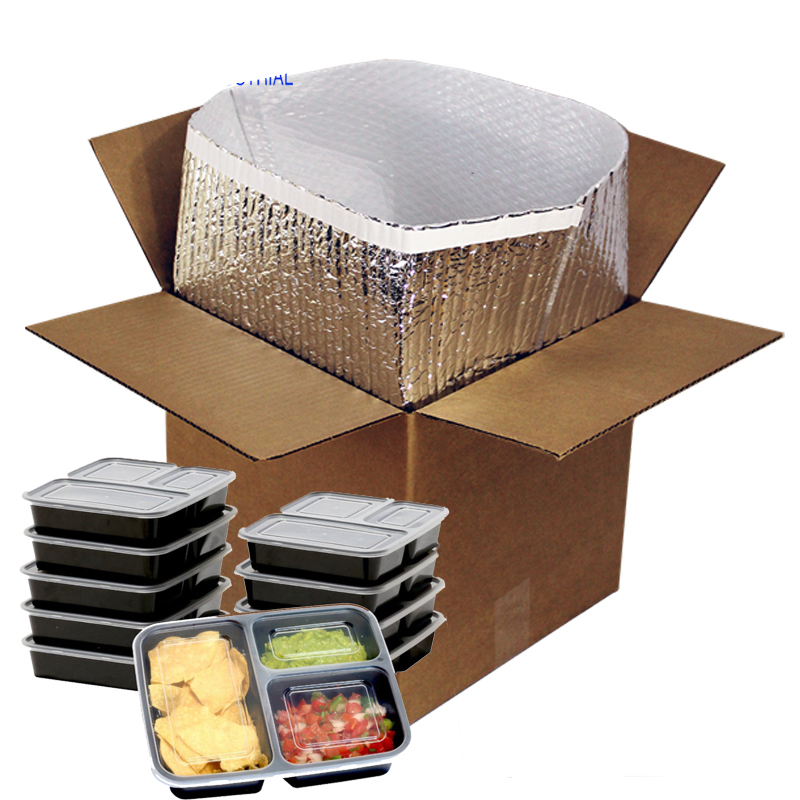
Une doublure isolée à double bulle est une couche d’isolation passive. Cela peut ralentir le gain ou la perte de chaleur, réfléchit la chaleur rayonnante de la paroi du carton, ajouter une petite quantité de rembourrage, et aide à créer une surface intérieure plus propre.. Ce n'est pas un réfrigérateur, ce n'est pas un dispositif actif de contrôle de la température, et cela ne supprime pas le besoin du bon liquide de refroidissement. Pour les programmes personnalisés basés sur des cartons, cette limite est particulièrement importante car l'envoi peut passer par plusieurs points de transfert avant que le destinataire n'ouvre le carton.
Considérez le revêtement comme une partie d'une petite pile thermique.. Le carton ondulé extérieur donne forme et résistance à la manipulation. La doublure ajoute une couche réfléchissante et d'espace aérien. Packs de gel, briques de glace, Packs PCM, ou de la neige carbonique fournissent de l'énergie froide le cas échéant. L'emballage du produit contrôle les fuites, hygiène, et contact direct. L'itinéraire ajoute alors le vrai stress: custom dimensions that reduce usable space, seal positions that slow packing, folds that create thermal gaps, print choices that affect lead time, and design changes that are not controlled. Si l'une de ces pièces est faible, le revêtement peut être blâmé même si le problème concerne en réalité la taille du carton, masse de liquide de refroidissement, ou une mauvaise manipulation.
C'est pourquoi la première question de l'acheteur devrait porter sur la charge utile et l'itinéraire., pas seulement l'épaisseur du revêtement. A shipment containing food delivery cartons, boîtes de fruits de mer, kits cliniques, cosmetics parcels, and other payloads that need a liner shaped around the carton needs a different risk review than a generic ambient parcel. Vous devez définir l'état requis du produit à la livraison, le temps de traitement prévu, le processus de réception, et les critères de rejet avant de comparer les échantillons de revêtement. Une spécification claire accélère les conversations avec les fournisseurs et réduit le risque qu'une option à faible coût soit approuvée pour une mauvaise raison..
Tracer l'itinéraire avant de décider du paquebot suffit
La cartographie d'itinéraire est un exercice simple que de nombreuses équipes sautent. Notez où le carton emballé sera placé avant le ramassage, comment il est chargé, s'il entre dans un centre de colis, combien de temps il peut attendre dans un véhicule, si un coursier ou un coursier ouvre un sac de livraison plus grand, et comment le destinataire inspecte le colis. Pour les programmes personnalisés basés sur des cartons, cette feuille de route révèle souvent un risque que les spécifications du paquebot ne peuvent à elles seules résoudre.
Une fois la carte visible, associer chaque risque à un contrôle. Custom dimensions that reduce usable space, seal positions that slow packing, folds that create thermal gaps, print choices that affect lead time, and design changes that are not controlled may require more coolant, un carton différent, une fermeture plus forte, une étiquette d'avertissement, une fenêtre d'expédition plus courte, ou un enregistreur de données. La doublure isolée à double bulle peut prendre en charge ces contrôles en réduisant le transfert de chaleur et en améliorant la surface intérieure du pack., mais il ne peut pas compenser chaque lacune opérationnelle.
La feuille de route aide également au regroupement des SKU. Products such as food delivery cartons, boîtes de fruits de mer, kits cliniques, cosmetics parcels, and other payloads that need a liner shaped around the carton may not share the same sensitivity or handling tolerance. Si un seul emballage est utilisé pour tous les SKU, l'élément présentant le risque le plus élevé devrait faire l'objet du test. Si la répartition des SKU est trop large, il peut être préférable de définir deux emballages plutôt que de forcer un seul modèle de doublure à tout couvrir.
Structure matérielle: ce que les acheteurs devraient traduire en opérations
Une structure à double bulle ajoute normalement plus d'espace d'air emprisonné qu'une simple couche de bulles. En termes pratiques, qui peut améliorer le rembourrage et le tampon thermique, mais cela affecte également l'épaisseur du pli, ajustement du carton, volume d'emballage, et cube d'expédition. Pour les programmes personnalisés basés sur des cartons, l'acheteur doit vérifier si la structure supplémentaire supporte le risque de route ou crée simplement un insert plus volumineux qui réduit l'espace de charge utile utilisable.
La surface de la feuille réfléchissante est utile car elle fait face au transfert de chaleur radiante, en particulier près des parois du carton ou pendant de courtes périodes d'exposition. Il ne faut pas le décrire comme une barrière magique. La chaleur peut toujours se déplacer par conduction aux points de contact, convection à travers les interstices, et fuite autour des coutures ou des ouvertures. La disposition du pli et la méthode de fermeture sont donc aussi importantes que la surface visible du film..
Pour chaque structure matérielle, demander ce qui restera pareil entre l'échantillon et la production. Changements dans le cinéma, hauteur de bulle, densité de la mousse, adhésif, revêtement, laminage, scellement des bords, ou le motif de pliage peut modifier le comportement de la doublure. In custom carton-based programs, un petit changement peut ne pas être visible pour l'emballeur, mais cela peut apparaître plus tard sous forme de condensation, produit broyé, des recettes plus chaudes, ou réclamations clients.
Utilisation respectueuse de la conformité sans surcharger la doublure
Pour les produits généraux sensibles à la température, la conformité dépend de la catégorie de produit. Produits de beauté, aliments spécialisés, diagnostic, et les produits pharmaceutiques ne partagent pas les mêmes règles ou niveaux de risque. Une équipe d'approvisionnement doit d'abord déterminer si l'expédition est une simple voie de protection de la qualité ou un programme de distribution réglementé.. Cette décision affecte la documentation, essai, étiquetage, et qualification des fournisseurs.
Si le produit est pharmaceutique ou lié aux soins de santé, Orientation du PIB, Pratiques de l'IATA concernant les marchandises sensibles à la température, et les instructions de stockage spécifiques au produit peuvent influencer l'emballage. Si le produit est un aliment, les attentes en matière de transport sanitaire et de contact alimentaire peuvent être pertinentes. Pour les marchandises non réglementées, les exigences de qualité des clients peuvent toujours exiger des preuves. Dans chaque cas, éviter le raccourci consistant à décrire une doublure comme conforme sans indiquer sur quoi elle a été testée et comment elle sera utilisée.
Une règle interne utile est simple: plus la charge utile est sensible et plus l'itinéraire est incertain, plus vous avez besoin de documentation. ISTA 7E et norme 20, FDA food-contact context, IATA healthcare cargo where air pharma is relevant, Tempk customization statements can guide the conversation, mais les acheteurs devraient toujours demander leur propre qualité, réglementaire, ou l'équipe de sécurité alimentaire avant d'approuver un emballage de production. The liner should not be used for custom artwork without engineering review, untested swaps in thickness or laminate, and regulated programs that treat customization as decoration only unless the whole shipping system has been reviewed for that risk.
Une table de vérification pratique pour les acheteurs
Utilisez ce tableau avant l'approbation de l'échantillon. Cela permet de concentrer la discussion sur les exigences d'expédition plutôt que sur le langage de la brochure..
| Zone de spécifications | Question de décision | Réponse du fournisseur qui aide |
|---|---|---|
| Exigence de température | Quel état le produit doit-il conserver à la réception? | Une demande de définition de la gamme, durée, et critères d'acceptation avant de proposer. |
| Géométrie des cartons | Le paquebot se fermera-t-il sans espaces dans les coins ni perte d'espace de charge utile? | Un dessin, dieline, ou échantillon fini assorti au carton. |
| Plan média froid | Où vont les packs de gel, PCM, briques de glace, ou assis sur de la glace carbonique? | Un croquis d'emballage et un avertissement sur les risques de contact direct, le cas échéant. |
| Tester les preuves | La performance est-elle basée sur votre itinéraire ou sur une réclamation générique? | Profil de test, charge utile, conditions ambiantes, et critères de réussite/échec. |
| Contrôle de production | L'échantillon approuvé peut-il être répété à grande échelle? | Spécification matérielle, méthode d'inspection, et notification de changement. |
Le but du tableau est de rendre visibles les hypothèses. Une fois les hypothèses écrites, l'acheteur peut décider de ce qui a besoin d'une fiche technique du fournisseur, qu'est-ce qui nécessite un envoi d'essai, et ce qui nécessite l'approbation de l'équipe qualité. Cette discipline est particulièrement utile lorsque la pression sur les prix pousse les équipes vers un paquebot plus léger ou moins cher avant que le risque lié à l'itinéraire ne soit compris..
Questions des fournisseurs qui changent réellement le résultat
Une forte conversation avec un fournisseur pour une doublure isolée à double bulle est spécifique. Instead of asking whether the liner is good for custom carton-based programs, demandez quelles tailles de carton sont prises en charge, quelles couches de matériaux sont utilisées, quelles tolérances sont contrôlées, comment les bords sont scellés, comment les doublures sont emballées pour l'expédition, et que se passe-t-il si le matériel approuvé est modifié. Cela transforme la discussion du langage commercial en contrôle de production.
Pour les commandes groupées, cutting die, fold layout, scellement des bords, MOQ questions framed as supplier confirmation, échantillon de pré-production, test packout, and change-control agreement should be visible before the purchase order is finalized. Si vous avez besoin d'une impression personnalisée, demander si les changements d'encre ou de laminage affectent le délai de livraison, Recyclabalité, examen du contact alimentaire, ou disponibilité du matériel. Si vous avez besoin de plusieurs tailles, demandez si chaque taille utilisera un dessin et un échantillon distincts. Si vous importez, demander comment les étiquettes, cartons, emballage à compression, et la palettisation affectent la réception dans votre entrepôt.
Outils de décision utiles
Vérifiez les détails avant de choisir l'emballage
Ces outils rapides peuvent vous aider à comparer le risque d'itinéraire, besoins de dimensionnement, choix de liquide de refroidissement, et les détails de l'emballage avant de demander un devis.
Doublure de boîte & Dimensionnement des couvertures de palettes
Vérifiez la logique de dimensionnement du revêtement de boîte et du couvercle de palette pour les projets d'emballage isotherme.
Dimensionnement estiméGénérateur de liste de contrôle de conformité
Créer une liste de contrôle pratique pour l'examen des emballages, expédition, et documentation.
Construire une liste de contrôleVérificateur de risque d'itinéraire
Examinez les conditions des pistes avant de sélectionner l'emballage en fonction des exigences opérationnelles réelles..
Vérifier le risque d'itinéraireLe fournisseur doit également être à l'aise pour discuter des limites. Un fournisseur qui prétend que chaque paquebot convient à chaque itinéraire crée un risque pour les deux parties. De meilleures réponses semblent plus conditionnelles: cette doublure peut s'adapter à des itinéraires courts avec le bon liquide de refroidissement; cette conception nécessite un essai pour des voies plus longues; ce produit nécessite une structure d'isolation différente; cette réclamation nécessite des documents. Les réponses conditionnelles sont souvent plus fiables que les affirmations sûres sans contexte.
La réception des chèques transforme l'emballage en preuve
L'inspection à la réception doit être conçue avant que la première expédition de production ne quitte l'entrepôt. Pour les programmes personnalisés basés sur des cartons, le destinataire peut vérifier l'état du produit, carton endommagé, état de la banquise, fuite visible, position de la doublure, intégrité du joint, ou enregistrements de température si la surveillance est utilisée. Sans norme de réception, les réclamations deviennent subjectives et difficiles à enquêter.
La doublure isolée à double bulle peut offrir une expérience de réception plus propre lorsqu'elle est bien dimensionnée et utilisée de manière cohérente.. Une doublure qui bouge, larmes, emprisonne le liquide au mauvais endroit, ou rend le carton difficile à ouvrir peut créer des plaintes même lorsque le produit lui-même est acceptable. Les acheteurs doivent considérer la personne qui ouvre le colis, pas seulement la personne qui l'emballe.
Si des plaintes surviennent, revoir la chaîne complète avant de blâmer un composant. Vérifiez si le produit a été correctement préconditionné, si le milieu froid a été congelé ou conditionné comme prévu, si la doublure correspond au carton, si l'itinéraire a changé, si le carton a été retardé, et si le destinataire a suivi les instructions. Cette approche des causes profondes évite des changements matériels répétés qui ne résolvent jamais le véritable problème..
Exemple pratique: transformer un échantillon en un emballage utilisable
Une équipe d'approvisionnement peut recevoir un échantillon de doublure isolée à double bulle qui semble acceptable et présente un bon prix pour un programme en vrac.. L'équipe ne doit pas passer directement à une commande de conteneurs. Cela devrait confirmer le dessin, matrice de carton, dimensions finies, couches de matériaux, scellement des bords, œuvres d'art, méthode d'emballage, et si l'échantillon de production sera fabriqué à partir des mêmes matériaux que l'échantillon approuvé.
Cet exemple ne vise pas à ralentir le sourcing. Il s'agit de prévenir un problème familier: un bel échantillon qui ne peut pas être répété lors d'une production de masse, ou un changement de production à faible coût que personne ne remarque jusqu'au début des plaintes des clients.
Pour les programmes personnalisés basés sur des cartons, le résultat utile n’est pas une réussite ou un échec générique. C'est une méthode d'emballage écrite que l'entrepôt peut répéter. La méthode doit inclure la manière dont la doublure est insérée, où se trouve la charge utile, comment sont disposés les médias froids, comment le carton est fermé, et ce que le destinataire doit inspecter. Une fois le processus défini, l'acheteur peut comparer les options des fournisseurs sur la cohérence plutôt que sur le seul aspect de la surface.
FAQ
Is a double bubble insulated liner enough for custom carton-based programs by itself?
Non. Une doublure isolée à double bulle est un composant d’isolation passive. Il peut ralentir le transfert de chaleur et améliorer l'emballage en carton., mais il faut quand même le bon carton, disposition de la charge utile, médias froids, processus de manipulation, et recevoir des chèques. Pour les itinéraires à plus haut risque, les acheteurs devraient tester l'emballage complet plutôt que de se fier à l'apparence de la doublure.
Que dois-je confirmer avant de commander des échantillons?
Confirmer les dimensions du carton, type de charge utile, état requis du produit, durée de l'itinéraire, plan média froid, risque d’humidité ou de fuite, et besoins en documentation. Demandez au fournisseur un échantillon fini correspondant au matériau de production et à la méthode de scellage prévus.. Pour les programmes personnalisés basés sur des cartons, il est préférable de tester un emballage réaliste plutôt qu'une doublure vide et soignée.
Quand devrais-je envisager un système plus lourd au lieu d’un revêtement?
Envisagez un expéditeur plus isolé, boîte rigide, emballage qualifié, ou contrôle actif lorsque le parcours est long, l'exposition ambiante est incertaine, le produit est réglementé, or the shipment involves custom artwork without engineering review, untested swaps in thickness or laminate, and regulated programs that treat customization as decoration only. Une doublure peut être utile, mais il ne doit pas être étendu au-delà de son rôle éprouvé.
Comment comparer équitablement les fournisseurs?
Donnez à chaque fournisseur le même profil d'expédition, taille du carton, hypothèses de charge utile, plan média froid, et demande de documentation. Comparez non seulement le prix unitaire mais également les dimensions finies, cohérence de l'échantillon, contrôle des matériaux, méthode d'emballage, capacité à prendre en charge le travail personnalisé, et volonté d'énoncer les limites des produits.
Conclusion: spécifier le revêtement comme composant contrôlé
A double bubble insulated liner can be a useful choice for custom carton-based programs, mais il doit être sélectionné dans le cadre d'un emballage complet de la chaîne du froid. L'acheteur doit définir les exigences du produit, risque d'itinéraire, géométrie du carton, plan de refroidissement, et recevoir des preuves avant d'approuver les échantillons.
The most important practical checks are carton dimensions, motif de pliage, méthode de fermeture, tolérances de production, exigences d'impression, and route validation plan. Si ces chèques sont traités tôt, la doublure peut prendre en charge un processus d'emballage plus propre, meilleur contrôle de l'entrepôt, et moins de litiges à la réception. S'ils sont ignorés, même un bon revêtement peut être utilisé dans la mauvaise voie ou assemblé de la mauvaise manière.
L'approche d'approvisionnement la plus sûre consiste à poser des questions conditionnelles et à exiger des réponses claires.. Ce qui est prouvé? Ce qui dépend de votre itinéraire? Ce qu'il faut tester? Quels changements nécessitent une approbation? Ces questions maintiennent l'honnêteté du package final.
À propos du Tempk
Tempk fournit emballage chaîne du froid options pour la nourriture, pharmaceutique, et autres envois sensibles à la température. Sa gamme de produits publiée comprend doublures de boîtes isolées, sacs thermiques, packs de glace en gel, EPP et boîtes d'expédition à froid, couvertures de palettes isolées, et matériaux d'emballage pour la chaîne du froid associés. Pour les projets de revêtement, Tempk peut aider les acheteurs à comparer les conceptions de doublures à base de carton avec les supports de refroidissement, exigences de charge utile, et acheminer les risques avant de passer des échantillons à l'approvisionnement en gros. Pour les programmes personnalisés basés sur des cartons, le rôle pratique est d'aider à aligner la conception du revêtement avec l'ajustement du carton, médias froids, et les limites opérationnelles de l'acheteur au lieu de traiter le paquebot comme une solution universelle.
For a double bubble insulated liner custom project, envoyez à Tempk votre itinéraire, carton, charge utile, et l'état requis du produit pour recevoir une recommandation plus ciblée.
Nombre de mots du corps: 2373 mots