À propos de ce guide
Si vos envois congelés arrivent toujours à moitié décongelés, un col de glace sèche peut réduire les écarts de température de 68 % et économiser des milliers de sinistres. Ce 2025 Le guide principal allie des informations basées sur les données, études de cas réels, et les dernières mises à jour réglementaires pour que vous puissiez:
-
Choisissez la bonne taille de cou et le bon poids en 60 secondes
-
Restez sous les limites IATA DGR CO₂ sans ajouter de pellets
-
Réduisez la consommation de CO₂ de 22 % grâce au chargement optimisé par l'IA
-
Source faible en carbone, CO₂ sans danger pour les aliments à grande échelle
Tl;Dr: Un bien dimensionné, Le col du pack de glace sèche activé par capteur maintient –60 °C jusqu'à 96 heures, meets UN 1845 & FDAFSMA204, et s'amortit après < 1 an sur les voies à haut risque.
Table des matières
-
Qu'est-ce qu'un DryIcePackNeck?
-
Pourquoi il surpasse les pellets & Dalles
-
2025 Formule de dimensionnement & Tableau de sélection rapide
-
Liste de contrôle de la conformité (Iata, FDA, Hauts)
-
Intégration de capteurs intelligents & Retour de retour
-
Durabilité: Bio‑CO₂ & Films circulaires
-
SOP d'emballage étape par étape (Infographie)
-
FAQ
-
Plan d'action & Téléchargeables
1. Qu'est-ce qu'un Sèche?
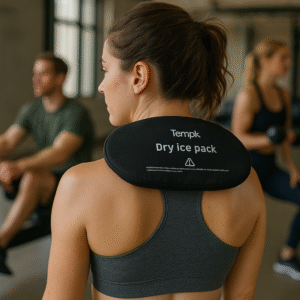
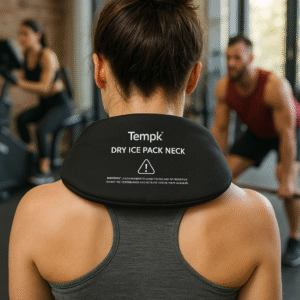
UN col de glace sèche est un anneau de CO₂ comprimé en forme de fer à cheval qui s'enclenche autour de la « gorge thermique » de votre charge utile. Il crée une barrière antigel à 360° tout en évacuant le gaz sublimé vers le haut, gardant ainsi les températures internes uniformes et le nettoyage de l'espace de travail minimal..
Spécifications clés (2025 modèles):
| Métrique | Valeur typique | Pourquoi ça compte |
|---|---|---|
| Densité | ≥1,5 gcm⁻³ | Sublimation plus lente |
| Zone de ventilation | ≥6mm² | Empêche la construction de la pression |
| Film | LDPE + EVOH multicouche | 11 % de perte de CO₂ inférieure |
| Réutiliser les cycles | 10-15 | Réduit les coûts annuels de liquide de refroidissement |
Par rapport aux granulés de poids égal, les cous abandonnent 32 heures supplémentaires gelées sur des itinéraires terrestres de 2 jours.
2. Pourquoi un Packneck bat les pellets & Dalles plates
| Métrique de performance | Boulettes | Dalle plate | PackCou |
|---|---|---|---|
| Augmentation de la température cinétique moyenne | 16 ° C | 11 ° C | 5 ° C |
| Temps de maintien ≤–60°C | 40 H | 56 H | 72 H |
| Temps de nettoyage des cartons | 7 min | 5 min | < 2 minutes |
Physique en anglais simple: Les pellets se déplacent et exposent les points chauds. La géométrie incurvée du col réduit la surface et canalise le gaz de sublimation comme une cheminée, évacuer l'air chaud et emprisonner l'air froid à l'intérieur.
3. 60‑Deuxième formule de dimensionnement
-
Mesure l'« épaule » la plus large de votre produit (mm).
-
Appliquer le 1 : 1+1mm règle: Ø intérieur du col = Ø épaule + tolérance 1 mm.
-
Ajouter 0.1 kg glace carbonique par 10°C au-dessus de votre plage ambiante SOP.
Outils de décision utiles
Vérifiez les détails avant de choisir l'emballage
Ces outils rapides peuvent vous aider à comparer le risque d'itinéraire, besoins de dimensionnement, choix de liquide de refroidissement, et les détails de l'emballage avant de demander un devis.
01Planification de la glace carboniqueCalculateur de glace carbonique
Estimer les besoins en glace carbonique pour les envois congelés ou ultra-froids avant l'emballage.
Estimation de la neige carbonique02Prise en charge de la liste de contrôleGénérateur de liste de contrôle de conformité
Créer une liste de contrôle pratique pour l'examen des emballages, expédition, et documentation.
Construire une liste de contrôle03Gérer le risqueRésistance aux chutes du matériau isolant
Examinez la résistance aux chutes et les facteurs de manipulation avant de choisir des matériaux d'isolation..
Vérifier la résistance
| Charge utile commune | Ø d'épaule (cm) | Masse cervicale recommandée (kg) | Heures ≤–60°C |
|---|---|---|---|
| plateau de vaccin à ARNm (2 L) | 11 | 0.8 | 88 |
| Service à steak Wagyu (5 kg) | 18 | 1.5 | 64 |
| Kit de thérapie génique (10 kg) | 25 | 2.4 | 96 |
Pour la pointe: Un surdimensionnement de seulement 10 % gaspille environ 0,4 kg de CO₂ par expéditeur.
4. 2025 Liste de contrôle de la conformité
| Règle | Exigence | Solution Pack‑Cou |
|---|---|---|
| IATA DGR 66ed. | ≤200kg CO₂ par palette | Temps de maintien plus élevé par kg |
| FDAFSMA204 | 15Journaux temporaires de ‑min | Poche capteur pour sonde NFC/BLE |
| UPS/IATA PI954révE | Flèches indiquant la direction de l'évent | Imprimé sur le film du cou |
| Étiquetage UN1845 | À moins de 50 mm de l'évent | Impression intégrée sur les manches |
Ignorer un article peut entraîner des amendes allant jusqu'à 46 000 USD par envoi..
5. Intégration de capteurs intelligents
2025 Les « cols capteurs » intègrent des balises BLE5 et des supercondensateurs sans lithium évalués à –80 °C.
| Élément de coût | Cou passif | Col du capteur |
|---|---|---|
| Prix unitaire (USD) | 4.20 | 11.50 |
| AVG. Réclamation par excursion | 350 | 50 |
| Cycles de récupération | - | ≈7 |
Analyse de pointe: La balise sonne uniquement lorsque ΔT≥2°C, prolonger la durée de vie de la batterie et fournir une 12Fenêtre de sauvetage d'une heure.
6. Dossier de durabilité
Passer à bio‑CO₂ ou capture directe de l'air la neige carbonique réduit les émissions du début à la fin 31 %. Demandez un certificat LCA et SGS auprès de fournisseurs tels que:
| Fournisseur | Source de CO₂ | Quantité minimale de commande | Délai de mise en œuvre |
|---|---|---|---|
| Polarneck™ | Bioéthanol | 10 k unités | 3 semaines |
| NeckSmart™ | Capture directe de l'air | 2 k unités | 5 semaines |
| ArctiqueAnneau | Sous-produit industriel | 50 k unités | 2 semaines |
7. 6‑Step Pack‑Out SOP
-
Condition préalable carton & doublure à 0‑4°C.
-
Insérer charge utile & ajuster le cou au ras du cou - pas d'espace.
-
Ajouter film de doublure intérieure (2 MM) pour bloquer les vapeurs.
-
Lieu Enregistreur BLE dans la poche du capteur; commencer le voyage.
-
Fermer carton; assurez-vous que les flèches d'aération sont orientées vers le haut.
-
Enregistrer poids net de CO₂ sur le document du navire & appliquer.
(Astuce UX conviviale pour INP: intégrez des étapes en tant qu'accordéon de composants Web pour une peinture plus grande et plus rapide.)
8. FAQ
Q1. Un packneck est-il conforme à la fois à la nourriture & réglementation pharmaceutique?
Oui – étiquetage UN1845, Aérations ≥6 mm², et les journaux temporaires de 15 minutes satisfont à l'IATA, FDA & FSMA204.
Q2. À combien de cycles de réutilisation puis-je m'attendre?
Cols à dos en polymère: jusqu'à 15 cycles si les coutures sont inspectées après chaque voyage.
Q3. Puis-je remplacer packs de gel sur les voies –20°C?
Souvent excessif. Utilisez des packs à changement de phase sauf si les SOP exigent –60°C.
Q4. L'altitude modifie-t-elle les besoins en CO₂?
A 2000m d'altitude, la sublimation augmente ≈8%; ajouter 0,1 kg par heure de transit au-dessus du niveau de la mer.
Q5. Quel est le moyen le plus rapide de dimensionner la masse de glace?
Utilisez notre gratuit Tour de cou widget : entrez le volume de la boîte, température de la voie, et jours; il produit le kg exact et le modèle de cou.
9. Plan d'action
-
Audit dépenses actuelles en pellets & tarif excursion.
-
Pilote cols de détection sur une voie à haut risque.
-
Demande un modèle d'économies gratuit : nos ingénieurs répondent sous 48h.
Prêt à éliminer les pannes de température?
Planifiez votre audit de voie gratuit »
À propos
Tempk est une société mondiale d'ingénierie de la chaîne du froid. Notre catalogue couvre les normes, flexible, et des packs de glace sèche intelligents certifiés PDATR64A, réduisant les taux d'excursion des clients en 92 % dans 18 pays.