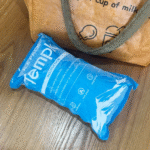
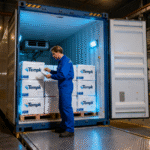
Enzyme replacement therapies are high-value biologic medicines that often move through specialty pharmacy, hôpital, perfusion à domicile, and clinical distribution lanes. The packout should protect the refrigerated range, avoid freeze contact, protect fragile vials and cartons, and create a clear temperature record for receiving. Because dose value and patient timing can be high, the route plan must be more controlled than an ordinary chilled parcel.
Enzyme replacement therapy planning data
| Plage cible typique | Many enzyme replacement therapies require 2-8 C refrigerated handling; always follow the approved label and local SOP. |
|---|---|
| Contrôle de l'humidité | Protect vial cartons, inserts, and labels from condensation because receiving teams may need clean lot and expiry data. |
| Pré-refroidissement | Use preconditioned shippers, liquide de refroidissement, and separators; avoid loading product during prolonged room-temperature staging. |
| Pression d'emballage | Use vial trays or carton support to protect glass, stoppers, étiquettes, and specialty infusion packaging. |
| Emplacement du liquide de refroidissement | Utilisation conditionnée 2-8 C coolant with a no-freeze buffer. Do not place vials against frozen gel packs. |
| Durée du transport | Valider 24-96 h courier or specialty pharmacy lanes with summer and winter profiles where relevant. |
| Pertes communes | Freeze contact, séjour chaleureux, mouillage des étiquettes, rupture de flacon, carton écrasé, missing temperature data, and rejected receiving. |
| Ajustement de l'emballage Tempk | Medical insulated shipper, 2-8 CPCM, vial support insert, barrière sèche, doublure absorbante, sceau d'inviolabilité, et enregistreur. |
Why enzyme therapies need a stronger cold-chain package
Enzyme products can be sensitive to temperature excursions and rough handling. The product may ship in small vial counts, which are vulnerable to cold spots when coolant mass is too close. En même temps, warm exposure during last-mile dwell can create a release issue. The package must control both ends of the range while protecting labels, flacons, stoppers, cartons, and infusion documentation.
Tempk would normally use a qualified expéditeur isolé, conditionné 2-8 CPCM, a vial support insert, doublure absorbante, barrière sèche, and a tamper-evident closure. The logger should sit in the payload zone and, pour les voies à haut risque, an edge logger can help identify cold-wall or warm-corner risk. Route validation should test actual vial count, format carton, profil ambiant saisonnier, courier timing, et flux de travail de réception.
Outils de décision utiles
Vérifiez les détails avant de choisir l'emballage
Ces outils rapides peuvent vous aider à comparer le risque d'itinéraire, besoins de dimensionnement, choix de liquide de refroidissement, et les détails de l'emballage avant de demander un devis.
Doublure de boîte & Dimensionnement des couvertures de palettes
Vérifiez la logique de dimensionnement du revêtement de boîte et du couvercle de palette pour les projets d'emballage isotherme.
Dimensionnement estiméRéférence du matériau isolant
Comparez les choix de matériaux d'isolation pour différents besoins d'emballage de la chaîne du froid.
Comparez les matériauxCalculateur de banquise
Estimation de la quantité de pain de glace pour les expéditions réfrigérées et planification pratique des itinéraires.
Estimer les packs de glaceApproche Tempk recommandée
Confirm the approved label, spécification du produit, durée de l'itinéraire, patient-delivery deadline, and receiving criteria before choosing the shipper. A la réception, review temperature record, lisibilité de l'étiquette, sécheresse du carton, glass condition, sceau d'inviolabilité, et temps de parcours. eCFR drug warehousing and distribution rules emphasize written procedures, appropriate storage conditions, et traçabilité des lots; the package should make those controls easier to document.