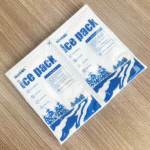
Produits de boulangerie de boîte d'isolation d'EPP: Arrêtez les commandes détrempées?
You can bake perfectly and still lose the customer at the doorstep. Delivery adds heat, humidité, and vibration in minutes. Ce EPP insulation box bakery products guide shows a workflow that keeps pastries crisp, cakes photo-ready, and chilled fillings stable. Many teams treat cream and custard items as a cold lane and aim to keep them around 41°F (5°C) ou plus froid, while also preventing condensation that turns crust soft.
Cet article répondra pour vous
-
Why last-mile bakery packaging fails and how to fix it
-
When bakery products temperature control is truly required
-
How to choose an EPP insulation box bakery products setup by route time
-
How to control condensation control for bakery delivery packaging
-
A repeatable pack-out SOP you can train fast
-
How to validate an EPP insulation box bakery products lane, clean safely, and make reuse pay
-
A quick EPP insulation box bakery products cost-per-trip mini calculator
Why Bakery Delivery Fails Without an EPP Insulation Box Bakery Products Setup
Réponse directe: Bakery delivery fails when moisture condenses, items get crushed, or chilled fillings drift warm. Un EPP insulation box bakery products setup reduces heat transfer and absorbs impacts, but packing discipline completes the system.
Bakery products don’t fail like frozen food. They fail emotionally. A smudged cake or soft croissant feels like a broken promise. Temperature swings and trapped moisture are the usual cause.
| Risque | Ce que tu vois | Pourquoi ça arrive | Ce que cela signifie pour vous |
|---|---|---|---|
| Condensation | boîte humide, soggy crust | warm product meets cool air | lower repeat orders |
| Crushing | bosses, flattened pastry | stacking and handling pressure | refunds and rework |
| Dérive de température | soft cream, melted chocolate | warm vehicle + longue mise en scène | plaintes de qualité |
| Transfert d'odeur | off-smells | charges mixtes + weak drying | brand damage |
Condensation control for bakery delivery packaging
Condensation is like fog on a bathroom mirror. Warm moisture meets a cooler surface and turns into droplets. Those droplets land on crust and erase your “fresh-baked” texture fast.
Practical tips for an EPP insulation box bakery products workflow
-
Cool products before packing. Never pack while steam is visible.
-
Use inserts so boxes cannot slide and dent corners.
-
Split warm bread from cold cream desserts on multi-stop routes.
Exemple concret: Adding a 20-minute cooling step plus a ventilated inner tray reduced soggy-croissant complaints.
When Do You Need Temperature Control for EPP Insulation Box Bakery Products?
Réponse directe: Not every pastry needs refrigeration. The key is whether it is chilled-perishable (often dairy, custard, or cream based). For those items, many programs reference cold holding near 41°F (5°C) ou ci-dessous, and short dwell time matters as much as insulation.
Use lane logic to remove guesswork. Keep “ambient lane” items focused on crush protection and humidity balance. Keep “cold lane” items focused on stable cold holding and minimal staging.
| Catégorie | Exemples | Lane choice | What your SOP should focus on |
|---|---|---|---|
| Ambient-stable | pain, many cookies | Ambient lane | écraser + humidity balance |
| Quality-sensitive | croissants, glazed donuts | Ambient or cool lane | airflow to avoid sogginess |
| Réfrigéré-périssable | cheesecake, cream pastry | Cold lane | packs froids + horodatages |
| Congelé | ice-cream cake, frozen dough | Voie gelée | prevent thaw spikes |
Bakery products temperature control: the two-lane menu
-
Ambient lane: ship dry, protect shape, avoid over-sealing.
-
Cold lane: pré-refroidir, add refrigerants, and record pack-out time.
-
Commandes mixtes: divide lanes inside one EPP insulation box bakery products trousse, or use two kits.
What Makes an EPP Insulation Box Bakery Products Program Different?
Réponse directe: Un EPP insulation box bakery products program protects temperature and structure together. EPP is a closed-cell foam that insulates and also absorbs repeated impacts. That matters when roads are rough and couriers stack loads.
In many datasheets, EPP can show thermal conductivity around 0.037–0.043 W/m·K, which helps slow temperature swings. Think of it as a shock-absorbing thermos for “cold and beautiful.”
EPP insulation box bakery products vs EPS foam shipper
| Type de conteneur | Stabilité thermique | Protection contre l'écrasement | La meilleure solution pour vous |
|---|---|---|---|
| EPP insulation box bakery products | fort, cohérent | strong for repeat impacts | réutiliser les boucles + premium delivery |
| Expéditeur de mousse EPS | fort | moyen | one-way shipping |
| Glacière en plastique dur | medium–strong | fort | durable but heavier |
How Do You Choose the Right EPP Insulation Box Bakery Products Size?
Réponse directe: Choose size for stability and fit, not maximum capacity. Oversized boxes create air voids and movement. Undersized boxes increase crushing and slow packing.
Right sizing keeps products flat, reduces shifting, and makes vans easier to load. Standardizing 2–3 sizes reduces packing errors and speeds dispatch.
How to choose an EPP insulation box bakery products setup (outil de décision)
Répondez à ces quatre questions:
-
Do you ship tall cakes above 12 cm often?
-
Do you run multi-stop routes with stacking?
-
Do you ship mixed ambient + chilled items together?
-
Do you see corner dents or frosting smears?
If you say “yes” twice, prioritize snug fit, locking trays, and interlocking lids.
| Sizing factor | Que vérifier | Erreur courante | Signification pratique pour vous |
|---|---|---|---|
| Empreinte | board + tray dimensions | rubbing sidewalls | smeared edges |
| Height | toppers, domes, piping | lid contact | instant premium damage |
| Refrigerant space | pack placement zones | packs touch product | freezing spots or soggy surfaces |
| Stability space | rails, blocs, séparateurs | empty voids | sliding and tilt damage |
How Do You Pack an EPP Insulation Box Bakery Products Order?
Réponse directe: Un fiable EPP insulation box bakery products pack-out uses a repeatable three-zone layout: stability zone, product zone, cooling zone. The product should not move, should not touch refrigerant, and should not see warm air rushing in.
Your biggest ROI often comes from stopping movement, not adding more coolant. This is why photo-based SOPs beat “tribal knowledge.”
POS d'emballage (simple, répétable)
-
Pre-cool chilled items, packs, and the EPP box when possible.
-
Add an anti-slip mat and a rigid base board.
-
Build a no-touch buffer with rails, corner blocks, or a tray.
-
Place refrigerants on sides and top, with a thin barrier sheet.
-
Joint, label “keep upright,” and time-stamp pack-out.
| Couche | Quoi utiliser | Pourquoi ça aide | Ce que cela signifie pour vous |
|---|---|---|---|
| Bas | anti-slip mat + rigid board | stops sliding | fewer tilted cakes |
| Côtés | rails or blocks | creates no-touch zone | protects glazing and piping |
| Haut | barrier sheet + paquet supérieur | reduces lid heat gain | less warm softening |
| Produit | inner cake box / plateau | keeps presentation clean | better unboxing moment |
Gel packs vs PCM packs for EPP insulation box bakery products
Règle simple: in an EPP insulation box bakery products voie froide, your goal is stable, not “as cold as possible.” Some PCM packs can be chosen to hold closer to a target range, reducing accidental freezing compared with very cold gel packs.
| Choix de réfrigérant | Mieux pour | Qu'est-ce qui peut mal se passer | Ce qu'il faut faire |
|---|---|---|---|
| Packs de gel | simple chilled runs | over-cold contact spots | keep a barrier + no-touch zone |
| Packs PCM | tighter temperature targets | wrong PCM for the lane | match PCM to your target range |
How Do You Reduce Condensation in EPP Insulation Box Bakery Products Deliveries?
Réponse directe: Condensation control is the #1 texture lever for flaky pastries. Pre-cool products, reduce warm air entry, reduce empty air voids, and keep cold packs off crisp crust.
Condensation forms when warm humid air meets a cold surface. So reduce humidity inside the box and avoid cold “hot spots” on the product.
The “Warm Product Trap” self-test (0–5)
Donnez-vous 1 point pour chaque « oui ».
-
Warm items enter without a cooling step.
-
Refrigerants touch the inner box or tray.
-
Large empty voids remain inside the EPP box.
-
Lids are opened repeatedly during staging.
-
High-surface-area crust items ship next to cold packs.
Guide de notation
-
0–1: faible risque.
-
2–3: moderate risk—adjust layout.
-
4–5: high risk—your current SOP will struggle.
| Scénario | Qu'est-ce qui ne va pas | Réparer | Ce que cela signifie pour vous |
|---|---|---|---|
| hot bread packed immediately | condensation builds | add cooling time | crisp crust preserved |
| croissants sealed in plastic | crust softens | ventilated tray | better crunch |
| cake box slides inside | smearing | locking insert | Moins de remboursements |
How Do You Protect Cakes in EPP Insulation Box Bakery Products for Cake Delivery?
Réponse directe: Most cake damage is motion, not temperature. Use a “three-lock” approach: lock cake-to-board, box-to-EPP, and EPP-to-vehicle. This stabilizes decoration during express delivery.
Even small vibrations can smear frosting and shift toppers. The box is the shell, but inserts and handling rules complete the system.
| Stability layer | Outil | Ce que ça empêche | Ce que cela signifie pour vous |
|---|---|---|---|
| Cake to board | non-slip pad | micro-sliding | clean edges |
| Box to EPP | insert tray | corner dents | moins de remplacements |
| EPP to van | sangles / tote lanes | tip-over | moins de réclamations pour dommages |
Practical driver rules
-
Avoid stacking decorated cakes unless the system is proven.
-
Keep cakes away from direct refrigerant contact to avoid drip.
-
Add “no hard braking” discipline for cake loads.
How Do You Validate and Monitor EPP Insulation Box Bakery Products Lanes?
Réponse directe: You don’t need sensors on every order. You need lane tests, pass/fail rules, and a short checklist. Start with one route, one box size, and one pack-out recipe.
A practical program uses temperature control, time control, ou un hybride. If you use time-only controls, confirm local requirements before rollout.
The 7-day validation plan
-
Pick one route and one box size.
-
Use one packout kit every time.
-
Test mild weather and a worst-case day.
-
Record pack time, pickup time, Délai de livraison, retards.
-
Define pass/fail for temperature drift and damage rate.
-
Update the SOP once, then train everyone.
| Élément de validation | Ce que vous suivez | Common fail point | Ce que cela signifie pour vous |
|---|---|---|---|
| temps de mise en scène | minutes before pickup | orders wait too long | fix cutoffs first |
| dérive de température | simple indicator | vivre au seuil de la porte | add scheduled windows |
| condensation score | visual checklist | warm-to-cold swings | add liners + airflow control |
| taux de dégâts | photos at delivery | stacking vibration | improve dividers + manutention |
Outil interactif: Delivery Readiness Score (0–10)
Donner 1 point pour chaque « oui ».
-
We classify items as ambient, glacé, ou congelé.
-
We use a photo-based EPP insulation box bakery products layout.
-
We record pack-out time on cold-lane shipments.
-
We prevent direct pack contact with products.
-
We use dividers for mixed orders.
-
We test lanes in summer and winter.
-
We have a doorstep-delay plan.
-
We have a cleaning + drying SOP.
-
We log exceptions and update recipes.
-
We track returns and losses.
0–4: fix basics.
5–7: scale carefully.
8–10: ready to grow.
How Do You Clean and Reuse an EPP Insulation Box Bakery Products Fleet?
Réponse directe: Reuse works when cleaning is routine, drying is complete, and inspection is simple. Un réutilisable EPP insulation box bakery products fleet pays off only when “yesterday’s smell” never reaches today’s customer.
Drying is often the hidden failure point. Wet stacking creates odors and weakens confidence. A drying rack and a short checklist usually fix more than stronger chemicals.
Cleaning SOP for EPP insulation box bakery products reuse (7 mesures)
-
Remove liners and debris.
-
Wash seams and lid edges with food-safe detergent.
-
Rinse to remove residue.
-
Sanitize with correct concentration and contact time.
-
Sécher complètement à l’air (no wet stacking).
-
Inspect for cracks, odeur, ajustement du couvercle.
-
Store clean in a protected area.
Quick reuse readiness score (0–10)
Score 0 à 2 pour chaque élément:
-
Written cleaning checklist
-
Controlled drying (not stacked wet)
-
Return tracking and counting
-
Pre-reuse inspection
-
No mixed-odor loads
8–10: ready to scale reuse.
5–7: pilot on limited routes.
0–4: fix basics first.
Food-contact and sanitation documentation (reste simple)
If you sell across markets, keep a “proof packet”:
-
EU plastics food-contact documentation aligned with Regulation (UE) 10/2011.
-
EU framework documentation aligned with Regulation (CE) 1935/2004.
-
NOUS. polypropylene food-contact statement aligned with 21 CFR 177.1520.
-
Intended use conditions: température, contact type, cleaning limits.
Is an EPP Insulation Box Bakery Products Program Worth the Cost?
Réponse directe: The right question is cost per successful delivery. Un EPP insulation box bakery products program reduces refunds when you control non-returns, temps de nettoyage, et taux de dégâts.
Mini-calculatrice:
Coût par voyage = (box cost ÷ expected trips) + nettoyage + logistique de retour + loss allowance
| Le retour sur investissement vit | What moves it most | Que faites vous | Ce que cela signifie pour vous |
|---|---|---|---|
| Taux de retour | dépôts + rappels | schedule returns | predictable cost |
| Taux de dommages | séparateurs + entraînement | “no stack” rules | plus de cycles de réutilisation |
| Cleaning time | station design | moins de touches | basse main-d'œuvre |
| Taux de perte | suivi | QR scan at handoff | protects ROI |
2025 Trends Shaping EPP Insulation Box Bakery Products
Dans 2025, bakery delivery is judged on consistency, not novelty. Teams are standardizing pack-out recipes, building reusable loops, and validating lanes before promotions.
A clear driver is packaging waste pressure and circular systems. Dans l'UE, Le PPWR est entré en vigueur en février 11, 2025, with broad application scheduled about 18 des mois plus tard.
Dernier aperçu des progrès
-
More route-based packaging by route time and product type.
-
More reuse loops where reverse logistics is realistic.
-
More “presentation-first” design focused on unboxing.
EPP Insulation Box Bakery Products FAQ
Q1: Do all bakery products need an EPP insulation box bakery products setup?
Non. Many breads and cookies can use an ambient lane. Cream-filled items often need a cold lane and tighter controls.
Q2: What temperature should cold-lane items target?
Many programs reference cold holding around 41°F (5°C) or below for perishable foods. Keep staging short and record pack-out time.
Q3: Will an EPP insulation box bakery products setup stop soggy pastries?
Ça aide, but pre-cooling and airflow matter more. Avoid packing while steaming and use ventilated trays for flaky crust.
Q4: Can I ship bread and cream cakes together?
It’s possible but risky. Warm bread adds moisture that can harm chilled desserts. Use dividers or ship as two lanes.
Q5: How often should I lane-test?
Test in hot months and after any change to couriers, itinéraires, or pack-out recipes. Small tests prevent seasonal refund spikes.
Q6: Are EPP boxes safe to reuse for bakery delivery?
Oui, when you standardize cleaning, désinfecter, séchage, and inspection. Odor control usually improves when drying is consistent.
EPP Insulation Box Bakery Products Summary and Recommendations
Un EPP insulation box bakery products workflow protects what customers judge: texture and presentation. Classify products by lane, right-size the box, lock products in place, and manage condensation like a KPI. Then validate one lane and scale with proof, Pas de supposition.
Plan d'action (étapes suivantes)
-
Pick your top 3 SKUs by revenue.
-
Assign each SKU to ambient or cold lanes.
-
Standardize one EPP insulation box bakery products pack-out with photos.
-
Run a 7-day EPP insulation box bakery products lane test, then train every packer in 15 minutes.
-
Add a return + cleaning loop before scaling.
À propos du tempk
Et tempk, we help teams build practical, répétable EPP insulation box bakery products systems for fragile, temperature-sensitive deliveries. We focus on right-sized EPP boxes, insert layouts that prevent crushing, and lane test plans that fit real routes. The goal is fewer refunds, better reviews, and consistent arrivals for every bakery order.
CTA: Share your product list, fenêtre de livraison, and weather range. We’ll map an EPP insulation box bakery products recipe you can pilot immediately.