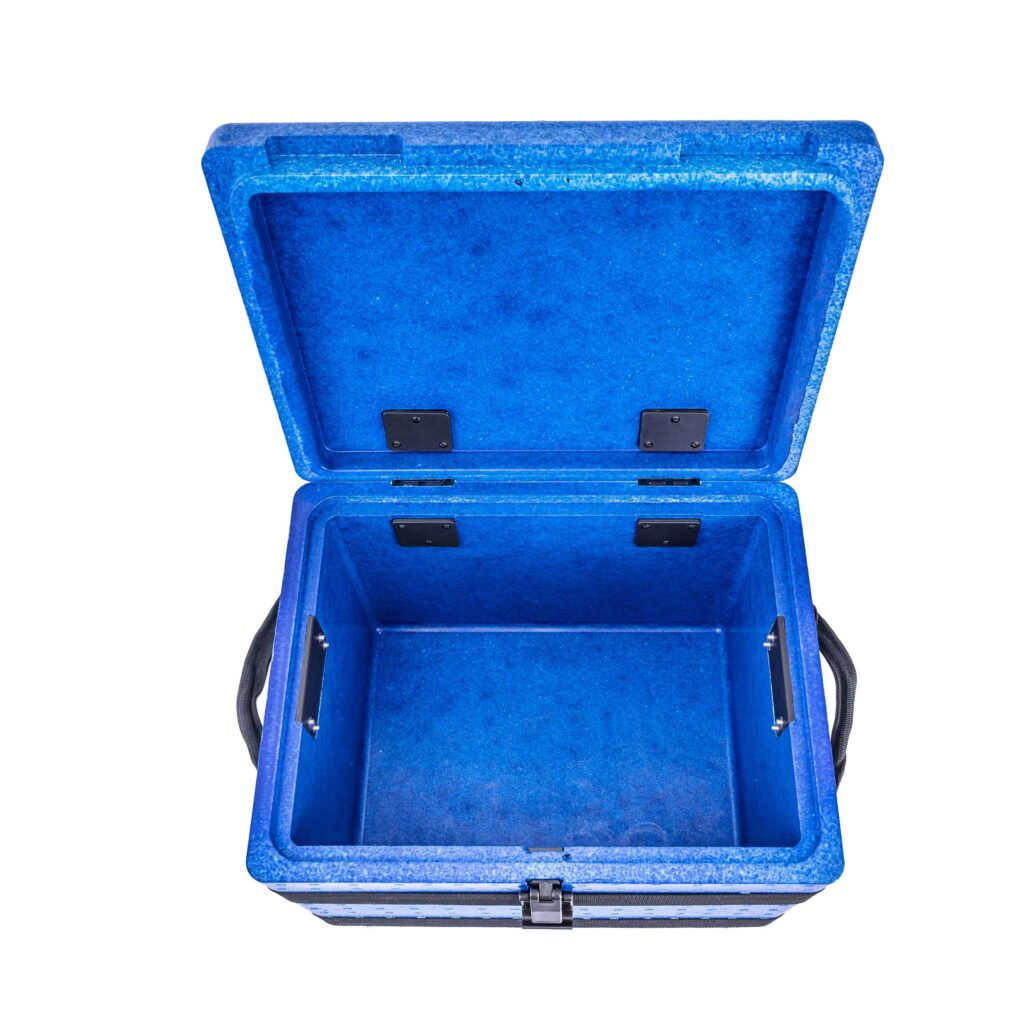
Comment choisir un conteneur de stockage EPP pour la livraison de courses pour un véritable travail en chaîne du froid
La meilleure façon de choisir un Conteneur de stockage en PPE pour la livraison d'épicerie, il faut commencer par l'expédition, pas la boîte. Plage de température de votre produit, forme de la charge utile, longueur de l'itinéraire, points de transfert, méthode de nettoyage, et la boucle de retour changent toutes à quoi ressemble un conteneur EPP approprié. Ce guide optimisé combine la logique de décision de l'acheteur, prudence technique, et des conseils pratiques sur les opérations afin que vous puissiez présélectionner les options sans vous fier à des affirmations non fondées.
Réponse de l'acheteur: présélectionner le produit par ajustement, pas par étiquette. Un bon conteneur de stockage EPP pour la livraison de courses doit correspondre à la charge utile, itinéraire, processus de transfert, documentation fournisseur, et plan de mise à l'échelle. Tout le reste est secondaire.
L’adéquation au cas d’utilisation précède le nom du produit
Un contenant de stockage en PPE pour la livraison d'épicerie peut être vendu comme isolé, durable, compact, empilable, résistant à l'humidité, ou écologique. Ces mots ne sont utiles qu'une fois que vous avez défini le cas d'utilisation. En livraison d'épicerie, cueillette en magasin, mise en scène, et transfert à domicile pour les articles réfrigérés ou sensibles à la température, le bon récipient doit être adapté au produit, itinéraire, ouvriers, processus de nettoyage, et modèle de retour. Une boîte excellente pour un itinéraire peut être gênante pour un autre.
Commencez par la charge utile: laitier, produits réfrigérés, kits de repas, modules complémentaires gelés, diviseurs isolés, et des packs de gel. Décrivez ensuite l'itinéraire: stockage avant expédition, vitesse d'emballage, mode de transport, exposition ambiante, points de transfert, et réception de l'inspection. Enfin, définir ce que la boîte doit faire. Est-il nécessaire d'amortir l'impact, réchauffement lent, résister à la condensation, pile sous charge, montrer une marque, ou retour par une boucle contrôlée? Cette séquence évite à la fois le surachat et la sous-spécification.
Pour les produits sensibles à la température, rappelez-vous que le PPE fournit une isolation passive. La boîte prend en charge la gestion de la température mais ne crée pas elle-même une plage de température vérifiée. Liquides de refroidissement, préconditionnement, conception d'emballage, surveillance, et les tests d'itinéraire font toujours partie de la décision complète.
Les quatre vérifications les plus importantes avant de commander
D'abord, vérifier l'ajustement interne. Le produit, liquide de refroidissement, séparateurs, doublures, et tout moniteur doit s'adapter sans forcer la fermeture du couvercle. Deuxième, vérifier la qualité de la fermeture. Le couvercle doit s'asseoir de manière constante après un véritable emballage., pas seulement quand la boîte est vide. Troisième, vérifier la durabilité de manipulation. Coins, poignées, jantes, et les points d'empilage doivent survivre à la façon dont votre personnel utilisera réellement le conteneur.
Quatrième, vérifier la documentation. Si un fournisseur réclame un temps de retenue, performances d'impact, aptitude au contact alimentaire, ou propriétés matérielles spéciales, demandez quelles preuves soutiennent l'affirmation et si elle s'applique à votre configuration. Les numéros non pris en charge doivent être traités comme du marketing jusqu'à ce qu'ils soient examinés.. Si votre itinéraire est réglementé ou de grande valeur, implique la qualité, logistique, et achats ensemble.
Ces quatre contrôles sont simples, mais ils filtrent beaucoup de mauvais choix. Ils rendent également les conversations avec les fournisseurs plus efficaces car vous discutez de contraintes réelles plutôt que de demander une meilleure boîte générique..
Guide des fonctionnalités à la décision
| Fonctionnalité | Signification de la décision utile | Ce qu'il ne faut pas supposer |
|---|---|---|
| Structure PPE à cellules fermées | Peut supporter la résistance à l’humidité et le rembourrage | Il ne prouve pas automatiquement l'assainissement ou le temps de maintien |
| Conception réutilisable | Peut réduire les emballages à usage unique dans les boucles gérées | La valeur de réutilisation disparaît sans contrôle de retour |
| Paroi et couvercle isolés | Ralentit le changement de température lorsque le conditionnement est correct | Ce n'est pas une réfrigération active |
| Géométrie empilable | Améliore l'organisation des fourgons et des entrepôts | L'empilabilité doit être vérifiée avec les cartons chargés |
| Options personnalisées | Peut améliorer l'ajustement, marque, et flux de travail | La personnalisation ne doit pas remplacer les tests sur échantillons |
Le tableau ci-dessous traduit les caractéristiques courantes du produit en décisions d'achat pratiques.. Il montre également ce qu'il ne faut pas supposer à partir du seul nom de la fonctionnalité..
Les noms de fonctionnalités sont des étiquettes utiles, pas de preuve définitive. L'acheteur doit encore connecter chaque élément à l'itinéraire, produit, et attente de qualité. Ceci est particulièrement important avant les commandes en gros ou personnalisées.
Quand une boîte EPP est un choix judicieux
Un Boîte EPP est souvent un choix judicieux lorsqu'une entreprise a besoin d'un contenant isotherme réutilisable capable de supporter des contacts répétés. Cela inclut la livraison à domicile, mise en scène d'épicerie, distribution alimentaire régionale, manipulation des fruits de mer, logistique médicale compacte, et programmes d'emballages consignés personnalisés. La résilience et le faible poids du matériau facilitent le transport, empiler, et nettoyer les cartons tous les jours.
La boîte est également utile lorsque le produit a besoin à la fois d'une certaine protection contre les chocs et les changements de température.. Par exemple, laitier, produits réfrigérés, kits de repas, modules complémentaires gelés, diviseurs isolés, et les packs de gel peuvent nécessiter un contenant plus structuré qu'un sac souple et une option plus réutilisable qu'un emballage en mousse jetable fragile. Le PPE peut combler cet écart lorsque la taille, couvercle, et l'emballage sont bien assortis.
Une autre situation intéressante est celle d’un programme avec des itinéraires prévisibles. Si le temps de parcours, charge utile, exposition ambiante, et le transfert sont relativement cohérents, il est plus facile de standardiser le conditionnement et de former les travailleurs. Moins l'itinéraire est prévisible, plus des tests et une surveillance peuvent être nécessaires avant la mise à l'échelle.
Quand la boîte seule ne suffit pas
Un conteneur de stockage en PPE pour la livraison de courses n'est pas suffisant lorsque l'envoi nécessite une plage de température éprouvée sans test d'emballage.. Ce n'est pas suffisant lorsque le produit est très sensible à la température et qu'il n'y a pas de plan de refroidissement., emplacement du moniteur, ou une qualification d'itinéraire existe. Ce n'est pas non plus suffisant lorsque les règles de nettoyage sont respectées., suivi des retours, et les critères de retraite sont absents d'un programme de réutilisation.
Les opérateurs du secteur alimentaire doivent vérifier les règles locales en matière de sécurité alimentaire et les exigences en matière de manipulation des produits.. Les acheteurs de produits de santé et de produits pharmaceutiques devraient vérifier les étiquettes des produits, procédures qualité, exigences du transporteur, et attentes de distribution pertinentes. Dans de nombreux cas, le boîtier EPP peut convenir comme composant isolé, mais le système complet doit encore être revu.
Cela ne réduit pas la valeur du PPE. Cela rend la valeur plus honnête. La boîte protège mieux lorsqu'elle fait partie d'un flux de travail contrôlé plutôt que lorsqu'elle est censée résoudre à elle seule tous les risques de la chaîne du froid..
Examen de l'échantillon à la production
Avant la mise à l'échelle, exécuter un exemple d'examen qui ressemble au travail quotidien. Emballer les marchandises réelles, utiliser le liquide de refroidissement prévu, fermez le couvercle à vitesse normale, empiler les cartons, déplacez-les sur l'itinéraire, nettoyez-les, et les inspecter après le retour. Enregistrer des observations pratiques: ajustement du couvercle, mouvement du produit, condensation, confort de portage, marques de surface, et le temps nécessaire au nettoyage.
Pour la vente en gros, coutume, ou commandes à l'exportation, comparer l'échantillon approuvé avec les unités de production. Vérifier les dimensions, couleur, emplacement du logo, sensation de mur, engagement du couvercle, emballage en carton, et tous les accessoires. Si une modification est apportée après l'approbation de l'échantillon, documentez-le. La cohérence entre l’échantillon et la production est souvent plus importante qu’un premier échantillon magnifique.
Quand la performance compte, demander les hypothèses derrière toutes les données de test. La même boîte peut fonctionner différemment avec une autre charge utile, masse de liquide de refroidissement, itinéraire, ou profil ambiant. Un acheteur prudent utilise les données des fournisseurs comme point de départ, ne remplace pas la vérification interne.
Outils de décision utiles
Vérifiez les détails avant de choisir l'emballage
Ces outils rapides peuvent vous aider à comparer le risque d'itinéraire, besoins de dimensionnement, choix de liquide de refroidissement, et les détails de l'emballage avant de demander un devis.
Doublure de boîte & Dimensionnement des couvertures de palettes
Vérifiez la logique de dimensionnement du revêtement de boîte et du couvercle de palette pour les projets d'emballage isotherme.
Dimensionnement estiméRéférence du matériau isolant
Comparez les choix de matériaux d'isolation pour différents besoins d'emballage de la chaîne du froid.
Comparez les matériauxGénérateur de liste de contrôle de conformité
Créer une liste de contrôle pratique pour l'examen des emballages, expédition, et documentation.
Construire une liste de contrôleExemple pratique
Un acheteur planifie la livraison de courses, cueillette en magasin, mise en scène, et le transfert à domicile des articles réfrigérés ou sensibles à la température peut commencer par une boîte compacte car elle semble efficace. Après test, l'équipe pourrait découvrir que le liquide de refroidissement et la charge utile sont en compétition pour le même espace. Les ouvriers ferment le couvercle avec pression, déplacement des plateaux de produits, et le joint du couvercle n'est pas cohérent. La meilleure solution pourrait être une boîte légèrement plus haute., un séparateur interne différent, ou deux tailles de cartons pour différentes familles de commandes.
Ce genre de résultat est normal. Un projet pilote pratique devrait révéler les compromis avant de passer une commande groupée. Le but n’est pas de trouver une boîte parfaite du premier coup; il s'agit de créer une configuration d'emballage que le personnel peut répéter de manière fiable sous une pression de fonctionnement réelle.
FAQ
Quelle est la première chose à vérifier avant d'acheter un conteneur de stockage EPP pour la livraison de courses?
Commencez par l'ajustement interne une fois l'emballage complet inclus. Produit, liquide de refroidissement, doublures, séparateurs, et les appareils de surveillance ont tous besoin d'espace. Si le couvercle ne se ferme que lorsque le personnel le force, la boîte n'est pas correctement dimensionnée pour le parcours.
Comment dois-je traiter les réclamations de performance des fournisseurs?
Demandez les conditions de la réclamation. Les performances dépendent de la charge utile, exposition ambiante, liquide de refroidissement, préconditionnement, et critères de test. Une réclamation peut être utile, mais cela ne doit pas être traité comme une preuve universelle à moins que les conditions ne correspondent à votre cas d'utilisation.
Quand vaut-il la peine d’envisager une boîte EPP personnalisée?
La conception personnalisée mérite d’être envisagée lorsque les boîtiers standards créent des problèmes opérationnels répétés, comme un mauvais ajustement, empilage inefficace, nettoyage difficile, ou exigences de marque. Commencez par les contraintes d'itinéraire et de charge utile avant de choisir des outils personnalisés ou des fonctionnalités moulées..
Qu'est-ce qui rend une boîte EPP adaptée à l'achat en gros?
L'achat en gros doit suivre l'approbation de l'échantillon, revue de cohérence de la production, contrôles d'emballage, et des critères d'acceptation clairs. La boîte doit correspondre à l'itinéraire, pas seulement le budget. Confirmer les dimensions, accessoires, emballage en carton, et règles de remplacement avant la mise à l'échelle.
Conclusion
Un conteneur de stockage en PPE pour la livraison de courses peut être un bon choix lorsque l'acheteur le considère comme un élément pratique de la chaîne du froid plutôt que comme un conteneur magique.. Les points les plus importants sont simples: définir l'itinéraire, confirmer la charge utile et la disposition du liquide de refroidissement, tester le couvercle et l'empilage sous manipulation réelle, planifier le nettoyage et le retour, et vérifiez toutes les allégations de performances avant de procéder à la mise à l'échelle. Pour la livraison d'épicerie, cueillette en magasin, mise en scène, et transfert à domicile pour les articles réfrigérés ou sensibles à la température, ces contrôles réduisent le risque d'acheter une boîte qui semble correcte mais qui ne correspond pas aux opérations quotidiennes.
La décision finale devrait équilibrer la protection des produits, convivialité pour les travailleurs, besoins en matière de documentation, et coût total d'exploitation. Un boîtier EPP bien choisi facilite la répétition du flux de travail. Un choix mal choisi crée des exceptions que le personnel doit résoudre au quotidien.
À propos du tempk
Tempk est un emballage chaîne du froid fournisseur axé sur les emballages pratiques de contrôle de la température pour les aliments, médecine, logistique, et applications de livraison. Notre gamme de produits comprend packs de glace en gel, packs de glace sec, isolé sacs thermiques, Boîtes d'expédition froides en PPE, doublures de boîtes isolées, couvertures de palettes, et matériaux d'emballage pour la chaîne du froid associés. Pour les projets de boîtes EPP, Tempk peut aider les acheteurs à réfléchir à l'adéquation du produit, disposition de la charge utile, compatibilité du liquide de refroidissement, conditions de manutention, et des exigences d'emballage personnalisées ou réutilisables sans transformer un choix de matériau en une promesse de performance non étayée. L’objectif est d’aider les acheteurs à passer d’un mot clé de produit à un choix de packaging révisable., testé, et répété.
Partagez votre mélange de références d'épicerie, flux de travail de préparation, et profil d'itinéraire avec Tempk pour comparer les options de conteneurs de stockage EPP.
Un autre point pratique est le comportement des travailleurs. Un conteneur de stockage en PPE pour la livraison de courses est manipulé par des personnes pressées par le temps. Si la boîte est difficile à ouvrir, difficile à fermer, ou déroutant à identifier, les travailleurs peuvent contourner le processus prévu. Une bonne conception de l'emballage réduit le nombre de décisions que le personnel doit prendre lors de l'emballage et du transfert..
La cartographie de l'itinéraire doit inclure les moments calmes, pas seulement le trajet en véhicule. Les cartons emballés peuvent attendre près d’un quai, s'asseoir dans un support de scène, ou rester ouvert pendant que les travailleurs vérifient les commandes. Ces périodes d'exposition peuvent être importantes pour la livraison d'épicerie, cueillette en magasin, mise en scène, et transfert à domicile pour les articles réfrigérés ou sensibles à la température, surtout lorsque le produit a déjà quitté le stockage contrôlé.
Pour les acheteurs, une spécification de boîte EPP doit être liée à une SOP. La SOP doit expliquer comment les boîtes sont conditionnées si nécessaire, comment les produits et le liquide de refroidissement sont disposés, comment les cartons retournés sont nettoyés, et comment les unités endommagées sont retirées. Sans cette couche opérationnelle, les performances du produit varient selon le quart de travail et l'emplacement.
Les équipes qualité posent souvent des questions différentes de celles des équipes achats. L'approvisionnement peut se concentrer sur le prix et les délais de livraison, alors que la qualité veut des preuves, cohérence, traçabilité, et changer de contrôle. L'intégration des deux points de vue dans l'étape d'échantillonnage évite les désaccords ultérieurs une fois que la case a déjà été sélectionnée.
Si la boîte contient des produits laitiers, produits réfrigérés, kits de repas, modules complémentaires gelés, diviseurs isolés, et des packs de gel, vérifier s'il y a des odeurs, condensation, ou des résidus peuvent rester après utilisation. Un conteneur réutilisable ne doit pas seulement survivre au parcours; il devrait revenir à un état que le personnel soit à nouveau à l'aise d'utiliser. Le processus de nettoyage doit être réaliste pour le nombre de cartons en circulation.
La planification des stocks est également importante. Les boîtes réutilisables se déplacent plus lentement que les emballages jetables car certaines unités sont toujours utilisées, en transit retour, en nettoyage, ou en attente d'inspection. La quantité achetée doit refléter ce cycle, pas seulement le nombre d'envois quotidiens. Les acheteurs doivent modéliser la diffusion avant de s'engager dans un programme à grande échelle.
Les étiquettes et la traçabilité méritent attention. Une zone d'étiquette lisse, zone d'identification moulée, ou un système de code couleur peut aider les travailleurs à identifier rapidement les boîtes. Pour les programmes consignés, une identification simple peut réduire les pertes et faciliter le suivi du nettoyage, entretien, et la retraite. Ces fonctionnalités doivent être planifiées avant l'outillage ou la commande groupée lorsque cela est possible.
Ne négligez pas le stockage. Une caisse qui fonctionne bien sur la route peut être peu pratique si elle consomme trop d'espace d'entrepôt ou si elle ne s'empile pas en toute sécurité lorsqu'elle est vide.. Envisagez la nidification, empilement, ajustement de palette, et la hauteur des étagères ainsi que les besoins thermiques et de rembourrage. L’ajustement opérationnel commence avant que l’expédition ne quitte le bâtiment.
Le processus d’achat le plus solide est itératif. Sélectionnez les tailles probables, demander des échantillons, testez-les avec de vrais pack-outs, recueillir les commentaires des travailleurs, ajuster la spécification, puis mettre à l'échelle. Cette approche demande plus d'efforts que de commander à partir d'une liste, mais cela réduit le risque d'acheter une grande quantité de boîtes qui ne conviennent pas à un usage quotidien.