Doublure à bulles en aluminium pour les essais cliniques: Comment les acheteurs doivent le spécifier
Un revêtement à bulles en aluminium destiné aux essais cliniques doit être sélectionné comme composant d'emballage avec des limites définies, pas comme une promesse imprimée sur une page produit. Dans la logistique des essais cliniques, l'acheteur doit savoir où le revêtement est utile, où ce n'est pas suffisant, et ce que le fournisseur doit documenter avant de commander en gros. L'objectif est un revêtement qui s'adapte aussi bien à l'opération qu'au carton..
Doublure, liquide de refroidissement, carton, et l'itinéraire doivent être traités ensemble
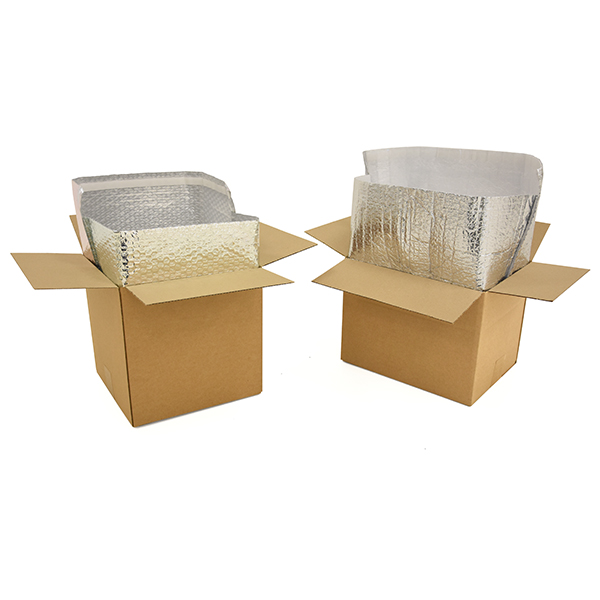
Une doublure à bulles en aluminium est une couche d'isolation passive. Cela peut ralentir le gain ou la perte de chaleur, réfléchit la chaleur rayonnante de la paroi du carton, ajouter une petite quantité de rembourrage, et aide à créer une surface intérieure plus propre.. Ce n'est pas un réfrigérateur, ce n'est pas un dispositif actif de contrôle de la température, et cela ne supprime pas le besoin du bon liquide de refroidissement. Pour la logistique des essais cliniques, cette limite est particulièrement importante car l'envoi peut passer par plusieurs points de transfert avant que le destinataire n'ouvre le carton.
Considérez le revêtement comme une partie d'une petite pile thermique.. Le carton ondulé extérieur donne forme et résistance à la manipulation. La doublure ajoute une couche réfléchissante et d'espace aérien. Packs de gel, briques de glace, Packs PCM, ou de la neige carbonique fournissent de l'énergie froide le cas échéant. L'emballage du produit contrôle les fuites, hygiène, et contact direct. L'itinéraire ajoute alors le vrai stress: conflits liés aux excursions de température, documentation de voie incomplète, variabilité de la gestion du site, retards d'expédition des patients, erreurs de placement de l'enregistreur de données, et en supposant qu'une doublure est un expéditeur qualifié. Si l'une de ces pièces est faible, le revêtement peut être blâmé même si le problème concerne en réalité la taille du carton, masse de liquide de refroidissement, ou une mauvaise manipulation.
C'est pourquoi la première question de l'acheteur devrait porter sur la charge utile et l'itinéraire., pas seulement l'épaisseur du revêtement. Un envoi contenant des médicaments expérimentaux, kits de laboratoire, échantillons diagnostiques, fournitures auxiliaires, et les matériaux d'essai susceptibles d'être sensibles à la température nécessitent un examen des risques différent de celui d'un colis ambiant générique.. Vous devez définir l'état requis du produit à la livraison, le temps de traitement prévu, le processus de réception, et les critères de rejet avant de comparer les échantillons de revêtement. Une spécification claire accélère les conversations avec les fournisseurs et réduit le risque qu'une option à faible coût soit approuvée pour une mauvaise raison..
Tracer l'itinéraire avant de décider du paquebot suffit
La cartographie d'itinéraire est un exercice simple que de nombreuses équipes sautent. Notez où le carton emballé sera placé avant le ramassage, comment il est chargé, s'il entre dans un centre de colis, combien de temps il peut attendre dans un véhicule, si un coursier ou un coursier ouvre un sac de livraison plus grand, et comment le destinataire inspecte le colis. Pour la logistique des essais cliniques, cette feuille de route révèle souvent un risque que les spécifications du paquebot ne peuvent à elles seules résoudre.
Une fois la carte visible, associer chaque risque à un contrôle. Conflits liés aux excursions de température, documentation de voie incomplète, variabilité de la gestion du site, retards d'expédition des patients, erreurs de placement de l'enregistreur de données, et en supposant qu'un paquebot soit un expéditeur qualifié, il peut avoir besoin de plus de liquide de refroidissement, un carton différent, une fermeture plus forte, une étiquette d'avertissement, une fenêtre d'expédition plus courte, ou un enregistreur de données. La doublure à bulles en aluminium peut prendre en charge ces contrôles en réduisant le transfert de chaleur et en améliorant la surface intérieure du pack., mais il ne peut pas compenser chaque lacune opérationnelle.
La feuille de route aide également au regroupement des SKU. Produits tels que les médicaments expérimentaux, kits de laboratoire, échantillons diagnostiques, fournitures auxiliaires, et les matériaux d'essai qui peuvent être sensibles à la température peuvent ne pas partager la même sensibilité ou tolérance de manipulation.. Si un seul emballage est utilisé pour tous les SKU, l'élément présentant le risque le plus élevé devrait faire l'objet du test. Si la répartition des SKU est trop large, il peut être préférable de définir deux emballages plutôt que de forcer un seul modèle de doublure à tout couvrir.
Structure matérielle: ce que les acheteurs devraient traduire en opérations
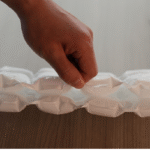
Une doublure à bulles en aluminium combine une surface réfléchissante avec un rembourrage à bulles. La couche face à la feuille aide à réduire le transfert de chaleur radiante, tandis que les espaces d'air emprisonnés dans la couche de bulles ralentissent la conduction à travers le revêtement.. Pour la logistique des essais cliniques, ceci est utile lorsque le colis est confronté à de courtes périodes d'exposition à la chaleur, mise en scène chaleureuse, ou environnements de manutention mixtes. La conception dépend toujours d'une fermeture correcte et d'un fluide suffisamment froid..
Une erreur courante est d’évaluer uniquement la brillance et l’épaisseur. Les vraies questions sont de savoir si le paquebot enveloppe la charge utile sans trous., si les coins sont protégés, si le joint ou le rabat reste fermé, et si l'humidité affecte les couches. Dans les programmes basés sur des cartons, le matériau le plus élégant peut être moins performant si le motif laisse des coins ouverts ou si le personnel précipite le processus d'insertion.
Pour chaque structure matérielle, demander ce qui restera pareil entre l'échantillon et la production. Changements dans le cinéma, hauteur de bulle, densité de la mousse, adhésif, revêtement, laminage, scellement des bords, ou le motif de pliage peut modifier le comportement de la doublure. Dans la logistique des essais cliniques, un petit changement peut ne pas être visible pour l'emballeur, mais cela peut apparaître plus tard sous forme de condensation, produit broyé, des recettes plus chaudes, ou réclamations clients.
Utilisation respectueuse de la conformité sans surcharger la doublure
La logistique des essais cliniques doit traiter un revêtement comme un composant d'emballage, pas comme une preuve du contrôle de la température en soi. Produits expérimentaux, kits de laboratoire, et les matériaux de diagnostic peuvent contenir des instructions de stockage spécifiques au produit.. De nombreux envois de produits de santé réfrigérés sont prévus autour de gammes réfrigérées de renom, mais l'exigence correcte doit provenir du protocole, étiquette, données de stabilité, ou accord qualité. Une doublure peut aider à réduire l’exposition, mais le paquet, liquide de refroidissement, enregistreur, et la documentation supporte le fardeau le plus lourd.
Pour les expéditions aériennes ou les programmes transfrontaliers, les équipes devront peut-être prendre en compte les pratiques de fret sensibles à la température de l'IATA, Distribution sensible au PIB, traitement douanier, et instructions de réception au niveau du site. L'article évite les allégations de conformité universelle car les exigences en matière d'approvisionnement clinique varient selon le produit., itinéraire, marché, et procédures de sponsoring. Les acheteurs doivent vérifier le protocole d'emballage, Placement de l'enregistrement, processus d'évaluation des excursions, et quelle documentation le site ou le dépôt doit conserver.
Une règle interne utile est simple: plus la charge utile est sensible et plus l'itinéraire est incertain, plus vous avez besoin de documentation. Références de stockage des vaccins CDC, Orientations du PIB de l’UE, VOICI LE TCR, Normes thermiques ISTA, Tempk emballage chaîne du froid la portée peut guider la conversation, mais les acheteurs devraient toujours demander leur propre qualité, réglementaire, ou l'équipe de sécurité alimentaire avant d'approuver un emballage de production. La doublure ne doit pas être utilisée pour des produits expérimentaux réglementés sans emballage qualifié., expéditions avec des gammes réfrigérées définies mais sans plan de refroidissement, et toute route où un contrôle actif ou un PCM validé est requis, à moins que l'ensemble du système d'expédition n'ait été examiné pour ce risque.
Une table de vérification pratique pour les acheteurs
Utilisez ce tableau avant l'approbation de l'échantillon. Cela permet de concentrer la discussion sur les exigences d'expédition plutôt que sur le langage de la brochure..
| Zone de spécifications | Question de décision | Réponse du fournisseur qui aide |
|---|---|---|
| Exigence de température | Quel état le produit doit-il conserver à la réception? | Une demande de définition de la gamme, durée, et critères d'acceptation avant de proposer. |
| Géométrie des cartons | Le paquebot se fermera-t-il sans espaces dans les coins ni perte d'espace de charge utile? | Un dessin, dieline, ou échantillon fini assorti au carton. |
| Plan média froid | Où vont les packs de gel, PCM, briques de glace, ou assis sur de la glace carbonique? | Un croquis d'emballage et un avertissement sur les risques de contact direct, le cas échéant. |
| Tester les preuves | La performance est-elle basée sur votre itinéraire ou sur une réclamation générique? | Profil de test, charge utile, conditions ambiantes, et critères de réussite/échec. |
| Contrôle de production | L'échantillon approuvé peut-il être répété à grande échelle? | Spécification matérielle, méthode d'inspection, et notification de changement. |
Le but du tableau est de rendre visibles les hypothèses. Une fois les hypothèses écrites, l'acheteur peut décider de ce qui a besoin d'une fiche technique du fournisseur, qu'est-ce qui nécessite un envoi d'essai, et ce qui nécessite l'approbation de l'équipe qualité. Cette discipline est particulièrement utile lorsque la pression sur les prix pousse les équipes vers un paquebot plus léger ou moins cher avant que le risque lié à l'itinéraire ne soit compris..
Questions des fournisseurs qui changent réellement le résultat
Une forte conversation avec les fournisseurs pour le revêtement à bulles en aluminium est spécifique. Au lieu de se demander si le revêtement est bon pour la logistique des essais cliniques, demandez quelles tailles de carton sont prises en charge, quelles couches de matériaux sont utilisées, quelles tolérances sont contrôlées, comment les bords sont scellés, comment les doublures sont emballées pour l'expédition, et que se passe-t-il si le matériel approuvé est modifié. Cela transforme la discussion du langage commercial en contrôle de production.
Pour les commandes groupées, gamme de stockage de produits, politique d'excursion, étalonnage de l'enregistreur, instructions du site, dessins d'emballage, qualification saisonnière, et le contrôle des modifications doit être visible avant la finalisation du bon de commande. Si vous avez besoin d'une impression personnalisée, demander si les changements d'encre ou de laminage affectent le délai de livraison, Recyclabalité, examen du contact alimentaire, ou disponibilité du matériel. Si vous avez besoin de plusieurs tailles, demandez si chaque taille utilisera un dessin et un échantillon distincts. Si vous importez, demander comment les étiquettes, cartons, emballage à compression, et la palettisation affectent la réception dans votre entrepôt.
Outils de décision utiles
Vérifiez les détails avant de choisir l'emballage
Ces outils rapides peuvent vous aider à comparer le risque d'itinéraire, besoins de dimensionnement, choix de liquide de refroidissement, et les détails de l'emballage avant de demander un devis.
Générateur de liste de contrôle de conformité
Créer une liste de contrôle pratique pour l'examen des emballages, expédition, et documentation.
Construire une liste de contrôleRéférence du matériau isolant
Comparez les choix de matériaux d'isolation pour différents besoins d'emballage de la chaîne du froid.
Comparez les matériauxRésistance aux chutes du matériau isolant
Examinez la résistance aux chutes et les facteurs de manipulation avant de choisir des matériaux d'isolation..
Vérifier la résistanceLe fournisseur doit également être à l'aise pour discuter des limites. Un fournisseur qui prétend que chaque paquebot convient à chaque itinéraire crée un risque pour les deux parties. De meilleures réponses semblent plus conditionnelles: cette doublure peut s'adapter à des itinéraires courts avec le bon liquide de refroidissement; cette conception nécessite un essai pour des voies plus longues; ce produit nécessite une structure d'isolation différente; cette réclamation nécessite des documents. Les réponses conditionnelles sont souvent plus fiables que les affirmations sûres sans contexte.
La réception des chèques transforme l'emballage en preuve
L'inspection à la réception doit être conçue avant que la première expédition de production ne quitte l'entrepôt. Pour la logistique des essais cliniques, le destinataire peut vérifier l'état du produit, carton endommagé, état de la banquise, fuite visible, position de la doublure, intégrité du joint, ou enregistrements de température si la surveillance est utilisée. Sans norme de réception, les réclamations deviennent subjectives et difficiles à enquêter.
La doublure à bulles en aluminium peut offrir une expérience de réception plus propre lorsqu'elle est bien dimensionnée et utilisée de manière cohérente.. Une doublure qui bouge, larmes, emprisonne le liquide au mauvais endroit, ou rend le carton difficile à ouvrir peut créer des plaintes même lorsque le produit lui-même est acceptable. Les acheteurs doivent considérer la personne qui ouvre le colis, pas seulement la personne qui l'emballe.
Si des plaintes surviennent, revoir la chaîne complète avant de blâmer un composant. Vérifiez si le produit a été correctement préconditionné, si le milieu froid a été congelé ou conditionné comme prévu, si la doublure correspond au carton, si l'itinéraire a changé, si le carton a été retardé, et si le destinataire a suivi les instructions. Cette approche des causes profondes évite des changements matériels répétés qui ne résolvent jamais le véritable problème..
Exemple pratique: transformer un échantillon en un emballage utilisable
Imaginez qu'une équipe d'approvisionnement clinique doive déplacer des kits d'essai d'un dépôt vers plusieurs sites pendant une période de temps incertain.. L'équipe envisage d'utiliser une doublure à bulles en aluminium, car elle s'insère dans un carton existant et se stocke à plat au dépôt.. Avant approbation, l'équipe cartographie les instructions du site, confirme la plage de stockage du produit à partir de la documentation d'essai, choisit le plan de refroidissement, place un enregistreur là où il peut refléter les conditions de la charge utile, et définit ce que le récepteur doit faire si l'enregistreur affiche une excursion.
Dans ce scénario, la doublure peut aider à réduire le stress thermique, mais la décision concerne vraiment l'emballage documenté. Si l'itinéraire change, la charge utile change, ou les exigences de stockage deviennent plus strictes, la conception du revêtement devrait être revue à nouveau plutôt que reportée automatiquement.
Pour la logistique des essais cliniques, le résultat utile n’est pas une réussite ou un échec générique. C'est une méthode d'emballage écrite que l'entrepôt peut répéter. La méthode doit inclure la manière dont la doublure est insérée, où se trouve la charge utile, comment sont disposés les médias froids, comment le carton est fermé, et ce que le destinataire doit inspecter. Une fois le processus défini, l'acheteur peut comparer les options des fournisseurs sur la cohérence plutôt que sur le seul aspect de la surface.
FAQ
Une doublure à bulles en aluminium est-elle suffisante à elle seule pour la logistique des essais cliniques?
Non. Une doublure à bulles en aluminium est un composant d'isolation passive. Il peut ralentir le transfert de chaleur et améliorer l'emballage en carton., mais il faut quand même le bon carton, disposition de la charge utile, médias froids, processus de manipulation, et recevoir des chèques. Pour les itinéraires à plus haut risque, les acheteurs devraient tester l'emballage complet plutôt que de se fier à l'apparence de la doublure.
Que dois-je confirmer avant de commander des échantillons?
Confirmer les dimensions du carton, type de charge utile, état requis du produit, durée de l'itinéraire, plan média froid, risque d’humidité ou de fuite, et besoins en documentation. Demandez au fournisseur un échantillon fini correspondant au matériau de production et à la méthode de scellage prévus.. Pour la logistique des essais cliniques, il est préférable de tester un emballage réaliste plutôt qu'une doublure vide et soignée.
Quand devrais-je envisager un système plus lourd au lieu d’un revêtement?
Envisagez un expéditeur plus isolé, boîte rigide, emballage qualifié, ou contrôle actif lorsque le parcours est long, l'exposition ambiante est incertaine, le produit est réglementé, ou l'expédition implique des produits expérimentaux réglementés sans emballage qualifié, expéditions avec des gammes réfrigérées définies mais sans plan de refroidissement, et tout itinéraire où un contrôle actif ou un PCM validé est requis. Une doublure peut être utile, mais il ne doit pas être étendu au-delà de son rôle éprouvé.
Comment comparer équitablement les fournisseurs?
Donnez à chaque fournisseur le même profil d'expédition, taille du carton, hypothèses de charge utile, plan média froid, et demande de documentation. Comparez non seulement le prix unitaire mais également les dimensions finies, cohérence de l'échantillon, contrôle des matériaux, méthode d'emballage, capacité à prendre en charge le travail personnalisé, et volonté d'énoncer les limites des produits.
Conclusion: spécifier le revêtement comme composant contrôlé
Un revêtement à bulles en aluminium peut être un choix utile pour la logistique des essais cliniques, mais il doit être sélectionné dans le cadre d'un emballage complet de la chaîne du froid. L'acheteur doit définir les exigences du produit, risque d'itinéraire, géométrie du carton, plan de refroidissement, et recevoir des preuves avant d'approuver les échantillons.
Les contrôles pratiques les plus importants sont le tampon thermique, conception d'emballage qualifiée, documentation, utilisation d'un enregistreur de données, instructions du site, et preuve à la réception. Si ces chèques sont traités tôt, la doublure peut prendre en charge un processus d'emballage plus propre, meilleur contrôle de l'entrepôt, et moins de litiges à la réception. S'ils sont ignorés, même un bon revêtement peut être utilisé dans la mauvaise voie ou assemblé de la mauvaise manière.
L'approche d'approvisionnement la plus sûre consiste à poser des questions conditionnelles et à exiger des réponses claires.. Ce qui est prouvé? Ce qui dépend de votre itinéraire? Ce qu'il faut tester? Quels changements nécessitent une approbation? Ces questions maintiennent l'honnêteté du package final.
À propos du Tempk
Tempk propose des options d'emballage pour la chaîne du froid pour les aliments, pharmaceutique, et autres envois sensibles à la température. Sa gamme de produits publiée comprend doublures de boîtes isolées, sacs thermiques, packs de glace en gel, EPP et boîtes d'expédition à froid, couvertures de palettes isolées, et matériaux d'emballage pour la chaîne du froid associés. Pour les projets de revêtement, Tempk peut aider les acheteurs à comparer les conceptions de doublures à base de carton avec les supports de refroidissement, exigences de charge utile, et acheminer les risques avant de passer des échantillons à l'approvisionnement en gros. Pour la logistique des essais cliniques, le rôle pratique est d'aider à aligner la conception du revêtement avec l'ajustement du carton, médias froids, et les limites opérationnelles de l'acheteur au lieu de traiter le paquebot comme une solution universelle.
Pour un revêtement à bulles en aluminium pour un projet d'essais cliniques, envoyez à Tempk votre itinéraire, carton, charge utile, et l'état requis du produit pour recevoir une recommandation plus ciblée.
Nombre de mots du corps: 2391 mots