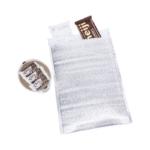
Les expéditions de fruits surgelés nécessitent un emballage surgelé qui protège à la fois la température et l'apparence du produit.. Pour la plupart des lignes commerciales de produits surgelés, la cible de réception est -18 C ou inférieur, et le carton doit également empêcher le gel, écrasement, dommages à l'étiquette, et perte de qualité décongelée-regelée.
Les fruits congelés peuvent visiblement échouer même lorsque seule la couche supérieure se réchauffe pendant une courte période.
Baies, mangue, et les fruits tranchés doivent être protégés de la compression, car les dommages causés par le dégel se manifestent par des agglomérations et des saignements de jus..
Le test de validation doit vérifier à la fois la température de l'enregistreur et l'apparence du produit après l'ouverture du carton..
Données de planification de la chaîne du froid
| Fenêtre de température | -18 C ou moins pour une livraison congelée; garder les temps de chargement et de transfert courts pour éviter le dégel de la surface. |
|---|---|
| Humidité ou humidité | Les fruits congelés sont sensibles à la condensation et à la formation de cristaux de glace, la cavité de l'expéditeur doit donc rester sèche. |
| Pré-refroidissement | Mettre les fruits et l'emballage dans des conditions congelées avant le chargement; ne chargez pas de fruits dans une boîte isolée et chaude. |
| Pression d'emballage | Évitez de presser le liquide de refroidissement dur dans les sacs de fruits mous; utiliser une feuille de protection pour les baies et les fruits tranchés. |
| Placement du liquide de refroidissement | Placez de la neige carbonique ou du liquide de refroidissement gelé dans une zone supérieure séparée et le long des parois latérales pour les voies plus longues.. |
| Durée du transit | 24-48 h les voies parcellaires sont courantes; 72 Les routes h nécessitent une isolation plus forte et une validation plus poussée du liquide de refroidissement. |
| Pertes communes | Fruits agglomérés, saignement de jus, dégel en surface, brûler le congélateur, sacs écrasés, et étiquettes humides. |
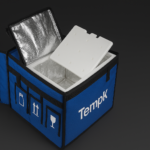
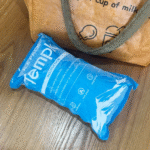
| Emballage Tempk approprié | Expéditeur isolé Tempk avec doublure résistante à l'humidité, zone de glace carbonique séparée, couche de support de sac, et contrôles à l'arrivée pour l'agglutination et le dégel de la surface. |
Approche d'emballage recommandée
Commencez avec un produit déjà gelé par rapport à la cible d'expédition. Un expéditeur isolé et glace carbonique le plan doit maintenir l'état gelé pendant le transport, ne pas redescendre le produit chaud après le chargement. Préconditionner l’expéditeur, garder le temps de préparation du congélateur court, et fermez le carton rapidement pour réduire les échanges d'air chaud.
Outils de décision utiles
Vérifiez les détails avant de choisir l'emballage
Ces outils rapides peuvent vous aider à comparer le risque d'itinéraire, besoins de dimensionnement, choix de liquide de refroidissement, et les détails de l'emballage avant de demander un devis.
Référence du matériau isolant
Comparez les choix de matériaux d'isolation pour différents besoins d'emballage de la chaîne du froid.
Comparez les matériauxCalculateur de glace carbonique
Estimer les besoins en glace carbonique pour les envois congelés ou ultra-froids avant l'emballage.
Estimation de la neige carboniqueDoublure de boîte & Dimensionnement des couvertures de palettes
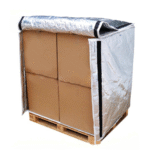
Vérifiez la logique de dimensionnement du revêtement de boîte et du couvercle de palette pour les projets d'emballage isotherme.
Dimensionnement estiméPour les expéditions de glace carbonique, utiliser une zone de liquide de refroidissement séparée et un étiquetage conforme au transporteur. La glace carbonique doit protéger le profil thermique sans frotter les sacs de vente au détail, plateaux de fissuration, ou créant une brûlure directe en surface. Pour les voies où la glace carbonique n'est pas autorisée, congelé packs de gel et une isolation plus solide nécessitent une validation séparée car la courbe de température sera différente.
Contrôles qualité avant sortie
Avant d'utiliser le packout à des fins commerciales, tester la même taille d'expéditeur, poids du produit, masse de liquide de refroidissement, service de transporteur, longueur de l'itinéraire, et assaisonner. A la réception, vérifier la température du produit, niveau de gel, intégrité du sac ou du plateau, état de l'étiquette, sécheresse du carton, et si le produit montre des signes de décongélation-recongélation.
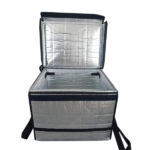
Pour la sélection des emballages Tempk, un point de départ typique est une haute performance boîte isotherme, doublure compatible avec la glace carbonique, couche de liquide de refroidissement séparée, fiche d'assistance produit, et enregistreur d'itinéraire. La masse finale du liquide de refroidissement doit être définie par les données de validation et les règles de traitement de destination, en particulier pour 48-72 h itinéraires de colis.
Base de référence
Les hypothèses de température suivent les pratiques courantes de manipulation des aliments surgelés et les directives de la FDA en matière de sécurité alimentaire des consommateurs qui identifient la température du congélateur à 0 F / -18 C. Les programmes finaux doivent suivre les propres spécifications de l’expéditeur, règles du marché de destination, et exigences des transporteurs pour la glace carbonique.