boîte isolée EPP camping extérieur: Un guide de sélection pratique pour les acheteurs B2B
Une décision pratique en matière d'isolation Boîte EPP le camping en plein air devrait commencer par le travail que la boîte doit effectuer. Il faudra peut-être amortir, isoler, empiler, retour, présenter le produit proprement, ou soutenir un processus de manipulation documenté pour le camping extérieur. Le EPP est utile car il est léger, résilient, et moulable, mais les acheteurs ne doivent pas considérer le matériel comme un raccourci pour la planification d'itinéraire, nettoyage, vérification de la température, ou revue de fournisseur. Ce guide se concentre sur les questions qui réduisent les mauvais achats avant qu'ils ne deviennent des problèmes opérationnels..
Décision en un paragraphe
boîte isolée en EPP le camping en plein air est un bon candidat lorsque l'application nécessite une protection réutilisable, isolation pratique, et un récipient moulé pouvant être manipulé à plusieurs reprises. Ce n'est pas une réponse universelle. Les acheteurs doivent vérifier le rôle de la boîte, les exigences du produit, exposition par voie, documentation fournisseur, processus de nettoyage, et tout besoin de suivi ou de qualification avant de passer de la commande d'échantillon à la commande en volume.
Où le EPP aide-t-il et où il a besoin de soutien
La manière la plus utile d'évaluer une boîte isolée en EPP est de décrire le travail d'exploitation dans un langage simple.. La boîte protégera-t-elle les objets fragiles, gain de chaleur lent, porter une lourde charge, organiser plusieurs petits paquets, retourner pour réutilisation, ou présenter le produit proprement lors de la remise? Chaque travail modifie les priorités de conception. Un couvercle adapté au stockage à sec peut ne pas suffire pour un itinéraire sensible à la température. Un volume interne important peut sembler efficace jusqu'à ce que le personnel découvre qu'une caisse chargée est difficile à soulever ou que la charge utile se déplace pendant le transport..
L'EPP aide car la structure en mousse moulée peut absorber les chocs, récupérer de nombreux impacts de manipulation, et restent plus légers que de nombreuses alternatives rigides en plastique ou en métal. Sa nature à cellules fermées soutient également la résistance thermique, c'est pourquoi il est souvent utilisé dans conteneurs isolés. Pour le camping en plein air, cela peut réduire les dommages aux points de remise et donner à l'acheteur plus de contrôle sur la forme de l'emballage.. Le compromis est que le EPP reste passif. ça ne refroidit pas, chaleur, moniteur, certifier, ou documenter un envoi par lui-même.
Les performances en extérieur dépendent de l'ombre, pré-refroidissement, quantité de glace ou de pack de gel, chaleur ambiante, discipline du couvercle, et à quelle fréquence la boîte est ouverte. Une description matérielle ne doit jamais être considérée comme une durée de détention garantie pour chaque camping..
Les détails de la boîte finie comptent plus que les adjectifs matériels généraux. Géométrie des coins, compression du couvercle, côtes moulées, comportement de drainage, texture de la surface, zones d'étiquette, et l'ajustement de l'insert influencent tous le comportement de la boîte après que le personnel l'utilise sur un itinéraire très fréquenté.. Les acheteurs doivent demander des échantillons qui reflètent la production attendue, puis testez la méthode de chargement réelle au lieu d'examiner la boîte vide sur une table de conférence.
Liste de contrôle de l'acheteur avant de passer aux échantillons
Le tableau ci-dessous transforme la sélection de box isotherme EPP camping extérieur en contrôles pratiques. Cela évite les numéros non pris en charge car la bonne réponse dépend du type de produit, exposition par voie, conception de boîte, et les preuves fournies par le fabricant ou le distributeur.
| Que vérifier | Comment le vérifier | Pourquoi ça compte |
|---|---|---|
| Rôle d'emballage | Confirmez si la boîte est un stockage de protection, isolation passive, un extérieur d'expédition, ou partie d'un système qualifié. | Empêche l'équipe de traiter un conteneur EPP comme étant adapté à chaque utilisation. |
| Charge utile et volume utilisable | Vérifiez l'espace réellement utilisable après les insertions, liquide de refroidissement, doublures, séparateurs, ou les plateaux sont inclus. | Évite le remplissage excessif, déplacement des charges utiles, et des hypothèses de capacité irréalistes. |
| Exigence de température | Utilisez les instructions du produit, plan de sécurité alimentaire, POS du laboratoire, ou exigence de qualité au lieu de supposer une gamme standard. | Maintient la décision d’emballage liée au produit plutôt qu’au matériau. |
| Conception du couvercle et de la fermeture | Revoir la ligne de scellement, habitude d'ouverture, méthode de verrouillage, et comment le couvercle se comporte après une utilisation répétée. | De nombreuses défaillances de routes commencent par un échange de chaleur ou une contamination à la fermeture. |
| Nettoyage et réutilisation | Définir le nettoyage, séchage, inspection, retour, et règles de retrait avant les commandes en volume. | La réutilisation ne fonctionne que lorsque l'opération permet de garder les boîtes propres et adaptées à leur usage.. |
| Preuve du fournisseur | Demander des informations matérielles, échantillons, contrôles de cohérence de la production, et toutes les données de test pertinentes pour votre application. | Une bonne documentation protège les réclamations du catalogue, examen de la qualité, et répéter les commandes. |
Ce tableau est utile car il sépare ce qu'EPP peut généralement prendre en charge de ce qui doit être vérifié pour la boîte réelle.. Les acheteurs peuvent l'utiliser lors des appels aux fournisseurs, exemples d'évaluations, et réunions d'approbation internes. Lorsqu'un fournisseur présente une réclamation de performance fixe, demander quelle charge utile, exposition ambiante, configuration du liquide de refroidissement, et des critères d'acceptation ont été utilisés pour produire cette affirmation.
Exemple d'examen: l'étape qui évite des corrections coûteuses
Un exemple d’examen doit être pratique. Chargez la boîte avec le contenu réel ou représentatif utilisé pour conserver la nourriture du pique-nique, boisson, ingrédients du repas, appât de pêche, ou des articles de cuisine de camp protégés lors des déplacements en véhicule, camps de jour, et courts séjours en plein air. Fermez le couvercle, déplacez-le comme le personnel le fera, empilez-le si un empilage est prévu, essuyez-le après un déversement simulé, et vérifiez si les étiquettes restent visibles. Ce type d'avis révèle souvent des problèmes qui ne sont pas visibles sur une photo de produit: coins serrés qui emprisonnent les résidus, couvercles difficiles à aligner, poignées inconfortables, ou des dimensions internes qui ne correspondent pas à la charge utile après l'ajout de doublures ou de séparateurs.
Les dimensions internes et externes doivent être examinées ensemble. La taille interne contrôle l’ajustement de la charge utile. La taille externe affecte l'espace sur les étagères, chargement du fourgon, modèles de palettes, et stockage de retour. Si le produit a besoin de liquide de refroidissement, plateaux, matériau absorbant, inserts, ou manchons de protection, le volume utilisable peut être inférieur au volume interne brut. Les acheteurs doivent demander aux fournisseurs de définir quelle mesure ils proposent.
La conception de la fermeture est un autre détail pratique. Un couvercle bien assorti peut réduire les échanges thermiques et protéger le contenu de la poussière ou des éclaboussures, tandis qu'une fermeture faible peut annuler les avantages d'une bonne isolation. Pour les opérations à gros volume, la question n'est pas seulement de savoir si le couvercle se ferme une fois. Il s'agit de savoir si le personnel occupé peut le fermer correctement à chaque fois, si la boîte donne un signal visuel clair lorsqu'elle est fermée, et si les dommages au niveau de la jante sont faciles à détecter.
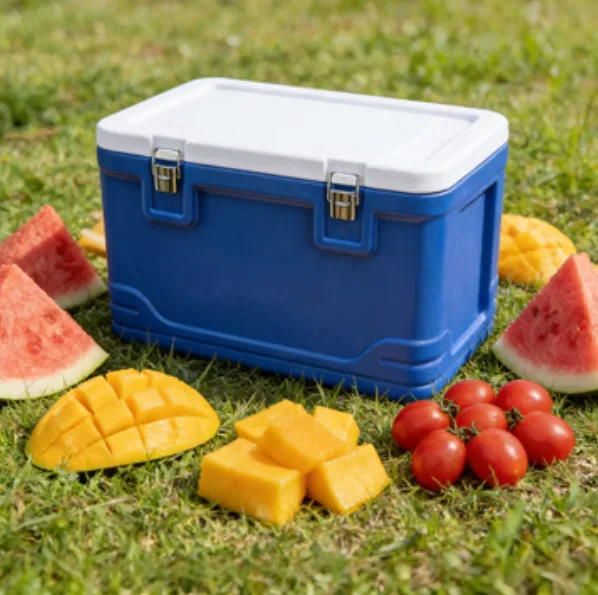
Imaginez une famille en camping-car chargeant des boissons fraîches, fruit, sandwichs, et les ingrédients du repas avant de quitter la maison. La boîte EPP est utile car elle est légère à transporter du véhicule à la table de pique-nique et a une meilleure récupération des chocs que de nombreuses mousses jetables. Il faut encore du contenu pré-réfrigéré, assez de glace ou packs de gel, une position ombragée, et une simple habitude de fermer le couvercle immédiatement après chaque utilisation.
Que vérifier avant de passer de l'échantillon à la commande
La première erreur consiste à utiliser l’expression camping en plein air avec boîte isolée en EPP comme si elle décrivait une solution complète.. Il décrit le matériel et la forme générale, pas l'itinéraire, emballage, méthode de surveillance, ou critères d'acceptation. Ceci est important pour le camping en plein air, car la boîte peut être utilisée par du personnel pressé par le temps et ne comprenant pas nécessairement les limites de l'emballage passif..
Pour les aliments périssables, les utilisateurs doivent suivre les directives locales en matière de sécurité alimentaire. Aux États-Unis, les directives officielles en matière de sécurité alimentaire mettent généralement l'accent sur le maintien des aliments froids au frais et sur la limitation du temps passé dans la zone dangereuse..
La deuxième erreur est d'ignorer les points de transfert. Les dommages et l'exposition à la température se produisent souvent lorsqu'une boîte est déplacée du stockage vers le véhicule., du véhicule au quai, du quai au personnel de réception, ou de la pile de retour au nettoyage. Demandez où se trouvera la boîte, qui l'ouvre, combien de temps le couvercle peut rester ouvert, et si le contenu est vérifié à l'arrivée. Un petit écart opérationnel peut être plus important qu’un large avantage matériel.
L’approche la plus sûre est de transformer chaque risque en une question fournisseur. Pour ce sujet, les principaux risques incluent les fuites de glace fondante, couvercle laissé ouvert, manipulation brutale du coffre, transport à main surchargé, et des instructions peu claires pour le consommateur. Aucun de ces risques ne fait du EPP un mauvais choix. Ils montrent simplement pourquoi un acheteur doit préciser l'application avant de demander le prix..
Outils de décision utiles
Vérifiez les détails avant de choisir l'emballage
Ces outils rapides peuvent vous aider à comparer le risque d'itinéraire, besoins de dimensionnement, choix de liquide de refroidissement, et les détails de l'emballage avant de demander un devis.
Générateur de liste de contrôle de conformité
Créer une liste de contrôle pratique pour l'examen des emballages, expédition, et documentation.
Construire une liste de contrôleVérificateur de risque d'itinéraire
Examinez les conditions des pistes avant de sélectionner l'emballage en fonction des exigences opérationnelles réelles..
Vérifier le risque d'itinéraireSélecteur d'emballage
Comparez les options d'emballage isotherme par produit, itinéraire, et besoin de température.
Trouver un emballageEnfin, planifier la fin d'utilisation. Si la boîte est destinée à être réutilisée, décider combien d'équipes s'en occuperont, où il sera nettoyé, comment les dommages seront enregistrés, et quand il sera mis hors service. Si la recyclabilité fait partie du message de vente, vérifier si l'acheteur, distributeur, ou un partenaire local chargé des déchets peut réellement collecter et traiter le matériau. Une réclamation n’est utile que lorsqu’elle peut être portée jusqu’au bout de l’opération.
Comment présélectionner un fournisseur pour l'application réelle
La sélection des fournisseurs doit être plus spécifique que de demander qui peut fabriquer des boîtes isolées en EPP pour le camping en plein air.. Plusieurs fournisseurs peuvent proposer une boîte moulée d’apparence similaire, mais les différences utiles apparaissent dans la qualité des échantillons, communication, documentation, contrôle de personnalisation, et avec quelle honnêteté le fournisseur décrit les limites d'application.
Commencez par ces questions: La boîte sera-t-elle portée à la main, stocké dans un véhicule, ou posé au sol au camp? Le couvercle se ferme-t-il fermement après une utilisation répétée en extérieur? La surface intérieure peut-elle être essuyée après un déversement de nourriture? La gamme de produits aura-t-elle besoin de couleur, logo, poignée, ou personnalisation du séparateur? Le but n’est pas de ralentir l’achat. Le but est d'éviter une commande en volume basée sur des hypothèses qui ne sont découvertes qu'une fois les cartons entrés dans l'itinéraire..
Demandez comment les échantillons sont approuvés et comment les unités de production sont comparées à l'échantillon approuvé. Ceci est particulièrement important lorsque la boîte a un couvercle moulé, insérer, charnière, fonction d'empilage, exigence de couleur, ou la marque du client. Une petite différence dimensionnelle peut créer un espace entre le couvercle, interférence du plateau, problème de code à barres, ou mouvement de la charge utile. Pour le médical, laboratoire, nourriture, ou applications aérospatiales, le coût d'une spécification vague est souvent plus élevé que le coût d'un examen minutieux d'un échantillon.
Discutez du langage des revendications avant les pages de produits, catalogues, ou les devis clients sont finalisés. Il est prudent de décrire le EPP comme un produit léger, résilient, matériau isolé lorsque ces déclarations correspondent au produit. Il n’est pas prudent de promettre une conformité universelle, temps de maintien fixe, aptitude médicale certifiée, ou une sécurité alimentaire garantie à moins que le fournisseur ne fournisse la preuve de la boîte exacte et du cas d'utilisation. S'il manque des preuves, rédiger la réclamation comme un point de vérification de l'acheteur plutôt que comme un fait.
Le prix doit être revu une fois la demande définie. Un prix unitaire inférieur peut devenir coûteux si la boîte est difficile à nettoyer, est retiré du service plus tôt, provoque des erreurs de sélection dans un entrepôt, ou oblige l'acheteur à ajouter un emballage supplémentaire plus tard. La meilleure comparaison est l’adéquation opérationnelle totale: prix d'achat, processus de réutilisation, taux de dégâts, efficacité du stockage, gestion du personnel, documentation, et parcours de fin de vie.
Limites d'ajustement: ce qu'il ne faut pas demander à la boîte de faire
Utiliser ce type de conteneur EPP lorsque le parcours bénéficie d'une protection moulée réutilisable, poids gérable, et isolation passive. C'est un bon choix lorsque la charge utile est connue, le processus de manipulation est reproductible, le personnel peut fermer et nettoyer la boîte correctement, et l'acheteur peut définir les preuves nécessaires avant le lancement.
Le boîtier ne suffit pas lorsque les utilisateurs attendent une réfrigération motorisée, rétention de glace sur plusieurs jours sans planification, stockage résistant aux ours, ou performances certifiées en matière de transport de denrées alimentaires. Il doit être décrit comme un stockage isolé passif., pas comme réfrigérateur.
Les allégations de durabilité nécessitent également une preuve opérationnelle. Les matériaux recyclables sont utiles, mais le résultat environnemental dépend de la durée d'utilisation de la box, comment il est nettoyé, si les retours sont efficaces, et si une collecte en fin de vie est disponible. UN boîte réutilisable qui est perdu après quelques voyages peut ne pas apporter l'avantage escompté. Un programme de retour bien géré peut rendre l’avantage matériel plus significatif.
Avant de passer une commande importante, lancer un petit examen contrôlé. Utiliser du contenu réel, personnel normal, véhicules attendus, et le processus de transfert réel. Enregistrez ce qui est facile, ce qui est déroutant, ce qui est sale, ce qui ralentit le personnel, et de quelles informations l'équipe de réception a besoin. Ces observations vous en diront plus qu'une affirmation générique sur les performances des boîtes isolées en EPP..
Remise à l'acheteur et réception des notes
Le transfert est l'endroit où de nombreuses hypothèses d'emballage sont testées. Pour le camping en plein air, décider qui scelle la boîte, qui l'ouvre, où il attend, et ce que l'équipe de réception vérifie avant d'accepter le contenu. Si la boîte est réutilisable, le personnel de réception doit savoir s'il doit le retourner immédiatement, envoyez-le pour le nettoyage, ou le mettre en quarantaine en raison de dommages ou de contamination. Ces petites règles évitent qu’un bon conteneur ne devienne un maillon faible du parcours.
Un étiquetage est également à prévoir. Une boîte EPP réutilisable peut nécessiter une étiquette de produit, étiquette d'itinéraire, étiquette de retour, étiquette d'état propre ou sale, ou une note d'avertissement concernant la discipline des paupières. Les étiquettes ne doivent pas bloquer les fonctionnalités d'empilement, cacher les dégâts, ou tomber pendant le nettoyage. Si la boîte contient des informations médicales, laboratoire, nourriture, ou des biens aérospatiaux, le processus d'étiquetage doit correspondre aux exigences de qualité internes de l'acheteur.
FAQ
Quel est le principal avantage du camping extérieur isolé en boîte EPP?
Le principal avantage est la combinaison d'une protection moulée, faible poids, isolation passive, et potentiel de réutilisation. Pour le camping en plein air, qui peut réduire les problèmes de manutention et améliorer la cohérence de l'emballage lorsque la boîte est adaptée à l'itinéraire.
Quelle est la manière la plus sûre de comparer les fournisseurs?
Donnez à chaque fournisseur le même brief: charge utile, besoins de taille interne, itinéraire, exigence de température, processus de nettoyage, modèle de réutilisation, besoins de personnalisation, et revendiquer des limites. Comparez les échantillons et les preuves, pas seulement des photos de prix ou de produits.
Tempk peut-il définir la plage de température requise pour mon produit?
La plage requise doit provenir des instructions de votre produit, équipe de qualité, plan de sécurité alimentaire, protocole de laboratoire, ou voie réglementaire. Tempk peut vous aider à discuter des options d'emballage autour de cette exigence, mais l'exigence du produit doit être confirmée par l'acheteur.
Que faut-il décider avant une commande groupée?
Avant une commande groupée, confirmer l'échantillon approuvé, dimensions, ajustement du couvercle, disposition de la charge utile, méthode de nettoyage, langue de revendication, rôle d'emballage, tester des preuves si nécessaire, et le processus pour les futures modifications ou remplacements de conception.
Conclusion
Choisir une boîte isotherme EPP pour le camping en plein air n'est pas qu'un simple achat d'emballage. C'est une décision concernant la protection du produit, flux de travail, risque de température, discipline de réutilisation, preuve du fournisseur, et contrôle des réclamations. Commencez par le produit et l'itinéraire, confirmer le rôle de l'emballage, tester des échantillons dans des conditions réalistes, et ensuite seulement passer à la commande en volume. Cette approche donne au EPP une chance équitable de fonctionner là où il est fort et évite de lui demander de résoudre des problèmes qui nécessitent un système différent..