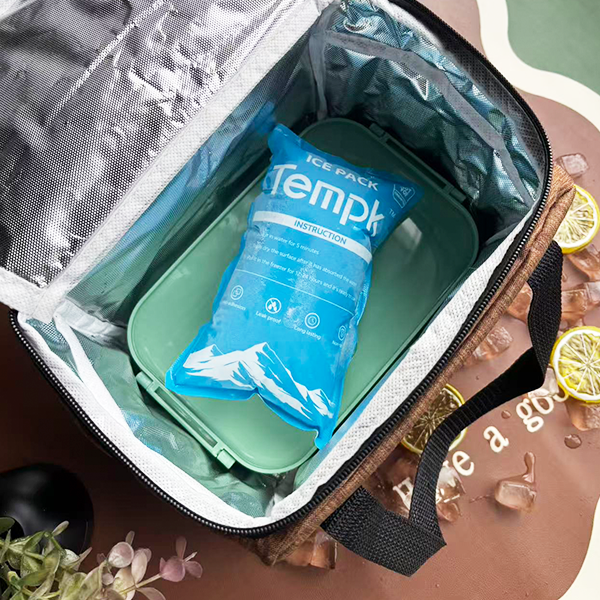
Pack de glace carbonique du fabricant pour la livraison de fruits: Comment choisir le bon pack
Un fabricant paquet de glace sec pour la livraison de fruits, cela vaut la peine d'être acheté uniquement lorsqu'il correspond au produit, l'itinéraire, et les preuves dont vous avez besoin après la livraison. Pour les fruits, la question pratique n'est pas simplement de savoir à quel point le sac est froid. Les acheteurs doivent confirmer s’ils ont besoin de glace carbonique solide au CO2, un pack réutilisable de type glace carbonique, PCM, packs de gel, ou un qualifié expéditeur isolé, puis vérifiez comment ce choix fonctionne avec la charge utile réelle et les conditions de manipulation.
La décision pratique en un seul paragraphe
Pour les fruits, ne commencez pas par le pack le plus froid. Commencez par l'état autorisé du produit, puis choisissez la source de froid la moins risquée pouvant supporter l'itinéraire. Un emballage de type glace carbonique peut aider certaines voies à haute température lorsqu'il est séparé des fruits et testé avec la boîte réelle, doublure, et charge utile, tandis que la glace sèche est souvent trop froide pour les fruits frais, à moins qu'un spécialiste n'ait conçu et validé un système tampon pour ce produit.. Le fournisseur devrait vous aider à vérifier cet ajustement avec la boîte réelle, charge utile, et processus de manipulation.
Définissez ce que signifie un pack de glace carbonique dans votre brief d'achat
L’expression « bloc de glace carbonique » doit être clarifiée dans chaque dossier d’achat.. Si cela signifie de la neige carbonique solide au dioxyde de carbone, l'acheteur doit prévoir un froid extrême, évacuation des gaz, marquages sur glace carbonique, sécurité des manipulations, et acceptation du transporteur. Si cela signifie un pack réutilisable de type neige carbonique, l'acheteur doit confirmer le matériel, méthode d'hydratation ou de congélation, comportement du liquide de refroidissement, qualité d'étanchéité, et si l'emballage est destiné à être réfrigéré, congelé, ou utilisation tamponnée.
Cette définition n'est pas un détail de formulation. Pour les fruits, cela affecte la sécurité des produits, sélection d'emballage, main d'oeuvre en entrepôt, instructions client, et coût logistique. Un fournisseur qui ne peut pas expliquer la différence peut quand même vendre un pack, mais l'acheteur devra découvrir la limitation lors des réclamations, livraisons refusées, ou un envoi d'essai échoué.
Les meilleurs briefs d'achat décrivent le produit, l'état requis à la livraison, la longueur du parcours, l'isolation déjà prévue, l'exposition ambiante attendue, et toute documentation dont l'équipe de réception a besoin. Avec ces informations, un fournisseur peut recommander un mode d'emballage au lieu de citer une taille d'emballage générique.
Adaptez l'emballage au risque lié aux fruits, pas à une réclamation de durée générique
De nombreux acheteurs demandent un sac de glace carbonique qui dure un certain nombre d'heures. Cette question est compréhensible, mais c'est incomplet. Le temps de maintien dépend de la box, masse de charge utile, quantité par paquet, profil ambiant, position du paquet, comment le colis est scellé, et comment le récepteur le gère. Un numéro provenant d'une fiche technique d'un fournisseur peut être utile pour la sélection, mais cela ne doit pas être considéré comme une garantie pour chaque voie.
La meilleure question est: quelle condition le fruit doit-il remplir à la fin du parcours, et quelle preuve le prouvera? Une fois cela défini, l'équipe d'emballage peut comparer la neige carbonique, packs de type glace carbonique, packs de gel, Packs PCM, et options d'isolation avec moins de conjectures. Cette approche facilite également l'explication du colis au personnel opérationnel..
Pour les fruits, l'emballage doit être conçu pour contrôler le flux de chaleur, pas seulement pour ajouter plus de masse froide. Couches tampons, placement de produit, remplissage de carton, discipline de clôture, et le préconditionnement sont souvent aussi importants que le pack lui-même.
Table de décision pour la revue des achats
| Question avant de commander | Meilleure réponse de l'acheteur | Risque si ignoré |
|---|---|---|
| Que contient réellement le pack? | CO2 solide, pack de type glace carbonique hydratée, gel, ou PCM | Mauvaise manipulation et mauvaise hypothèse de température |
| Quel état du produit doit arriver? | Glacé, congelé, ultra-froid, ou tout simplement cool | Dommages dus au gel ou livraison à chaud |
| Quelle boîte et quelle charge utile ont été testées? | Même isolation, masse du produit, et position du pack prévue pour l'utilisation | Le temps de retenue du fournisseur peut ne pas s'appliquer |
| Qui gère la documentation? | Qualité, logistique, transporteur, et les équipes de réception | Envois rejetés ou preuves manquantes |
| L'échantillon peut-il être répété? | Spécifications verrouillées et contrôle de production | La commande en gros varie de l'échantillon approuvé |
Le tableau n'est pas destiné à remplacer un essai d'emballage. Cela aide les acheteurs à poser les bonnes questions avant de commander un échantillon, le premier test est donc plus proche des conditions réelles de fonctionnement. Lorsqu'un fournisseur ne peut pas répondre à l'un de ces points, traitez-le comme un élément à vérifier plutôt que comme une raison de deviner.
Une liste de contrôle d'achat pour le contrôle de l'échantillon à la production
Un échantillon peut sembler réussi car il a été soigneusement emballé par une personne expérimentée.. Les cycles de production sont différents. Davantage de travailleurs sont impliqués, le temps de congélation du paquet peut varier, des substitutions de boîtes peuvent se produire, et les délais d'expédition peuvent raccourcir le processus. Pour les fruits, les acheteurs doivent décider comment l'essai réussi sera traduit en instructions de travail reproductibles.
- Verrouiller le type de pack, taille, description du matériau, et méthode de conditionnement avant l'ordre de fabrication.
- Enregistrez l’expéditeur isolé, doublure, masse de charge utile, et la position du paquet utilisée dans l'essai.
- Confirmez si le même pack fonctionne pendant les saisons chaudes et froides ou nécessite un ajustement saisonnier..
- Former les emballeurs sur les couches de séparation et les restrictions de contact direct.
- Définir ce que les équipes de réception doivent inspecter et quelles preuves elles doivent conserver.
Cette liste de contrôle est particulièrement importante pour la capacité du fabricant, car le coût de l'incohérence apparaît généralement après que la commande quitte l'entrepôt.. Un pack moins cher qui nécessite une manipulation peu claire peut être plus cher qu'un pack légèrement plus structuré..
Utilisez des allégations prudentes lorsque les équipes de qualité ou de réglementation sont impliquées
Pour les fruits, les allégations d'emballage fortes doivent être traitées avec soin. Un fournisseur peut décrire les matériaux de l'emballage, utilisation prévue, étapes de conditionnement, et support de test disponible, mais la décision finale dépend des exigences du produit et du processus d'expédition. Ceci est particulièrement important lorsqu'un envoi touche des services médicaux, pharmaceutique, ou distribution de vaccins, où la documentation et l'examen de la qualité peuvent être requis.
Pour de la glace carbonique réelle, l'expéditeur doit vérifier les marchandises dangereuses et les exigences du transporteur avant l'expédition. Les emballages doivent généralement permettre la libération des gaz, et des marquages peuvent être requis pour le transport aérien. Pour les packs de glace carbonique sans CO2, l'acheteur doit toujours vérifier les instructions de congélation, limitations du contact direct, et si le pack a été testé chez l'expéditeur prévu.
Le langage du fournisseur le plus sûr est pratique et conditionnel. Il explique où le pack est approprié, ce qu'il faut vérifier, et ce qu'il ne faut pas supposer. Ce genre de formulation peut sembler moins dramatique qu’une large promesse de performance., mais cela protège à la fois l'acheteur et l'utilisateur final.
Un exemple pratique pour éviter la mauvaise source de froid
Une équipe d'approvisionnement demande une solution de glace carbonique car les expéditions précédentes se sont réchauffées pendant le transport.. Après avoir examiné les exigences du produit, l'équipe découvre que les fruits doivent rester frais mais ne doivent pas être exposés à un gel extrême. Au lieu de passer directement à la glace sèche, l'équipe demande aux fournisseurs de comparer les packs de type glace carbonique, packs de gel, Packs PCM, et changements d'isolation.
La proposition du fournisseur la plus performante n’est pas nécessairement la plus froide. C'est celui qui explique la séparation des produits, conditionnement des emballages, ajustement de la boîte, risque d'itinéraire, et les preuves nécessaires à l'approbation. L'équipe effectue un essai avec la charge utile réelle et enregistre les conditions de réception avant de lancer la commande groupée..
Cet exemple montre pourquoi la discipline des acheteurs est importante. Le but n'est pas d'ajouter un réfrigérant plus puissant; le but est de protéger le produit de manière à ce que l'entrepôt, transporteur, récepteur, et l'équipe de qualité peut répéter.
Drapeaux rouges dans les propositions des fournisseurs
Une proposition relative aux fruits devrait susciter des inquiétudes si elle promet une aptitude universelle, évite de définir le type de pack, fournit un numéro de temps de maintien sans conditions de test, ou ignore la différence entre réfrigéré, congelé, et des exigences ultra faibles. Cela devrait également susciter des inquiétudes si le fournisseur ne peut pas expliquer comment le paquet doit être stocké., conditionné, et séparé de la charge utile.
Outils de décision utiles
Vérifiez les détails avant de choisir l'emballage
Ces outils rapides peuvent vous aider à comparer le risque d'itinéraire, besoins de dimensionnement, choix de liquide de refroidissement, et les détails de l'emballage avant de demander un devis.
Outil d’évaluation du risque d’itinéraire
Examinez les conditions des pistes avant de sélectionner l'emballage en fonction des exigences opérationnelles réelles..
Vérifier le risque d’itinéraireSélecteur d’emballage
Comparez les options d'emballage isotherme par produit, itinéraire, et besoin de température.
Trouver un emballageRésistance aux chutes du matériau isolant
Examinez la résistance aux chutes et les facteurs de manipulation avant de choisir des matériaux d'isolation..
Vérifier la résistanceUn autre signal d’alarme est une proposition qui traite la documentation après coup.. Même pour les itinéraires alimentaires, les acheteurs peuvent avoir besoin de recevoir des notes d'inspection, soutien aux enquêtes sur les réclamations, ou de simples enregistrements d'emballage. Pour les voies médicales et pharmaceutiques, les attentes en matière de documentation peuvent être plus formelles et doivent être définies dès le début.
Une proposition forte est généralement plus spécifique. Il décrit l'utilisation prévue, les limites, ce qu'il faut tester, et quelles informations l'acheteur doit fournir avant de commander. Cela rend la décision d'achat plus sûre même lorsque le fournisseur ne peut pas garantir chaque résultat de l'itinéraire..
FAQ
Comment comparer les fournisseurs de packs de glace carbonique du fabricant pour la livraison de fruits?
Comparez avec quelle clarté chaque fournisseur définit le type de pack, température d'utilisation prévue, méthode de conditionnement, disposition de l'emballage, preuve de test, et la cohérence de la production. Un fournisseur qui vous pose des questions sur votre itinéraire et les risques liés au produit fournit généralement une recommandation plus sûre qu'un fournisseur qui propose uniquement des prix en fonction de la taille du paquet..
Quelles informations dois-je donner au fournisseur?
Indiquez le type de produit, état cible à la livraison, taille de boîte, poids de charge utile, longueur de l'itinéraire, mode transporteur, exposition ambiante probable, et si une documentation est nécessaire. Pour les fruits, expliquer également toute sensibilité au gel, humidité, pression, ou dommage de présentation.
Puis-je compter sur un temps de rétention indiqué?
Utilisez-le uniquement comme point de contrôle initial, sauf si le fournisseur explique les conditions du test.. Le temps de maintien change avec l'isolation, charge utile, quantité par paquet, température ambiante, événements d'ouverture, et le comportement du récepteur.
La comparaison des coûts doit inclure la main-d'œuvre et le risque de défaillance. Un pack bon marché à la pièce peut nécessiter un conditionnement plus soigné, plus de matériel de séparation, plus de formation, ou plus d'intervention du service client. Un emballage légèrement plus contrôlé peut être moins coûteux pour les expéditions répétées s'il réduit les réclamations et les retouches..
Les récepteurs affectent également le résultat. Pour les fruits, l'équipe de réception doit savoir si le colis doit être ouvert immédiatement, si le liquide de refroidissement restant doit être manipulé avec des gants, et quel état du produit doit être vérifié avant d'accepter l'expédition. Des instructions de réception claires réduisent les réclamations évitables.
L’une des raisons pour lesquelles les acheteurs ont des difficultés avec l’emballage des fruits est que le risque de température n’est pas visible au moment de l’emballage.. La boîte peut sembler correcte, le sac peut être froid, et le carton peut être soigneusement scellé, mais le produit peut toujours être exposé à un point froid local ou à une période de transfert chaude. Une méthode d'emballage écrite permet de convertir un contrôle visuel en un processus contrôlable.
Les meilleures recommandations des fournisseurs incluent généralement des limites. Un fournisseur qui indique quand ne pas utiliser un sac de glace carbonique peut être plus utile qu'un fournisseur qui prétend que le même sac fonctionne partout.. Les limites aident les acheteurs à éviter les mauvaises applications et à choisir une alternative plus sûre lorsque l'itinéraire ou le produit ne convient pas..
Lors de la comparaison des propositions, demander à chaque fournisseur de séparer les faits prouvés des hypothèses. Les faits prouvés peuvent inclure une description matérielle, dimensions du colis, instructions de conditionnement, ou un test réalisé dans des conditions définies. Les hypothèses incluent les performances sur un nouvel itinéraire, dans une autre boîte, ou avec une charge utile différente.
Un pilote utile n’a pas besoin d’être compliqué, mais ça devrait être honnête. Emballez le produit réel ou une charge utile représentative, utiliser la boîte prévue, suivre le processus normal de l'entrepôt, et exposer l'envoi à un itinéraire qui ressemble à une utilisation future. Un résultat parfait obtenu uniquement en laboratoire peut ne pas révéler la variabilité de l'entrepôt.
Si l'envoi traverse les modes, comme un camion vers l'air ou un entrepôt vers un transporteur de colis, les exigences peuvent changer. La glace carbonique réelle peut déclencher les procédures du transporteur, et certains transporteurs limitent l'acceptation par type de service ou par destination. Vérifiez ces détails avant qu'un acheteur ne s'engage sur un emballage qui dépend de la neige carbonique.
Ne considérez pas un enregistreur de données comme une protection contre la température. Un enregistreur enregistre ce qui s'est passé; il n'empêche pas le gain de chaleur ni le gel. C'est utile lorsque l'acheteur a besoin de preuves, mais il doit être associé à un emballage qui a une chance raisonnable de maintenir le produit dans l'état prévu.
Le vocabulaire autour de la livraison de fruits, produce chaîne du froid, blessure par refroidissement, la condensation peut prêter à confusion, l'acheteur doit donc utiliser des descriptions simples dans le brief d'achat. Décrire le produit, l'itinéraire, l'état de livraison, et les contraintes de manutention. Laissez le fournisseur recommander la source froide seulement après que ces faits soient connus.
Quand dois-je éviter la vraie neige carbonique?
Évitez la glace carbonique lorsque le produit ne doit pas geler, lorsque le transporteur ne peut pas l'accepter, lorsque le personnel ne peut pas le gérer en toute sécurité, ou lorsque l'emballage ne peut pas évacuer le dioxyde de carbone. Pensez aux packs de gel, Packs PCM, ou une autre méthode d'expédition à la place.
Conclusion
Un pack de glace carbonique du fabricant pour la livraison de fruits est un achat pratique lorsque l'acheteur le traite comme une partie d'un emballage contrôlé.. Définir l'état requis du produit, confirmer si la glace carbonique est appropriée, vérifier l'isolation et la position du pack, et demandez des preuves qui correspondent à votre itinéraire. La décision la plus sûre est généralement celle qui comporte des limites claires, ce n'est pas la plus grande revendication de refroidissement.
À propos du Tempk
Tempk est le emballage chaîne du froid marque de Shanghai Tempk Industrial Co., Ltée. Nous soutenons les acheteurs qui ont besoin de choix d'emballages pratiques pour leurs aliments, pharmaceutique, médical, et autres envois sensibles à la température. Pour les fruits, notre rôle est d'aider à connecter la source de froid, emballage isolé, charge utile, et processus de traitement afin que l'acheteur puisse passer de l'examen des échantillons à un plan de commande plus reproductible.
Envoyez à Tempk vos exigences en matière de produit, profil d'itinéraire, charge utile, et étape d'achat. Nous pouvons vous aider à comparer les options de conditionnement pratiques avant de passer de l'échantillon à la commande groupée..