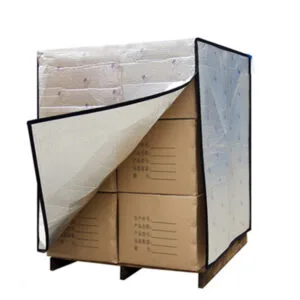
Couvertures isolantes pour palettes pour centres de distribution: Construire le plan de contrôle avant le bon de commande
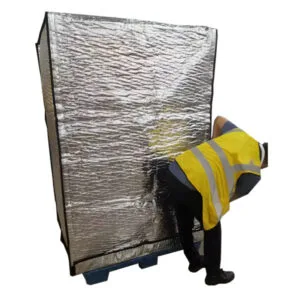
Si une spécification d'achat commence par « couverture isolée argentée,« ça commence trop tard. Couvertures isolantes pour palettes pour les centres de distribution ne doivent être sélectionnés qu'après que l'équipe a défini ce qu'il advient de la charge entre les emplacements contrôlés, quels risques liés à la température sont importants, et ce que les opérateurs peuvent exécuter à plusieurs reprises. La couverture devient alors un tampon thermique ciblé, pas un vague substitut à la réfrigération. Un programme solide réunit six décisions: limite du cas d'utilisation, ajustement de palette, preuve thermique, procédure au sol, contrôle des fournisseurs, et propriété du cycle de vie. Laisser l'un d'entre eux indéfini peut rendre un accessoire apparemment simple peu fiable au moment précis du transfert là où il est nécessaire..
Donnez à la couverture un rôle clair
Le premier contrôle est une phrase qui dit ce que la couverture est censée faire et ce qu'elle n'est pas censée faire.. Par exemple: « Cette garantie est utilisée lors du transfert de la salle d'attente contrôlée vers un véhicule de départ agréé et lors des attentes à quai définies. » La formulation peut varier, mais il doit identifier la famille de produits, étape du processus, condition de départ, exposition, et point final.
Cette limite évite trois erreurs courantes.
D'abord, l'isolation n'est pas la réfrigération. Une couverture passive ralentit les échanges thermiques; il n'élimine pas la chaleur en continu et ne récupère pas une palette qui a démarré en dehors de son état requis. Deuxième, l'isolation ne surveille pas. Un enregistreur enregistre les conditions sélectionnées, tandis qu'une couverture modifie le taux de flux de chaleur. Troisième, un composant n'est pas un système thermique qualifié. Pour un produit sensible, la solution complète peut également inclure un véhicule, socle isolé, liquide de refroidissement, modèle de charge défini, procédures, surveillance, preuve de test, et examen de la qualité.
La limite doit également nommer les exclusions. La couverture peut ne pas être approuvée pour une attente en extérieur, stockage de nuit, un mouvement de ligne non réfrigéré, une hauteur de palette différente, ou un produit avec une autre exigence de température. Les exclusions explicites sont utiles car les améliorations des entrepôts se propagent souvent de manière informelle. Une couverture qui a résolu un problème de quai peut être empruntée pour une autre voie sans que personne ne reconnaisse que la preuve ne s'applique plus..
Utiliser un langage que les opérateurs peuvent comprendre. « Réduire le taux de dérive de la température pendant le transfert approuvé » est plus précis que « maintenir la température ». « Gardez le capot fermé, sauf pour l'étape de numérisation répertoriée » est plus pratique que « minimiser l'exposition ». La signification technique appartient aux pièces justificatives, mais l'instruction au sol doit guider le comportement.
Trouvez l'exposition que cache la moyenne du bâtiment
La température moyenne signalée pour un centre de distribution décrit rarement le pire moment de la palette. Les charges se déplacent dans des microenvironnements: une porte de chambre froide, une allée étroite avec de l'air en mouvement, une voie de rassemblement à côté d'une porte de quai pour vélos, un tablier ensoleillé, une remorque avec un toit chaud, ou une zone de contrôle de qualité dont la finalité n'est pas le contrôle de la température.
Cartographiez la séquence avec les personnes qui l'exécutent. Enregistrez où la palette s'arrête, combien de temps les exceptions peuvent durer, quel côté fait face à la porte, si la charge repose sur un sol chaud ou froid, et à l'ouverture de l'emballage. Inclure le rejet de la remorque, ramassage tardif, panne du scanner, correction de paperasse, inspection de sécurité, et changement d'équipe. Le flux normal peut être rapide; les exceptions déterminent si la couverture devient un tampon utile ou une fausse confiance.
Les variations saisonnières sont importantes. Le défi de la chaleur estivale est évident, mais un produit qui ne doit pas geler peut être exposé au même risque en cale froide. Le flux d'air peut amplifier l'échange thermique de surface même lorsque l'air ambiant mesuré ne semble pas extrême.. L'exposition directe au rayonnement solaire ou à une surface chaude peut affecter un visage plus que les autres.. Une évaluation représentative devrait donc examiner l’orientation, durée, et séquence, non seulement un nombre ambiant maximum.
Les propriétés du produit et de la charge modifient la réponse. Le dense, une palette entièrement chargée a une inertie thermique différente de celle d'une palette légère, palette partiellement remplie. L'espacement des caissons et le porte-à-faux modifient les trajectoires d'air et la surface. L’état initial du produit fournit ou supprime la marge. Aucun de ces faits ne crée un calcul universel, mais ils montrent quelles configurations doivent être représentées lorsque des preuves sont générées.
Le résultat de l’exercice de cartographie est un petit ensemble de défis de conception. Les exemples sont un transfert de routine, une attente maximale plausible approuvée, une condition de saison froide, et un événement d'ouverture pour l'inspection requise. Une équipe peut alors concevoir un programme de couverture et de test par rapport aux défis réels plutôt qu’à un « environnement d’entrepôt » indéfini.
Rédigez une exigence utilisateur à laquelle un fournisseur peut répondre
L'exigence doit combiner la condition physique, but thermique, manutention, hygiène, identification, et documentation. Évitez de spécifier un matériau privilégié avant que la fonction ne soit claire. Un fournisseur peut proposer différentes constructions, mais chaque proposition doit répondre aux mêmes questions opérationnelles.
Géométrie et accès
Mesurer les palettes de production chargées, pas de palettes vides. Capturer l'empreinte, hauteur maximale, surplomb, planches de coin, film étirable, profil supérieur, saillies, et variation normale. Définir si le couvercle recouvre un top cap séparé ou une base isolée. Indiquer quelles étiquettes, bûcherons de données, codes de cas, ou les documents doivent rester accessibles.
Une bonne coupe n'est ni trop serrée ni trop surdimensionnée.. Les couvertures serrées sont difficiles à appliquer et peuvent se déchirer ou remonter.. Un excès de matériau peut créer des espaces, traîner, snag, masquer les étiquettes, ou interférer avec l'équipement de manutention. Les dimensions internes finies et la tolérance de fabrication sont plus utiles qu'un nom générique de taille de palette.
La conception des accès doit refléter des événements réels. Si la numérisation nécessite l'ouverture d'un panneau, la fermeture doit être reproductible et l'instruction de travail doit définir la manière dont elle est rétablie. Si le couvercle entier doit être retiré à chaque inspection, le personnel finira par improviser. Pochettes pour documents, fenêtres claires, et les rabats peuvent aider, mais ils doivent être revus pour leur nettoyabilité, durabilité, et continuité de l'isolation.
Construction thermique
Demandez la disposition complète des couches, parement, isolation, coutures, renforts, fermeture, et traitement de base. Les propriétés des matériaux sont utiles lorsque leurs conditions de test sont visibles, mais ils ne peuvent pas remplacer les informations sur les performances de la couverture finie.
La chaleur entre ou sort par conduction, mouvement de l'air, et rayonnement. L'isolation fibreuse ou cellulaire peut ralentir les chemins conducteurs. Les fermetures et les coins comprimés peuvent les contourner. Les surfaces réfléchissantes peuvent réduire le transfert radiant lorsqu'elles sont utilisées dans une géométrie incluant un espace d'air approprié; une surface brillante en elle-même ne constitue pas une revendication de durée de tenue. Les fonds et les ouvertures lâches peuvent permettre l'échange d'air. La spécification doit inciter les fournisseurs à aborder toutes ces voies.
Compatibilité sol
Indiquer la méthode d'application attendue, masse de couverture maximale de sécurité si l'organisation en possède une, hauteur de levage acceptable, interaction avec un chariot élévateur, restrictions du convoyeur, antistatique ou autres besoins spécifiques au site, approche de nettoyage, et méthode de stockage. Ces exigences devraient provenir de la sécurité des installations, ingénierie, hygiène, et du personnel de qualité. Ne les déduisez pas d’une feuille de matériau thermique.
Identification et contrôle des approvisionnements
Définir des marques de taille et d'orientation visibles, possession, indices sur l'état du produit, et tout code-barres ou identifiant d'actif. Exigez ensuite un dessin ou une spécification contrôlé qui relie ces caractéristiques à la construction.. Déterminer quel matériau, dimension, couture, adhésif, fermeture, et les changements de processus nécessitent une notification ou une approbation.
Utiliser les preuves de décision, Pas un numéro de performance générique
Une déclaration selon laquelle une couverture « fonctionne pendant un certain nombre d’heures » n’a aucun sens sans ses conditions. Le résultat pertinent est lié à un état de produit de départ, contenu de la palette, géométrie, profil ambiant, état de base, application, ouvertures, plan de capteur, et critère d'acceptation. Modifiez ces entrées et le résultat peut changer.
Construire un test autour d'une décision. Si la décision concerne une attente à quai approuvée, représenter ce processus avec une charge et un défi justifiés. Si la décision concerne l’équivalence fournisseur, comparer les unités à intention de production contrôlée selon le même protocole. Si le problème vient de la variation de l'opérateur, inclure des opérateurs formés appliquant le couvercle plutôt que de créer une installation de laboratoire parfaite.
| Décision du programme | Des preuves qui le soutiennent | Propriétaire de la décision | Réponse lorsque les preuves sont manquantes ou échouent |
|---|---|---|---|
| La couverture s'adapte aux modèles de palettes approuvés | Charges mesurées, échantillon d'intention de production, essai documenté d'ajustement et de manipulation | Ingénierie de l'emballage et opérations d'entrepôt | Réviser les dimensions ou restreindre la liste de chargement approuvée |
| Le couvercle fournit le tampon thermique prévu | Protocole thermique pré-approuvé avec charge représentative, exposition, application, capteurs, et critères | Propriétaire produit ou qualité avec support technique | Refonte, changer le processus, ou utilisez une commande active/réfrigérée appropriée |
| Le personnel peut l’appliquer de manière cohérente | Application observée, instruction de travail, retour d'information sur la formation, examen des exceptions | Opérations d'entrepôt | Simplifiez la conception ou le flux de travail avant le lancement |
| Les unités réutilisables restent aptes au service | Bilan de nettoyage, critères de défaut, règles d'inspection et de réparation | Qualité, hygiène, et propriétaire de l'actif | Quarantaine, réparation selon une méthode approuvée, ou retirer l'unité |
| La production reste équivalente aux échantillons approuvés | Spécification contrôlée, chèques entrants, accord de changement de fournisseur | Approvisionnement et qualité | Conserver l'approvisionnement concerné et effectuer un examen des modifications |
Ce cadre attribue une personne à chaque conclusion. Cela empêche également le rapport de test thermique de devenir la réponse à des questions sans rapport telles que la nettoyabilité ou la récupération.. Les preuves manquantes devraient produire une action définie, pas une interprétation marketing plus large.
Les chambres contrôlées et les évaluations sur le terrain ont chacune de la valeur. Une chambre peut créer une exposition reproductible à des fins de comparaison. Une évaluation sur le terrain capture les portes, mouvement, congestion, et le comportement réel. Ni l’un ni l’autre n’est universellement suffisant. Le plan de test doit expliquer pourquoi la méthode choisie représente la décision et où elle ne représente pas la décision..
ISTA 7E fournit des profils thermiques pour tester des produits emballés individuels circulant dans les systèmes de livraison de colis. Cela peut éclairer une étude lorsque cet environnement est pertinent, mais ce n'est pas une validation universelle pour un couverture de palette ou chaque voie de fret. La distribution pharmaceutique peut également utiliser les principes de profilage des itinéraires et de qualification du système d'expédition décrits dans les directives de l'Organisation mondiale de la santé et de l'industrie.. L'équipe technique doit sélectionner et justifier la méthode plutôt que de donner un nom standard à un essai sans précédent..
Le placement des capteurs nécessite la même discipline. Un point au centre peut réagir lentement et manquer un bord exposé. Un capteur situé sur la surface du couvercle peut refléter l'influence ambiante plutôt que l'état du produit.. Utiliser des emplacements qui répondent au risque et documenter l’identité de l’appareil, état d'étalonnage, configuration de la journalisation, et traitement des données. Conditions des enregistrements de surveillance; cela n'augmente pas la protection thermique.
Transformez la conception approuvée en contrôles d'entrepôt
Un programme de couverture a besoin d'un flux de statut, pas seulement une affiche de candidature. Définir comment une unité passe du stockage propre à l'utilisation, remettre, retour, inspection, nettoyage, quarantaine, réparation, et la retraite.
Outils de décision utiles
Vérifiez les détails avant de choisir l'emballage
Ces outils rapides peuvent vous aider à comparer le risque d'itinéraire, besoins de dimensionnement, choix de liquide de refroidissement, et les détails de l'emballage avant de demander un devis.
Calculateur de banquise
Estimation de la quantité de pain de glace pour les expéditions réfrigérées et planification pratique des itinéraires.
Estimer les packs de glaceVérificateur de risque d'itinéraire
Examinez les conditions des pistes avant de sélectionner l'emballage en fonction des exigences opérationnelles réelles..
Vérifier le risque d'itinéraireCalculateur de glace carbonique
Estimer les besoins en glace carbonique pour les envois congelés ou ultra-froids avant l'emballage.
Estimation de la neige carboniqueAvant utilisation, l'opérateur confirme le type de couverture correct et inspecte les caractéristiques fonctionnelles: continuité de l'isolation là où elle est visible, coutures, fermeture, parement, identification, propreté, sécheresse, et façonner. Une liste de défauts doit distinguer les marques cosmétiques des dommages pouvant affecter les performances thermiques ou hygiéniques.. « Utiliser si cela semble correct » n'est pas un critère reproductible.
Le produit doit entrer dans la scène couverte dans les conditions requises. L'opérateur applique le couvercle dans son orientation spécifiée, ferme le bas et accède aux fonctionnalités, confirme les étiquettes et les moniteurs requis, et enregistre l'actif ou le lot si le processus l'exige. La palette couverte reste soumise aux limites d'étagement approuvées. La couverture ne doit jamais être interprétée comme un stockage ambiant illimité.
Les transferts nécessitent un propriétaire nommé. Si le transporteur retient la couverture sur la palette, le transporteur doit savoir s'il peut être ouvert, où il est retiré, et qui protège le chargement après. Si le couvercle est retiré au quai, l'équipe doit définir le premier point de retrait sûr. Le personnel de réception doit savoir qu'une apparence isolée ne prouve pas que le chargement est conforme aux spécifications..
Les règles d’exception protègent la qualité des décisions. Lorsqu'une attente dépasse la condition approuvée, une fermeture se trouve ouverte, la surveillance est manquante, ou le couvercle est endommagé, le personnel doit déplacer la charge vers l'état de sécurité spécifié, conserver les dossiers, et informer la fonction responsable. L'élimination des produits appartient au processus approuvé de l'organisation et aux experts concernés; il ne faut pas l'improviser d'une réclamation d'un fournisseur.
Pour les médicaments, Les lignes directrices applicables en matière de bonnes pratiques de distribution peuvent exiger que des conditions de stockage définies soient maintenues pendant le transport et que les contrôles à l'appui soient documentés.. Pour les aliments entrant dans le champ d’application de la règle de transport sanitaire de la FDA, les responsabilités peuvent inclure des véhicules et des équipements appropriés, sanitaire, contrôle de la température lorsque cela est nécessaire pour des raisons de sécurité, communication, entraînement, et des enregistrements. Ces obligations sont des responsabilités du système. La couverture les prend en charge uniquement dans le cadre de son rôle approuvé.
Achetez le processus de production ainsi que l'échantillon
Le meilleur échantillon lors d'un événement de sourcing a peu de valeur si les unités de production varient ou si les matériaux changent sans examen. Les achats doivent demander comment le fournisseur contrôle les dimensions finies, mise en place de l'isolation, coutures, fermetures, impression, et défauts visuels. Toute preuve thermique doit être traçable à la même révision de construction citée.
Demander suffisamment d'unités d'intention de production pour évaluer la variation normale. Un échantillon de matériau plat ne peut pas démontrer l'ajustement des coins, qualité des coutures, accès aux étiquettes, ou effort de l'opérateur. Inspectez également les emballages entrants. Les couvertures compressées ou mal pliées lors de l'expédition peuvent arriver avec des plis., fermetures endommagées, ou isolation non récupérée.
Les discussions avec les fournisseurs doivent séparer les faits des questions. Composition du matériau, dessin approuvé, et les dimensions mesurées peuvent être des faits documentés. La durée thermique du parcours de l’acheteur peut rester une question jusqu’à ce qu’elle soit testée. La durée de vie du nettoyage peut rester spécifique au site jusqu'à ce que l'installation évalue ses produits chimiques et ses processus.. Quantité minimale de commande, délai de mise en œuvre, impression personnalisée, pièces de rechange, et les conditions commerciales doivent être confirmées pour le projet réel plutôt que rapportées comme des valeurs industrielles fixes..
Le contrôle des changements mérite une clause, pas une demande informelle. Un film de confrontation, note au bâton, densité de la mousse, adhésif, chevauchement des coutures, fil, ou la fermeture peut affecter l'ajustement, manutention, réponse à l'humidité, ou performances thermiques même si l’aspect extérieur est similaire. Définir le délai de notification et le parcours d’examen adaptés au système qualité de l’acheteur. L'inspection entrante peut alors vérifier les caractéristiques critiques sans essayer de recréer le contrôle de fabrication du fournisseur..
Faire de la réutilisation une boucle gérée
Les couvertures réutilisables peuvent soutenir l'efficacité matérielle lorsque le réseau de distribution les récupère, les maintient fonctionnels, et les utilise à plusieurs reprises. La durabilité à elle seule ne crée pas ce résultat. Une couverture envoyée dans un réseau ouvert sans garde ne peut effectuer qu'un seul mouvement.
Choisissez un modèle de propriété: piscine locale, boucle partenaire fermée, retour client, ou service géré si disponible. Définir l'identification, conteneur de retour, transport, inspection de réception, nettoyage, séchage, stockage, réparation, et responsabilité en cas de perte. Pilotez ces étapes avec la fonction thermique.
Suivre les utilisations terminées et les résultats de l’état. Le langage de la durée de vie de conception est moins utile que le dossier des documents délivrés par l'établissement., revenu, accepté, réparé, rejeté, et unités manquantes. Un modèle de coût du cycle de vie peut alors inclure l'acquisition, travail d'application, mouvement inverse, nettoyage, inspection, réparation, stockage, perte, et fin de vie. Diviser par utilisations terminées acceptées uniquement une fois que les données réelles sont disponibles.
La comparaison environnementale doit couvrir l’ensemble du cycle de vie. Le cadre de gestion durable des matériaux de l'EPA encourage l'utilisation productive des matériaux dans l'ensemble de la production., utiliser, et fin de vie. Pour une couverture de palette, cela signifie examiner la quantité et la composition des matériaux, fabrication et emballage entrant, protection thermique du produit, opérations de réutilisation, transport, nettoyage, et élimination ou valorisation. Un seul attribut tel que le contenu recyclé ou la recyclabilité ne peut pas répondre à toute la question..
Les règles européennes en matière d'emballage attirent également davantage l'attention sur la prévention, réutilisation, Recyclabalité, et des informations. Le règlement européen sur les emballages et leurs déchets commence à s'appliquer progressivement à partir du mois d'août. 12, 2026. Son effet précis dépend de la classification, géographie, rôle, et les détails de mise en œuvre. Les équipes d'approvisionnement au service de l'UE devraient vérifier les obligations actuelles pour leur couverture et leur flux spécifiques plutôt que de copier une déclaration de conformité générale dans une spécification..
La planification de la fin d’utilisation doit être locale. Les articles multicouches peuvent être difficiles à séparer, et un composant théoriquement recyclable peut ne pas être accepté une fois laminé, contaminé, ou surdimensionné. Demandez au fournisseur de déchets ou de valorisation concerné ce qu'il peut réellement traiter. Si aucun itinéraire n'existe, dites-le clairement et utilisez ces informations dans la revue de conception.
Revoir le programme lorsque le réseau change
L'approbation est conditionnelle à un produit et un processus définis. Un examen est nécessaire lorsque les dimensions des palettes, mélange de produits, densité de charge, conditions de départ, disposition du quai, transporteur, voie, véhicule, produit chimique de nettoyage, construction de la couverture, ou modifications des exigences réglementaires. L'examen peut conclure que les preuves existantes restent applicables, mais cette conclusion devrait être documentée.
Les données opérationnelles peuvent révéler des signes avant-coureurs. Des déchirures répétées dans les coins peuvent indiquer un surplomb ou un problème de qualité de palette.. Les fermetures ouvertes à l'arrivée peuvent indiquer un besoin d'accès ou une mauvaise formation. Un retour lent peut créer des pénuries de stocks qui poussent le personnel vers des alternatives non approuvées.. L'humidité trouvée après le stockage peut indiquer un séchage inadéquat. Ces signaux relient la conception physique aux performances des processus.
N'utilisez pas les enregistrements de température comme une carte de pointage simpliste pour la couverture.. La température du produit reflète de nombreux facteurs, y compris la réfrigération, exposition, charger, état de départ, placement du capteur, et manipulation. Étudier les tendances avec les limites du système intactes. Sinon, un mouvement réfrigéré réussi peut dissimuler une housse mal appliquée, ou un événement matériel sans rapport peut être imputé à la couverture.
Une revue transversale périodique peut permettre de couvrir les écarts, dommage, récupération, nettoyage, changements de fournisseur, observations de formation, et si le cas d'utilisation s'est élargi. Le but n’est pas la paperasse en soi. Il s'agit de maintenir la revendication du produit alignée sur ce que fait réellement le centre de distribution..
Questions fréquemment posées
Quelles informations doivent être envoyées en premier à un fournisseur de housses de palettes?
Fournir les dimensions et les variations des palettes chargées, des photographies ou des dessins, sensibilité au produit, la condition de fonctionnement requise, état de départ, séquence de manipulation, exposition probable, besoins d'accès, plan de nettoyage, modèle de réutilisation, et les attentes en matière de preuves. Séparer les exigences confirmées des questions ouvertes. Cela pose au fournisseur un véritable problème de conception au lieu d'une invitation à proposer une taille générique..
Comment un acheteur peut-il comparer deux couvertures sans indice d'isolation universel ??
Comparez les constructions contrôlées sous le même protocole représentatif. Conserver la charge utile, condition de départ, exposition ambiante, base, application, ouvertures, plan de capteur, et des critères d'acceptation cohérents. Comparez également l'ajustement, manutention, dommage, nettoyage, identification, contrôle de l'approvisionnement, et coût total d'exploitation. Une valeur matérielle à elle seule ne peut pas classer de manière fiable deux systèmes de palettes finis.
Quand une couverture de palette ne suffit-elle pas?
Une couverture n'est pas suffisante lorsque la condition requise ne peut pas être protégée par l'exposition prévue avec des preuves et des contrôles justifiés.. Exposition ambiante longue ou sévère, une charge qui démarre en dehors des exigences, un besoin de récupération active, ou une manipulation très variable peut nécessiter du matériel réfrigéré, un conteneur actif, liquide de refroidissement, un système passif qualifié, ou un itinéraire repensé.
Une couverture peut-elle être qualifiée de conforme après avoir réussi un test thermique?
Pas dans un sens universel. Un résultat thermique soutient une décision de performance définie dans des conditions indiquées. La conformité peut également dépendre des exigences du produit, équipement, sanitaire, procédures, surveillance, entraînement, enregistrements, qualification, changer de contrôle, et les règles locales. Les équipes qualité et réglementaires doivent déterminer ce que le résultat soutient pour l'opération spécifique..
Qu’est-ce qui justifie la mise à l’échelle d’un projet pilote de couverture réutilisable?
Un pilote utile montre bien plus que des performances thermiques. Il démontre une application cohérente, identification intacte, manipulation acceptable, récupération, inspection, nettoyage et séchage, stockage, décisions défectueuses, et un modèle de propriété viable. Évoluez uniquement une fois que l'organisation a compris à la fois la protection des produits et les ressources nécessaires pour maintenir le fonctionnement de la boucle..
Conclusion
Un programme fiable de couvertures isolantes pour palettes pour centres de distribution commence par le plan de contrôle. Définir une utilisation, cartographier l'exposition réelle, préciser l'assemblage fini, et générer des preuves autour d’une vraie décision. Attribuer la propriété de l'application, remettre, exceptions, changements de fournisseur, nettoyage, et réutiliser. Conserver la protection thermique, surveillance, réfrigération, et la qualification en tant que concepts distincts qui fonctionnent ensemble lorsque le risque l'exige. Quand ces limites sont claires, une couverture isolée peut être un tampon pratique pour un centre de distribution plutôt qu'une promesse non testée attachée à une palette.
À propos du tempk
Tempk prend en charge le B2B emballage chaîne du froid projets avec des offres comprenant des palettes isolées et des couvertures thermiques et connexes emballage à température contrôlée. Nous pouvons utiliser la géométrie de votre palette, séquence de fonctionnement, exposition attendue, et plan de réutilisation pour encadrer une discussion pratique sur le produit. Le bon choix dépend toujours du système final, preuve représentative, et les contrôles requis par vos équipes logistiques et qualité; aucune construction de couverture unique ne doit être considérée comme adaptée à chaque voie.
Partagez vos besoins d'utilisateur ou une description du parcours de la palette avec Tempk avant de commander à grande échelle. Nous pouvons vous aider à comparer les options de couverture pertinentes pendant que votre équipe conserve les décisions finales de qualification et de conformité..