Couvertures thermiques de palettes pour le stockage en vrac adaptées à la charge, Site, et processus
Le meilleur couvertures thermiques de palettes pour le stockage en vrac ne sont pas choisis uniquement en fonction de l'épaisseur. Ils sont choisis en faisant correspondre un ensemble complet de couverture à une palette connue., une exposition connue, et un processus d'entrepôt reproductible. La couverture ralentit alors les échanges thermiques indésirables pour cet événement défini. Il ne génère pas de refroidissement, maintenir indéfiniment un point de consigne exact, ou remplacer une chambre froide, véhicule frigorifique, ou décision relative à la qualité du produit.
Cette approche axée sur l'enveloppe opérationnelle résout de nombreuses erreurs d'achat courantes. Au lieu de demander quelle couverture est « la plus isolée,» vous demandez quelle configuration reste utilisable et appuyée par des preuves à votre quai, sur ton sol, autour de votre charge, et à travers le retard, vous devez réellement gérer.
Tracez la limite avant de nommer la solution
Commencez par un simple dessin des limites. Placez la palette au centre et étiquetez tout ce qui peut échanger de la chaleur ou de l'humidité avec elle.: air ambiant, courants d'air de porte, toit et lumières, charges adjacentes, béton ou acier sous la palette, et toute exposition extérieure. Ajouter l'itinéraire et le timing. Cette image révèle souvent que la demande d’achat n’est pas vraiment un « stockage en masse ». Il peut s'agir d'une sortie de salle contrôlée, une attente au quai, un transfert inter-bâtiments, un support de trop-plein, ou une mise en attente d'urgence.
Ajoutez maintenant la limite du produit. Enregistrez les conditions de stockage approuvées, si le gel ou la surchauffe est particulièrement dommageable, l'uniformité de la charge lorsqu'elle quitte un espace contrôlé, et qui décide si une excursion est acceptable. Les exigences varient selon les aliments, médicaments, produits chimiques, électronique, et matériaux industriels. La température imprimée sur un bon de travail d'entrepôt peut ne pas être le critère de qualité complet.
Enfin, ajouter la limite opérationnelle. Notez les dimensions de la palette après l'emballage, porte-à-faux du boîtier, fréquence à charge partielle, matériel de manutention, étiquetage, contrôles d'incendie, besoins en matière d'assainissement, et la portée des travailleurs. Un couvercle qui semble thermiquement résistant mais qui ne peut pas être installé de manière sûre ou cohérente ne constitue pas un contrôle efficace..
Le résultat est un court énoncé du problème. Par exemple: « Mettez en mémoire tampon une famille définie de palettes préconditionnées lors de la préparation sortante intérieure à côté de la porte. 4, y compris une condition de retard documentée, sans obstruer les cartes d’identité ou l’accès des transpalettes. C'est bien plus utile pour un fournisseur et une équipe de test que « Besoin d'une couverture thermique de 48 heures ». Il énonce une fonction sans inventer de résultat.
Décidez si une couverture est le bon contrôle
Passif couvertures de palettes sont attrayants car ils ne nécessitent aucune énergie et peuvent être déployés autour des charges existantes. Ces avantages ne les rendent pas adaptés à tous les risques. Utiliser une hiérarchie de contrôle basée sur la gravité et la durée de l'exposition.
Si les marchandises nécessitent un stockage continu réfrigéré ou congelé, la commande principale doit normalement être un équipement conçu, surveillé, et maintenu pour cette condition. Si un transfert dépasse régulièrement la capacité de l'isolation passive, améliorer la planification, ajouter une mise en scène contrôlée, ou utilisez une enceinte appropriée à température contrôlée. Si l'exposition est brève, prévisible, et suffisamment modéré pour étudier, une couverture peut être une couche secondaire proportionnelle.
Une couverture peut également soutenir un plan d’urgence, mais seulement après que le plan ait identifié le point auquel les marchandises sont déplacées vers une réfrigération de secours ou une autre solution qualifiée. La résistance passive peut ralentir un changement de température; il ne peut pas vous dire si le produit reste publiable. Données, critères approuvés, et l'examen de la qualité remplit ce rôle.
Rejeter l’option de couverture lorsqu’elle crée un risque plus important. Les exemples incluent les matériaux en vrac près des roues du véhicule., interférence avec les arroseurs des racks, incapacité de voir les étiquettes réglementées, risques de contamination incompatibles, ou des conditions extérieures qui peuvent soulever ou tremper l'enceinte. Repenser l'œuvre peut être plus sûr que d'y insérer une housse en tissu.
Traduire la couverture en zones fonctionnelles
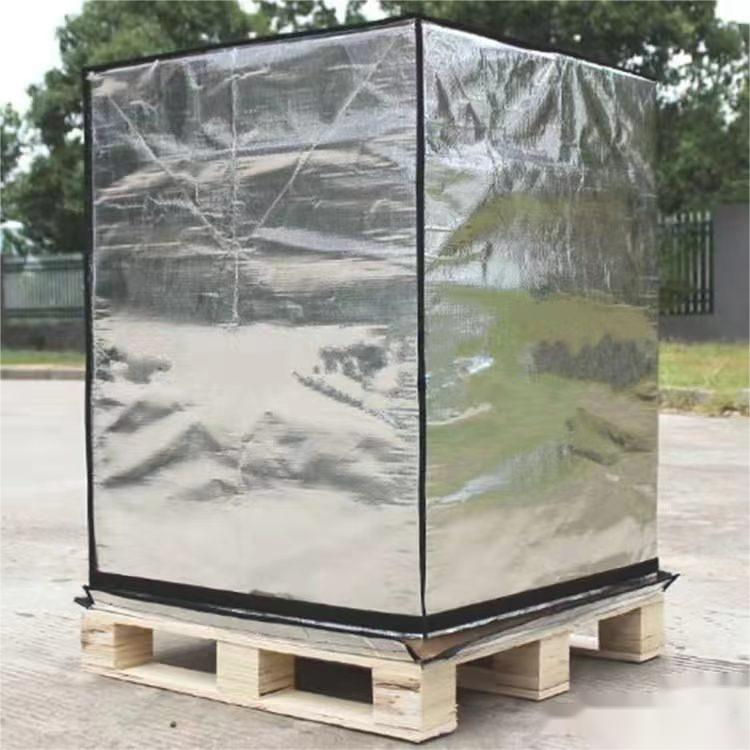
Une couverture finie peut être comprise comme cinq zones fonctionnelles. Cette vue rend les comparaisons de fournisseurs plus claires qu'une liste de noms commerciaux de matériaux.
Zone radiante: La face extérieure rencontre les lumières, surface du toit, soleil, ou un environnement froid. Les propriétés réfléchissantes peuvent réduire l'échange radiant, mais seulement dans l'orientation et la condition appropriées. Saleté, contact direct, dommages au revêtement, et les plis peuvent changer l'effet.
Zone résistive: Le noyau isolant ralentit le flux de chaleur conductrice à travers le panneau. Son efficacité dépend de la structure, épaisseur, compression, humidité, coutures, et le vieillissement. Les données nominales du panneau ne sont pas les mêmes que les performances de la couverture finie.
Zone de contrôle aérien: Jupes, chevauchements, rabats, et les fermetures limitent le mouvement de l'air. Un petit espace continu peut dominer une différence mineure entre les âmes isolantes, surtout en cas de vent ou de ventilateur.
Zone de contact: La palette, sol, étagère, ou le pont de la remorque forme la limite inférieure. Une couverture à cinq côtés laisse ce chemin distinct. Toute base isolée fait partie de la stabilité de la charge, hygiène, et qualification.
Zone d'interface humaine: Poignées, étiquettes, fermetures, lignes de pliage, et les points de préhension déterminent si les travailleurs installent correctement le système. Ces détails influencent également les dommages et la réutilisation.
Les explications du ministère de l’Énergie sur le transfert de chaleur identifient la conduction, convection, et le rayonnement comme modes de base. Un examen de la zone fonctionnelle relie ces principes aux détails de l'entrepôt. Cela empêche également la couche réfléchissante externe de recevoir toute l'attention tandis que l'espace inférieur, isolation humide, ou une fermeture ratée contrôle le résultat.
L'humidité traverse plusieurs zones. Une charge froide pénétrant dans l'air humide peut subir de la condensation même sous un couvercle résistant à l'eau.. L'eau peut affaiblir les cartons, étiquettes obscures, rendre les sols glissants, ou entrez un stratifié endommagé. Définir quand le couvercle est installé, comment les unités humides sont manipulées, où ils sèchent, et comment les infiltrations d'eau cachées sont détectées.
Construire des preuves en couches
Les preuves de performance doivent mûrir à mesure que l'achat passe du concept à l'échelle. Chaque étape répond à une question différente.
| Étape de la preuve | Question principale | Sortie utile |
|---|---|---|
| Examen des documents | La construction est-elle identifiable et adaptée au dépistage? | Description de la couche, dimensions, tolérances, informations sur le matériel et la sécurité, limites indiquées |
| Essai d'ajustement et de manipulation | Les travailleurs peuvent-ils l'utiliser en toute sécurité sur chaque famille de charges approuvée? | Observations sur l'installation, carte des écarts, dédouanement de l'équipement, visibilité de l'étiquette, notes de dommages |
| Etude thermique contrôlée | La configuration tamponne-t-elle le défi défini? | Protocole, données de capteur étalonnées, dégradés, répéter les résultats, observations d'humidité et d'intégrité |
| Site pilote | Le processus fonctionne-t-il dans des conditions réelles de transferts et de retards ?? | Conformité, données en direct, exceptions, commentaires de l'opérateur, résultats du contrôle des actifs |
| Vérification de routine | Les performances approuvées restent-elles crédibles dans le temps? | Inspection à l'arrivée, révision du changement, chèques de couverture âgés, enregistrements de tendances et d'écarts |
Cette séquence évite deux extrêmes. Il ne nécessite pas de programme thermique coûteux pour une couverture qui échoue au premier essai d'ajustement., et il ne confond pas un ajustement confortable avec une résistance thermique. Les preuves augmentent avec le risque et l’engagement.
L'ISTA publie des normes officielles d'essais thermiques et des profils de transport, dont la norme 7E pour les thermiques de livraison de colis emballage de transport et norme 20 processus pour conteneurs d'expédition isolés. Ces cadres peuvent guider une réflexion disciplinée, mais leur portée doit être respectée. Une couverture de palette utilisée pour le stockage stationnaire en entrepôt n'est pas validée du seul fait qu'un rapport mentionne un profil ISTA. Déterminer si la méthode représente l'application réelle et quelles modifications ont été apportées.
Pour une étude contrôlée, spécifier la construction de la palette, températures de départ, configuration de la couverture, profil environnemental, limite d'étage, mouvement de l'air, humidité le cas échéant, gestion des événements, système de capteurs, durée, et critères d'acceptation. Cartographier les points chauds et froids probables. Ne placez pas chaque sonde au centre, où la masse thermique fournit le plus grand tampon. Documentez les règles de données manquantes et répétez la justification avant de voir les résultats.
Soyez prudent avec la durée indiquée par un fournisseur. Demander: durée selon quel critère, sous quel modèle ambiant, avec quelle charge utile, à quelle condition de départ, en utilisant quelles positions du capteur? Un test peut être tout à fait valable pour sa configuration et ne pas être pertinent pour la vôtre.
Outils de décision utiles
Vérifiez les détails avant de choisir l'emballage
Ces outils rapides peuvent vous aider à comparer le risque d'itinéraire, besoins de dimensionnement, choix de liquide de refroidissement, et les détails de l'emballage avant de demander un devis.
Générateur de liste de contrôle de conformité
Créer une liste de contrôle pratique pour l'examen des emballages, expédition, et documentation.
Construire une liste de contrôleCalculateur de glace carbonique
Estimer les besoins en glace carbonique pour les envois congelés ou ultra-froids avant l'emballage.
Estimation de la neige carboniqueSélecteur d'emballage
Comparez les options d'emballage isotherme par produit, itinéraire, et besoin de température.
Trouver un emballageRédiger la consigne de travail autour des modes de défaillance
Une instruction doit montrer plus que comment tirer une couverture sur une palette. Cela devrait empêcher les échecs prévisibles du contrôle..
Avant l'installation, l'opérateur vérifie l'identité de la palette, famille de charges approuvée, statut de sortie initial, identifiant de couverture, sécheresse, propreté, coutures, isolation, fermetures, et dispositions d'étiquetage. Le couvercle est installé dans l'orientation spécifiée à l'emplacement défini. Tous les rabats et jupes sont sécurisés, avec du matériel exempt de roues et de sentiers piétonniers. L'horloge de maintien commence selon un déclencheur indiqué.
Pendant la mise en scène, la palette reste uniquement dans les positions approuvées. L’ouverture est évitée sauf si la procédure le permet; si l'accès se produit, le personnel l'enregistre ou relance la règle définie par l'équipe qualité. Un déménagement vers une porte non approuvée, tablier extérieur, endroit ensoleillé, ou le deck métallique déclenche une escalade plutôt qu'une continuation fortuite.
À la fin, le personnel retire le couvercle en toute sécurité, inspecter la charge au besoin, capturer des données de surveillance, et acheminez le couvercle vers un retour propre, nettoyage, réparation, quarantaine, ou à la retraite. Une couverture endommagée n’est jamais rendue acceptable simplement en la doublant avec une autre couverture non évaluée. Deux couches peuvent modifier la manipulation, humidité, comportement au feu, et clôture sans base de performance connue.
Les aides visuelles doivent montrer des écarts inférieurs acceptables, ordre de clôture, affichage correct de l'étiquette, et dommages courants. Les superviseurs doivent observer les performances pendant les quarts de travail les plus chargés et pendant les saisons froides ou chaudes.. Un processus conçu lors d'un essai silencieux peut échouer lorsque les opérateurs manipulent plusieurs palettes à la fois..
Les informations sur la manutention des matériaux dans les entrepôts de l'OSHA aux États-Unis mettent en évidence des passages clairs et un dégagement sécurisé des équipements.. Les lois locales et les règles des installations varient, mais la leçon opérationnelle est large: l'isolation doit s'adapter au système de déplacement sécurisé. Feu, bâtiment, assureur, et des examens de l'assainissement peuvent également être nécessaires en fonction du produit et des modalités de stockage..
Acheter le programme, pas seulement les panneaux
Les achats groupés amplifient les petites ambiguïtés. Un décalage dimensionnel d’un centimètre, une fermeture délocalisée, ou un stratifié de substitution peut donner lieu à des centaines d'installations incohérentes. La demande de devis doit indiquer la géométrie et la construction approuvées., tolérances critiques, étiquetage, conditionnement, inspection à l'arrivée, notification de changement, et documenter les attentes.
Demandez aux fournisseurs de séparer les faits en trois groupes:
Caractéristiques identifiées: matériels, assemblée, dimensions, fermetures, et contrôles de fabrication.
Performances prises en charge: résultats liés à un spécimen nommé, charge utile, profil, et critère d'acceptation.
Hypothèses d'application: conditions que l'acheteur doit confirmer par sa propre évaluation ou qualification.
Cette séparation récompense la franchise. Un fournisseur qui indique clairement les limites peut être un partenaire plus solide qu'un fournisseur proposant des allégations universelles de température..
Évaluer la cohérence de l’échantillon à la production. Conserver un échantillon approuvé ou une spécification détaillée, et définir ce que les chèques entrants vérifient. Pour un programme réutilisable, demander des limitations de nettoyage, critères d'inspection, méthode de réparation autorisée, et indicateurs de retraite. Demandez ce qui se passe si un composant devient indisponible. Une substitution matérielle ne doit pas entrer en production avant que son impact n’ait été examiné.
Évitez les allégations inventées de retour sur investissement. Plutôt, construire un modèle de coûts spécifique au site contenant l'acquisition, fret, stockage, travail pour installer et retirer, nettoyage, séchage, réparations, logistique inversée, perte, surveillance, qualification, et élimination. Comparez-le avec la méthode actuelle sur le même nombre d'événements de palettes. Inclure les pannes de service et les stocks bloqués dans la boucle de retour.
Rendre la réutilisation et la durabilité mesurables
Les housses réutilisables peuvent réduire les achats de protections jetables sur des boucles fermées stables. Ils peuvent également voyager à vide sur de longues distances, nécessitent un nettoyage gourmand en ressources, disparaître lors des transferts, ou devenir inutilisable après contamination. La performance environnementale est un résultat du système, pas d'étiquette attachée au produit.
Définir une comparaison fonctionnelle telle qu'un événement de palette correctement protégé dans le cadre de l'exposition approuvée. Suivre les cycles réels, taux de retour, fréquence de nettoyage, matériel de réparation, perte, et causes de retraite. Déterminer si l'ensemble de couverture peut entrer dans un véritable flux de recyclage local ou si des couches mixtes l'empêchent. Le « recyclable » sans filière de collecte et de traitement offre peu de valeur opérationnelle.
Les choix de conception peuvent améliorer le résultat. Une propriété claire et des identifiants uniques réduisent les pertes. Les familles de charges standard réduisent les dommages dus à un mauvais ajustement. Des fermetures remplaçables et une réparation contrôlée peuvent prolonger le service. Une méthode de pliage et de rangement peut protéger la face réfléchissante et l'isolation. Cependant, chaque réparation ou condition de vieillissement doit rester dans le cadre du programme d'inspection et de vérification.
Examiner les données après un projet pilote. Si les couvertures sont techniquement efficaces mais rarement retournées, le plan de durabilité nécessite un travail logistique. Si la plupart des dommages surviennent dans un coin pointu, la construction ou le renforcement de la palette peut nécessiter un ajustement. Si les files d'attente de nettoyage provoquent des pénuries, couvrir l'inventaire ou les méthodes d'hygiène doivent être repensées. Les preuves devraient changer le programme.
Conclusion: Une enveloppe opérationnelle prête à être libérée
Avant le déploiement complet, résumer l’utilisation approuvée sur une seule page. Inclure les familles de charges couvertes, condition de départ, emplacements autorisés, séjour maximum évalué, conditions saisonnières, configuration de base, photographies d'installation, surveillance requise, critères d'inspection, expositions interdites, et actions d'escalade. Référencer l'étude à l'appui et la spécification contrôlée.
Cette enveloppe d'une page permet aux opérateurs de prendre des décisions rapides tout en préservant le dossier technique plus approfondi.. Il permet également de distinguer le tampon passif du contrôle actif de la température.. Lorsqu'un retard, emplacement, état de la couverture, ou le produit tombe hors de l'enveloppe, la bonne action est l'escalade, pas d'optimisme.
Les couvertures thermiques de palettes pour le stockage en vrac peuvent améliorer la résilience aux limites de stockage et de transfert lorsque leur rôle est délibérément limité. Définir d'abord l'exposition, examiner les six côtés de la charge, tester la configuration terminée, et contrôler à la fois les personnes et les matériaux grâce à une mise à l'échelle. C'est ainsi qu'une simple couverture devient un élément crédible des opérations de l'entrepôt sans qu'on lui demande d'effectuer le travail de réfrigération..
À propos du tempk
Exploité par Shanghai Tempk Industrial Co., Ltd., Tempk est un emballage chaîne du froid marque dont les pages produits incluent couvertures thermiques de palettes, emballage isolé et des boîtes, liquide de refroidissement, et PCM. Sur les pages de solutions, le support indiqué couvre l'examen du package, planification de la position des bûcherons, et planification de la validation. Pour la planification du déploiement, nous pouvons relier ces activités pour charger les familles, exposition du site, manipulation des couvertures, surveillance, et hypothèses de réutilisation. Le client doit encore définir l’enveloppe opérationnelle de l’entrepôt, approuver les critères d'acceptation, et décider si les preuves de la configuration complète proposée sont suffisantes.
Utilisez votre carte d'exposition et votre matrice de famille de charge pour ouvrir la discussion avec Tempk. Ajoutez des limites de traitement et des attentes en matière de preuves afin que l'examen reste axé sur le déploiement..