Qualifier les housses thermiques de palettes: Guide pratique de sélection et d’utilisation
Qualifier couvertures thermiques de palettes cela a du sens lorsque l'acheteur peut définir clairement le problème d'exposition. Ils sont conçus pour ralentir le transfert de chaleur autour du fret palettisé pendant l'expédition ou la préparation., mais ils doivent être adaptés au produit, itinéraire, objectif de température, construction de palettes, et processus de manipulation. La meilleure décision d'achat commence par la voie, pas le catalogue. Ce guide optimisé montre comment choisir, test, et utiliser des couvertures sans trop revendiquer ce qu'ils peuvent faire.
C’est important pour les responsables qualité, ingénieurs d'emballage, équipes de validation, acheteurs logistique pharmaceutique, et les équipes chargées des opérations de la chaîne du froid, car la même couverture peut être bien adaptée à une voie et mal adaptée à une autre.. La décision dépend de la planification des tests pour les expéditions palettisées où l'exposition au soleil, séjour au quai, temps de rampe de l'aéroport, et le placement de la sonde influence la réponse, sensibilité au produit, exigences en matière de preuves, et les personnes qui appliquent la couverture. Un bon article ou une bonne page de fournisseur devrait vous aider à faire cette distinction au lieu de promettre une protection dans toutes les situations..
Définir la fenêtre d'exposition avant de choisir la couverture
Commencez par noter le point exact où la palette devient vulnérable: faire un test cosmétique, placer les sondes uniquement dans des endroits faciles, tester une charge utile irréaliste, ignorer la charge solaire, et traiter les résultats de laboratoire comme une qualification de voie universelle. Cette étape semble basique, mais cela empêche la plupart des surachats et des sous-achats. Si la fenêtre vulnérable est courte et prévisible, une couverture peut suffire à réduire les risques. Si la fenêtre vulnérable est longue, incontrôlé, ou lié à une gamme de produits étroite, l'itinéraire peut nécessiter un équipement actif, emballage passif qualifié, liquide de refroidissement, ou un plan logistique différent.
Une bonne carte d'exposition inclut l'emplacement, heure prévue, pire retard crédible, saison, soleil, mouvement de l'air, humidité, et qui contrôle la palette à ce moment-là. Il doit également montrer le premier point protégé après l'exposition. La couverture doit être utilisée pour combler cet écart. Si personne ne peut identifier l'écart, l'équipe n'est pas encore prête à sélectionner une structure de couverture.
Faire correspondre la structure au produit, itinéraire, et manipulation
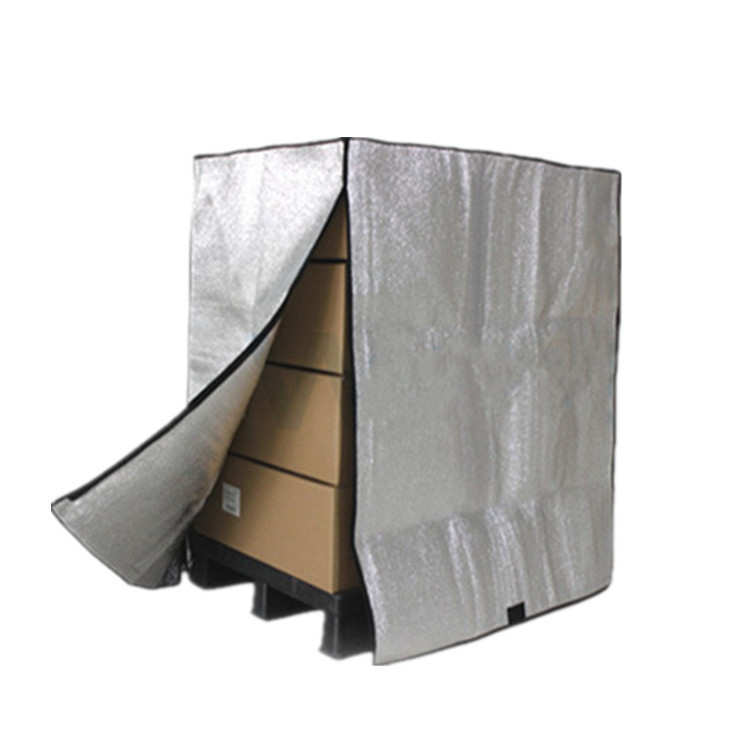
La structure du couvercle doit correspondre à la manière dont la chaleur atteint la palette. Réflectivité de la surface, couche d'isolation, comportement des coutures et des fermetures, placement de la sonde, et la répétabilité de la gestion peut être importante, mais pas de la même manière. La lumière directe du soleil et les surfaces chaudes pointent vers une protection radiante et une couverture supérieure. Points d'exposition au vent ou au froid vers la discipline de fermeture et l'ajustement de la jupe inférieure. La réutilisation grossière pointe vers des coutures renforcées et une résistance au nettoyage. Un acheteur doit demander quelle fonctionnalité résout le problème principal de l'itinéraire.
Les exigences du produit passent en premier. La qualification doit définir les critères d'acceptation, profil de test, charge utile, emplacements des sondes, et procédure opérationnelle avant l'interprétation des résultats. Ne choisissez pas une couverture avec une étiquette de température générique à moins que votre équipe qualité ou opérationnelle ait confirmé que l'étiquette correspond à l'expédition.. Une couverture utilisée pour un produit à large tolérance peut ne pas être acceptable pour une charge pharmaceutique à haut risque ou une palette de produits surgelés confrontée à un long séjour ambiant..
| Point de décision | Que vérifier | Pourquoi ça compte |
|---|---|---|
| Produit et gamme | Confirmer la sensibilité du produit et l'objectif de température requis. La qualification doit définir les critères d'acceptation, profil de test, charge utile, emplacements des sondes, et procédure opérationnelle avant l'interprétation des résultats. | Empêche d'utiliser le couvercle pour une cuisinière qu'il n'a jamais été censé prendre en charge. |
| Exposition de l'itinéraire | Carte exécutant un test cosmétique, placer les sondes uniquement dans des endroits faciles, tester une charge utile irréaliste, ignorer la charge solaire, et traiter les résultats du laboratoire comme une qualification universelle des voies avant de choisir la structure. | Indique si la couverture protège le véritable point faible ou si elle n'a l'air bien que dans un échantillon. |
| Construction de palettes | Mesurer la largeur chargée, profondeur, hauteur, coins, profil supérieur, film étirable, et les besoins de la jupe inférieure. | Évite les lacunes, coins serrés, et les couvertures qui ne peuvent pas être appliquées rapidement. |
| Méthode de manipulation | Vérifier le contact du chariot élévateur, temps de mise en scène, visibilité de l'étiquette, méthode d'ouverture, et qui enlève le couvercle à la réception. | Rend la couverture utilisable dans les opérations quotidiennes plutôt que uniquement dans un dossier d'achat. |
| Preuve | Demandez quelle charge utile, profil ambiant, carte de la sonde, et les critères d'acceptation soutiennent toute déclaration de performance. | Sépare les allégations marketing des preuves de contrôle des risques utilisables. |
Utiliser le tableau comme filtre d'achat plutôt que comme formalité. Si vous ne pouvez pas répondre à l'un des éléments, la réponse manquante est un risque. Ce risque peut être faible, mais cela doit être compris avant que la couverture ne soit commandée en gros ou écrite dans une instruction de travail standard.
Le dimensionnement et l'application font partie de la performance
Même une structure matérielle solide peut avoir des performances médiocres lorsqu'elle ne s'adapte pas à la charge réelle.. Mesurer la palette chargée, y compris les cartons en surplomb, planches de coin, film étirable, irrégularité supérieure, et changements saisonniers de SKU. Décidez si la couverture doit être bien serrée, laisser de la place pour un placement rapide, ou descendez plus bas pour couvrir les cartons de bord. Si l'équipe utilise plusieurs modèles de palettes, examinez chacun d’eux avant de standardiser sur une seule taille de couverture.
Le moment de la candidature est également important. Une couverture doit généralement être appliquée avant le début de l'exposition, pas après que la palette ait déjà attendu sur le quai ou la rampe. Le personnel doit savoir où sont stockées les couvertures, comment ils sont identifiés, quel côté est tourné vers l'extérieur, comment les fermetures doivent être sécurisées, et quand les couvercles doivent être retirés. Si le processus n'est pas écrit, le résultat peut changer d'une équipe à l'autre.
La qualification et le suivi garantissent l’honnêteté des réclamations
La qualification ne consiste pas à prouver qu’une couverture est bonne dans tous les contextes possibles.. Il s'agit de montrer si une couverture spécifique, sur une charge spécifique, dans des conditions définies, prend en charge une exigence définie. Le test doit utiliser des charges utiles réalistes, constructions de palettes représentatives, emplacements de sonde significatifs, et les critères d'acceptation convenus avant l'exécution. Pour les soins de santé, nourriture, ou fret contrôlé par le client, un examen de la qualité peut être nécessaire avant que le résultat ne soit utilisé.
La surveillance doit être traitée séparément de l'isolation. Un enregistreur de données enregistre ce qui s'est passé; ça ne protège pas la palette. Une couverture ralentit le transfert de chaleur; il n'enregistre pas de preuve. De nombreuses procédures fiables de la chaîne du froid utilisent à la fois, mais ils résolvent des problèmes différents. Si un envoi ne reçoit pas d'examen, l'enregistrement de l'enregistreur facilite l'enquête tandis que l'état de la couverture et les événements d'itinéraire aident à expliquer la cause.
Questions sur les fournisseurs et les opérations avant une utilisation en masse
Un examen des achats doit aller au-delà du prix par couverture. Les acheteurs doivent confirmer la méthode de test, profil ambiant, hypothèses d'exposition solaire, carte de la sonde, correspondance de charge utile, répétition des courses, critères d'acceptation, et format de documentation. La raison est simple: les housses de palettes sont des éléments opérationnels. Ils sont pris en charge par les équipes de l'entrepôt, transporteurs, et récepteurs, pas seulement examiné par le personnel des achats. Une couverture qui semble idéale sur une photo peut échouer si son installation prend trop de temps, masque les étiquettes, déchirures aux coins, ou ne peut pas être retourné proprement pour être réutilisé.
| Sujet fournisseur | Question à poser | Pourquoi ça compte |
|---|---|---|
| Structure des couches | Quelles couches sont utilisées dans la réflectivité de la surface, couche d'isolation, comportement des coutures et des fermetures, placement de la sonde, et gestion de la répétabilité? | Le nom du matériau à lui seul n’explique pas le comportement de transfert de chaleur ou la durabilité. |
| Base de taille | Les dimensions sont-elles basées sur l'empreinte de la palette, palette chargée, ou mesure personnalisée? | Une mauvaise taille est l'un des moyens les plus rapides de perdre la protection des bords et de la base.. |
| Base de test | Quelle charge utile, profil ambiant, direction d'exposition, et les emplacements des sondes ont été utilisés? | Un test depuis une voie différente peut être utile en arrière-plan, pas de qualification directe. |
| Contrôle de la réutilisation | Comment nettoyer les couvertures, séché, plié, inspecté, et retraité? | La valeur réutilisable dépend de la discipline du processus, non seulement la ténacité des matériaux. |
| Cohérence de la production | Les unités de production correspondront-elles à l'échantillon approuvé dans la pile de couches, conception de couture, et fermeture? | La cohérence entre l'échantillon et le volume est importante lorsque les couvertures sont utilisées sur de nombreuses palettes. |
Ce tableau n'a pas pour but de ralentir le processus d'achat. Cela vous aide à éviter l'erreur courante consistant à approuver un échantillon sur la seule base de l'apparence du matériau.. Le fournisseur doit être en mesure d'expliquer à quoi sert la couverture., ce pour quoi il n'est pas conçu, et quelles informations un acheteur doit fournir avant qu'une recommandation fiable puisse être faite.
Outils de décision utiles
Vérifiez les détails avant de choisir l'emballage
Ces outils rapides peuvent vous aider à comparer le risque d'itinéraire, besoins de dimensionnement, choix de liquide de refroidissement, et les détails de l'emballage avant de demander un devis.
Liquide de refroidissement & Référence PCM
Comparez les options de liquide de refroidissement et de PCM lorsqu'un itinéraire nécessite une prise en charge supplémentaire de la température.
Comparez les optionsCalculateur de glace carbonique
Estimer les besoins en glace carbonique pour les envois congelés ou ultra-froids avant l'emballage.
Estimation de la neige carboniqueSélecteur d'emballage
Comparez les options d'emballage isotherme par produit, itinéraire, et besoin de température.
Trouver un emballageExemple pratique
Par exemple, une équipe qualité souhaite tester les performances de la couverture lors d'un transfert estival du quai au camion et doit décider où placer les sondes sur les bords et le noyau de la palette. Un acheteur raisonnable ne se demanderait pas si une couverture peut résoudre tous les problèmes de température sur le trajet.. La meilleure question est de savoir si la couverture réduit suffisamment l'exposition connue pour soutenir la procédure opérationnelle.. Cela nécessite de mesurer la palette, comprendre combien de temps la palette attend, et confirmer qui applique et retire la couverture.
La même situation peut conduire à des décisions différentes. Un produit à faible risque avec une large tolérance peut nécessiter une simple housse réutilisable et un chèque de réception. Un produit à risque plus élevé peut nécessiter des tests de couverture, bûcherons de données, transports actifs, ou approbation de qualité. Le choix de la couverture doit correspondre au produit et à la voie, pas une déclaration générale sur expédition sous chaîne du froid.
Quand choisir une solution différente
Choisir une solution différente ou supplémentaire lorsque le résultat attendu est une déclaration universelle réussite/échec pour tous les produits, toutes les voies, ou toutes les saisons. Cela ne veut pas dire que la couverture n'a aucune valeur. Cela signifie que la couverture ne doit pas assumer la responsabilité d'un risque qu'elle ne peut pas contrôler.. Véhicules frigorifiques, conteneurs frigorifiques, unités de fret aérien actives, qualifié expéditeurs passifs, systèmes de refroidissement, et la surveillance au niveau du produit ont tous un rôle à jouer. La bonne conception peut combiner plusieurs outils plutôt que de forcer un seul produit à résoudre l'ensemble de la voie..
Une décision prudente protège l'acheteur ainsi que la cargaison. Une surestimation des performances de la couverture peut entraîner le rejet des expéditions, confiance des clients endommagée, et des enquêtes difficiles sur les écarts. Le comprendre peut entraîner des dépenses inutiles en solutions actives., expositions gérables. L’objectif est un jugement équilibré basé sur des preuves d’itinéraire.
FAQ
Ce qui rend crédible un test de qualification de housse de palette?
Un test crédible définit la charge utile, taille de la couverture, méthode de fermeture, profil ambiant, exposition solaire si pertinent, emplacements des sondes, critères d'acceptation, et les étapes de manipulation avant le début des tests. Le rapport doit montrer ce qui a été testé et ce qui ne l'a pas été. Un résultat provenant d'une charge utile ou d'une saison différente ne doit pas être traité comme une preuve universelle.
Une housse thermique de palette peut-elle remplacer le transport frigorifique?
Pas tout seul. Une couverture est une couche passive qui ralentit le transfert de chaleur; camions frigorifiques, frigorifiques, et les conteneurs actifs contrôlent l'environnement environnant. Une couverture peut prendre en charge une courte fenêtre de chargement ou de préparation, ou ajoutez un tampon lorsque les portes des équipements actifs sont ouvertes, mais il ne doit pas être utilisé comme substitut direct lorsque la qualité du produit dépend d'une gestion active de la température..
Où un acheteur doit-il placer les enregistreurs de données lors du test d'une couverture de palette?
L'emplacement de l'enregistreur doit refléter le risque que vous essayez de comprendre. De nombreuses équipes recherchent des positions avancées, exposition supérieure, température centrale du produit, et tout côté confronté à la chaleur la plus forte, froid, ou le soleil. La bonne carte dépend du produit, conception de la couverture, construction de palettes, et critères d'acceptation. Ne comptez pas uniquement sur l’endroit le plus protégé.
Les couvertures réutilisables nécessitent-elles un processus d'inspection?
Oui. La réutilisation ne fonctionne que lorsque les couvertures sont vérifiées pour les déchirures, fermetures usées, isolant écrasé, contamination, et étiquettes manquantes avant chaque utilisation. Une couverture endommagée peut paraître acceptable de loin mais laisser des vides ou créer des points faibles lors de la manipulation. Pour les produits réglementés ou dont la qualité est gérée, l'approche d'inspection et de nettoyage doit correspondre à la procédure du site.
Quelles informations doivent être demandées à un fournisseur?
Demander la structure matérielle, dimensions intérieures, conception de fermeture, conditions d'utilisation recommandées, conseils de nettoyage, disponibilité des échantillons, et la condition de test derrière toute réclamation de performance. Si un fournisseur indique un temps de maintien ou un résultat de température, demander quelle charge utile, profil ambiant, emplacements des sondes, et les critères d'acceptation ont été utilisés.
Conclusion
La meilleure décision quant à la qualification des housses thermiques pour palettes consiste à faire correspondre la housse au risque de l'itinéraire., il ne faut pas supposer qu'une couverture isolée protégera chaque palette. Commencez par les exigences du produit, cartographier la fenêtre d'exposition, mesurer la véritable construction de la palette, et vérifier si la couverture peut être appliquée correctement par les personnes qui s'occupent du fret. Examinez ensuite attentivement les preuves et évitez de traiter une barrière passive comme un contrôle actif de la température..
Si le parcours est court et que le point faible est clair, une couverture peut être un contrôle pratique et reproductible. Si le produit est très sensible, le chemin est long, ou la plage d'acceptation est étroite, la couverture peut encore jouer un rôle mais doit être associée à un emballage qualifié, équipement actif, surveillance, ou examen de la qualité si nécessaire. Un acheteur attentif considère la couverture comme un élément d’un processus discipliné de chaîne du froid..
Notes de terrain supplémentaires pour les acheteurs
Pour les housses de palettes thermiques admissibles, la discipline sur le terrain fait souvent la différence entre une couverture utile et un achat décevant. Notez qui applique la couverture, où sont stockées les couvertures inutilisées, quand un couvercle doit être retiré, et comment les équipes de réception signalent les dommages ou l'humidité. Ces détails semblent petits, mais ils déterminent si la couverture est utilisée de manière cohérente lorsque l'itinéraire est occupé, le quai est bondé, ou un transporteur arrive plus tôt que prévu.
Les acheteurs doivent également comparer l'échantillon approuvé avec les unités de production. Vérifiez la pile de couches, largeur de couture, placement de la fermeture, zone d'étiquette, renfort de coin, et s'adapte à la charge prévue la plus élevée. Si l'itinéraire implique plusieurs entrepôts ou partenaires 3PL, partager les mêmes photos d'application et instructions de travail avec chaque site. Le but n’est pas de compliquer la procédure; il s'agit d'éviter que chaque endroit invente une manière différente d'utiliser la même couverture.
À propos du Tempk
Tempk travaille avec des acheteurs qui ont besoin de fonctionnalités pratiques emballage chaîne du froid et options d'isolation au niveau des palettes pour des conditions réelles d'expédition et de préparation. Pour les projets de couvertures thermiques de palettes, la conversation utile ne concerne pas seulement les noms de matériaux. Il s'agit de la taille de la palette, hauteur de charge, exposition par voie, réutiliser les attentes, et comment la couverture sera appliquée par les équipes de l'entrepôt ou de la logistique. Nous pouvons vous aider à comparer les structures de couverture, discuter du dimensionnement personnalisé, et préparez les bonnes questions avant de passer de l'examen d'échantillons à une utilisation groupée.