Crémerie réfrigérée Efficient Business USA (2025)
If you run a refrigerated creamery efficient business USA, votre marge se résume souvent à deux chiffres: 45°F for rapid cooling/holding expectations in many Grade “A” milk contexts, et 0°F (ou ci-dessous) pour les objectifs de stockage congelé à long terme. NOUS. frozen dairy production also remains massive—1,386 million gallons in 2024—so consistency is not optional if you want repeat customers.
Cet article vous aidera:
-
Construire un refrigerated creamery efficient business USA workflow that reduces warm-time exposure (minutes hors du froid)
-
Fixez des objectifs de température pratiques, alarmes, and sensor placement for repeatable quality
-
Couper energy-efficient refrigeration for creameries costs without risky shortcuts
-
Faire FSMA temperature monitoring records feel simple, pas stressant
-
Plan ahead for low-GWP refrigerants for cold storage et 2025 compliance timelines
-
Choose shipping and packaging rules that match each delivery lane
What defines a refrigerated creamery efficient business USA in 2025?
UN refrigerated creamery efficient business USA is not “more equipment.” It is température stable + disciplined routines + proof you can trust. You win when your team can repeat the same good day, even during peak season.
A simple way to manage that is to combine two frameworks:
-
Cold Triangle: Temps, Température, Touche (how long, how cold, how many moves)
-
3-Loop Check: Cold loop, People loop, Proof loop (systèmes, habitudes, enregistrements)
The daily “Cold Triangle” that protects margin
| Cold Triangle Factor | Ce que vous contrôlez | What breaks first | Ce que cela signifie pour vous |
|---|---|---|---|
| Temps | limites de mise en scène, loading windows | product sits out | faster quality loss + more claims |
| Température | points de consigne, flux d'air, alarmes | points chauds + door heat | texture drift + shelf-life risk |
| Touche | handling steps, remballe | extra moves | labor waste + risque de dommages |
Conseils pratiques que vous pouvez utiliser aujourd'hui
-
Pick one KPI: track “minutes out of cold” per batch or pallet.
-
Make it visible: a timer board beats a long SOP nobody reads.
-
Fix the biggest leak first: portes, joints, staging discipline.
Exemple de cas pratique: One small facility reduced rework by enforcing a 10-minute staging rule with a visible timer and a “door owner” during loading windows.
How do you set temperatures for a refrigerated creamery efficient business USA?
UN refrigerated creamery efficient business USA lives or dies by targets and alarms, pas des moyennes. Many Grade “A” programs reference rapid cooling to 45°F (7°C) ou moins in certain contexts, while long-term frozen storage guidance anchors on 0°F (-18°C) ou ci-dessous. s1.sos.mo.gov+1
Qui dit, premium ice cream quality often needs colder and steadier conditions than minimum safety benchmarks. Your best move is to define targets by zone.
A simple temperature zone plan you can run
| Zone | Cible pratique | Alarm trigger | Ce que ça change pour toi |
|---|---|---|---|
| Réception / short-hold cooler | stable “cold zone” | alerte précoce + time delay | fewer spikes during unloading |
| Mix aging / ingredient cooler | consistent setpoint | tight high-temp alarm | better batch repeatability |
| Finished goods freezer | 0°F baseline or colder | high-temp alarm + escalade | fewer “soft pints” + moins de retours |
Emplacement du capteur: measure where product warms first
-
Put sensors at the warmest shelf, not the coldest vent.
-
Avoid “false comfort” readings near evaporator airflow.
-
Confirm calibration on a schedule (monthly/quarterly).
Two-level alarm ladder (simple et efficace)
-
Investigate: identify door event, airflow blockage, or defrost cycle.
-
Stop-ship: if time/temperature threshold is exceeded, hold product and document actions.
Exemple de cas pratique: A creamery stopped “mystery soft pints” by moving a sensor to the warmest rack position and tightening the staging cooler alarm rule.
How do you design workflow for a refrigerated creamery efficient business USA?
UN refrigerated creamery efficient business USA designs cold rooms like production tools. If your building forces people to prop doors and search for product, you will pay for it—every day.
The simplest layout rule you can enforce
-
Keep product moving one direction (receiving → process → finished goods → shipping).
-
Separate “dirty paths” from “clean paths.”
-
Make “ship today” obvious with a dedicated lane.
Airflow lanes: the invisible quality tool
| Layout choice | Ce que ça fait | What it risks | Signification pratique pour vous |
|---|---|---|---|
| Clear fan/return area | improves circulation | slightly less density | moins de points chauds + températures plus stables |
| Empilage serré | increases capacity | blocks airflow | refroidissement irrégulier + more scrap |
| Zoning by SKU/velocity | speeds picking | needs discipline | fewer door-open minutes |
Door discipline checklist that actually works
-
Pre-stage pallets avant the door opens
-
Assign one person as door owner in peak windows
-
Use strip curtains / rapid doors if traffic is high
-
Batch picking instead of “one-item trips”
Exemple de cas pratique: A team reduced energy spikes after posting a door timer and running loading in 30–60 minute batches.
How can a refrigerated creamery efficient business USA cut energy costs fast?
Energy savings in a refrigerated creamery efficient business USA usually come from reducing heat entry and stabilizing refrigeration behavior. The fastest wins are often “boring” maintenance and smarter controls.
Low-cost energy sweep (do this week)
-
Check door gaskets for gaps and cracks
-
Clean condenser/evaporator coils on schedule
-
Confirm setpoints match product needs (not “just in case”)
-
Review defrost frequency (avoid over-defrosting)
-
Look for frost patterns that signal airflow blockage
Controls that often deliver strong ROI (directionnel)
EPA materials note floating head pressure control peut livrer typical annual energy savings around 5% à 12%, depending on system constraints and climate. Small changes to condensing temperature also matter, so stability pays twice: lower kWh and fewer callbacks.
| Levier de commande | Typical payoff | Complexité | Votre avantage pratique |
|---|---|---|---|
| Pression de tête flottante | 5–12% annual savings | Moyen | lower kWh in cooler weather |
| Defrost optimization | moins de pointes de chaleur | Low–Med | better hardness + fewer quality swings |
| Infiltration reduction | lower latent load | Faible | moins de gel + less compressor work |
One more “hidden” lever: pre-cooling milk (where it applies)
Properly sized plate coolers can reduce milk cooling energy requirements by about 30–60% in some setups. Dairy Conservation If your process load is predictable, right-sizing can beat expensive upgrades.
Exemple de cas pratique: After gasket replacement + defrost tuning, one plant saw less frost build-up and fewer emergency service calls.
How do you improve labor efficiency in a refrigerated creamery efficient business USA?
Labor efficiency in a refrigerated creamery efficient business USA improves when you reduce “touches” and shorten travel paths. Every extra move costs money and adds warm exposure risk.
The Touch Count method (quick worksheet)
Count touches after packaging:
-
Move to staging
-
Move to storage
-
Move to pick line
-
Move to load
Votre objectif: retirer one full touch without adding confusion.
| Étape du processus | Common waste | Better pattern | Ce que cela signifie pour vous |
|---|---|---|---|
| Cueillette | recherche | étiquettes de zones + ABC zoning | faster pick speed |
| Mise en scène | mixed priorities | couloirs de date d'expédition | moins d'erreurs |
| Chargement | ad-hoc sequencing | pre-built loads | shorter door cycles |
Practical tips that work in small teams
-
Utiliser batch picking (one trip, many lines)
-
Créer un “ship today” lane near the door (not blocking airflow)
-
Standardize pallet patterns and labels (no “guessing”)
Exemple de cas pratique: A creamery reduced overtime by zoning fast movers and adding simple aisle signage.
How does a refrigerated creamery efficient business USA reduce spoilage?
Spoilage is rarely random in a refrigerated creamery efficient business USA. It usually follows repeatable patterns: longue mise en scène, mixed lots, slow changeovers, and unclear priorities.
FEFO in plain English (première expiration, first-out)
FEFO means: use what expires first, d'abord. It fails when dates are hard to see and lots are mixed.
Make FEFO visual:
-
Big date labels you can read from 6 feet away
-
Fixed rack locations per lot
-
Physical separation (“no mixing lane”)
Practical spoilage controls you can start this week
-
Set a hard pack-out clock from cold room to truck
-
Use ingredient “kits” for the next run to speed changeovers
-
Separate strong-odor items to protect sensory quality
Exemple de cas pratique: A team cut scrap after creating pre-labeled kits per batch and enforcing lot separation.
What compliance and 2025 refrigerant rules shape a refrigerated creamery efficient business USA?
UN refrigerated creamery efficient business USA is audit-ready when your daily habits and your records match. FSMA preventive controls commonly require a written food safety plan, and FDA guidance notes it must be reanalyzed at least once every three years. NOUS. Food and Drug Administration
The “Proof loop”: keep records small, cohérent, and close to work
| Record type | Fréquence | Format | Pourquoi ça vous aide |
|---|---|---|---|
| Surveillance de la température | continuous + daily review | auto log + initiales | fast proof in audits |
| Actions correctives | au besoin | short form | shows control and learning |
| Calibration checks | monthly/quarterly | liste de contrôle | prevents “bad data” decisions |
2025 réfrigérants: avoid stranded decisions
EPA’s Technology Transitions program restricts certain higher-GWP HFC uses in covered sectors starting Janvier 1, 2025, with compliance details varying by subsector. 美国环保局 If you wait until a breakdown, “simple replacement” can turn into an expensive redesign.
Contractor questions that protect your future
-
“What refrigerant GWP are we choosing, and what are the compliance dates?»
-
“What training and service changes come with this refrigerant?»
-
“How do you handle parts availability during the transition?»
Exemple de cas pratique: A creamery avoided a rushed replacement by ordering earlier and selecting equipment aligned with likely future refrigerant pathways.
How do you ship reliably from a refrigerated creamery efficient business USA?
UN refrigerated creamery efficient business USA ships reliably by matching conditionnement + processus to each lane. Shipping is where good plants lose control—through delays, temps d'ouverture de la porte, and warm trucks.
Lane-based shipping rules (simple et évolutif)
| Type de voie | Typical problem | Que normaliser | Ce que cela signifie pour vous |
|---|---|---|---|
| Local multi-stop | doors open often | stop order + discipline de porte | better end-of-route temps |
| Régional | weather swings | seasonal lane tests | fewer summer surprises |
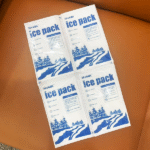
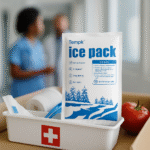
| DTC parcel | unpredictable delivery | expéditeur isolé + packs de gel | moins de plaintes « arrivé chaud » |
Practical shipping tips you can use this week
-
Pre-chill trucks (don’t load into a warm box)
-
Deliver sensitive stops first (don’t leave best customer last)
-
Stage orders cold-to-cold (avoid hallway “parking”)
Exemple de cas pratique: A team improved end-of-route temperature by reordering stops so the farthest deliveries went first.
Auto-évaluation: Are you running a refrigerated creamery efficient business USA?
Notez chaque élément: 0 = not in place, 1 = partiel, 2 = cohérent (max 20)
-
Door discipline is trained and followed
-
Staging has strict time limits
-
Airflow lanes are protected
-
Receiving temps are recorded consistently
-
Picking is batched (not random trips)
-
Coils and gaskets have a maintenance schedule
-
Inventory flow supports FEFO/FIFO
-
Staff can explain setpoints in plain words
-
Hot spots are identified and corrected
-
Loading is pre-staged for short door cycles
Guide de notation
-
0–7: fix routines + layout first
-
8–14: optimize energy + standardize process
-
15–20: scale with monitoring + amélioration continue
2025 derniers développements et tendances
Dans 2025, the biggest shift is this: equipment decisions start with compliance timelines and end with equipment selection, pas l'inverse. EPA’s Technology Transitions requirements have made refrigerant planning a real operational strategy.
Dernier aperçu des progrès
-
More monitoring, less drama: automated logs reduce audit stress
-
Controls-first energy savings: smarter defrost and head pressure are “first moves”
-
More lane testing: packaging and service levels match delivery risk
-
More pressure on consistency: the market is large, and customers remember variability
Questions fréquemment posées
Q1: What is the fastest first step for a refrigerated creamery efficient business USA?
Start with door discipline and staging time limits. They reduce heat gain and stop “silent” quality loss.
Q2: Do I really need 0°F for frozen storage?
For long-term frozen storage, 0°F (-18°C) ou ci-dessous is a common benchmark for best quality and safe long-term holding.
Q3: What causes summer energy spikes most often?
Warm air infiltration through doors and weak seals. Faster loading routines and gasket repairs usually help quickly.
Q4: What does “monitoring must be documented” mean in plain English?
It means you record what you checked, what you found, and what you did when something was wrong.
Q5: Which upgrade usually pays back fastest?
High-ROI basics first: scellage, coil cleaning, defrost tuning, and controls like floating head pressure where suitable.
Q6: How do I know if I have hot spots?
Look for uneven frost patterns, repeat “soft product” in the same location, or warmer readings at the farthest racks.
Résumé et recommandations
UN refrigerated creamery efficient business USA wins by controlling temps, température, et toucher every day. Your fastest gains come from door discipline, airflow protection, and visible staging limits. Energy savings usually come from sealing, entretien, and smarter controls. Labor savings come from fewer touches and clearer zoning.
Simple action plan (realistic)
-
Enforce staging time limits and door discipline this week
-
Protect airflow lanes and fix seals next week
-
Batch pick and zone SKUs by velocity within 30 jours
-
Add a 3-minute daily checklist and review trends monthly
CTA: Pick one operational change this week, measure the impact, and lock it in before adding complexity.
À propos du tempk
Et tempk, we help cold chain teams build practical packaging and process routines for temperature-sensitive goods. We focus on repeatable workflows, stable thermal performance, and easy-to-train standards—so your refrigerated creamery efficient business USA can scale with fewer surprises.
Prochaine étape (CTA): Partagez la taille de votre installation, shipping lanes, and weekly order pattern. We can help you map a simple efficiency plan you can implement in weeks.