Pack de glace carbonique du fournisseur pour la livraison de vaccins: Six portes d'approbation
Un fournisseur glace carbonique le pack pour la livraison du vaccin doit passer six étapes d’approbation liées avant une utilisation de routine: exigences du produit, identité matérielle, conception du système, qualification thermique, contrôle opérationnel, et gestion du cycle de vie des fournisseurs. Aucun portail ne peut être remplacé par un prix unitaire bas ou une réclamation de durée générique. La première question est aussi linguistique que technique. La neige carbonique solide est du dioxyde de carbone, alors qu'un « sac de glace carbonique » hydraté est une feuille activée par l'eau qui est gelée. Leurs risques et contrôles diffèrent. Parce que de nombreux vaccins réfrigérés sont sensibles au gel, le processus d'approbation doit démontrer une protection contre le froid excessif ainsi que contre le réchauffement, en utilisant les instructions actuelles du produit et les règles applicables du programme de vaccination.
Grille 1: Confirmez les exigences en matière de vaccins et de programmes
La première porte appartient au programme de vaccination ou à la fonction qualité autorisée, pas le fournisseur de liquide de refroidissement. Il confirme la présentation exacte du vaccin, instructions actuelles du fabricant, état de transport pris en charge, sensibilité au gel, manipulation des diluants, plage de charge utile, itinéraire, et parcours d'excursion.
L'enregistrement de la porte devrait répondre:
Quel vaccin, présentation, configuration du lot, et le carton secondaire sont couverts?
Quelles instructions actuelles de stockage et de transport contrôlent la conception?
La congélation est-elle interdite, et comment les suspicions de gel sont-elles évaluées?
Un diluant ou un article accessoire voyage-t-il dans le même colis?
Quel programme de vaccination, contracter, ou des règles d'organisation s'appliquent également?
Quels extrêmes de charge utile et quels groupes de routes sont concernés ??
Qui peut approuver la qualification et prendre des décisions d'excursion?
Une vague demande de « vaccins réfrigérés » ne passe pas. Si plusieurs produits sont regroupés, documenter pourquoi leurs exigences, géométrie, masse, et le risque sont représentés par les charges utiles de qualification. Si les preuves ne peuvent pas soutenir le groupe, divisez-le.
Définir l'horloge d'acheminement depuis la préparation et l'emballage jusqu'au retour au stockage pris en charge à la réception. Inclure la mise en scène, seuils de ramassage, moyeux, fenêtres de livraison, et un retard crédible. Définir les défis saisonniers et les destinations alternatives. Une promesse de niveau de service est une entrée, pas une preuve d'exposition réelle.
Grille 1 identifie également les hypothèses interdites. Les exemples incluent « plus il fait froid, plus il est sûr," " L'étiquette du liquide de refroidissement détermine l'état du vaccin," "Un paquet congelé restant prouve l'acceptation,» ou « tous les diluants peuvent être conditionnés comme le vaccin ». L'enregistrement de ces limites rend les conversations ultérieures avec les fournisseurs plus claires.
Le résultat est un résumé des exigences approuvé et un cadre d'acceptation. Si les instructions actuelles du produit ne sont pas disponibles ou sont contradictoires en interne, arrêtez-les et résolvez-les avant de choisir le matériau. L’ingénierie ne peut qualifier une cible indéfinie.
Grille 2: Établir l’identité matérielle et l’architecture du système
La deuxième porte détermine ce qu'est réellement le liquide de refroidissement proposé.. Obtenir des instructions spécifiques à un article, descriptif technique, informations sur la composition ou la sécurité, le cas échéant, dimensions, masse, tolérances, identification du lot, stockage, préparation, critères d'intégrité, élimination, and revision.
Le dioxyde de carbone solide nécessite un système capable de libérer du gaz et un environnement opérationnel prenant en charge la ventilation., contact froid, contrôle des quantités, et exigences de mode applicables. Sa très basse température peut être incompatible avec les produits réfrigérés., vaccin sensible au gel, à moins que l'état du produit pris en charge et sa conception qualifiée justifient son utilisation.
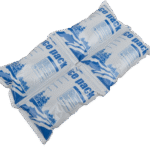
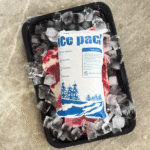
UN hydrater un sac de glace carbonique est généralement une feuille sèche absorbant l’eau qui est hydratée et congelée. Il doit être modélisé comme un liquide de refroidissement à base d'eau. La préparation change sa masse et sa géométrie, tandis que le pliage peut modifier le contact et le flux de chaleur. Packs de gel et les packs à changement de phase techniques restent des matériaux distincts avec leurs propres spécifications et conditionnement.
Tableau des preuves architecturales
| Décision architecturale | Preuve d'approbation | Panne évitée |
|---|---|---|
| Article exact du liquide de refroidissement et révision | Spécification actuelle, instructions, échantillons, et le code du lot | Confondre les feuilles d'hydrates avec de la neige carbonique solide ou les remplacer par des formulations |
| État conditionné | Processus d’hydratation ou de conditionnement, tolérances, et libérer le chèque | Masse thermique et ajustement du sac variables |
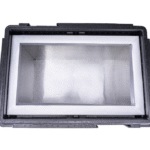
| Récipient isolé | Matériel, dimensions, fermeture, et révision contrôlée | Utilisation des données de test d'une enveloppe thermique différente |
| Séparation et placement | Dessin d'emballage, barrières, orientation, et des photos | Contact direct à froid, pliant, lacunes, ou zones chaudes |
| Charge utile et fardage | Tranches minimales et maximales, produit représentatif, et remplissage contrôlé | Configurations non testées de faible masse ou surchargées |
| Localisation de surveillance | Justification de la cartographie et placement reproductible | Mesurer le liquide de refroidissement ou l'air vide au lieu de l'environnement du vaccin |
| Ventilation et manipulation | Conception de l'emballage et procédure de sécurité lors de l'utilisation de neige carbonique solide | Pression, exposition, et rejet du transporteur |
| Configuration de réception | Ouverture, transfert, moniteur, et instructions d'escalade | Stockage retardé ou version de produit non prise en charge |
La nomenclature du système doit empêcher les substitutions. Une entretoise, doublure, ruban adhésif, carton, ou un changement de remplissage des vides peut modifier le transfert de chaleur ou la libération de gaz. Si un composant est essentiel à la performance, traitez-le comme contrôlé même s'il semble peu coûteux.
Grille 2 passe lors de l'approvisionnement, ingénierie, opérations, et la qualité utilisent la même identité de composant et la même architecture d'emballage. Le nom commercial d’un fournisseur peut rester sur le bon de commande, mais les registres internes doivent indiquer le matériel en termes techniques sans ambiguïté.
Grille 3: Qualifier les performances thermiques et physiques
La troisième porte met l'architecture en évidence. Utiliser des composants équivalents à la production et un assemblage contrôlé. Le protocole doit identifier les objectifs du test, configurations, charges utiles, profils ambiants, durée, appareils, carte des capteurs, critères d'acceptation, réplique, inspections physiques, traitement des données, écarts, et approbations.
Cartographier des emplacements chauds et froids crédibles. Placez les capteurs près des murs, couvercle, bas, centre, risques de contact, et des positions de produits représentatives telles que justifiées par la géométrie. Le risque le plus froid peut apparaître précocement ou sous un profil froid; le plus chaud peut apparaître tard, près d'une couture, ou avec la charge maximale. Examinez chaque trace de capteur requise plutôt que de vous fier à une moyenne.
Défiez les charges utiles minimales et maximales. Une commande minimale peut exposer un carton à plus de surface de liquide de refroidissement et moins de tampon thermique. Une commande maximale peut encombrer le colis et restreindre le placement prévu. Si une charge fictive est nécessaire pour rester dans une fourchette approuvée, son type et sa disposition doivent être contrôlés.
Le conditionnement doit être représentatif. Les feuilles d'hydrates doivent être préparées en utilisant la méthode de production proposée, échantillons de laboratoire non soigneusement sélectionnés à la main. La glace carbonique solide doit être chargée sous la forme et la quantité approuvées., avec mise en scène réaliste et sublimation. Les packs de gel ou à changement de phase doivent atteindre l'état de conditionnement défini via un congélateur ou un processus que les opérations peuvent reproduire.
Inclure le risque de distribution physique, le cas échéant. Compression, vibration, orientation, dommages à la cellule de refroidissement, mouvement du couvercle, et l'humidité peut modifier les performances ou la convivialité. Un résultat de chambre dans une boîte parfaite stationnaire peut ne pas couvrir un réseau de colis approximatif.
Conserver les données brutes et les exécutions de développement ayant échoué. Expliquer les exclusions, points manquants, écarts de protocole, et calculs. La qualification passe uniquement selon des critères pré-approuvés. Si le système tombe en panne, repenser et répéter le travail nécessaire; ne réétiquetez pas un emplacement hors d’état comme étant non pertinent après coup.
La sortie de la porte doit spécifier exactement ce qui est qualifié: révisions des composants, récipient, emballage, support de charge utile, itinéraire ou profil, saison, durée, position du moniteur, et hypothèses d’exploitation. C'est une approbation limitée, pas une déclaration selon laquelle le liquide de refroidissement fonctionne pour chaque vaccin.
Grille 4: Connectez la surveillance aux décisions d’excursion
La quatrième porte garantit qu'un envoi de routine génère des preuves utiles. Choisissez un enregistreur de données numériques approprié et, lorsque cela est justifié, un indicateur de gel. Définir l'identité de l'appareil, état de précision ou d’étalonnage, configuration, activation, placement, démarrer et arrêter, télécharger, conservation des fichiers, gestion des alarmes, et revoir.
Le placement de routine des enregistreurs doit provenir de la cartographie des qualifications. Rendre reproductible avec une pochette, agrafe, position marquée, ou un schéma. Un enregistreur à côté de la neige carbonique solide peut indiquer les conditions du réfrigérant; un objet lâche dans un grand vide peut montrer de l'air sans rapport avec la charge utile. Le poste doit représenter la décision que le programme a l’intention de prendre.
Un indicateur de gel fournit un avertissement ciblé mais pas un historique complet de la température. Son seuil, réponse, activation, stockage, expiration, et l'emplacement doit être compris. Lorsqu'un indicateur et un enregistreur sont utilisés à la fois, établir quelles données sont conservées et comment les désaccords sont remontés.
Les instructions de réception doivent exiger le transfert rapide du vaccin vers un lieu de stockage pris en charge., inspection des colis, arrêt du moniteur ou lecture, et conservation des données. Définir la réponse aux dommages, humidité, manque de liquide de refroidissement, un appareil non démarré, une alarme, un affichage illisible, ou une livraison en dehors de la fenêtre prévue.
Pour toute excursion suspectée, protéger et séparer le vaccin comme l’exige la procédure. Documenter le produit, parcelle, quantité, rendez-vous, fois, températures, itinéraire, emballage, et actions. Obtenir des conseils du programme de vaccination, fabricant, ou autorité de qualité désignée. Le personnel ne doit pas jeter ni utiliser le vaccin concerné jusqu'à ce qu'une décision documentée soit prise..
Outils de décision utiles
Vérifiez les détails avant de choisir l'emballage
Ces outils rapides peuvent vous aider à comparer le risque d'itinéraire, besoins de dimensionnement, choix de liquide de refroidissement, et les détails de l'emballage avant de demander un devis.
Doublure de boîte & Dimensionnement des couvertures de palettes
Vérifiez la logique de dimensionnement du revêtement de boîte et du couvercle de palette pour les projets d'emballage isotherme.
Dimensionnement estiméLiquide de refroidissement & Référence PCM
Comparez les options de liquide de refroidissement et de PCM lorsqu'un itinéraire nécessite une prise en charge supplémentaire de la température.
Comparez les optionsRésistance aux chutes du matériau isolant
Examinez la résistance aux chutes et les facteurs de manipulation avant de choisir des matériaux d'isolation..
Vérifier la résistanceLa porte échoue si l'organisation collecte des données mais n'a pas de réviseur, temps de réponse, ou autorité de disposition. Cela échoue également si les alertes en temps réel sont envoyées dans une boîte de réception non surveillée.. Le suivi est un système de décision, pas un accessoire placé dans la boîte.
Grille 5: Prouver le fonctionnement et le plan d’urgence
La cinquième porte teste si les personnes et les installations peuvent exécuter la conception qualifiée. Observez le personnel de routine hydrater ou conditionner le liquide de refroidissement, sélection de composants, assembler des charges minimales et maximales, activation des moniteurs, fermeture des conteneurs, remplir des dossiers, et organiser les expéditions. Chronométrez le travail et notez où les instructions invitent à l’interprétation.
Les opérations d’hydratation nécessitent un accès approprié à l’eau, drainage, espace d'inspection, capacité du congélateur, et ségrégation de statut. Le chargement du congélateur doit permettre aux packs d'atteindre l'état approuvé. Les opérations de glace carbonique nécessitent un calendrier d’approvisionnement, outils protégés, évaluation de la ventilation, contrôle des quantités, et manipulation formée. Les deux nécessitent un inventaire de contingence sans mélanger les révisions.
Utiliser des scanners, trousses, ou des contrôles indépendants où la confusion dans l'emballage présente un risque significatif. Les photographies contrôlées peuvent appuyer la vérification. La formation devrait inclure pourquoi une entretoise, orientation, ou surveiller les problèmes liés à l'emplacement afin que le personnel reconnaisse les conditions anormales plutôt que de suivre aveuglément les étapes.
Les procédures d'urgence doivent identifier:
programme actuel, fabricant, facilité, transporteur, et contacts du site de sauvegarde;
critères pour maintenir le vaccin en place plutôt que de le déplacer;
conteneurs de transport qualifiés, matériaux d'emballage, et des moniteurs;
préparation des véhicules et des installations alternatives;
inventaire et accès en dehors des heures normales;
emballage, transport, reçu, et enregistrements de données;
autorité pour les écarts et la disposition des produits.
Exécutez une perceuse de table ou pratique. Un plan écrit peut révéler que le réfrigérateur de secours n'a pas d'espace confirmé, le kit enregistreur est verrouillé, ou le seul emballeur formé n'est pas disponible. Corrigez ces lacunes avant une panne.
Le transport d’urgence ne doit pas reposer sur des paquets congelés en vrac touchant le vaccin ou sur une quantité improvisée de neige carbonique solide.. Si un conteneur préqualifié n'est pas disponible, suivre les conseils d'urgence et la procédure d'escalade applicables plutôt que d'inventer une configuration non prise en charge.
Grille 5 réussit lorsque les rôles formés peuvent reproduire le système à un rythme normal et peuvent accéder à une voie d'urgence crédible. La qualification sans préparation opérationnelle est une preuve de laboratoire, pas de capacité de livraison.
Grille 6: Contrôler le fournisseur et le cycle de vie
La sixième porte couvre la période après le lancement. Approuver le fournisseur et l'article exact via une spécification définie, contrôles entrants, traçabilité, processus de plainte, avis de changement, soutien à l'enquête, plan de continuité, et conservation des dossiers. Identifier les changements qui nécessitent une évaluation préalable.
Formulation du matériau, structure absorbante, film, joint, dimensions, instructions imprimées, site de fabrication, sous-traitant, ou les tolérances peuvent affecter les performances. Les fournisseurs d’emballages les considèrent parfois comme des changements commerciaux équivalents; le programme de vaccination peut les considérer comme des changements par rapport à une référence qualifiée. L'accord devrait combler cet écart.
Suivre les tendances opérationnelles par lot et emballage du fournisseur: variation d'hydratation, fuites, dommage, rejets de conditionnement, écarts de montage, alarmes, livraisons tardives, et plaintes. Une inspection visuelle réussie à l'arrivée ne détecte pas tous les changements thermiques, les données sur les tendances et les préavis sont donc importants.
La planification de la continuité doit identifier une capacité alternative sans autoriser la substitution automatique. Un composant de deuxième source nécessite le même examen d'identité, évaluation du système, et des preuves adaptées à son impact. En période de pénurie, la qualité doit décider comment utiliser le matériel approuvé restant et si une alternative contrôlée peut être introduite.
Décision d’approbation hypothétique
Imaginez un distributeur de vaccins évaluant une feuille d'hydrate d'un nouveau fournisseur. Grille 1 confirme que les vaccins sont réfrigérés et sensibles au gel, avec instructions de diluant séparées. Grille 2 confirme que la feuille ne contient pas de dioxyde de carbone solide, mais les échantillons de masse conditionnée montrent une variation plus large que prévu.
Le fournisseur resserre ses instructions de préparation, tandis que le distributeur ajoute un contrôle d'acceptation en masse. Grille 3 la cartographie trouve ensuite un coin froid avec une charge utile minimale. Une entretoise et une charge fictive définie corrigent la géométrie, et les défis répétés passent. Grille 4 place l'enregistreur de routine à proximité de cette région auparavant froide et ajoute une carte d'escalade de récepteur claire.
Pendant la porte 5, les opérateurs constatent que les feuilles stockées de manière serrée ne sont pas conditionnées de manière cohérente. Des supports de congélateur et des limites de chargement sont ajoutés, alors le processus est vérifié. Grille 6 établit la traçabilité des lots et la notification préalable des films, absorbant, joint, dimension, instruction, et changements de site.
Le composant est approuvé uniquement pour le conteneur nommé, deux supports de charge utile, itinéraires définis, et processus maîtrisé. Il n'est pas approuvé comme substitut universel aux packs de gel ou comme neige carbonique solide.. Ce résultat hypothétique démontre une limite d'approbation utile: suffisamment large pour une exécution de routine, suffisamment étroit pour protéger les preuves.
L’examen du cycle de vie devrait également inclure la durabilité. Compter le volume entrant, eau d'hydratation, énergie du congélateur, perte de composants, masse d'emballage, retours, nettoyage, réexpédition, et les déchets de vaccins. Les allégations de réutilisation ou de recyclage doivent être vérifiées par rapport aux opérations réelles. L’amélioration de l’environnement est précieuse lorsqu’elle préserve ou améliore la réussite de l’administration des vaccins.
Questions fréquemment posées
À qui revient l'approbation finale du liquide de refroidissement ??
La propriété dépend de l’organisation, mais l'approbation finale doit combiner le programme de vaccination ou l'autorité de qualité avec des preuves d'ingénierie et d'exploitation de l'emballage.. Les achats peuvent gérer la sélection commerciale, tandis que le fournisseur fournit des données sur les articles. La personne autorisée à distribuer le vaccin ou à évaluer les excursions doit être explicitement définie et indépendante des allégations commerciales..
Un emballage peut-il couvrir plusieurs produits vaccinaux?
Éventuellement, lorsqu'une justification et une qualification documentées du regroupement couvrent les instructions de produit pertinentes, sensibilité au gel, géométrie du paquet, masse, extrêmes de charge utile, itinéraire, et surveillance. Partager une catégorie de stockage nominale ne suffit pas. Si un produit présente un pire cas différent ou une contrainte de diluant différente, testez-le séparément ou réduisez le groupe approuvé.
Quand la requalification est-elle nécessaire?
Utiliser une évaluation d’impact documentée. Modifications du liquide de refroidissement, récipient, entretoise, charge utile, itinéraire, transporteur, risque ambiant, conditionnement, assemblée, ou les exigences en matière de vaccins peuvent nécessiter n'importe quoi, de l'examen des documents à la requalification complète. Tendances défavorables, alarmes répétées, fuites inexpliquées, ou une dérive de processus peut également déclencher une vérification. Évitez une règle de calendrier universelle inventée.
La certification du fournisseur est-elle suffisante pour approuver le système?
Non. Les certifications ou déclarations des fournisseurs peuvent prendre en charge l'examen de la qualité et de la conformité dans le cadre de leur portée indiquée., mais ils ne démontrent pas qu'un vaccin particulier, récipient, emballage, itinéraire, et le processus opérationnel fonctionnera. L'approbation du système nécessite les instructions de produit applicables, données de qualification, opérations reproductibles, surveillance, et procédures contrôlées de réception et d'excursion.
Que se passe-t-il si une feuille d'hydrate fuit?
Protéger le personnel et les vaccins, documenter l'état du colis, et suivre la procédure de réception ou d'excursion. Évaluer l’intégrité des packages primaires et secondaires, surveiller les données, beaucoup de liquide de refroidissement, manutention, et itinéraire. Mettre en quarantaine le matériel concerné, si nécessaire. Signaler un défaut justifié d'un composant via le processus de réclamation du fournisseur et suivre les événements similaires pour une action plus large..
Rendre visible la limite d'approbation
Le dossier d'approbation finale doit s'intégrer aux opérations sans perdre sa signification technique. Indiquez le liquide de refroidissement exact, révision, préparation, récipient, emballage, charge utile, itinéraire, portée saisonnière, moniteur, processus de réception, et exceptions autorisées. Lier le dossier à l'instruction de travail et à la formation en cours. Les contrôles des codes-barres ou du système de commande peuvent empêcher la sélection en dehors de cette limite.
Créez un tri des modifications d'une page qui demande si les instructions relatives au vaccin, charge utile, itinéraire, matériel, géométrie, conditionnement, mode de transport, site fournisseur, surveillance, ou le récepteur a changé. Un « oui » envoie la proposition à une évaluation d'impact documentée avant expédition..
À propos du tempk
Les documents officiels de Tempk décrivent hydrater les packs de glace carbonique sous forme de feuilles activées par l'eau qui sont congelées après hydratation, pas aussi solide que le dioxyde de carbone. Son portefeuille comprend également des packs de gel et emballage isolé catégories. Ces produits peuvent être considérés comme des composants d’un processus de développement de distribution contrôlée de vaccins.. L'acheteur doit confirmer l'article actuel, révision, instructions, contr?les de lot, et pièces justificatives, puis qualifiez le système complet pour le vaccin exact, charge utile, itinéraire, méthode de surveillance, et processus opérationnel. Les décisions d'excursion restent du ressort du programme applicable., fabricant, ou fonction qualité autorisée.
Apporter à Tempk un résumé des exigences approuvées et une architecture système proposée. Demander des échantillons équivalents à la production et des preuves techniques actuelles, puis faites passer le candidat par les six portes avant l'utilisation systématique du vaccin.