Pack de glace sèche fournisseur pour le transport de légumes: Du devis à l’itinéraire qualifié
Le livrable d'un fournisseur paquet de glace sec pour le projet de transport de légumes ne devrait pas être une boîte de packs froids. Ce devrait être un itinéraire contrôlé: le réfrigérant est correctement identifié, les limites de sécurité du légume sont définies, le packout est reproductible, les retards probables sont testés, et les récepteurs savent quoi inspecter. Ce résultat est particulièrement important car le « bloc de glace carbonique » peut décrire un véritable dioxyde de carbone solide ou une feuille réutilisable activée par l’eau.. La vraie neige carbonique est beaucoup trop froide pour être utilisée comme liquide de refroidissement universel pour les produits frais., tandis que les packs congelés à base d'eau peuvent également provoquer une congélation par contact. Un processus à cinq portes facilite l'approvisionnement, qualité, opérations, et les fournisseurs parviennent ensemble à une décision défendable.
Les cinq portes
Chaque porte répond à une question différente. Passer une porte plus tard ne peut pas compenser une réponse manquante plus tôt dans le processus.
| Porte de décision | Question pour clôturer | Preuve minimale | Raison d'arrêter ou de repenser |
|---|---|---|---|
| 1. Identité et utilisation prévue | Quel réfrigérant est acheté, et la charge utile est-elle fraîche ou congelée? | Description du produit, informations de sécurité, forme de produit, et l'itinéraire prévu | Nom ambigu de « glace carbonique » ou véritable glace carbonique proposée par défaut pour les légumes frais |
| 2. Enveloppe de produits | Quelles températures de produit et limites de qualité s'appliquent? | Spécification de produit approuvée, état initial de la pulpe, examen de l'humidité et de la sensibilité | Une gamme réfrigérée générique utilisée pour les cultures incompatibles |
| 3. Architecture de pack | Comment le liquide de refroidissement, isolation, charge utile, et les obstacles travaillent ensemble? | Dessin, nomenclature, instruction de conditionnement, et séquence de chargement | Quantité de composants indiquée sans hypothèses de placement ou de charge thermique |
| 4. Qualification | Le système exact protège-t-il les endroits chauds et froids du couloir? | Profils ambiants définis, capteurs calibrés, répétition des courses, et évaluation de la qualité des produits | Données moyennes uniquement, pas de capteurs de point froid, ou pas de défi hivernal |
| 5. Contrôle de production | Chaque expédition peut-elle reproduire le système approuvé? | Plan de contrôle, entraînement, traçabilité, avis de changement, procédure de réception, et examiner les déclencheurs | L'échantillon diffère de la production ou les opérateurs improvisent l'hydratation et le placement du pack |
Le tableau est aussi une carte des responsabilités. Les achats peuvent posséder une comparaison commerciale, mais le propriétaire du produit ou l'équipe qualité doit approuver les limites des produits.. L'ingénierie de l'emballage et le fournisseur peuvent développer la configuration. Les opérations doivent démontrer qu'elles peuvent exécuter la procédure, tandis que les équipes de réception ferment la boucle de rétroaction.
Grille 1: lever l’ambiguïté de la « banquise sèche »
La spécification d'achat doit utiliser un nom technique et un nom commercial séparément.
Si le réfrigérant est du dioxyde de carbone solide, appelle ça de la « glace carbonique », dioxyde de carbone, solide, UN1845 » lorsque le contexte d'expédition applicable exige cette identification. À pression atmosphérique normale, il se sublime à environ −78,3°C. Ceci explique à la fois sa capacité de transport congelé et son danger pour les tissus frais.. Cela explique également pourquoi l'emballage doit libérer du gaz plutôt que de se fermer hermétiquement..
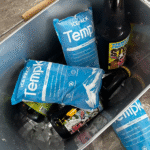
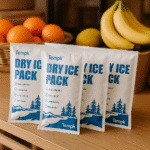
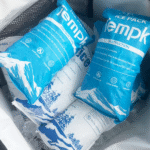
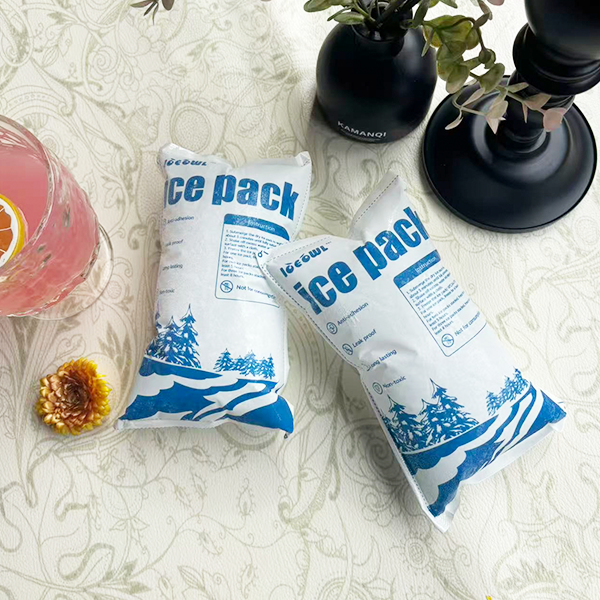
Si le produit est une feuille d'hydratation, le décrire comme une compresse froide en polymère activé par l'eau qui est congelée avant utilisation. Tempk est publié hydrater un sac de glace carbonique utilise une membrane perméable, absorbant en polymère, et film composite. Ce produit ne contient pas de dioxyde de carbone solide. Une description claire évite le traitement inutile des marchandises dangereuses et indique aux emballeurs que l'hydratation et le conditionnement au congélateur sont nécessaires..
Si c'est un pack de gel, brique rigide, ou PCM formulé, identifier le type de remplissage, comportement de transition lorsqu'il est pris en charge, masse nominale, construction extérieure, et conditionnement. Ne permettez pas au fournisseur de substituer une catégorie à une autre sans approbation simplement parce que les dimensions externes correspondent..
La première porte sépare également les légumes frais des légumes transformés surgelés. La vraie neige carbonique peut être un candidat rationnel pour une charge utile qui doit rester gelée. Pour les concombres frais, laitue, tomates, poivrons, pommes de terre, ou courge, sa température extrême crée un risque évident de gel. Toute proposition d'utilisation doit comporter une justification technique spécifique et des contrôles de contact avec le produit., concentration de gaz, sécurité des travailleurs, règles de transport, et qualification. Dans de nombreuses nouvelles applications, un liquide de refroidissement ou un équipement réfrigéré moins agressif est le meilleur point de départ.
Grille 2: créer l'enveloppe des matières premières
« Rester cool » n'est pas une spécification. L'enveloppe des produits définit l'exposition acceptable et les conditions qui affectent la qualité.
Commencez par le formulaire de produit. La laitue entière et les légumes-feuilles coupés ne sont pas soumis aux mêmes obligations en matière de sécurité alimentaire. Aux États-Unis concernés. opérations, Les directives de la FDA recommandent que les légumes-feuilles coupés soient reçus et conservés à 5°C ou moins. C'est une limite supérieure de sécurité, pas d'instruction pour laisser les paquets congelés toucher le produit. L’adoption locale et le plan de sécurité alimentaire de l’entreprise doivent être vérifiés.
Suivant, identifier la zone de manipulation optimale de la récolte et les blessures dues à des températures plus basses. USDA, FAO, et les conseils de l'UC Davis montrent la diversité:
De nombreux légumes feuillus et tempérés sont manipulés à une température proche de 0°C, mais leur marge de congélation peut être faible.
Les concombres sont généralement meilleurs entre 10 °C et 12,5 °C et peuvent développer des dommages causés par le froid en dessous d'environ 10 °C., avec un effet influencé par le temps et le cultivar.
Les poivrons sont généralement manipulés à environ 7,5°C pour une conservation plus longue; une exposition plus faible peut produire des symptômes de refroidissement en fonction de la durée et de la maturité.
Citrouilles, courges à croûte dure, et les patates douces nécessitent une manipulation plus chaude que de nombreuses cultures à feuilles.
La sensibilité au gel varie. Les pommes de terre et les tomates peuvent être endommagées de façon permanente par un léger gel, tandis que le chou mûr peut mieux tolérer un léger gel. La tolérance n'est pas une raison pour concevoir en dessous de la limite approuvée.
La spécification doit aborder les cibles et les plages d'action, pas seulement un point de consigne. Il devrait définir comment la température de la pulpe est mesurée, combien de temps les excursions peuvent durer si elles sont acceptées, et quels défauts de qualité déclenchent la retenue ou le rejet. Inclure l'humidité, tolérance à la condensation, compatibilité avec l'éthylène, maturité, cultivar, et durée de vie attendue sur le marché lorsqu'ils sont significatifs.
Les charges mixtes nécessitent une décision de compatibilité explicite. Une température de compromis commune peut être appropriée pour un court voyage, mais il devrait être approuvé comme un compromis avec une limite de durée. Une compresse froide ne peut pas rendre le brocoli et le concombre biologiquement identiques.
Enfin, enregistrer l'état de départ. Le produit arrivant à 18°C ne peut pas être traité comme s'il était prérefroidi à 8°C.. L'emballage passif est généralement mieux utilisé pour maintenir une charge utile préparée. Les directives de transport de l'USDA mettent l'accent sur l'élimination rapide de la chaleur des champs et notent que la réfrigération de transport n'est pas un outil de pré-refroidissement illimité.. Un test d'emballage doit utiliser la température de chargement réelle approuvée., y compris variation normale.
Grille 3: concevoir le système autour du flux de chaleur
Une compresse froide n’a pas de durée significative en soi. La performance du chargeur ressort de sa charge utile, isolation, liquide de refroidissement, géométrie, exposition ambiante, et manipulation.
Commencez par les dimensions internes utilisables. Les fournisseurs indiquent souvent la taille externe de la boîte ou le volume interne brut, mais les barrières et le liquide de refroidissement consomment de l'espace de charge utile. Mesurer les légumes emballés dans leur emballage primaire et préserver les voies d'aération si nécessaire. Produits broyés, bouches d'aération bloquées, ou un couvercle maintenu ouvert par un emballage surdimensionné n'est pas une solution thermique.
Placez ensuite le liquide de refroidissement en fonction du flux de chaleur attendu et de la sensibilité du produit.. Une parcelle exposée de tous côtés peut nécessiter une protection distribuée. Une palette à l'intérieur d'une remorque réfrigérée peut être exposée à des risques principalement lors de la mise en scène et de l'ouverture des portes.. Une feuille gelée posée sur le dessus peut s'affaisser autour des légumes irréguliers et augmenter le contact. Une brique rigide peut rester dans un canal mais peut créer une surface froide concentrée.
Utiliser délibérément des séparateurs. Plaquettes ondulées, manches, canaux moulés, et les espaces aériens peuvent réduire la conduction directe. Leur épaisseur, réponse à l'humidité, et la position appartiennent à la nomenclature. Les ajouts informels effectués sur la chaîne de conditionnement modifient la résistance thermique et ne doivent pas être acceptés sans examen..
Le conditionnement fait partie de la conception. « Congelé » peut décrire des packs à des températures de départ très différentes. Un paquet sorti d'un congélateur très froid peut initialement présenter une surface plus sévère qu'un paquet qui a été trempé jusqu'à un état contrôlé.. Une feuille d'hydratation varie également en fonction de la consommation d'eau, temps de vidange, orientation, et l'uniformité des cellules. L'instruction de travail doit définir des conditions mesurables que le site peut reproduire.
La vraie glace carbonique suit une architecture différente. Cela nécessite une libération de gaz, emballage compatible, manipulation sûre, et une quantité déterminée pour la charge utile et la voie gelées réelles. Pour le transport aérien, Les documents IATA actuels indiquent les instructions d'emballage. 954, ventilation des emballages, Marquage UN1845, les mots « Dioxyde de carbone, solide » ou « Glace sèche," et poids net de glace carbonique, sous réserve des variations de l'opérateur et de l'état. Ces contrôles gèrent les marchandises dangereuses; ils ne prouvent pas la performance du produit en termes de température.
Un budget thermique simple
La discussion technique doit tenir compte de la chaleur traversant l'isolation, air chaud entrant par les ouvertures, chaleur résiduelle dans la charge utile, respirer la chaleur des produits vivants, gestion de l'exposition, et l'énergie absorbée par le liquide de refroidissement. Il convient également de reconnaître le risque lié au froid. L'ajout de liquide de refroidissement augmente la capacité de froid disponible mais peut aggraver les dépressions locales ou prolonger l'exposition au froid..
Ce budget biface change la question du design. Au lieu de demander, "Combien de paquets gardent la boîte au frais?" demander, "Quel arrangement maintient chaque emplacement de produit pertinent dans l'enveloppe approuvée à travers le profil?" Cette formulation rend les pannes chaudes et froides également visibles..
Grille 4: qualifier la température et la qualité vendable
Un protocole de qualification doit être rédigé avant le test. Sinon, les résultats sont facilement interprétés en fonction du résultat souhaité.
Définissez au moins les éléments suivants:
la boîte extérieure exacte, isolation, doublures, barrières, ruban adhésif, et fermeture;
type de légume, cultivar ou maturité lorsque cela est important, emballage primaire, masse, arrangement, et température de départ de la pulpe;
produit de refroidissement, parcelle, masse conditionnée, état de départ, nombre, et emplacement;
été, hiver, et profils de retard justifiés par des données d'itinéraire ou une exigence de conception conservatrice;
modèles d'enregistreurs, état d'étalonnage, intervalle d'échantillonnage, placement du capteur, et synchronisation de l'horloge;
Outils de décision utiles
Vérifiez les détails avant de choisir l'emballage
Ces outils rapides peuvent vous aider à comparer le risque d'itinéraire, besoins de dimensionnement, choix de liquide de refroidissement, et les détails de l'emballage avant de demander un devis.
Calculateur de banquise
Estimation de la quantité de pain de glace pour les expéditions réfrigérées et planification pratique des itinéraires.
Estimer les packs de glaceLiquide de refroidissement & Référence PCM
Comparez les options de liquide de refroidissement et de PCM lorsqu'un itinéraire nécessite une prise en charge supplémentaire de la température.
Comparez les optionsCalculateur de glace carbonique
Estimer les besoins en glace carbonique pour les envois congelés ou ultra-froids avant l'emballage.
Estimation de la neige carboniquecritères d'acceptation de la température, règles d'excursion, et durée du test;
inspections physiques et de la qualité des produits au déballage et après une période d'observation appropriée;
nombre d'exécutions et règles de gestion des valeurs aberrantes ou des écarts de test.
Le placement du capteur mérite du soin. Placez les enregistreurs dans les zones chaudes prévues près des couvercles ou des coins exposés, au centre de charge utile, et dans les zones froides prévues à côté des barrières et du liquide de refroidissement. Sécurisez-les afin que les vibrations du transport ne puissent pas les mettre en contact direct avec le pack.. Mesurer l'exposition représentative de la pulpe ou de la surface lorsque la décision relative au produit en dépend.
La température moyenne est un mauvais critère de libération pour une boîte non uniforme. Si une couche de concombre gèle alors que le centre reste chaud, faire la moyenne des deux peut créer un chiffre rassurant qui ne décrit aucun concombre réel. Examinez chaque trace critique.
La qualité post-test comble un deuxième angle mort. Des dommages causés par le froid peuvent apparaître une fois les légumes réchauffés pendant la distribution ou la présentation.. Le plan d'inspection peut inclure des piqûres, zones gorgées d'eau, douceur des tissus, décoloration interne, pourriture, flétrissement, jaunissement, odeur, et emballer l'humidité en fonction de la culture. La conformité thermique et l’état commercialisable sont des résultats complémentaires.
Les tests en chambre contrôlée et les pilotes d'itinéraire jouent différents rôles. La chambre prend en charge la répétabilité face à un défi défini. Un pilote révèle des retards d’emballage, tri, chargement du véhicule, inversion de paquet, les douanes habitent, pratique de livraison, et recevoir l'exécution. Un programme basé sur les risques utilise souvent d'abord un test contrôlé, puis vérifie la conception sur des voies représentatives.
Un hypothétique programme de poivrons
Imaginez un importateur de services alimentaires transportant des poivrons verts dans un couloir terrestre.. Sa pratique actuelle utilise des produits congelés packs de gel placé directement contre les cartons intérieurs car on a dit au personnel que plus froid signifie plus frais.
À la porte 1, l'acheteur confirme que les packs sont du gel à base d'eau, pas de glace carbonique. À la porte 2, l'équipe qualité adopte une enveloppe spécifique au poivre, éclairée par sa propre expérience produit et ses conseils post-récolte, qui place généralement les poivrons verts à environ 7,5°C et reconnaît le risque de refroidissement lors d'un stockage plus froid. Il enregistre la température d'emballage approuvée, maturité, temps de parcours maximum, et symptômes à inspecter.
À la porte 3, deux prototypes sont développés. On utilise un PCM conditionné en canaux fixes. L'autre conserve le format de gel existant mais ajoute une étape de trempe et une barrière définies.. Les deux préservent la même charge utile utilisable et la même fermeture. L'équipe ne suppose pas que l'une ou l'autre des conceptions est supérieure.
Grille 4 compare les deux systèmes en été, hiver, et profils de retard. Les capteurs sont placés à proximité des packs, aux coins, sous le couvercle, et dans le centre de charge utile. L'examen qualité se poursuit après l'arrivée donc piquant, trempage dans l'eau, décoloration de la cavité des graines, ou la pourriture peut apparaître. Un pilote sur voie réelle vérifie ensuite si les opérateurs suivent la séquence.
À la porte 5, la configuration sélectionnée est figée sous forme de dessin et d'instruction de travail. Le fournisseur doit avertir l'acheteur avant de changer de film critique, gel, dimensions, ou scellement. L’entrepôt audite le conditionnement et le placement des packs, tandis que les récepteurs enregistrent les défauts et les exceptions de température.
Aucun résultat de test inventé n'est nécessaire pour rendre l'exemple utile. Il démontre comment une vague habitude de pack froid devient une comparaison documentée avec un propriétaire de décision à chaque étape.
Grille 5: rendre l'emballage approuvé reproductible
La mise à l'échelle révèle des variations qu'un prototype de laboratoire peut cacher. Le plan de contrôle de la production doit couvrir à la fois les opérations de fabrication du fournisseur et celles de l'acheteur..
Du côté des fournisseurs, se mettre d'accord sur les dessins approuvés, contrôles des matières premières, tolérances de masse et dimensionnelles, inspection des joints, critères de fuite, capacité d'absorption le cas échéant, identification du lot, échantillonnage, gestion des non-conformités, et conservation des dossiers. Préciser les modifications qui nécessitent un préavis. Un polymère différent, jauge de film, adhésif, fournisseur, outil de formage, fenêtre d'étanchéité, ou le site de fabrication peut modifier le comportement physique ou thermique.
La cohérence de l’échantillon à la production mérite un contrôle formel. Comparez les unités de production avec les échantillons approuvés pour la taille, masse, joint, activation, ajuster, et toute caractéristique thermique clé. Un changement de couleur ou de motif imprimé peut sembler cosmétique mais peut signaler une construction différente du film.; enquêter plutôt que de supposer.
Sur le site d'emballage, reçu de contrôle, stockage, hydratation, gel, trempe, inspection, chargement, et fermeture. Les congélateurs ont besoin d’un débit d’air et d’une capacité suffisants pour la taille réelle du lot. Les opérateurs ont besoin de règles pour les packs partiellement congelés, cellules endommagées, contamination, décongélation prolongée, et produit qui arrive en dehors de sa plage de température de départ.
À destination, établir une inspection de réception standard. Notez les dommages au carton, humidité, mouvement de la meute, état restant du liquide de refroidissement, températures de la pâte à des endroits définis, statut de l'enregistreur, et défauts visibles du produit. Définir qui peut libérer l'expédition et quand un contrôle qualité est requis.
Les commentaires doivent déclencher une action contrôlée. Un événement chaleureux ne justifie pas automatiquement un autre pack; la cause pourrait être une étape de prérefroidissement retardée, un couvercle manquant, ou un long quai. Un événement froid peut nécessiter des changements de conditionnement ou de barrière plutôt qu'un thermostat plus élevé.. Toute modification de conception retourne à la porte appropriée.
Évaluez le risque, pas seulement le pack
Une comparaison commerciale peut être organisée en quatre groupes de coûts.
Acquisition: prix du pack, carton et isolation, impression, échantillons, outillage, commande minimum, et fret entrant.
Préparation: eau d'hydratation, espace congélateur, énergie, travail, zone de trempe, équipement de protection, perte de glace carbonique avant le chargement, et formation.
Distribution: poids et volume sortants, manutention des marchandises dangereuses le cas échéant, suppléments du transporteur, logistique de retour, nettoyage, tri, et perte d'actifs.
Échec: légumes rejetés ou déclassés, crédits clients, relivraison, élimination des déchets, enquêtes, et durée de conservation perdue.
Ce modèle peut inverser un avantage de prix apparent. Une feuille d'hydratation peut arriver compacte et réduire l'espace de stockage, mais nécessitent plus de contrôle de préparation. Une brique rigide réutilisable peut coûter plus cher au départ et fonctionner correctement sur un itinéraire fermé, mais ne serait pas économique dans la livraison de colis à sens unique. La vraie neige carbonique peut préserver un produit congelé tout en ajoutant du poids, sublimation, et obligations de traitement.
Demander aux fournisseurs de citer séparément la configuration et les services définis. Prix des composants, isolation, prise en charge des tests, impression personnalisée, outillage, et le fret doit être visible. Évitez de comparer une proposition de système testé avec un devis en vrac non qualifié comme s'ils étaient équivalents..
Registre des risques d’alerte précoce
| Modèle d'échec | Ce que cela peut indiquer | Confinement immédiat | Réponse à plus long terme |
|---|---|---|---|
| Produits imbibés d'eau ou mous à côté des emballages | Gel par contact ou refroidissement intense | Conservez le produit concerné et inspectez les emplacements cartographiés | Revoir le conditionnement, barrières, placement, et limite d'acceptation inférieure |
| Centre chaud avec couches extérieures froides | Mauvaise répartition du liquide de refroidissement ou densité de charge utile excessive | Évaluez toutes les traces du capteur avant la libération | Refonte du flux d'air, position du paquet, ou charge utile utilisable |
| Carton mouillé ou effondré | Condensation, fuite, ou incompatibilité matérielle | Séparez les colis endommagés et protégez le chargement | Évaluer l’intégrité du pack, doublures, humidité, et la solidité du conseil d'administration |
| Les cellules d'hydratation diffèrent en taille | Prise d'eau variable, processus de trempage, ou du matériel | Arrêtez d'utiliser des unités en dehors des conditions approuvées | Renforcer les contrôles de la méthode d’hydratation et de l’absorption des fournisseurs |
| Acceptation manquante des transporteurs aériens pour la glace carbonique | Documentation, marquage, ventilation, ou problème d'opérateur | Ne pas soumissionner jusqu'à ce que corrigé | Créez une liste de contrôle des marchandises dangereuses spécifique à l'itinéraire |
| La température passe mais les défauts apparaissent plus tard | Blessure due au froid non visible au déballage | Prolonger la garantie de qualité lorsque cela est justifié | Ajouter l'observation après réchauffement à la qualification |
Le registre transforme les symptômes en pistes d’investigation. Cela décourage également une augmentation réflexive du liquide de refroidissement. Les mesures correctives doivent s'attaquer au mécanisme, et le package mis à jour doit être retesté lorsque le changement peut affecter les performances.
Questions fréquemment posées
Qui doit approuver la plage de température pour le transport des légumes?
Le propriétaire du produit et l'équipe de qualité ou de sécurité alimentaire doivent l'approuver conformément aux réglementations applicables., exigences du client, conseils post-récolte, et expérience produit. Un fournisseur d'emballages peut concevoir en fonction de la gamme mais ne doit pas définir seul la limite biologique.. Enregistrez le formulaire du produit, source, méthode de mesure, et règles d'excursion.
Le temps de rétention indiqué par le fournisseur est-il suffisant pour l'approbation de l'achat?
Seulement si la réclamation correspond à votre système complet et à vos critères d'acceptation. Revoir la boîte, isolation, charge utile, températures de départ, conditionnement du liquide de refroidissement, placement, profil ambiant, capteurs, durée, et répétabilité. Un résultat de composant uniquement ou de boîte vide ne peut pas être transféré directement à une expédition de légumes chargée.
Pourquoi tester un profil hivernal alors que le problème est de garder les produits au frais?
L'exposition hivernale peut créer une défaillance du côté froid. Parois de véhicules, zones de tri, et les emballages entièrement congelés peuvent conduire les légumes sensibles en dessous de leur plage de sécurité.. Une conception réservée à l'été peut donc réussir les tests de réchauffement tout en provoquant un refroidissement ou un gel par temps froid..
Quand la vraie neige carbonique est-elle une option raisonnable?
C'est plus plausible lorsque la charge utile elle-même doit rester gelée, comme les légumes transformés surgelés, et l'expéditeur est conçu pour ses températures extrêmes et ses émissions de gaz. L'utilisation de légumes frais n'est pas une application par défaut. Règles du transporteur, ventilation, sécurité des travailleurs, compatibilité des packages, et la qualification doivent tous être abordés.
Qu'est-ce qui devrait déclencher la requalification?
Les déclencheurs peuvent inclure des modifications apportées au légume, forme de produit, charge utile, boîte, isolation, barrière, liquide de refroidissement, quantité par paquet, conditionnement, matériel du fournisseur, site de fabrication, itinéraire, transporteur, durée, ou exposition ambiante. Les tendances aux écarts et aux défauts de réception répétés devraient également inciter à un examen. Définir les déclencheurs dans le plan de contrôle des changements avant le lancement.
La question de la version finale
Avant d'approuver une commande, poser une question: L'organisation peut-elle expliquer et reproduire pourquoi cette configuration exacte protège ce légume précis sur cet itinéraire précis?
Une réponse complète identifie le fluide frigorigène sans ambiguïté, fixe des limites spécifiques aux produits, contrôle le prérefroidissement et le conditionnement, corrige la géométrie du packout, teste les endroits chauds et froids, évalue la qualité du produit, répond aux véritables règles de sécurité et de transport de la glace carbonique, le cas échéant, et gère les changements. S'il manque un lien, acheter plus de packs ne réparera pas la logique.
À propos du tempk
Tempk fournit des feuilles froides hydratées, packs de gel, briques de glace, boîtes isolées, et d'autres emballage chaîne du froid composants. Son sac de glace carbonique hydraté est activé avec de l'eau et congelé; il est distinct du dioxyde de carbone solide. Nous pouvons utiliser l’enveloppe de marchandises d’un acheteur, charge utile, itinéraire, boîte, et le processus opérationnel pour discuter des options de composants et de conditionnement. Qualification, durée, et l'adéquation doit rester liée à la configuration finale testée et aux critères d'acceptation approuvés par l'acheteur..
CTA: Apportez à Tempk votre briefing d'itinéraire et le dessin actuel de votre colis pour identifier la prochaine porte de décision, comparer des échantillons appropriés, et planifier les preuves avant de passer à la production en volume.