Selecting Temperature Control Pallet Covers For Chocolate by Cargo, voie, et preuves
Le droit couvertures de palettes de contrôle de température for chocolate are specified from the shipment backward. Begin with the condition that finished chocolate bars, molded products, chocolats, collations enrobées, seasonal gift assortments, and ingredients sensitive to heat, froid, humidité, and odor must maintain, identifier le segment incontrôlé qui le menace, et décider si une couverture passive peut réduire ce risque sans interférer avec l'équipement actif, manutention, sécurité, ou la conformité. A pallet cover can slow warming or cooling, but it cannot actively chill a warm pallet, prevent every form of bloom, or compensate for a route that keeps chocolate in damaging conditions for too long. Un processus d'achat judicieux combine donc une cartographie du parcours, ajustement de palette, examen des matériaux et des fermetures, preuve représentative, et un mode opératoire clair.
The cover’s most defensible place in the lane
Le cas d'utilisation le plus important est une exposition définie entre des étapes contrôlées. In chocolate and confectionery logistics, that exposure may involve melting or softening, floraison de graisse ou de sucre, condensation, packaging scuffing, captation des odeurs, and seasonal heat exposure during docks, parcel injection, or mixed-temperature transport. Un couvercle peut ralentir la réponse de la palette pendant que l'équipe termine le chargement, transfert, inspection, ou recevoir. C'est moins convaincant lorsque le parcours ne dispose pas d'un contrôle de température adapté pendant une longue période ou lorsque le produit démarre en dehors des conditions requises..
Cette distinction soutient une décision simple. Utilisez une isolation passive pour gérer un défi thermique limité qui persiste après la mise en place de bons contrôles de processus.. Utiliser la réfrigération active, chauffage, stockage conditionné, ou un service différent lorsque l'environnement doit être contrôlé plutôt que simplement tamponné. Utiliser la surveillance lorsque des preuves d’exposition sont nécessaires. Ces outils peuvent se compléter, mais ils ne remplissent pas la même fonction.
L'exigence de fret doit être spécifique. Chocolate contains a structured fat phase and is also sensitive to moisture. Heat can soften or destabilize the product; temperature cycling and condensation can affect appearance and texture. Formulation, inclusions, conception de colis, and product geometry change the response. L'expéditeur doit définir la condition de départ acceptable, politique d'excursion, problème de qualité ou de sécurité, et recevoir la décision. Sans cette information, le fournisseur ne peut proposer qu'une couverture générique, et l'acheteur ne peut pas déterminer si le résultat est approprié.
The route profile comes before material selection
Tracez l'itinéraire comme une séquence d'environnements plutôt que comme une ligne entre les villes. Marquer le conditionnement des produits, construction de palettes, stockage contrôlé, mise à quai, chargement, séjour au terminal, contrôle douanier ou de sécurité, transport de ligne, transfert, étape de destination, et recevoir. Pour chaque étape, enregistrer le défi ambiant probable, durée normale, retard crédible, garde à vue, et si le couvercle est fermé, ouvert, ou supprimé.
L'exposition critique peut être courte et intense ou longue et modérée. Le soleil direct sur le dessus d'une palette peut créer un problème de conception différent de celui d'un sol froid, vent dans un aéroport, humidité à l'intérieur d'un conteneur, ou un retard le week-end dans un terminal LTL. Une seule température ambiante moyenne masque ces différences. La spécification doit se concentrer sur le pire segment plausible auquel la couverture est censée s'adresser..
Identifiez également le prochain environnement. Si la palette entre en réfrigération active, le couvercle devra peut-être s'ouvrir ou se détacher pour permettre la circulation de l'air. Si une palette froide entre dans de l'air chaud et humide, le retrait devra peut-être être retardé ou géré pour limiter la condensation. Si les inspecteurs ont besoin d'accéder, le couvercle a besoin d'une méthode d'ouverture et de refermeture reproductible. Le processus en aval fait partie de la conception de la couverture.
Measure the finished pallet and inspect every opening
Mesurer la palette chargée finie. Les dimensions de base standard ne tiennent pas compte du porte-à-faux de charge, empilement irrégulier, planches de coin, Caps supérieurs, ou changements de hauteur. La couverture doit se chevaucher suffisamment pour se fermer de manière cohérente sans traîner excessivement ni bloquer l'accès des chariots élévateurs.. Si plusieurs constructions de palettes sont attendues, décidez si une conception réglable ou plusieurs tailles dédiées produisent un meilleur contrôle.
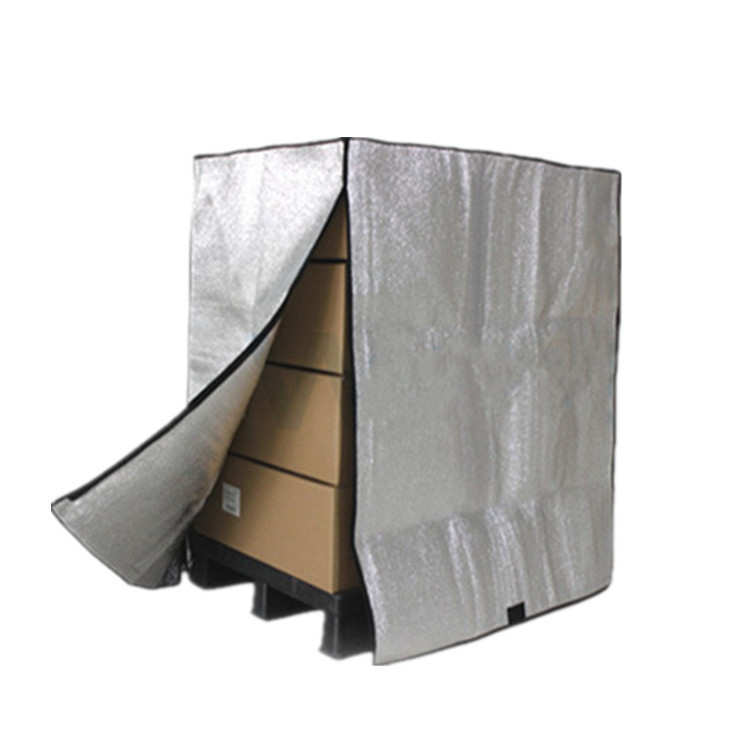
Examinez la couverture comme un article fini. Regardez les coutures, coins, fenêtres, poignées, rabats, extrémités de la fermeture éclair, zones à crochets et boucles, et le périmètre inférieur. Ces emplacements concentrent les contraintes mécaniques et peuvent devenir des chemins de flux thermiques.. Appliquer la housse avec les sangles prévues, film étirable, filets, ou sécurisation du conteneur de manière à ce que la compression et l'accrochage soient visibles avant l'approbation.
L'accès est un autre compromis. Une fenêtre peut préserver la lecture des codes-barres, mais il peut avoir besoin d'être renforcé et peut différer thermiquement du panneau environnant. Un rabat peut faciliter l'inspection, mais seulement si les gestionnaires savent comment le fermer. Une couverture scellée à sens unique peut être plus simple, tandis qu'une conception réutilisable peut justifier des fermetures réparables. Sélectionnez des fonctionnalités qui résolvent des tâches connues plutôt que d'ajouter de la complexité pour une commodité hypothétique.
Avoid choosing by shine, épaisseur, or weight alone
Une surface réfléchissante, couche de mousse, structure des bulles, ou le textile lourd n'établit pas de manière indépendante les performances de l'expédition. Les couches réfléchissantes traitent principalement la chaleur rayonnante sous une orientation et des conditions appropriées. Les couches isolantes réduisent le flux de chaleur conductrice mais peuvent perdre de leur efficacité lorsqu'elles sont comprimées ou mouillées.. Le renforcement améliore la durabilité mais peut ajouter de la rigidité, coutures, et le poids. Le revêtement fini doit équilibrer la résistance thermique avec l'application., accéder, nettoyage, et la sécurité des itinéraires.
Demandez une description claire de la couche et demandez ce qui peut changer entre l'échantillon et la production. Adhésifs, films, mousses, revêtements, fil, fermetures, et les dimensions des panneaux peuvent affecter le comportement. Un accord de contrôle des modifications est particulièrement important pour les commandes répétées ou les applications qualifiées. L'inspection entrante peut inclure des dimensions, état des coutures, fonction de fermeture, propreté, odeur, défauts visibles, et toute déclaration de matériel critique.
Food hygiene, allergen and lot traceability, instructions de stockage spécifiques au produit, transport sanitaire, and receiving inspection remain essential. Chocolate quality limits may be tighter than basic food-safety requirements and should come from the manufacturer’s specification. Les limites spécifiques au produit et les exigences de transport actuelles doivent être vérifiées par le responsable de la qualité., réglementaire, sécurité alimentaire, EHS, ou équipe marchandises dangereuses. Le langage du fournisseur le plus sûr décrit la construction du couvercle et les conditions de test sans impliquer une approbation universelle..
Turn cargo and lane facts into a controlled specification
| Zone de spécifications | Informations à fournir | Preuve ou décision nécessaire |
|---|---|---|
| Exigence de fret | Produit, emballer, condition de départ, exposition acceptable, et conséquence de l'écart | Critères d'expédition et de réception approuvés par le propriétaire |
| Palette chargée | Empreinte finie, plage de hauteur, surplomb, répartition du poids, coins, envelopper, et la retenue | Vérification de l'aptitude physique sur une palette représentative |
| Exposition de l'itinéraire | Profil ambiant, exposition au soleil ou au vent, demeurer, retard, contact au sol, et changements de mode | Carte des voies normale et la moins plausible |
| Conception de la couverture | Calques, dimensions finies, fermeture, chevaucher, accéder, fenêtres, protection de la base et du dessus | Tolérances d’échantillon et de production approuvées |
| Preuve de performance | Charge utile, condition de démarrage, essai ambiant, capteurs, ouvertures, et règle d'acceptation | Comparaison représentative, étude de chambre, ou pilote |
| Exploitation et réutilisation | Application, suppression, inspection, nettoyage, séchage, réparation, stockage, retour, et la retraite | AMADOUER, entraînement, et la propriété |
Ce cadre permet d'éviter les achats par un seul numéro. Conductivité thermique, épaisseur, ou une durée déclarée peut éclairer la décision, mais aucun n'est suffisant sans le contexte de test et d'assemblage. Les achats doivent pouvoir retracer chaque réclamation importante jusqu'à un dessin de produit, déclaration matérielle, condition d'essai, ou règle de fonctionnement.
Essai, surveillance, and protection answer different questions
Utiliser des tests qui correspondent à la décision. Une étude de sélection côte à côte peut montrer quelle couverture ralentit plus efficacement le changement de température sous une exposition contrôlée.. Une étude en chambre peut reproduire un profil ambiant et un délai définis. Un pilote surveillé peut montrer si les employés appliquent correctement la couverture et si l'itinéraire comprend des ouvertures non planifiées. Les expéditions à haut risque peuvent nécessiter une procédure plus formelle, qualification documentée selon le système qualité du propriétaire.
Outils de décision utiles
Vérifiez les détails avant de choisir l'emballage
Ces outils rapides peuvent vous aider à comparer le risque d'itinéraire, besoins de dimensionnement, choix de liquide de refroidissement, et les détails de l'emballage avant de demander un devis.
Vérificateur de risque d'itinéraire
Examinez les conditions des pistes avant de sélectionner l'emballage en fonction des exigences opérationnelles réelles..
Vérifier le risque d'itinéraireRésistance aux chutes du matériau isolant
Examinez la résistance aux chutes et les facteurs de manipulation avant de choisir des matériaux d'isolation..
Vérifier la résistanceCalculateur de banquise
Estimation de la quantité de pain de glace pour les expéditions réfrigérées et planification pratique des itinéraires.
Estimer les packs de glaceTout test doit documenter la charge utile, condition de départ, dimensions de la palette, échantillon de couverture, défi ambiant, contact au sol, emplacements des capteurs, événements d'ouverture, et critères d'acceptation. Les courbes de température sans ce contexte sont difficiles à interpréter. Un temps de protection déclaré ne doit jamais être séparé des conditions qui l'ont produit..
La surveillance ne remplace pas la protection, et la protection n'est pas une preuve de l'état. Décidez de ce que les capteurs sont censés montrer. Un capteur ambiant prend en charge l'analyse d'itinéraire; un capteur de surface montre le bord exposé; un capteur central peut répondre lentement; un simulateur de produit peut approximer le comportement thermique. Le processus de disposition doit indiquer qui examine les données et quel est leur lien avec l'acceptation du produit..
Origine, transit, and receiving need one connected procedure
A l'origine, vérifier que le produit et la palette sont prêts à être fermés. Vérifier l'identité et l'état de la couverture, appliquez-le dans l'orientation définie, fermer tous les chevauchements, garder les étiquettes et les marques requises visibles, placer les dispositifs de surveillance comme approuvé, et inspectez la base et les coins. Enregistrer la demande lorsque les procédures de traçabilité ou de qualité l'exigent.
Pendant le transport, préciser si les manutentionnaires peuvent ouvrir le couvercle et ce qu'ils doivent faire par la suite. Fournir une règle d'escalade pour les larmes, mouiller, contamination, fuites, connexions manquées, séjour prolongé, panne d'équipement actif, ou une charge trouvée en dehors de l'environnement prévu. Les instructions doivent diriger l'envoi vers un contrôle approprié plutôt que de compter sur la couverture au-delà de son utilisation évaluée..
À destination, inspecter avant ouverture, suivre toute procédure d'acclimatation ou de circulation d'air, évaluer les enregistrements de température ou de conditions, et séparez les housses réutilisables endommagées ou contaminées.. Couvertures propres et sèches selon une méthode approuvée, inspecter les fermetures et l'isolation, enregistrer les réparations si nécessaire, et retirer les unités qui ne peuvent pas fournir un ajustement ou une hygiène constante.
Erreurs courantes à supprimer du bon de commande
- Demander un nombre fixe d'heures de protection sans définir la charge utile et le profil ambiant.
- Spécifier uniquement la base de la palette en ignorant la hauteur chargée, surplomb, chevauchement de fermeture, et accès.
- Traiter l'aspect réfléchissant, épaisseur, ou langage « réutilisable » comme preuve de la performance finie.
- Laisser des étiquettes, retenue, flux d'air, inspection, sanitaire, ou interaction avec des marchandises dangereuses pour des opérations à découvrir plus tard.
- Approuver un échantillon sans contrôler les matériaux de production, dimensions, coutures, et fermetures.
- Exécution d'un test de température mais sans enregistrement des événements de manipulation ou des conditions visibles.
- Utiliser la couverture pour justifier une exposition plus longue au lieu d’intensifier l’expédition lorsque les conditions dépassent le plan.
Une application réaliste
A confectionery company ships premium gift boxes during a warm season. Pallets are held in a conditioned room, covered immediately before loading, and transferred to suitable transport. The cover reduces short outdoor and dock exposure, while the shipping calendar and delay plan limit the risk of extended heat.
Cette application ne réussit que si la couverture reste un contrôle défini dans la voie plus large.. La condition de départ, transports actifs, timing de transfert, inspection, et le processus de remontée d'informations continue d'assumer la responsabilité de la protection des produits..
Questions de l'acheteur avant l'approbation
- Quelle température, humidité, and appearance criteria apply to the exact chocolate product?
- Is the pallet fully conditioned before the cover is closed?
- Where can solar exposure or warm terminal dwell occur?
- How will the receiver avoid condensation when opening a cold shipment?
- Are cover materials low odor, faire le ménage, and compatible with food-packaging operations?
Questions fréquemment posées
Can a thermal pallet cover prevent chocolate bloom?
It may reduce rapid temperature change, but bloom has multiple causes, including heat history, cycle de température, humidité, and formulation. The cover is one part of a broader storage and transport plan.
Should ice packs be added under a chocolate pallet cover?
Not without a designed and tested packout. Localized overcooling and condensation can create new problems, and loose refrigerants may not be acceptable in the handling system. Use an engineered solution when active cooling is needed.
Is reflective film enough for summer shipping?
Reflective surfaces can reduce radiant heat gain in suitable conditions, but overall performance also depends on insulation layers, coutures, ajuster, flux d'air, exposition, and pallet mass. A shiny surface alone is not a performance guarantee.
How should chocolate be received after cold transport?
Follow the manufacturer’s acclimation and inspection procedure. Opening a cold load immediately in warm humid air can encourage condensation, so the timing and environment of cover removal matter.
Conclusion
Choose temperature control pallet covers for chocolate by connecting five things: l'exigence de fret, le segment de route exposé, la géométrie de la palette finie, le processus de fonctionnement, et des preuves qui représentent l'utilisation prévue. Une couverture est plus défendable lorsqu'elle a un étroit, rôle explicite et lorsque ses limites sont inscrites dans le plan d’expédition.
La prochaine étape n'est pas une commande groupée. C'est un échantillon représentatif sur la palette réelle, suivi d'un examen de l'ajustement et de la manipulation et d'une comparaison thermique ou d'un pilote approprié. Une fois que l’équipe a compris comment fonctionne la couverture et comment les employés l’utilisent, l'approvisionnement peut faire évoluer une spécification contrôlée plutôt qu'une allégation marketing.
À propos du Tempk
Fournitures temporaires emballage chaîne du froid et couvercle de palette thermique options pour les applications d'expédition B2B. For chocolate pallets that need protection from seasonal heat, rapid transitions, condensation, et gérer les dommages, nous pouvons vous aider à organiser une discussion sur la taille des palettes, construction matérielle, fermetures, accéder, utilisation unique ou réutilisable, et évaluation d'échantillons. Nous ne considérons pas une couverture passive comme un remplacement des contrôles de transport requis ou de la qualification spécifique au produit du client..
Partagez votre construction de palette, besoin en matière de fret, exposition par voie, et processus de manipulation avec Tempk pour comparer un échantillon pratique et définir les contrôles nécessaires avant la production.