Boîte d'expédition VIP pour l'expédition de charcuterie: Ajustement éprouvé
La conclusion pratique est qu'une boîte d'expédition VIP pour l'expédition de charcuterie est un bon candidat lorsque l'espace du colis est limité., exposition ambiante difficile, ou un aliment périssable de valeur justifie une résistance thermique plus élevée. Il ne réussit qu'en tant que système passif complet: panneaux protégés, liquide de refroidissement compatible, emballages alimentaires primaires scellés, une mise en page reproductible, performances temps-température testées, et règles de réception décisives. Il n’existe pas de température ou de durée de conservation universelle pour la charcuterie, et plus froid n'est pas toujours mieux. VIP n’est pas non plus automatiquement l’option la plus verte; comparer les pertes de nourriture, utilisation matérielle, fret, récupération, et la réutilisation réelle avant de faire une allégation de durabilité.
Passez quatre portes avant de choisir VIP
Le moyen le plus rapide d’éviter une discordance coûteuse est d’exiger que l’envoi franchisse quatre portes de décision..
Grille 1: les besoins alimentaires sont connus. Définir les conditions d'expédition et de stockage du fabricant, limites de sécurité, limites de qualité plus strictes, le cas échéant, durée de conservation restante à l'expédition, température initiale du produit, et critères de réception. Faites ceci pour la viande tranchée prête à manger, fromage, crâne, terrine, salades, sauces, et accompagnements séparément. L'épicerie fine est une catégorie de merchandising, pas une classification technique de température.
Grille 2: la voie crée un réel besoin d'isolation. Compter le temps depuis le stockage contrôlé à l'origine jusqu'à l'emballage, ramasser, tri, livraison, et recevoir une disposition. Inclure un scénario de retard raisonnable et une exposition saisonnière. Si une doublure isolée ou une boîte EPP qualifiée répond aux exigences avec une marge appropriée, VIP peut augmenter les coûts et la sensibilité de la manipulation sans une valeur opérationnelle suffisante.
Grille 3: l'emballage peut être répété. La chambre interne proposée doit s'adapter à la charge utile autorisée, liquide de refroidissement, séparateurs, et vider le contrôle sans que les opérateurs forcent le couvercle ou improvisent. Le conditionnement du liquide de refroidissement et l'ordre de chargement nécessitent une instruction de travail qu'une équipe d'emballage très occupée peut suivre.
Grille 4: des preuves soutiennent l'assemblage fini. La conductivité du matériau à elle seule ne permet pas d'établir le temps de maintien. Vérifier la géométrie de la boîte, charge utile, liquide de refroidissement, températures de départ, profil ambiant, capteurs, dépasser les limites, stress physique, nombre de constructions, et les écarts. L'approbation appartient à la configuration nommée, pas les mots « VIP box ».
Si une porte reste ouverte, traiter la conception comme un prototype. C'est un statut utile car il rend visible l'œuvre manquante.
Traduire un assortiment de charcuterie en exigences thermiques
Commencez par les dangers et la qualité, puis construire le cahier des charges logistique. De nombreuses charcuteries, fromages à pâte molle, et les pâtés sont des aliments prêts à consommer réfrigérés. Quelques saucissons secs, fromages affinés, ou les produits scellés peuvent être stables en conservation lorsque leur formulation et leur processus validés soutiennent ce statut. Les produits surgelés et les plats préparés chauds forment différentes classes d'expédition. Ne jamais déduire la classe de l'apparence, prix, guérir la langue, ou où l'article se trouve dans un magasin.
Les produits prêts à consommer méritent une attention particulière car les consommateurs risquent de ne pas appliquer une étape de cuisson réduisant les risques biologiques.. Les Centers for Disease Control and Prevention expliquent que la réfrigération ne tue pas Listeria, et la Food and Drug Administration note que l'organisme peut survivre et se développer sous réfrigération.. L'isolation ralentit le gain de chaleur; cela ne répare pas le mauvais assainissement, éliminer la contamination, ou réinitialiser la durée de conservation.
Lister ce qui doit rester séparé. Un emballage profondément conditionné peut créer un défaut de qualité au contact à froid dans le fromage ou dans une émulsion riche en matières grasses.. Un paquet de viande qui fuit peut contaminer un autre article. Lait, œuf, poisson, noix, blé, sésame, ou d'autres allergènes réglementés peuvent être présents dans les aliments et les accompagnements. Le paquet a besoin d'une séparation physique, joints fiables, et un étiquetage précis ainsi que des performances thermiques.
Définir les profils de commande minimum et maximum. Une chambre dense et pleine a une inertie thermique différente d'un coffret cadeau léger plein d'air décoratif. Un pot à pâté en verre conduit et emmagasine la chaleur différemment d'un plateau en mousse contenant des tranches de viande. Si les substitutions sont autorisées, les documenter par équivalence thermique et physique ou les envoyer pour révision. Le marketing peut modifier un assortiment du jour au lendemain; un emballage qualifié ne peut pas.
Comment le système contrôle la chaleur
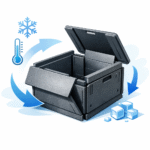
Un panneau d'isolation sous vide enferme un noyau poreux dans une enveloppe à haute barrière et élimine une grande partie du gaz interne.. Cela supprime la conduction gazeuse et la convection, ce qui peut donner au panneau une conductivité thermique au centre du panneau bien inférieure à celle de la mousse conventionnelle pour la même épaisseur. La paroi mince peut préserver l'espace de chargement à l'intérieur d'un carton limité par le transporteur.
Pourtant, un expéditeur à six côtés n’est pas un panneau infini. La chaleur traverse les visages, bords de panneaux pliés ou scellés, coins, le couvercle, coutures, et tout pont structurel. Les recherches sur les enveloppes barrières VIP montrent une véritable tension de conception: une forte barrière contre les gaz aide à retenir le vide, tandis que les couches métalliques et les bords des panneaux peuvent augmenter les ponts thermiques. La pénétration de gaz et de vapeur d’eau modifie progressivement les performances, et une température élevée peut accélérer la perméabilité de la barrière. Une crevaison, pli prononcé, ou un joint endommagé peut entraîner une perte plus rapide.
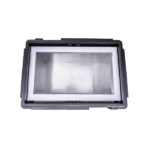
C'est pourquoi un VIP a besoin de protection. La gamme officielle de Tempk, Par exemple, comprend des arrangements soutenus par des panneaux avec des coques en plastique, Boîtes EPP, ou doublures. Une coque de protection contribue à la résistance aux chocs et à la structure de manipulation; cela ne rend pas chaque panneau à l'abri des dommages. Établir les chèques entrants, inspection avant utilisation, quarantaine, et critères de départ à la retraite avec le fournisseur.
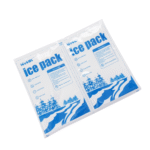
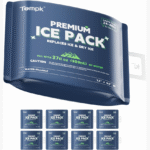
Le liquide de refroidissement assure la réserve thermique. Sa masse, comportement de phase, condition de départ, superficie, et son emplacement déterminent comment il absorbe la chaleur entrante. Packs de gel se conformer aux produits irréguliers; rigide briques de glace peut aider à standardiser une mise en page; les matériaux à changement de phase peuvent être sélectionnés en fonction d'un besoin du produit. Aucun ne maintient automatiquement une plage stable. Le liquide de refroidissement choisi appartient à la même nomenclature testée que le coffret.
Le produit lui-même contribue à la masse thermique. Les aliments chauds consomment immédiatement la réserve de liquide de refroidissement. Définir la durée maximale hors stockage contrôlé lors du picking et du conditionnement, et contrôlez la préparation du liquide de refroidissement avec des critères mesurables plutôt que de « congeler pendant la nuit ».
Comparez les systèmes dans les mêmes conditions
Les comparaisons d'approvisionnement échouent souvent parce que les fournisseurs proposent des tailles extérieures différentes, charges utiles, profils de test, et définitions du temps de maintien. Normalisez d'abord le cas d'utilisation.
| Facteur de décision | Hybride VIP | Refroidisseur PPE | Doublure de carton isotherme |
|---|---|---|---|
| Espace de charge utile à taille extérieure fixe | Souvent avantageux car les murs peuvent être plus minces | Plus de volume de mur peut être nécessaire | Varie selon le type de doublure et les plis |
| Tolérance de manipulation | Nécessite une protection délibérée du panneau | Couramment adapté aux manipulations répétées | Dépend fortement du carton et de la fermeture |
| Ajustement par boucle de retour | Possible avec inspection et contrôle des composants | Souvent pratique sur les itinéraires fermés | Généralement adapté à l’expédition aller simple |
| Des preuves qui comptent | Données thermiques et post-impact du coffret complet | Thermique, fermeture, nettoyage, et données de durabilité | Ajustement carton, thermique, humidité, et données de clôture |
| Meilleure question | Les performances des parois minces résolvent-elles une contrainte de route documentée? | L'espace utilisable et les opérations de retour fonctionneront-ils? | L'itinéraire est-il suffisamment prévisible pour ce packout plus simple? |
Utiliser la même limite externe, charge utile utilisable, simulant alimentaire ou produit réel, état du liquide de refroidissement, profil ambiant, plan de capteur, et critères d'acceptation. Un système EPP qualifié peut surpasser un expéditeur VIP mal assemblé. Une doublure peut être un choix responsable sur une voie courte et prévisible. VIP est justifié par l'avantage vérifié du système, pas par prestige matériel.
Qualifiez-vous du prototype à la production
Rédiger une spécification des besoins de l'utilisateur avant de demander une réclamation de performance. Il doit indiquer les profils alimentaires, conditions de température acceptables, plage de charge utile, substitutions autorisées, temps de voie et temps de contingence, expositions ambiantes, hypothèses d'orientation du package, limite de taille externe, et recevoir la décision. Identifier quelles conditions protègent la sécurité et lesquelles protègent la qualité.
Outils de décision utiles
Vérifiez les détails avant de choisir l'emballage
Ces outils rapides peuvent vous aider à comparer le risque d'itinéraire, besoins de dimensionnement, choix de liquide de refroidissement, et les détails de l'emballage avant de demander un devis.
Calculateur d’accumulateurs de froid
Estimation de la quantité de pain de glace pour les expéditions réfrigérées et planification pratique des itinéraires.
Estimer les packs de glaceRéférence du matériau isolant
Comparez les choix de matériaux d'isolation pour différents besoins d'emballage de la chaîne du froid.
Comparez les matériauxLiquide de refroidissement & Référence PCM
Comparez les options de liquide de refroidissement et de PCM lorsqu'un itinéraire nécessite une prise en charge supplémentaire de la température.
Comparez les optionsChoisissez une méthode de test pertinente. ASTM D3103-20(2025) aborde les performances d'isolation thermique des boîtiers de distribution sous des températures ambiantes variables et souligne l'intérêt de tester le boîtier lui-même. ISO 22982-1 couvre les exigences générales relatives aux colis de transport de colis à température contrôlée, tandis que l'ISO 22982-2 adresses physiques, conductivité, et tests de performances d'isolation. L'ISO maintient explicitement la sécurité et l'hygiène en dehors du champ d'application de la partie 1.
ISTA 7E propose des profils de chaleur et de froid standardisés développés à partir des données de transport de colis. Il permet de comparer et de qualifier les systèmes sur une base commune, mais l'ISTA le distingue des données de voie personnalisées et de la qualification personnalisée du pire cas. Utiliser des profils standards le cas échéant, puis ajoutez des conditions dérivées de la voie lorsque la géographie, saison, service, ou le risque de retard ne correspond pas à la base de conception.
Instrument probablement dans des endroits chauds et froids. Un capteur d'air central peut manquer un coin chaud du couvercle et un point de contact froid entre le produit et le liquide de refroidissement.. Utiliser des appareils calibrés avec une incertitude et un échantillonnage appropriés, synchroniser les horloges, et indiquer comment le résultat sera interprété. Là où la mesure du produit n’est pas pratique, justifier la géométrie simulée, masse, température de départ, et propriétés thermiques.
Exécuter des cas limites avec plusieurs builds et opérateurs. Inclure les charges utiles minimales et maximales, modèles de vide autorisés, conditionnement saisonnier du liquide de refroidissement, et les retards pertinents. Combinez les preuves thermiques et physiques: impact sur les parcelles, vibration, ou la compression peut altérer une fermeture ou endommager un panneau avant la partie la plus chaude du parcours. Prédéterminer les critères d’acceptation et documenter les échecs plutôt que d’ajuster le rapport autour d’une exécution favorable.
Le transfert de production est un risque distinct. Geler la nomenclature, dessins, disposition des panneaux, spécifications du liquide de refroidissement, carton, séparateurs, et instruction de travail. Comparer les unités de production avec l'échantillon approuvé. Demandez au fournisseur de vous informer avant de modifier le noyau du panneau ou la barrière., coquille, adhésif, dimensions, film ou remplissage de liquide de refroidissement, ou d'autres fonctionnalités pouvant affecter les performances. Le contrôle des modifications décide si une évaluation ou un nouveau test est nécessaire.
Gardez la conformité alimentaire dans sa couche appropriée
Le Code alimentaire de la FDA est un modèle de sécurité de la vente au détail et des services alimentaires proposé aux États, locale, tribal, territorial, et juridictions fédérales pour l'adoption. Ce n'est pas une réglementation universelle des transports. Ses dispositions peuvent éclairer les contrôles d'un établissement, mais les entreprises doivent vérifier les exigences locales adoptées et les règles applicables à leur produit et à leur marché..
La règle de transport sanitaire de la FDA s'applique à certains. expédiés, chargeurs, transporteurs routiers ou ferroviaires, et récepteurs, sous réserve de son champ d'application, exceptions, et renonciations. Il concerne les équipements adaptés et nettoyables, contrôles de température nécessaires pour la sécurité, protection des aliments prêts à consommer, contact croisé avec un allergène, formation selon des modalités spécifiées, et des enregistrements. La loi n'applique pas cette règle au transport aérien ou maritime., bien que d'autres obligations et contrats puissent régir ces modes.
La conformité au contact alimentaire suit le contact prévu. Un VIP caché à l’intérieur d’un mur extérieur ne doit pas être présenté comme un panneau de qualité alimentaire sans support spécifique au produit.. Le plateau scellé, poche, envelopper, doublure de pot, diviseur, ou l'absorbant qui entre en contact avec les aliments doit être adapté aux conditions prévues. La FDA réglemente les substances entrant en contact avec les aliments aux États-Unis; l'Union européenne applique son cadre aux matériaux destinés à entrer en contact avec des aliments. Conserver les déclarations justificatives correspondant au matériel réel, utiliser, température, et le marché.
L'hygiène et les allergènes ne disparaissent pas dans une glacière. Protégez les aliments prêts à manger scellés des matières premières et des fuites de liquide de refroidissement.. Conserver les étiquettes des lots et des ingrédients. Aux États-Unis, le sésame a rejoint les huit allergènes majeurs précédemment définis pour les exigences applicables aux aliments emballés. Les marchés de destination utilisent leurs propres listes et règles d'allergènes, les paniers mondiaux nécessitent donc un examen du marché plutôt qu'une étiquette copiée.
Libérez chaque colis via un flux de travail contrôlé
Au banc d'emballage, mettre en scène uniquement les composants actuels et afficher un diagramme concis. Vérifier le lot et l'état des aliments, préparation du liquide de refroidissement, nombre de composants, séparateurs, annuler le contrôle, activation de l'enregistreur là où il est utilisé, siège du couvercle, preuve d'inviolabilité, version de l'étiquette, et le temps de réalisation. Connectez l'enregistrement du transporteur à la révision du colis. Un enregistreur peut fournir des preuves d'exposition, mais il ne peut pas refroidir les aliments ni prouver une production sanitaire.
A la réception, inspecter le carton, sceau d'inviolabilité, humidité, écrasement, joints de produits, fuite de liquide de refroidissement, et le temps écoulé. Mesure à l'emplacement approuvé et exceptions de quarantaine pour un examen formé; odeur, apparence, et le liquide de refroidissement restant ne sont pas des tests de libération. Pour les systèmes réutilisables, conserver les preuves des dommages, puis nettoyer, désinfecter si nécessaire, sec, inspecter, et enregistrer la remise en service selon une procédure matériellement compatible. ISO/TS 22984 offre des conseils pertinents, tandis que le secteur alimentaire reste responsable de son propre fonctionnement.
Rendre les allégations de durabilité mesurables
Un VIP mince peut réduire le volume du colis ou la demande en liquide de refroidissement dans une conception qualifiée, mais sa barrière composite et son noyau peuvent être difficiles à récupérer par une collecte ordinaire. La réutilisation répartit les impacts de la fabrication uniquement sur les produits terminés., nettoyé, cycles de retour utilisables. Comparez les systèmes par livraison réussie en suivant la masse des composants, rapport de charge utile, fret, rejet de nourriture, remplacement, retours, lavage, dommage, réparation, et fin de vie effective.
Le règlement de l’Union européenne sur les emballages et les déchets d’emballages est entré en vigueur en février 2025 et s'applique généralement à partir d'août 2026. Son orientation tout au long du cycle de vie comprend des objectifs de minimisation des emballages et de recyclabilité., tandis que les tâches exactes dépendent du système fini et de l'opérateur. Décrire la recyclabilité par composant et marché de destination. L'approche de l'EPA en matière de matériaux durables soutient également la prévention des pertes alimentaires., parce que les aliments rejetés transportent les ressources utilisées pour produire, processus, cool, et le distribuer.
Questions fréquemment posées
Combien de temps une boîte de charcuterie VIP restera-t-elle froide?
Il n’y a pas de réponse universelle responsable. La durée dépend de la boîte finie, état du panneau, liquide de refroidissement et conditionnement, température de départ du produit, masse et géométrie de la charge utile, profil ambiant, manutention, et plage d'acceptation. Demandez des traces temps-température pour le colis exact ou représentatif et testez les scénarios normaux et de retard de l'itinéraire avant d'attribuer une durée de travail.
Une loge VIP est-elle plus sûre qu'une box isotherme ordinaire?
VIP peut fournir une isolation plus solide dans des murs plus minces, mais la sécurité alimentaire dépend du système complet contrôlé. Un panneau endommagé, mauvais liquide de refroidissement, produit chargé à chaud, mauvais assainissement, fuite du pack primaire, ou une règle de réception faible peut annuler l'avantage. Comparez les systèmes qualifiés dans les mêmes conditions et conservez les contrôles de sécurité alimentaire qui opèrent avant et après le transport.
Peut-on emballer de la viande pour expédier de la viande, fromage, et pâté ensemble?
Éventuellement, si leurs conditions approuvées sont compatibles et que la configuration testée couvre la charge utile combinée. Vérifier la sensibilité au contact froid, intégrité du paquet primaire, allergènes, contamination croisée, géométrie, masse minimale et maximale, et durée de conservation. Si les exigences sont contradictoires, séparer les produits ou développer une autre configuration plutôt que de faire la moyenne de leurs limites.
Quand faut-il retirer une boîte VIP réutilisable?
Utiliser le support pris en charge par le fournisseur, critères spécifiques à la conception. Les signes avant-coureurs peuvent inclure une crevaison, pli sévère, gonflement, joints de bord endommagés, échec de l'obus, usure de la fermeture, sol ou odeur persistante, fuite de liquide de refroidissement, ou dérive thermique inexpliquée. Mettez en quarantaine les composants douteux au lieu de les corriger. Enregistrez l'inspection et le retrait afin que des défaillances répétées puissent conduire à une correction de conception ou de manipulation..
Approuver le système, puis contrôlez la routine
VIP vaut la peine d'être acheté lorsque l'itinéraire et la charge utile ont besoin de ses performances thermiques à paroi mince et l'assemblage complet prouve cet avantage. Définir l'état de chaque aliment, tester les charges utiles et les retards des limites, protéger les panneaux, contrôle du liquide de refroidissement, et connectez la nomenclature approuvée pour emballer et recevoir les instructions. Revoir le contact alimentaire, sanitaire, allergènes, portée du transport, et la durabilité en tant que leurs propres flux de données probantes. Cela produit une décision d’expédition de charcuterie que vos opérations et vos équipes qualité peuvent défendre.
À propos du tempk
Listes temporaires Coffrets isothermes VIP avec des panneaux amovibles ou intégrés et des conceptions hybrides pouvant combiner VIP avec des coques en plastique, Boîtes EPP, ou doublures. Nous proposons également des packs de gel adaptés, briques de glace, et options PCM pour les packouts passifs. Notre rôle pratique est de transformer votre profil alimentaire, charge utile utilisable, exposition par voie, plan de refroidissement, panneau de protection, et réutiliser les besoins dans une liste restreinte de produits et un exemple de discussion. Les performances finales et l'adéquation doivent être vérifiées avec la configuration et les preuves prévues avant la sortie en production..
Contactez Tempk pour comparer les produits pertinents vérifiés, y compris les formats de loges VIP, Alternatives au PPE, doublures isolées, et options de packs de gel. Partagez vos besoins alimentaires, plage de charge utile, voie, et tester les attentes afin que l'étape suivante soit un exemple de plan révisable plutôt qu'une réclamation générique.