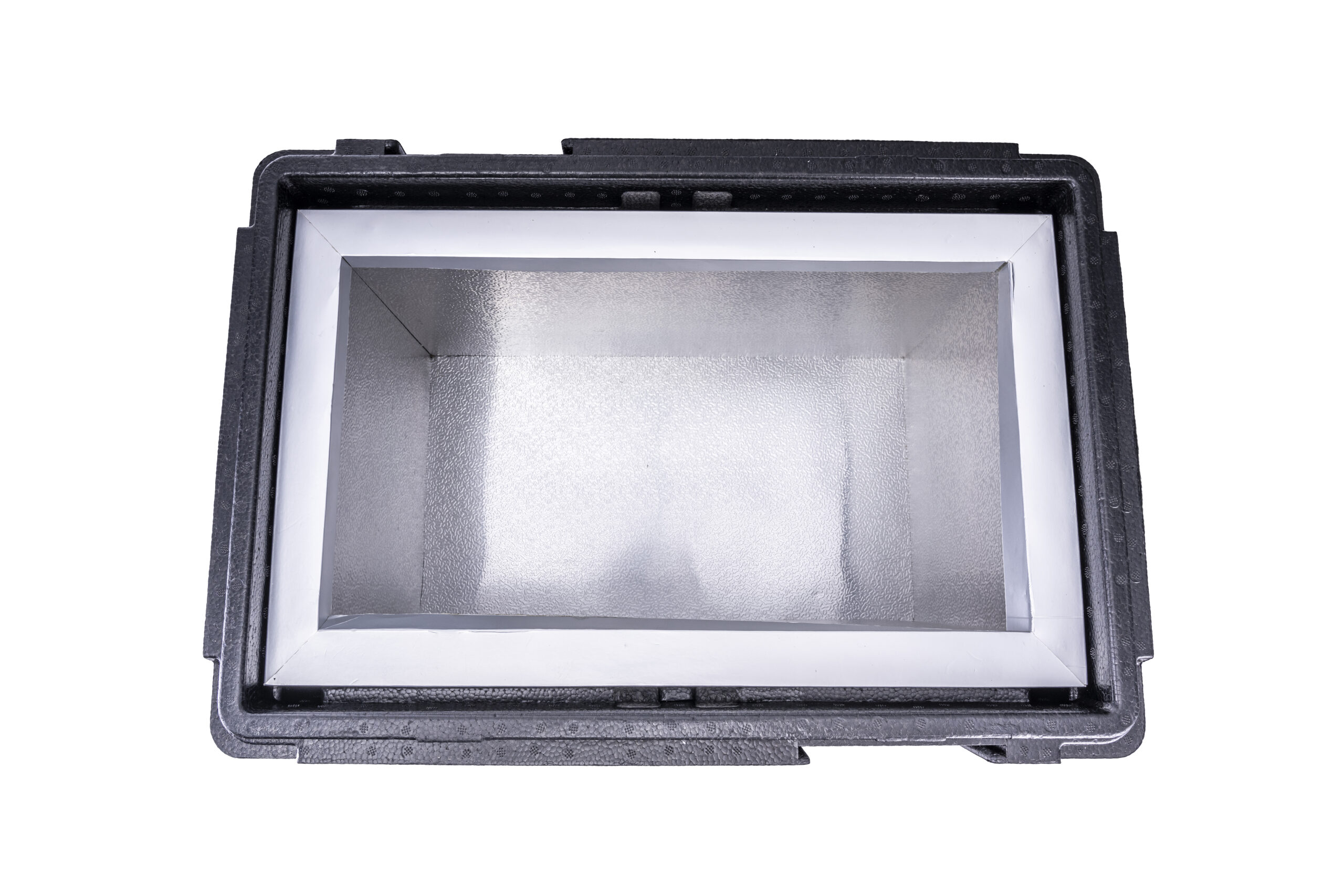
Sélection d'un VIP Conteneur d'expédition pour la chaîne du froid cosmétique
Un conteneur d'expédition VIP pour la chaîne du froid cosmétique ne doit être sélectionné que lorsque les preuves du produit définissent un risque thermique significatif et que l'analyse de l'itinéraire montre qu'une isolation passive haute performance est justifiée.. Les cosmétiques n’ont pas de règle universelle d’expédition entre 2°C et 8°C, et beaucoup ne nécessitent aucune réfrigération. Un VIP intact ralentit le flux de chaleur mais ne refroidit pas la charge utile; PCM ou autre fluide thermique approuvé, conditionnement, géométrie, et l'emballage créent le profil de température. L'acheteur doit évaluer le système, contrôlez-le en utilisation courante, et juger de la durabilité à travers les matériaux, perte de produit, fret, récupération, et réutiliser. Telles sont les conclusions qui distinguent une solution défendable d’une boîte coûteuse..
Les preuves de produits précèdent la conception de la chaîne du froid
L'entrée la plus importante est l'état approuvé du cosmétique dans son emballage primaire commercialisé.. Une fiche technique sur une matière première peut identifier un ingrédient sensible, mais cela ne définit pas automatiquement la stabilité de la formule complète. Le système d'émulsion, paquet antioxydant, système de conservation, espace de tête, barrière de conteneur, fermeture, et le processus de fabrication peut modifier la façon dont le produit réagit à la chaleur, froid, lumière, oxygène, et le temps.
La FDA explique que les changements de température et l'exposition au soleil et à l'air peuvent altérer la couleur des cosmétiques., texture, et odeur. L'humidité et la chaleur peuvent également affecter les performances de conservation et les conditions de croissance microbienne.. ISO/TR 18811:2018 fournit un cadre de test de stabilité tout en laissant explicitement les méthodes, conditions, caractéristiques, et critères d'acceptation au fabricant car les produits cosmétiques et leurs utilisations varient considérablement.
Ces preuves peuvent conduire à plusieurs contrôles de transport différents. Un baume peut avoir besoin d'une limite supérieure pour éviter de ramollir. Une émulsion riche en eau peut nécessiter une protection contre la chaleur et le gel.. Un produit volatil pourrait dépendre davantage de l’intégrité du joint et de la protection contre la lumière. Un nettoyant robuste peut nécessiter uniquement des précautions de distribution normales. Le mot « cosmétique » ne peut pas choisir parmi eux.
Traitez VIP, liquide de refroidissement, et charge utile en un seul ensemble thermique
Un panneau d'isolation sous vide place un noyau de support poreux à l'intérieur d'une enveloppe à haute barrière et élimine la majeure partie du gaz interne.. Une conduction de gaz plus faible confère à un panneau intact une résistance thermique élevée pour son épaisseur. Le potentiel de la paroi mince est utile lorsqu'un expéditeur doit préserver l'espace de charge utile dans une limite de taille de colis ou ajouter une résistance thermique sans grande paroi en mousse..
Le panneau est un élément de flux de chaleur. Bords, matériau de l'enveloppe pliée, articulations, coins, couvercles, fermetures, et les supports structurels peuvent évacuer la chaleur autour du centre. Les performances efficaces du boîtier peuvent donc différer sensiblement d'une nouvelle valeur de conductivité au centre du panneau.. Le gaz ou l'humidité qui pénètre dans l'enveloppe au fil du temps peut dégrader l'isolation., tandis qu'une perforation ou une défaillance du joint peut entraîner une perte beaucoup plus rapide. La conception doit protéger les panneaux des outils d'emballage, coins produits, manipulations répétées, et nettoyage.
Un conteneur VIP passif n'a pas de réfrigération alimentée ni de contrôleur de rétroaction. Son comportement en température provient des conditions de départ et de l'équilibre entre le flux thermique environnemental et la capacité thermique à l'intérieur.. PCM ajoute un stockage de chaleur latente à l'approche de sa transition de phase, alors que packs de gel, briques de glace, ou d'autres supports approuvés peuvent fournir un comportement de refroidissement différent. Aucun n’est universellement adapté.
Sélectionnez le liquide de refroidissement par rapport aux limites de produit supérieure et inférieure.. Un PCM plus froid n’est pas automatiquement plus sûr. Les surfaces gelées placées à côté d'une bouteille sensible au gel peuvent créer une zone froide locale même si un capteur d'air central semble acceptable. L'emballage peut nécessiter des unités conditionnées plutôt que profondément congelées., poches fixes, séparateurs, ou couches tampons. Ces éléments doivent être montrés dans le dessin contrôlé.
La charge utile fait également partie de l'assemblage. La masse du produit contribue à l'inertie thermique, les cartons primaires influencent le flux d’air, et l'espace vide permet le mouvement. Une commande d'une bouteille et une caisse complète peuvent créer différents emplacements chauds et froids. Le volume interne brut est donc une mauvaise mesure d’achat. Demandez les dimensions utilisables de la chambre après les VIP, liquide de refroidissement, séparateurs, inserts, et des dispositifs de surveillance sont en place.
Traduire un couloir de livraison en conditions testables
Un profil d'itinéraire doit couvrir toute la durée en dehors des conditions de stockage approuvées.. Inclure la mise en scène pré-porteuse, ramasser, tri, transport de ligne, douane, véhicules du dernier kilomètre, échec de livraison, vivre le week-end, et recevoir. Le temps de service du transporteur à lui seul exclut plusieurs endroits où les colis sont confrontés à de l'air incontrôlé ou à un chauffage solaire direct..
Séparer les dangers de la saison chaude et de la saison froide. Une conception destinée à tamponner la chaleur estivale peut nécessiter un conditionnement PCM différent de celui destiné à protéger contre le froid hivernal.. Si une configuration à l'année est proposée, tester s'il contrôle les deux directions sans créer de nouveau dépassement de limite. Les emballages saisonniers peuvent être plus faciles à optimiser, mais ils nécessitent des dates de changement claires, component identity, entraînement, et contrôle des stocks.
Utiliser des charges utiles commerciales réelles ou des substituts thermiques justifiés. Documenter le nombre d'unités, niveau de remplissage, température de départ, orientation, et emballage primaire. Définir le profil ambiant, durée, emplacements des capteurs, capacité d'enregistrement, critères de réussite, et permis le préconditionnement. Une référence telle que ISTA 7E peut aider à structurer les tests thermiques des colis, mais les limites spécifiques aux produits et la pertinence des voies doivent encore être établies.
Surveillez les points chauds et froids probables plutôt que de vous fier à un seul capteur central. Température de l'air, température à la surface de la bouteille, et la masse simulant le produit ont des temps de réponse différents, le protocole doit donc indiquer ce que représente chaque mesure. L’incertitude des mesures et l’étalonnage du capteur sont importants lorsque les résultats approchent d’une limite.
Une revue compacte à emporter ou à refuser
| Question de révision | Allez signal | Arrêter ou examiner le signal |
|---|---|---|
| Y a-t-il une exigence thermique définie? | La stabilité du produit fini et l'approbation de la qualité établissent des limites | Gamme copiée à partir d'un autre produit ou secteur d'activité |
| VIP résout-il un problème d'itinéraire? | Exposition, espace, ou la durée rend une isolation plus forte utile | L'itinéraire contrôlé ne présente aucun risque thermique important |
| Le liquide de refroidissement est-il compatible? | Le conditionnement et le placement contrôlent la chaleur sans violer la limite inférieure | Pack surgelé sélectionné car il « dure plus longtemps » |
| La performance est-elle pertinente? | Les tests chargés correspondent à une charge utile justifiée, profil, et réussir les critères | Seules les données de panel ou un test sans rapport sont proposés |
| Les opérateurs peuvent-ils le répéter? | Composants, étapes, postes, fermeture, et les étapes de l'enregistreur sont explicites | Le succès dépend du jugement informel du tribunal |
| La conception peut-elle rester contrôlée? | Spécification, inspection à l'arrivée, et la notification de changement sont convenues | Les matériaux ou dimensions critiques peuvent changer silencieusement |
| Le cas environnemental est-il défini? | Les alternatives complètes partagent une unité fonctionnelle et une limite de route | « Réutilisable » ou « recyclable » est considéré comme une preuve en soi |
Cet examen aide les responsables des achats à arrêter rapidement les projets faibles.. Un résultat « stop » ne rejette pas toujours la technologie VIP; il identifie les preuves de produit manquantes, données du système, ou contrôle d'exploitation. Résolvez cet écart avant de comparer les prix ou d’approuver les quantités de production.
De l’échantillon fournisseur à l’expédition de routine
Commencez par un cahier des charges plutôt qu'un code de catalogue. Il doit indiquer les limites du produit, dessins de charge utile, exposition par voie, objectif de surveillance de la température, équipement de conditionnement, contraintes de station de conditionnement, processus de réception, et si le modèle opérationnel est à sens unique ou réutilisable. Le fournisseur peut alors proposer une isolation, liquide de refroidissement, et la géométrie comme configuration coordonnée.
Effectuer ensuite une cartographie du développement pour trouver les zones chaudes et froides. Utilisez les résultats pour ajuster les joints des panneaux, conception du couvercle, Quantité et emplacement du PCM, couches tampons, ou inserts de charge utile. Un essai échoué est précieux s'il expose un mécanisme et conduit à un changement contrôlé. Répéter le même test sans documenter le changement produit peu de preuves.
Le test de confirmation doit utiliser la configuration de production proposée et un protocole approuvé. Le rapport a besoin de suffisamment de contexte pour reproduire le résultat: exemples d'identités, versions de composants, conditionnement, mise en scène écoulée, charge utile, profil ambiant, carte des capteurs, enregistrements bruts, écarts, et l'acceptation. Un temps de garde annoncé sans ces conditions ne doit pas être transféré au programme cosmétique..
Un pilote d'itinéraire surveillé peut remettre en question les hypothèses du laboratoire. Il peut révéler un arrêt du quai de chargement, variabilité douanière, orientation, exposition de la porte, ou des problèmes de récupération de données. Le personnel de qualité doit décider si les résultats de l'itinéraire soutiennent la libération de routine, nécessitent une désaisonnalisation, ou montrer qu'un niveau de service différent est nécessaire.
Outils de décision utiles
Vérifiez les détails avant de choisir l'emballage
Ces outils rapides peuvent vous aider à comparer le risque d'itinéraire, besoins de dimensionnement, choix de liquide de refroidissement, et les détails de l'emballage avant de demander un devis.
Calculateur d’accumulateurs de froid
Estimation de la quantité de pain de glace pour les expéditions réfrigérées et planification pratique des itinéraires.
Estimer les packs de glaceRésistance aux chutes du matériau isolant
Examinez la résistance aux chutes et les facteurs de manipulation avant de choisir des matériaux d'isolation..
Vérifier la résistanceCalculateur de glace carbonique
Estimer les besoins en glace carbonique pour les envois congelés ou ultra-froids avant l'emballage.
Estimation de la neige carboniqueAvant la mise à l'échelle, verrouiller la nomenclature et les instructions de travail. Définir les chèques entrants pour les dimensions des boîtes, état du panneau, PCM identity, remplir ou masser là où c'est critique, intégrité du joint, inserts, étiquettes, et ajustement du carton. Convenez quels changements de fournisseur nécessitent une notification et si un examen, travaux de pontage, ou un nouveau test est nécessaire. Un échantillon n'est utile que si les unités de production restent équivalentes dans les attributs qui comptent.
Contrôlez le packout là où il échoue réellement
Le conditionnement est une source fréquente de variation. Une instruction telle que « geler pendant la nuit » ne définit pas le point de consigne de l'équipement., modèle de chargement, temps minimum, allocation d'étape, ou préparation. Le comportement du PCM dépend de l'état thermique. Préciser la façon dont les packs sont disposés dans l'équipement de conditionnement, comment les unités prêtes sont identifiées, et combien de temps ils peuvent attendre sur le banc.
Le diagramme du pack doit être visuel et positionnel. Numéroter des panneaux ou des briques PCM, afficher l'orientation du séparateur, définir le nombre de charges utiles, identifier l'emplacement du capteur, et indiquer les étapes de fermeture et de scellage. Si différentes configurations saisonnières existent, rendre les couleurs ou les codes des composants sans ambiguïté sans se fier uniquement à la couleur.
La réception transforme le suivi en action. Attribuer la responsabilité de la récupération de l'enregistreur, revoir, escalade d'excursion, et disposition de l'expédition. Un enregistreur détecte ce qui s'est passé à son emplacement; cela n'empêche pas une excursion ni ne prouve que chaque unité a connu la même condition. Combinez les données avec la carte de capteurs qualifiée, état du colis, événements d'itinéraire, et règle de décision spécifique au produit.
Maintenir la conformité et la sécurité microbiologique dans leurs couloirs
Aux États-Unis, la plupart des cosmétiques ordinaires et leurs ingrédients ne nécessitent pas l'approbation de la FDA avant leur commercialisation, à l'exception des exigences applicables aux additifs colorants. Les fabricants et les distributeurs restent responsables de la sécurité et de la véracité de l'étiquetage.. Un conteneur VIP ne doit pas être décrit comme accordant l'approbation générale de la FDA ou la conformité au produit cosmétique..
Les allégations sur les produits peuvent modifier la classification. Crèmes solaires, traitements contre l'acné, et d'autres produits destinés à traiter ou à prévenir une maladie ou à affecter la structure ou la fonction du corps peuvent être des médicaments ou à la fois des médicaments et des cosmétiques.. Ces produits sont confrontés à des exigences supplémentaires, y compris la stabilité du médicament et la date d'expiration. Confirmer le classement unité de gestion des stocks par unité de gestion des stocks et marché par marché.
Emballages sous chaîne du froid ne remplace pas la conservation. La FDA identifie une conservation inefficace, emballage inadéquat, mauvaise expédition ou stockage, matériaux contaminés, conditions de fabrication, et l'utilisation par les consommateurs comme risques microbiologiques distincts. Une voie réfrigérée peut ralentir la croissance dans des conditions définies, mais il ne valide pas la protection antimicrobienne ni ne rend acceptable le produit contaminé. Efficacité de conservation, fabrication hygiénique, protection du colis primaire, et le contrôle des transports doit chacun faire son propre travail.
Faire de la durabilité une contrainte de conception mesurée
Une isolation haute performance peut améliorer l'efficacité de la charge utile dans certaines conceptions, car une paroi plus fine laisse plus d'espace interne.. Cela peut également réduire le liquide de refroidissement nécessaire pour répondre à un profil. Aucun des deux résultats ne doit être présumé; comparer les packages qualifiés par dimensions externes, masse totale, charge utile utilisable, liquide de refroidissement, perte de produit, et performances de livraison.
La construction VIP combine un noyau, enveloppe barrière, et couches ou coque de protection. Les parcours de fin de vie dépendent des matériaux exacts et des infrastructures locales. Demandez les déclarations de matériaux et les instructions de séparation. Si l’accès au recyclage est limité, ne pas transformer la recyclabilité théorique en une vaste revendication environnementale.
Les expéditeurs réutilisables ajoutent le transport de retour, nettoyage, inspection, perte, réparation, et la retraite. Leur impact dépend de l'utilisation réalisée, pas un titre de cycle de conception. Les itinéraires fermés avec des retours consolidés peuvent mieux favoriser la réutilisation que la livraison dispersée aux consommateurs, mais la comparaison doit utiliser des hypothèses d'exploitation réelles.
Pour les entreprises qui mettent des emballages sur le marché de l'UE, le règlement sur les emballages et les déchets d’emballages est entré en vigueur en février 2025 et s'applique généralement à partir d'août 2026, avec différentes mesures suivant leurs propres délais. Cela renforce la nécessité de revoir la minimisation, Recyclabalité, étiquetage, contenu recyclé, et obligations de réutilisation, le cas échéant. Les juristes doivent déterminer les tâches exactes; la nécessité thermique doit être documentée tandis que les volumes et matériaux inutiles sont éliminés.
Questions fréquemment posées
Quand VIP vaut-il le coût supplémentaire?
Le VIP est le plus défendable lorsqu'il est exposé à l'itinéraire, limites de produits étroites, conséquence élevée de la perte, ou des contraintes de taille externe rendent sa haute résistance par épaisseur utile. Comparez-le avec une option isolée conventionnelle sous la même charge utile et le même profil ambiant. Si les deux répondent aux exigences de manière fiable, le système total le plus simple peut être préférable.
Un conteneur VIP peut-il protéger les cosmétiques sans liquide de refroidissement?
Parfois l’objectif est uniquement de ralentir la chaleur ou le froid extérieur, et l'isolation sans liquide de refroidissement peut être évaluée. Où la chambre doit être tenue à proximité d’une région cible, un PCM conditionné ou un autre fluide thermique fait généralement partie du système passif. La configuration correcte dépend des limites du produit et des conditions d'acheminement.
Ce qui doit être inclus dans un devis fournisseur?
Demander des dimensions externes et internes utilisables, matériaux des composants, dessin de la charge utile, panneau de protection, spécification du liquide de refroidissement, instructions de conditionnement et d'emballage, preuve de test, carte des capteurs, critères d'inspection, tolérances de production, et les termes de contrôle des changements. Séparez les faits établis des éléments qui nécessitent un essai d'échantillon ou une qualification de l'acheteur.
Le passage d'un profil thermique ISTA valide-t-il chaque itinéraire?
Non. Un profil standardisé peut prendre en charge la comparaison et les tests, mais cela ne représente peut-être pas tous les climats, point d'arrêt, charge utile, service, ou scénario d'échec. Le Product Owner doit valider les critères d'acceptation et justifier de la pertinence du profil. La surveillance des voies et l'évaluation des risques saisonniers peuvent encore être nécessaires.
La réfrigération peut-elle compenser un système de conservation faible?
Non. Le contrôle et la conservation de la température répondent à différents risques. Le transit par le froid ne peut valider la protection antimicrobienne de la formule, éliminer la contamination, ou remplacer une bonne fabrication et un emballage primaire protecteur. Le programme de préservation et le programme de transport doivent être évalués séparément, puis examinés ensemble pour le produit fini.
Approuver un système, pas un panneau
La bonne décision commence par une enveloppe spécifique au cosmétique et se termine par un processus de routine capable de reproduire la configuration testée. VIP fournit une isolation passive puissante dans une section mince, tandis que le liquide de refroidissement, géométrie, conditionnement, et la charge utile déterminent comment cet avantage affecte la température du produit. Les tests doivent représenter la voie et la charge commerciale, et la surveillance doit être liée à une décision de réception approuvée.
Achetez seulement après preuve, charge d'exploitation, contrôles des fournisseurs, et le cas du cycle de vie sont visibles. Cette approche peut sélectionner un pack VIP-PCM, un carton isotherme plus simple, ou non expéditeur thermique du tout. Chacun peut être correct lorsqu’il est lié au risque réel du produit.
À propos du tempk
Tempk fournit Coffrets isothermes VIP et des packouts passifs configurables qui associent des configurations de panneaux protégés à des packs PCM, packs de gel, ou des briques de glace. Nous pouvons examiner les dimensions de la chambre de charge utile, forme de liquide de refroidissement, conditionnement, séparation, séquence d'emballage, et des contrôles de commandes répétées par rapport aux exigences déclarées d'un acheteur. L'expéditeur de colis pharmaceutiques VIP-PCM publié par Tempk montre cette architecture intégrée, mais ce n'est pas une validation cosmétique. Nous aidons à préparer les échantillons candidats et les apports techniques afin que la marque cosmétique puisse évaluer le système complet sous sa propre stabilité., itinéraire, qualité, et critères de durabilité.
Partagez votre enveloppe produit, dessin de la charge utile, exposition par voie, et contraintes de pack-station avec Tempk. Demandez une configuration candidate et un plan de test avant de vous engager dans un emballage de routine de la chaîne du froid cosmétique.