L’expédition de réactifs de recherche sur de longues distances est plus qu’une tâche logistique : c’est une garantie scientifique. Même des variations mineures de température peuvent altérer les enzymes, anticorps ou kits de test et faire dérailler les expériences. UN Conteneur d'expédition VIP pour l'expédition de réactifs de recherche exploite la technologie des panneaux isolés sous vide et les matériaux à changement de phase pour maintenir des plages de température strictes pendant des jours. Selon la recherche sur l'industrie, the global chaîne du froid logistics market will surge from USD 324.85 milliards en 2024 en USD 862.33 milliards 2032, reflétant la demande croissante de protection thermique robuste. Ce guide répond à vos questions avec des conseils pratiques, données récentes et conseils faciles à suivre.
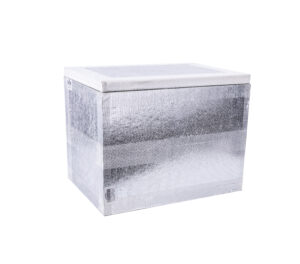
Pourquoi choisir un conteneur d'expédition VIP pour l'expédition de réactifs de recherche? Découvrez pourquoi les panneaux isolés sous vide surpassent les panneaux traditionnels boîtes à mousse et comment ils réduisent le poids tout en augmentant la protection.
Comment fonctionnent la technologie VIP et les matériaux à changement de phase? Découvrez la science derrière l'isolation sous vide et comment les PCM stabilisent les températures pendant des jours.
Quelles réglementations affectent l’expédition des réactifs de recherche? Comprendre le classement, exigences en matière d'emballage et de documentation.
Comment sélectionner le bon conteneur VIP pour votre envoi? Évaluer la taille, tenir le temps, poids, options de durabilité et de surveillance numérique.
Quelles sont les dernières 2025 tendances et innovations? Explorez les capteurs IoT, predictive analytics and sustainability initiatives shaping chaîne du froid logistics.
Pourquoi choisir un conteneur d'expédition VIP pour l'expédition des réactifs de recherche?
Les réactifs de recherche sont souvent des protéines sensibles, enzymes, anticorps ou kits chimiques qui perdent leur efficacité avec de légères variations de température. Panneau isolé sous vide (VIP) conteneurs maritimes offrent une isolation supérieure et une conception légère, maintenir les réactifs dans des plages de température strictes pendant des jours plutôt que des heures. Contrairement aux boîtes volumineuses en mousse de polystyrène, Les panneaux VIP ne nécessitent pas de coque de protection épaisse; cela signifie plus d'espace de chargement et une réduction du poids d'expédition, ce qui est important lorsque les coursiers facturent en fonction du poids volumétrique.. The durable outer film and tightly fitted panels outperform conventional EPS foam boxes, making VIP containers ideal for highvalue biological materials.
Explication élargie
On long haul routes, research reagents may encounter multiple handling points, crossborder delays and extreme temperatures. A VIP shipping container reduces these risks by combining four layers of protection to minimise heat transfer and withstand rough handling. Its advanced insulation allows you to reduce the amount of refrigerant without compromising safety, increasing usable payload and lowering freight costs. Many models integrate smart sensors for realtime monitoring; température, humidity and shock sensors transmit data at one to fiveminute intervals. Proactive alerts enable you to intervene if conditions deviate, preserving reagent integrity during customs holds or tarmac delays.
La science des panneaux isolés sous vide et des matériaux à changement de phase
Les panneaux VIP sont constitués d'un noyau poreux, souvent de silice, scellé dans une barrière étanche à l'air.. L'évacuation de l'air du noyau crée un environnement proche du vide qui réduit considérablement la conduction thermique et la convection.. Le film barrière reflète également la chaleur rayonnante, offrant une triple défense contre le gain de chaleur. Ces panneaux offrent jusqu'à 90 % efficacité d'isolation améliorée par rapport aux emballages en mousse de polyuréthane. En raison de leur profil mince, Les murs VIP permettent plus d'espace pour les échantillons et réduisent le poids total.
Pour maintenir une température interne constante, Les conteneurs VIP s'associent souvent à matériaux à changement de phase (PCMS)—des gels ou sels spéciaux qui absorbent et libèrent de l'énergie thermique. Quand la température monte, le PCM fond, absorption de la chaleur; quand ça tombe, ça solidifie, libérer l'énergie stockée. Ce processus maintient les réactifs dans des plages définies (Par exemple, 2–8 °C pour les enzymes réfrigérées ou –20 °C pour les réactifs congelés). Par rapport à glace carbonique, Les PCM fournissent des températures stables sans les risques de sécurité liés à la manipulation de la sublimation au CO₂. Ils répondent également aux réglementations sur les matières dangereuses pour le transport aérien.
Tableau 1 – Technologies d’isolation et leur impact
| Technologie | Performance thermique | Durée typique | Ce que cela signifie pour vous |
| Boîte en mousse traditionnelle | Faible isolation; murs épais | 24–48 heures | Convient aux expéditions sur de courtes distances mais volumineuses et lourdes; risque d'excursions pendant les retards. |
| Glace carbonique avec boîte à mousse | Maintient en dessous de –60 °C; lourd | 24–72 heures | Convient aux réactifs congelés mais soumis aux règles de sécurité et à une sublimation rapide. |
| Panel VIP uniquement | Jusqu'à 90 % meilleure isolation | 48–72 heures | Idéal pour les réactifs ambiants ou réfrigérés; léger avec des parois fines. |
| VIP + Technologie PCM | Isolation supérieure avec température stabilisée | 72–120 heures | Idéal pour les réactifs de recherche critiques; maintient 2 à 8 °C, –20 °C ou plages ultra-froides avec un poids minimal. |
| Conteneur de refroidissement actif | Utilise des compresseurs, nécessite de l'énergie | Continu (ça dépend de la puissance) | Fournit un contrôle précis mais coûteux et risque de défaillance mécanique; pas idéal pour les transferts longue distance. |
Conseils pratiques et recommandations
Expéditions intercontinentales: Utiliser VIP + Conteneurs PCM évalués pour au moins 72 heures. Ils fournissent suffisamment de tampon pour les retards douaniers et le transbordement.
Réactifs dangereux: Choisissez des modèles dotés de plateaux internes étanches et de coques extérieures renforcées pour résister aux chocs et aux changements de pression.
Surveillance: Intégrez toujours des capteurs IoT pour la température, surveillance de l'humidité et des chocs; configurer des alertes pour les écarts.
Programmes de réutilisation: Optez pour des valises VIP réutilisables avec des panneaux et des PCM remplaçables pour répartir les coûts sur plusieurs expéditions et réduire les déchets.
Cas du monde réel: Au cours de la période 2024-2025, une entreprise pharmaceutique a utilisé un VIP + Conteneur PCM (CCT Advanced™ SU96) expédier des réactifs de thérapie génique de Boston à Tokyo. Malgré un transit de 72 heures avec des retards inattendus, des capteurs internes ont enregistré des températures entre 2 °C et 8 °C, et les réactifs ont maintenu leur pleine activité à leur arrivée. La conception du SU96—50 % lighter than conventional singleuse containers—reduced freight costs and passed ISTA 7D stability tests.
How Do Vacuum Insulated Panels and PCM Technology Protect Your Research Reagents?
VIP panels create a nearvacuum barrier that drastically reduces heat transfer, while phasechange materials absorb and release heat to maintain stable temperatures across long transit times. By removing air from the core, VIP panels eliminate convection and minimise conduction; the reflective barrier film further reduces radiant heat. When integrated with PCMs, these containers can keep reagents refrigerated, frozen or ultracold for over 72 heures.
Explication élargie
Inside a VIP panel, the core material (such as silica or fiberglass) is highly porous. When manufacturers evacuate air from the panel and seal it with an impermeable film, le manque de molécules d'air ralentit la conduction thermique. Cette conception conduit à une conductivité thermique extrêmement faible, parfois 0.003 Avec(m·K), par rapport à 0.03 Avec(m·K) pour mousse conventionnelle. Le film barrière intègre également une couche métallisée qui reflète le rayonnement infrarouge. Combiné, ces caractéristiques permettent aux panneaux VIP d'offrir une résistance thermique élevée dans un profil mince.
Les matériaux à changement de phase complètent les panneaux VIP en atténuant les fluctuations de température. Chaque PCM a un point de fusion et de congélation spécifique, par exemple, gels à base d'eau pour 2 à 8 °C ou sels hydratés pour –20 °C. Lorsque les températures ambiantes dépassent le point de fusion du PCM, le matériau absorbe la chaleur et fond, empêcher la charge utile de se réchauffer. Quand les températures chutent, il cristallise et dégage de la chaleur, empêcher le gel. Parce que les PCM libèrent de grandes quantités de chaleur latente, ils maintiennent des températures stables pendant de longues périodes. Les PCM sont également recyclables et non toxiques, aligner les objectifs de durabilité. La combinaison de panneaux VIP et de PCM permet aux conteneurs de maintenir la température pendant 72 à 120 heures sans alimentation externe..
Intégration avancée des capteurs
Les conteneurs maritimes VIP modernes intègrent des capteurs pour une surveillance continue. Les systèmes de suivi en temps réel signalent la température, humidité et chocs à intervalles réguliers. Les appareils compatibles IoT peuvent envoyer des alertes si le conteneur subit des écarts, permettre des actions correctives telles que le réapprovisionnement en liquide de refroidissement ou le réacheminement de l'expédition. Ces systèmes génèrent également des pistes d'audit numériques pour la conformité réglementaire. Certains conteneurs intègrent des modes d'hibernation; Par exemple, le SU96 gère les retards sans compromettre l'intégrité du produit.
Quelles réglementations affectent l’expédition des réactifs de recherche?
Les réactifs de recherche sont souvent soumis à la réglementation sur les matières dangereuses; classification appropriée, conditionnement, l'étiquetage et la documentation sont essentiels à une expédition sûre et légale. NOUS. des agences telles que le ministère des Transports (POINT), L'OSHA et l'EPA établissent des règles. À l'international, L'Association internationale des transports aériens (Iata) et les Nations Unies publient des lignes directrices. La première étape consiste à déterminer si votre réactif est une substance dangereuse, sélectionner un agent, toxine, matière radioactive ou d'une autre catégorie. La classification dicte l'emballage, exigences en matière d'étiquetage et de documentation.
Explication élargie
Les réactifs dangereux doivent être emballés dans un endroit sécurisé, des contenants étanches qui résistent aux chocs, changements de pression et variations de température. Les emballages extérieurs doivent être suffisamment robustes pour éviter les déversements lors d'une manipulation brutale.. Les étiquettes doivent indiquer clairement le contenu, classe de danger, Numéro de l'ONU, exigences de température et instructions de manipulation afin que les transporteurs et les agents des douanes puissent identifier rapidement les matériaux.
La documentation est tout aussi importante. Les expéditeurs doivent fournir des descriptions détaillées du réactif, y compris la quantité, classe de danger et groupe d'emballage, accompagné d'une déclaration selon laquelle le colis répond à toutes les réglementations pertinentes. Les expéditions internationales peuvent nécessiter des licences d’importation/exportation, Fiches de données de sécurité (FDS) et formulaires de douane. Vérifiez toujours les exigences du pays de destination; certains endroits restreignent l'importation de certains matériels biologiques.
Tableau 2 – Liste de contrôle réglementaire pour l’expédition des réactifs de recherche
| Étape | Description | Pourquoi ça compte |
| Classification | Identifier si le réactif est dangereux, agent radioactif ou biologique. | Détermine l'emballage, exigences en matière d'étiquetage et de documentation. |
| Emballage | Utiliser étanche, conteneurs résistants aux chocs capables de supporter les variations de température. | Empêche les déversements et maintient l’intégrité pendant le transport. |
| Étiquetage | Appliquer les étiquettes de danger de l'ONU, étiquettes de plage de température et instructions de manipulation. | S'assure que les transporteurs comprennent les dangers et les conditions de stockage. |
| Documentation | Fournir une description du réactif, classe de danger, groupe d'emballage et déclaration signée. | Conformité au DOT, IATA et réglementations douanières. |
| Surveillance | Intégrez des capteurs de température et de choc pour les journaux de conformité. | Crée des données traçables pour les audits et les preuves réglementaires. |
Conseils pratiques et recommandations
Classement précoce: Travaillez avec votre comité institutionnel de biosécurité pour classer les réactifs et identifier toute manipulation spéciale ou contrôle d'exportation..
Kits d'emballage: Utiliser des conteneurs VIP avec confinement secondaire interne pour éviter les fuites; choisir les PCM en fonction de la température de stockage du réactif.
Étiquetage: Incluez les étiquettes de danger et « Conserver à 4 °C » ou « Conserver en dessous de –20 °C » pour plus de clarté.
Documentation: Préparer les fiches signalétiques et les permis d'importation à l'avance pour les expéditions internationales. Conservez des copies numériques accessibles via votre prestataire logistique.
Exemple pratique: Une startup de biotechnologie expédiant une enzyme étiquetée comme classe 9 diverses matières dangereuses utilisées un conteneur VIP avec des flacons intérieurs étanches. Ils ont appliqué l'ONU 3373 (Substances biologiques, Catégorie B) étiquettes et autocollants de plage de température. Avec une documentation précise, l'envoi a été dédouané sans délai et est arrivé à Singapour dans les 48 heures, maintenir la plage requise de 2 à 8 °C.
Comment sélectionner le bon conteneur d'expédition VIP pour votre envoi de réactifs de recherche?
Choisir le bon conteneur d'expédition VIP implique d'équilibrer les exigences de température, tenir le temps, taille, poids, conformité et durabilité. Commencez par identifier la plage de température requise : réfrigéré (2–8 ° C), congelé (–20 ° C) ou ultrafroid (en dessous de –50 °C)— et la durée maximale du transit plus un tampon pour les retards. Suivant, adapter le volume du conteneur à votre charge utile; Les cas VIP vont de 2 L à plus 163 L. En sélectionnant uniquement le volume interne nécessaire, vous réduisez à la fois le poids et les coûts d'expédition..
Explication élargie
Le poids et le mode d'expédition influencent le coût. Les conteneurs VIP sont plus légers que de nombreuses alternatives en mousse, mais des différences de poids existent toujours selon les modèles. Frais de transport aérien par poids réel et dimensionnel; donc, un boîtier plus léger réduit les coûts de transport. Pour le fret maritime, la capacité d’empilage et la résistance structurelle sont importantes. Choisissez des conteneurs capables de supporter les charges d’empilage de palettes sans compromettre l’isolation.
La conformité réglementaire doit guider votre choix. Recherchez des conteneurs préqualifiés avec des profils thermiques validés qui répondent aux bonnes pratiques de distribution (PIB) et les exigences de la FDA. De nombreux fabricants fournissent des documents de certification, simplifier les audits. Assurez-vous que le conteneur prend en charge la surveillance en temps réel et la journalisation électronique pour respecter les réglementations telles que la règle FSMA. 204, qui nécessite une traçabilité 24 heures sur 24 pour les aliments à haut risque.
La durabilité est un autre facteur critique. Le Emballage de la chaîne du froid le marché passe de la mousse à usage unique aux solutions réutilisables et recyclables. Les valises VIP conçues pour plusieurs cycles réduisent à la fois les déchets et le coût global. Certains programmes proposent des modèles de location ou de mutualisation, allowing you to spread the investment across several shipments. Evaluate whether the container uses recyclable materials and whether panels or PCMs are replaceable. Also consider the carbon footprint of manufacturing and transport when assessing sustainability.
Tableau 3 – Selection Criteria for VIP Reagent Containers
| Critère | Considérations | Impact sur votre envoi |
| Plage de température & durée | Determine 2–8 °C, –20 °C or ultracold; check container’s hold time. | Ensures reagents remain within required range; avoids under or oversized containers. |
| Volume & charge utile | Select internal volume slightly larger than reagent volume. | Maximises payload efficiency and reduces freight costs. |
| Poids & mode d'expédition | Compare container weights; assess air vs. sea freight requirements. | Minimises transportation cost and ensures stacking capability. |
| Conformité réglementaire | Look for GDPvalidated cases with IoT sensors. | Simplifies audits and meets FSMA, FDA and IATA requirements. |
| Durabilité & réutilisation | Optez pour des contenants réutilisables avec des composants recyclables. | Réduit les déchets et le coût total de possession. |
| Capacités de surveillance | Garantissez l’enregistrement des données en temps réel et les alertes à distance. | Fournit une intervention proactive et une preuve réglementaire. |
| Coût vs. valeur | Tenir compte du coût initial par rapport à la valeur du produit et aux options de mise en commun. | Empêche la perte de réactifs coûteux et peut réduire les dépenses à long terme. |
Conseils pratiques et recommandations
Planifier les retards: Choisissez toujours un récipient contenant au moins 20 % temps de rétention plus long que la durée de transit prévue.
Le poids compte: Pour le fret aérien, calculer le poids volumétrique (L×L×H ÷ 5,000) et comparez avec le poids réel pour éviter des suppléments inattendus.
Outils de décision utiles
Vérifiez les détails avant de choisir l'emballage
Ces outils rapides peuvent vous aider à comparer le risque d'itinéraire, besoins de dimensionnement, choix de liquide de refroidissement, et les détails de l'emballage avant de demander un devis.
Liquide de refroidissement & Référence PCM
Comparez les options de liquide de refroidissement et de PCM lorsqu'un itinéraire nécessite une prise en charge supplémentaire de la température.
Comparez les optionsSélecteur d’emballage
Comparez les options d'emballage isotherme par produit, itinéraire, et besoin de température.
Trouver un emballageOutil d’évaluation du risque d’itinéraire
Examinez les conditions des pistes avant de sélectionner l'emballage en fonction des exigences opérationnelles réelles..
Vérifier le risque d’itinéraireProgrammes de réutilisation: Enquêter sur les programmes de mutualisation de fournisseurs qui offrent de la maintenance, nettoyage et suivi des valises VIP réutilisables.
Intégration numérique: Sélectionnez des valises avec connectivité sans fil à intégrer à la plateforme logistique de votre laboratoire.
Exemple pratique: Un groupe de recherche universitaire devait expédier 50 flacons d'une enzyme rare de l'Allemagne à l'Afrique du Sud. L'itinéraire comprenait plusieurs escales, et l'enzyme nécessaire –20 °C. Ils ont sélectionné un conteneur VIP de taille moyenne conçu pour 120 heures avec des matériaux à changement de phase. Les capteurs IoT du conteneur ont téléchargé les données de température sur un tableau de bord cloud, qui déclenchait des alertes lorsque le conteneur restait sur le tarmac à 28 °C. Une intervention rapide a évité une excursion de température, et les réactifs sont arrivés intacts.
Tendances et innovations des conteneurs d'expédition VIP façonnant l'expédition des réactifs de recherche en 2025
La logistique de la chaîne du froid évolue rapidement, piloté par l’IoT, IA, les mandats de durabilité et l’expansion des marchés mondiaux. Les entreprises adoptent des technologies avancées pour améliorer leur visibilité, réduire les déchets et répondre aux exigences réglementaires. Vous trouverez ci-dessous les principales tendances qui façonnent l’expédition des réactifs de recherche.
Derniers développements
Surveillance en temps réel et intégration IoT: Les systèmes compatibles IoT fournissent des mises à jour instantanées sur la température, humidité et emplacement. Des capteurs avancés alertent les expéditeurs des écarts, tandis que la blockchain garantit un enregistrement et une traçabilité sécurisés des données.
Analyse prédictive et IA: Les outils d'IA analysent les itinéraires, la météo ambiante et les données historiques pour prédire les risques et suggérer des ajustements. L'automatisation et la robotique dans les entrepôts frigorifiques rationalisent la manutention et minimisent les erreurs humaines.
Innovations d'emballage intelligent: Les capteurs et enregistreurs de données intégrés dans l'emballage fournissent des mises à jour de température en temps réel. Les matériaux à changement de phase offrent un contrôle de la température sans énergie, et réutilisable emballage isolé réduit les déchets.
Initiatives de durabilité: Les entreprises adoptent une logistique neutre en carbone, biodégradable matériaux d'isolation et des contenants réutilisables pour répondre aux objectifs environnementaux. Le passage de la mousse EPS à usage unique aux systèmes recyclables s’accélère.
Évolution de la réglementation: De nouvelles règles telles que le règlement européen sur les emballages et les déchets d’emballages (PP) Et les États-Unis. Règle de la FSMA 204 exigent des matériaux recyclables et une traçabilité 24h/24. La conformité stimule l'innovation en matière de surveillance intelligente et emballage durable.
Insistance au marché
Le marché mondial des panneaux d’isolation sous vide devrait passer de USD 8.5 milliards en 2024 en USD 13.2 milliards 2033, reflétant un taux de croissance annuel composé de 5 %. Les VIP proposent des profils fins, une résistance thermique élevée et des avantages en matière d'efficacité énergétique dans tous les secteurs. The expansion of chaîne du froid logistics—fueled by pharmaceutical demand, le commerce électronique et la distribution de vaccins – constituent un moteur important. Par exemple, les expéditions pharmaceutiques représentent environ 45 % de la demande d'expédition VIP, et les applications biotechnologiques représentent environ 23 %. L’évolution vers les aliments d’origine végétale et le commerce électronique mondial accroît également la demande de produits fiables. Solutions de chaîne du froid.
L’expédition des réactifs de recherche profite de ces tendances. La disponibilité du briquet, Des conteneurs VIP plus efficaces, combiné à des analyses prédictives et à des matériaux durables, permet aux laboratoires d'expédier des échantillons plus loin avec moins de ressources. Alors que les pressions réglementaires s’accentuent, des conteneurs offrant des performances thermiques validées, la traçabilité numérique et les composants recyclables deviendront la norme.
Conseils pratiques et recommandations
Tirer parti des plateformes IoT: Intégrez vos expéditions à des plateformes cloud qui suivent la température et l'emplacement en temps réel.
Adoptez la planification basée sur l'IA: Utilisez l'analyse prédictive pour choisir les itinéraires et les emballages optimaux en fonction des prévisions météorologiques et des temps de transit..
Choisissez des matériaux durables: Optez pour des conteneurs avec panneaux recyclables et PCM; participer à des programmes de location ou de mise en commun pour réduire les déchets.
Restez informé: Tenez-vous au courant des nouvelles réglementations comme la règle FSMA 204 et PPWR; choisissez des conteneurs qui offrent des pistes d'audit numériques pour simplifier la conformité.
Par exemple: Un grand fournisseur de sciences de la vie est passé des boîtes en mousse à usage unique aux conteneurs VIP réutilisables avec changement de phase recyclable packs de gel dans 2025. Sur 12 mois, les déchets ont diminué de 70 %, les frais de transport ont diminué 15 % en raison du poids réduit, et l'entreprise a satisfait aux exigences de traçabilité de la FSMA grâce à des enregistreurs de données intégrés. These improvements also enhanced brand reputation among ecoconscious customers.
Questions fréquemment posées
Q1: What is the difference between a VIP shipping container and a regular boîte isotherme?
A VIP shipping container uses a vacuumsealed porous core to drastically reduce heat transfer. Regular foam boxes rely on trapped air for insulation and have thicker walls. VIP containers offer higher insulation efficiency, thinner walls and lighter weight, making them ideal for research reagent shipping.
Q2: Can VIP containers maintain ultralow temperatures (–70 °C) required for some reagents?
Oui. When combined with appropriate phasechange materials, VIP containers can maintain ultralow temperatures below –50 °C for extended periods. Always select PCMs tailored to your desired temperature range.
Q3: How long can a VIP container keep my reagents within range without power?
Les conteneurs VIP de haute qualité maintiennent la température pendant 72 à 120 heures. La durée dépend des conditions ambiantes, la quantité de PCM, et l’épaisseur de l’isolation du conteneur. Choisissez un conteneur évalué pour une durée de transit plus longue que votre temps de transit prévu plus un tampon.
Q4: Les conteneurs VIP sont-ils conformes aux réglementations IATA et FDA?
La plupart des conteneurs VIP conçus pour les expéditions médicales et de recherche répondent aux directives de contrôle de la température de l'IATA et aux exigences de bonnes pratiques de fabrication de la FDA.. Vérifiez toujours les données de validation et la documentation de certification.
Q5: Les conteneurs VIP sont-ils respectueux de l'environnement?
De nombreux modèles sont réutilisables et intègrent des panneaux et PCM recyclables. En réduisant l'utilisation de réfrigérant et en permettant des programmes de mutualisation, Les conteneurs VIP réduisent l'empreinte carbone et les déchets par rapport aux emballages en mousse à usage unique.
Résumé et recommandations
Principaux à retenir:
Les conteneurs maritimes VIP offrent une isolation supérieure, réduisant le transfert de chaleur et maintenant l'intégrité des réactifs pendant des jours.
Les matériaux à changement de phase stabilisent la température sans les risques de glace carbonique.
La conformité réglementaire nécessite une classification correcte, emballage étanche, un étiquetage approprié et une documentation complète.
Choisir le bon récipient implique de faire correspondre la plage de température, tenir le temps, volume, objectifs de poids et de durabilité.
Tendances 2025 inclure la surveillance IoT, analyse prédictive, matériaux durables et réglementations plus strictes.
Plan d'action
Évaluez vos réactifs: Identifier leur sensibilité à la température et leur classification des dangers.
Choisissez un conteneur VIP: Basé sur la plage de température, durée et taille de la charge utile; sélectionner des options réutilisables avec PCM intégrés.
Intégrer la surveillance: Utilisez des capteurs et des enregistreurs de données IoT pour le suivi de la température et de la localisation en temps réel.
Préparer la documentation: Assurer les étiquettes de danger, Les fiches signalétiques et les permis d'importation sont prêts; intégrer des enregistrements numériques pour la conformité.
Évaluer la durabilité: Optez pour des contenants recyclables et participez à des programmes de mutualisation pour réduire les déchets et les coûts.
Restez à jour: Follow evolving regulations and technological innovations to continuously improve your chaîne du froid strategy.
À propos du Tempk
Tempk is a leading provider of chaîne du froid packaging solutions. Avec un R interne&Centre D et programme d'assurance qualité strict, nous concevoir des panneaux isolés sous vide et des matériaux à changement de phase conformes aux réglementations sanitaires mondiales. Nos conteneurs d'expédition VIP réutilisables sont testés selon les normes ISTA 7D et peuvent maintenir des températures pendant plus de 72 heures.
Action: Contactez les spécialistes de Tempk pour discuter des solutions de conteneurs VIP personnalisées pour vos besoins d'expédition de réactifs de recherche. Notre équipe vous aidera à équilibrer les performances, conformité réglementaire et durabilité.