How to Source a Bulk Dry Ice Pack for Food Transport With Evidence
Sourcing a bulk Paket es kering for food transport should produce more than a pallet of coolant. It should produce a controlled item, an approved packout, a repeatable preparation process, and a route decision backed by evidence. Itu "Paket es kering" in this article is a water-activated sheet that is hydrated and frozen before use. Ini bukan karbon dioksida padat. That boundary prevents incorrect safety assumptions and forces a useful commercial question: under what exact food, kotak, rute, and handling conditions does this hydration sheet perform its assigned role? The following plan moves from requirement to supplier approval without turning a component into an unsupported compliance or duration claim.
Write the Shipment Requirement Before the Request for Quotation
A strong sourcing project begins with a one-page design input. It should state:
- Food identity, formulation category, and physical state.
- Keamanan- or quality-related temperature criteria defined by the responsible team.
- Product and primary-package dimensions and mass.
- Product condition at release and packing.
- Order configurations and allowable substitutions.
- Insulated container and closure.
- Rute, melayani, serah terima, and expected ambient challenge.
- Delivery and receiving process.
- Monitoring and documentation needs.
- Sehari-hari, mingguan, and peak forecast.
If a facility ships several food families, make a configuration matrix. Do not use "makanan dingin" as one row. Chilled ready-to-eat meals, daging beku, and produce have different hazards and sensitivities.
Define what the component must do
The sheet may be assigned to absorb heat during an ambient handover, protect a parcel for the complete route, supplement an insulated tote in refrigerated distribution, or provide flexible wall coverage. Each role produces different tests.
Also state what it is not expected to do. It should not cool improperly handled food into compliance, replace necessary refrigeration, mencegah kontaminasi, or determine whether an excursion is acceptable.
Use a Product-Identity Gate
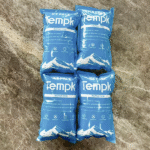
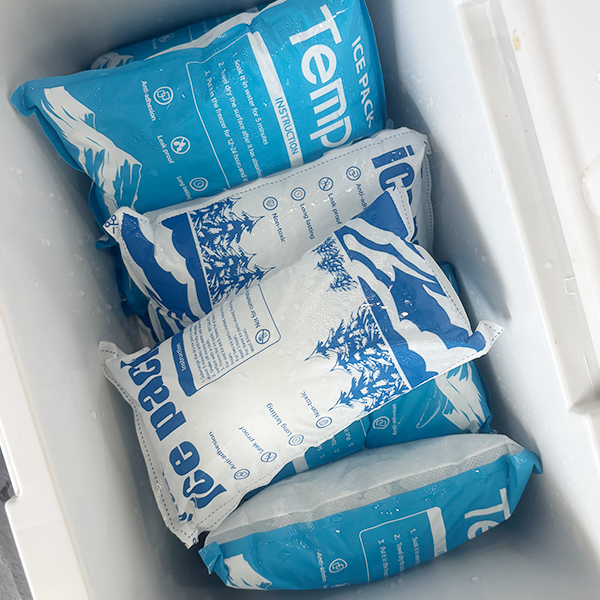
Require the supplier to confirm that the item is a water-activated hydration coolant sheet. Obtain its activation method, deskripsi konstruksi, dry and hydrated geometry, tata letak sel, penyimpanan, freezing instructions, dan identifikasi.
Why be so explicit? Solid carbon dioxide dry ice is much colder, Sublimat ke gas, and requires different handling and transport considerations. Paket gel and specialized phase-change coolants can also behave differently. Similar commercial names do not make these products technically interchangeable.
The purchase description could include the functional identity and approved item code rather than the ambiguous phrase alone. Warehouse locations should also distinguish dry unactivated stock from frozen ready stock.
Choose the Packout Architecture
The design needs to control both heat entry and coolant contact.
| Design variable | Pertanyaan untuk dijawab | Diperlukan bukti |
|---|---|---|
| Wadah terisolasi | Does it limit route heat gain when closed and handled? | Complete-packout testing |
| Coolant format | Does hydrated geometry fit without damaging payload? | Fit trial and drawing |
| Sheet placement | Are hot surfaces covered without creating cold contact? | Multi-location temperature data |
| Buffer or spacer | Does it reduce freezing while allowing adequate cooling? | Comparative packout test |
| Kepadatan muatan | Does every order size behave acceptably? | Configuration-specific assessment |
| Kontrol kelembaban | Do condensation and drainage weaken packaging? | Physical inspection under challenge |
| Penutup | Can operators reproduce the sealed state? | Line trial and operational check |
| Pemantauan | Does the sensor plan detect relevant hot and cold risks? | Written measurement rationale |
This architecture becomes the bill of materials. Every item and position should have a reason. Removing a divider or changing a liner is a design change, not a purchasing convenience.
Make starting condition non-negotiable
Product starting temperature and state strongly affect thermal demand. Define release checks upstream and staging time at packing. When food arrives warm, follow a hold and escalation process. Do not instruct packers to compensate with extra coolant.
Design around physical food packages
Hydrated cells expand. Check whether they push against tray lids, sharp pouch corners, tutup botol, or seals. Examine how the parcel behaves after vibration and orientation changes. A sheet that fits an open box may shift once the carrier turns it on its side.
Prove the Activation Process at Operating Scale
The sheet supplied is not the component used. Water and freezing transform it. That transformation requires process evidence.
Hidrasi
Follow controlled instructions using an appropriate clean water source. Define equipment, ukuran tumpukan, inspeksi, and sanitation. Determine whether cells hydrate evenly under peak throughput. Do not establish generic time or thickness values without item-specific evidence.
Drainase
Define how surface water is removed and how long sheets can wait before freezing. Observe dripping, kontaminasi permukaan, dan penanganan operator.
Pembekuan
Map rack arrangement, beban batch, aliran udara, freezer recovery, dan lepaskan. The display set point does not establish that every cell is fully frozen. Challenge the process with the largest normal load.
Memanggungkan
Set a status system and maximum exposure between freezer removal and box closure. If ready sheets soften during line delays, the starting condition no longer matches the tested packout.
Perakitan
Run at normal line speed. Observe incorrect orientation, skipped buffers, damaged cells, lantai basah, ergonomic problems, and closure consistency. Redesign instructions or component geometry where repeated errors occur.
Use an Evidence Ladder Instead of a Single "Tahan waktu"
Supplier data can support component selection. Buyer testing supports intended use.
Melangkah 1: Tinjauan dokumentasi. Konfirmasikan identitas, konstruksi, ukuran, instruksi, deklarasi, kontrol banyak, dan mengubah pemberitahuan.
Melangkah 2: Fit and preparation trial. Verify hydration, pembekuan, penanganan lembaran, penempatan, dan muatan sesuai.
Melangkah 3: Thermal development. Compare counts, posisi, buffer, and box options with representative food.
Melangkah 4: Route-relevant qualification. Challenge the final bill of materials with justified ambient conditions, negara bagian awal, lokasi sensor, pengulangan, dan kriteria penerimaan.
Melangkah 5: Operational verification. Demonstrate that real staff, peralatan, and schedules reproduce the configuration.
Melangkah 6: Ongoing review. Monitor routes and investigate deviations, keluhan, cacat, dan perubahan.
A supplier's duration claim is useful only after its conditions are known. Ask what temperature was measured, in which box, dengan muatan apa, at which ambient condition, and at which sensor location. If the answer is incomplete, treat the figure as a screening statement.
Contoh praktis: a frozen order-size change
A frozen dessert company qualifies a full six-unit box. Sales later adds a two-unit order in the same carton. The smaller payload has less thermal mass and more void, and sheets can shift during parcel handling. Rather than assuming the smaller order is easier, the company performs a focused assessment and finds that a right-sized carton gives more stable geometry with fewer components.
The information gain is operational: packout performance does not scale only with product count. Geometri, luas permukaan, ruang kosong, and movement matter.
Integrate Sanitation and Regulatory Responsibilities
Hydration uses water near food packaging. Bring the activation station into sanitation planning. Control tanks, rak, selang, saluran air, sarung tangan, gerobak, freezer, and segregation from raw or dirty return areas. Define actions for leaks and damaged sheets.
United States sanitary transportation provisions may apply to covered food movements and responsible parties. The relevant concepts include suitable and sanitary transportation equipment, adequate temperature control where needed for safety, komunikasi, pelatihan dalam keadaan yang berlaku, dan catatan. Other jurisdictions have their own requirements. The buyer should determine applicability with qualified guidance.
No coolant establishes compliance. The overall food process must control hazards. Raw and ready-to-eat food separation, kontrol alergen, cooking and cooling, vehicle sanitation, menerima, and disposition remain independent responsibilities.
Alat pengambilan keputusan yang berguna
Periksa detailnya sebelum Anda memilih kemasan
Alat cepat ini dapat membantu Anda membandingkan risiko rute, kebutuhan ukuran, pilihan pendingin, dan detail kemasan sebelum Anda meminta penawaran.
Kalkulator Es Kering
Perkirakan kebutuhan es kering untuk pengiriman beku atau sangat dingin sebelum pengepakan.
Perkirakan es keringPembuat Daftar Periksa Kepatuhan
Buatlah daftar periksa praktis untuk tinjauan kemasan, pengiriman, dan dokumentasi.
Buat daftar periksaKetahanan Jatuh Bahan Isolasi
Tinjau ketahanan jatuh dan faktor penanganan sebelum memilih bahan insulasi.
Periksa resistensiFor material review, describe the actual contact condition. Does the sheet touch food, a sealed pouch, a carton, or an inner liner? Request evidence for the supplied construction and market. Avoid broad claims that one sheet is approved for all foods worldwide.
Menyetujui Pemasok, Bukan Hanya Sampelnya
The sample should become a controlled reference. Before the bulk order, agree on:
- Item name and revision.
- Dry and hydrated dimensions and measurement methods.
- Cell and seam layout.
- Construction and relevant declarations.
- Lot and carton identification.
- Packaging and storage.
- Preparation and handling instructions.
- Defect and nonconformance criteria.
- Change-notification expectations.
- Complaint investigation and replacement.
Review supply continuity separately. Confirm lead time, pesanan minimum, kuantitas palet, forecast requirements, surge capacity, dan stok pengaman. If a backup item is needed, assess it before an emergency. Visual similarity is not technical equivalence.
Incoming controls can include identity, menghitung, integritas yang terlihat, penandaan banyak, ukuran, and periodic hydration or fit checks. The frequency should reflect risk and supplier performance.
Design Receiving and Excursion Decisions
The cold chain ends only when the food is accepted and placed into proper storage. Give receivers a procedure:
1. Record delivery time and condition.
2. Check seal, karton, mengompol, dan kerusakan.
3. Retrieve monitor data or measure product as specified.
4. Segregate questionable shipments.
5. Escalate to the authorized quality or food-safety role.
6. Transfer accepted product promptly.
Do not use surface feel as the sole disposition criterion. Do not let a driver's statement replace evidence. The authorized team should interpret time-temperature information against product-specific criteria.
Customer deliveries need equally careful wording. Instructions should say what to do, not promise that "Paket es keep everything safe." Failed-delivery and return policies should be part of route design.
Control Cost and Environmental Impact With Real Data
Compare total cost per approved shipment:
- Sheet purchase and inbound freight.
- Hydration water and labor.
- Energi freezer, rak, and space.
- Rejects and damaged units.
- Insulation and other packaging.
- Pack assembly time.
- Monitoring and investigation.
- Return collection, pembersihan, and losses if reusable.
- Pembusukan makanan, kredit, and reshipment.
The same boundary supports sustainability decisions. Dry storage can reduce inbound volume, while activation and freezing add impacts. Reuse can reduce new components but requires reliable return, kebersihan, dan inspeksi. A lighter packout is not an improvement if food losses increase.
Run controlled pilots and publish only claims supported by the program's data. Avoid universal savings or reuse-cycle numbers.
Failure Review: Fix the Mechanism
When a route fails, resist the automatic instruction to add coolant.
Warm center, dinding dingin: Check precooling, kepadatan, aliran udara, dan kontak.
Early top warming: Inspect lid, penutup, ruang kepala, and top sheet.
Karton basah: Review drainage, kondensasi, liner, paparan kelembaban, and board strength.
Leaking cells: Examine lot, tepi yang tajam, lipat, kompresi, dan menangani.
Variable results between days: Compare hydration batch, pemuatan freezer, memanggungkan, starting product, and operator.
Doorstep warming: Review delivery policy and service design, not only box contents.
Corrective action should link evidence to a cause, update the controlled configuration where needed, and verify effectiveness.
Pertanyaan yang sering diajukan
What makes a hydration sheet appropriate for bulk food operations?
It should have a controlled specification, consistent preparation, geometry that fits the packout, suitable material documentation, production traceability, and evidence from the complete shipment design. Bulk suitability also requires enough hydration, freezer, kebersihan, and assembly capacity at peak demand.
Is colder always better for frozen food?
Not as a general procurement rule. Makanan beku, komponen, and packages have product-specific requirements. Excessively cold local conditions can affect packaging or create unnecessary handling risk. Define the required state and use a packout designed for it rather than selecting the coldest named coolant.
How should an alternate supplier be qualified?
Compare construction, dry and hydrated geometry, pengambilan air, persiapan, jahitan, bukti material, dan pengendalian produksi. Then assess fit and thermal performance in the approved packout. An alternate should receive a documented risk-based decision before use, not an emergency visual substitution.
What is the most important operational audit point?
Verify that the sheet used on the line matches the item and preparation state in the approved packout. Wrong formats, pembekuan sebagian, unauthorized extra sheets, and omitted buffers can invalidate otherwise strong design work. Observe the process at normal and peak workload.
Can monitoring replace repeated packout testing?
Monitoring supports ongoing verification and can reveal route drift, but it does not replace sound development and qualification. Routine data also need a response process. A recorded excursion without defined review and corrective action is evidence collected without control.
Kesimpulan
An evidence-based sourcing plan connects the bulk dry ice pack for food transport to a defined product, kotak, rute, proses aktivasi, spesifikasi pemasok, dan menerima keputusan. Confirm that the item is a water-activated frozen sheet rather than solid carbon dioxide. Prove preparation at operating scale, memenuhi syarat paket lengkap, integrate sanitation and food-safety duties, dan mengendalikan perubahan. The result is not a universal claim. It is a repeatable shipment configuration with known boundaries.
Tentang tempk
Sebagai kemasan rantai dingin merek Shanghai Tempk Industrial Co., Ltd., Tempk covers paket pendingin Dan kemasan terisolasi. A useful sourcing discussion with Tempk begins with the food category, kondisi yang diperlukan, muatan, kotak, rute, volume puncak, and activation process. Tempk can discuss component formats and samples against those inputs. The buyer's qualified functions should approve food criteria, penggunaan bahan, test design, kinerja rute, kebersihan, and final shipment decisions.
CTA: Give Tempk your complete food transport design input – not just a requested sheet size – to start a sample and packout review.