Manajemen Rantai Dingin untuk Transportasi Makanan Beku?
Terakhir diperbarui: Desember 12, 2025
Jika Anda ingin lebih sedikit klaim, pengembalian dana yang lebih sedikit, dan lebih sedikit keluhan “itu datang dengan lembut”., manajemen rantai dingin untuk makanan beku angkutan memiliki satu pekerjaan: menjaga suhu produk tetap stabil melalui setiap penyerahan. Target “aturan praktis” global untuk banyak makanan cepat beku adalah -18°C atau lebih dingin, dan pemanasan apa pun di atas itu harus diminimalkan.
Ini juga penting untuk limbah: laporan FAO 13.2% makanan hilang sebelum dijual eceran, Dan 19% lebih banyak lagi yang terbuang di ritel/layanan makanan/rumah tangga—Kontrol suhu adalah salah satu cara praktis yang sebenarnya dapat Anda tingkatkan.
Artikel ini akan menjawabnya untuk Anda:
-
Bagaimana manajemen rantai dingin untuk transportasi makanan beku benar-benar berfungsi dari dok ke dok
-
Apa batas suhu pengangkutan makanan beku Anda harus mengatur (dan mengapa suhu -12°C terus muncul)
-
Bagaimana cara mencegahnya perubahan suhu selama pemuatan dengan sederhana, rutinitas yang berulang
-
Bagaimana membuktikannya manajemen rantai dingin untuk transportasi makanan beku dengan pemantauan + catatan (tanpa tenggelam dalam dokumen)
-
Yang 2025 standar dan peraturan adalah hal yang paling penting, termasuk perjanjian ATP dan harapan transportasi sanitasi
Apa sebenarnya yang tercakup dalam manajemen rantai dingin untuk transportasi makanan beku??
Manajemen rantai dingin untuk transportasi makanan beku adalah serangkaian tindakan yang membuat produk beku tetap beku saat berpindah antar penyimpanan, kendaraan, dan pelanggan. Anggap saja sebagai “kontrol suhu + kebersihan + bukti." Panduan Codex untuk makanan beku cepat menekankan pada pengangkutan dalam peralatan terisolasi itu idealnya mempertahankan -18°C atau lebih dingin, memulai perjalanan pada -18°C atau lebih dingin, ditambah pra-pendinginan dan pembongkaran yang hati-hati. Rumah FAO
Jika ada tautan yang gagal, Anda tidak hanya mengambil risiko kelembutan. Anda juga berisiko kehilangan kualitas lebih cepat, freezer terbakar, dan perselisihan yang berantakan tentang tanggung jawab.
Makanan beku memaafkan untuk sesaat, tapi itu bukan sihir. Pembekuan memperlambat pembusukan, namun ia tidak “mensanitasi” makanan, jadi pengendalian kebersihan dan kontaminasi silang tetap penting.
Secara sederhana: manajemen rantai dingin untuk transportasi makanan beku adalah bagaimana Anda menjaga suhu tetap stabil Dan menjaga produk tetap aman.
Apakah Anda mengatur suhu produk, suhu udara, atau keduanya?
Suhu udara adalah apa yang ditampilkan oleh reefer. Suhu produk adalah apa yang dimakan pelanggan. Codex bahkan membingkai suhu produk selama pengangkutan sebagai ketentuan kualitas dan terkadang sebagai CCP (titik kendali kritis). Rumah FAO
Jadi, Anda harus merencanakan keduanya, terutama pada jalur panjang atau muatan bernilai tinggi.
| Apa yang Anda ukur | Apa yang diberitahukannya kepada Anda | Apa yang terlewatkan | Makna praktis untuk Anda |
|---|---|---|---|
| Titik setel reefer | Target yang Anda tuju | Tempat panas/dingin sebenarnya | Membantu standarisasi SOP |
| Kembalikan udara | Apa yang dilakukan udara di trailer | Inti produk yang lambat berubah | Menangkap penyimpangan peralatan |
| Pemeriksaan produk (pemeriksaan tempat) | Kondisi produk sebenarnya | Bisa lambat dan terbatas | Terbaik untuk perselisihan + penerimaan |
| Waktunya habis (waktu serah terima) | Risiko saat pintu terbuka | Gradien palet internal | Seringkali menjadi “pembunuh diam-diam” |
Kiat Praktis yang Dapat Anda Gunakan Hari Ini
-
Saat pengiriman: konfirmasi produk sudah sesuai spesifikasi sebelum dimuat; reefer menjaga suhu, mereka tidak “menarik ke bawah” cukup cepat untuk produk hangat. Aliansi Rantai Dingin Global
-
Pada titik serah terima: kurangi waktu membuka pintu dan gunakan rutinitas pembongkaran tertulis; Codex secara eksplisit menyebutkan frekuensi dan durasi pembukaan pintu. Rumah FAO
-
Setelah melahirkan: jika produk dihangatkan, dinginkan kembali -18°C sesegera mungkin ketika proses Anda memungkinkan. Rumah FAO
Contoh dunia nyata: Pengirim pangsit beku memotong klaim dengan beralih ke “kebijakan dua pintu” (satu memuat, seseorang memonitor waktu buka pintu) dan menerapkan konfirmasi pra-pendinginan pada saat pengiriman.
Target suhu manakah yang menentukan manajemen rantai dingin untuk transportasi makanan beku?
Di dalam manajemen rantai dingin untuk transportasi makanan beku, Anda memerlukan target yang mudah dilatih dan diaudit. Panduan Codex untuk makanan beku cepat sudah jelas: transportasi seharusnya idealnya menjaga -18°C atau lebih dingin, dan pemanasan di atas -18° C. harus diminimalkan. Ini juga memperingatkan bahwa paket terhangat tidak boleh lebih hangat dari -12° C. untuk memastikan kualitas. Rumah FAO
Angka -12°C itu penting karena karton terhangat sering kali merupakan “kebenaran” pengalaman pelanggan.
Anda dapat memperlakukan batas suhu seperti pagar pembatas:
-
Target: di mana Anda ingin tinggal (sering kali -18°C)
-
Ambang peringatan: tempat Anda menyelidiki (contoh: -16° C.)
-
Tolak ambang batas: di mana Anda berhenti dan meningkat (contoh: -12°C paket terhangat) Rumah FAO
Jika Anda mengikuti -18°C, atau -15°C adalah standar baru?
Selama beberapa dekade, -18° C. telah menjadi titik setel beku yang umum. Dalam dua tahun terakhir, upaya industri telah mendorong “perpindahan ke -15°C” karena alasan energi dan emisi, mengutip penelitian dan uji coba di 2024 (termasuk pengurangan energi yang dilaporkan) tanpa dampak kualitas yang nyata untuk beberapa produk. situs web keamanan pangan
Inilah kesimpulan praktisnya: -15°C bisa menjadi sebuah strategi, tetapi hanya jika Anda memvalidasi berdasarkan jenis produk, umur simpan, dan toleransi pelanggan.
| Pendekatan sasaran | Penggunaan khas | Tingkat risiko | Apa artinya bagimu |
|---|---|---|---|
| -18°C garis dasar | Jalur paling beku | Lebih rendah | Default terbaik untuk beban campuran Rumah FAO |
| -15program °C | SKU yang tervalidasi | Sedang | Perlu pengujian + penyelarasan pelanggan situs web keamanan pangan |
| -12batas °C | Hanya tamasya singkat | Tinggi | Perlakukan sebagai batas kualitas “jangan melebihi”. Rumah FAO |
Kiat Praktis yang Dapat Anda Gunakan Hari Ini
-
Jika Anda mengirimkan produk campuran: menyimpan -18° C. sebagai aturan sederhana Anda, lalu validasi pengecualian satu kelompok SKU dalam satu waktu. Rumah FAO
-
Jika jalur Anda panjang atau panas: memperketat ambang batas kewaspadaan, karena kasus-kasus terhangat muncul lebih dulu.
-
Jika Anda mengemudikan -15°C: menjalankan uji coba terkontrol, kemudian mengunci aturan penerimaan tertulis dengan pelanggan. situs web keamanan pangan
Contoh dunia nyata: Sebuah toko roti beku regional beralih ke kebijakan “dua tingkat”.: -18°C untuk palet campuran, -15°C hanya untuk satu kelompok SKU yang divalidasi.
Bagaimana cara menghentikan kenaikan suhu selama pemuatan dalam manajemen rantai dingin untuk transportasi makanan beku?
Jika manajemen rantai dingin untuk transportasi makanan beku gagal, sering gagal di dok. Reefernya bisa menjadi sempurna, namun produk menjadi hangat selama pementasan, pemuatan lambat, dan pembukaan pintu berulang kali. Codex membutuhkan kompartemen yang sudah didinginkan sebelumnya, pengawasan suhu produk pada saat pemuatan, dan metode bongkar/muat cepat yang meminimalkan kenaikan suhu. Rumah FAO
Praktik terbaik GCCA menambahkan sebuah kebenaran sederhana: jika muatan tidak berada pada suhu yang tepat sebelum dimuat, unit pendingin mungkin tidak memiliki waktu atau kapasitas untuk menurunkannya selama transit. Aliansi Rantai Dingin Global
Jadi alat terbaik Anda bukanlah gadget baru. Ini adalah rutinitas pemuatan yang ketat.
Apa itu “pra-dingin + panggung + segel” rutin?
Gunakan pola pikir tiga langkah ini:
-
Pra-dingin: trailer mencapai sasaran dan stabil sebelum pintu terbuka
-
Panggung: palet siap di tempat yang dingin (tidak duduk di udara sekitar)
-
Segel: tutup pintu, konfirmasi tekanan yang dikehendaki, konfirmasi alarm, berangkat dengan cepat Rumah FAO+1
| Kontrol pemuatan | Apa yang harus dilakukan | Kegagalan umum | Makna praktis untuk Anda |
|---|---|---|---|
| Trailer sudah didinginkan sebelumnya | Verifikasi suhu stabil sebelum memuat | “Kami berasumsi itu dingin” | Mencegah permulaan yang salah Rumah FAO |
| Waktu pementasan | Tetapkan menit maksimal dalam keadaan dingin | Palet menunggu dokumen | Memotong karton dengan pinggiran hangat |
| Bukaan pintu | Batasi frekuensi + lamanya | Beberapa pemeriksaan di tengah beban | Melindungi paket terhangat Rumah FAO |
Kiat Praktis yang Dapat Anda Gunakan Hari Ini
-
Untuk dok bervolume tinggi: gunakan aturan “lampu hijau”—tidak ada palet yang bergerak sampai pra-pendinginan trailer dipastikan. Aliansi Rantai Dingin Global
-
Untuk tim kecil: menugaskan satu orang untuk mengatur waktu pembukaan pintu (pengatur waktu telepon sudah cukup).
-
Untuk lintas dermaga: perlakukan setiap titik transfer seperti peristiwa berisiko; Codex memperingatkan agar tidak meninggalkan produk pada suhu sekitar. Rumah FAO
Contoh dunia nyata: Distributor makanan laut beku mengurangi keluhan “karton sudut lunak” setelah menetapkan waktu pementasan maksimal 12 menit yang ketat di luar penyimpanan dingin.
Pilihan kemasan apa yang membuat manajemen rantai dingin untuk transportasi makanan beku menjadi lebih mudah?
Tidak setiap pengiriman membutuhkan metode yang sama. Manajemen rantai dingin untuk transportasi makanan beku terlihat berbeda untuk pengiriman truk penuh dengan pengiriman paket. Tugas Anda adalah mencocokkan waktu + suhu + penanganan risiko hingga kemasan paling sederhana yang masih berfungsi.
Cara praktis untuk berpikir tentang pengemasan adalah:
-
Kontrol yang dipimpin oleh reefer (kendaraan melakukan pekerjaannya)
-
Kontrol yang dipimpin paket (kemasan berhasil)
-
Hibrida (keduanya berbagi pekerjaan)
60-alat pengambilan keputusan kedua: Apa yang harus Anda gunakan?
Skor setiap baris dari 0–2, lalu total.
-
Waktu transit: di bawah 12 jam (0) / 12-48 jam (1) / 48jam+ (2)
-
Serah terima: 0–1 (0) / 2–3 (1) / 4+ (2)
-
Paparan sekitar: kebanyakan di dalam ruangan (0) / campur aduk (1) / landai panas (2)
-
Sensitivitas klaim: rendah (0) / sedang (1) / tinggi (2)
-
Kerapuhan produk (risiko tekstur/kristal es): rendah (0) / sedang (1) / tinggi (2)
Jumlah 0–3: yang dipimpin reefer biasanya sudah cukup.
Jumlahnya 4–7: hibrida (lemari pendingin + penutup palet / menambahkan isolasi).
Jumlahnya 8–10: sistem pengirim yang dipimpin paket atau tervalidasi.
Tip: Jika Anda tidak dapat menjelaskan pilihan Anda dengan jelas dalam satu kalimat, SOP Anda terlalu rumit.
Tabel perbandingan kemasan (tetap sederhana)
| Pilihan | Terbaik untuk | Perhatian | Makna praktis untuk Anda |
|---|---|---|---|
| Lemari pendingin + SOP pemuatan yang baik | Beban penuh | Penundaan dermaga | Biaya unit terendah saat disiplin Rumah FAO+1 |
| Penutup palet terisolasi | Jalur campuran | Penyegelan yang buruk | Menambahkan buffer saat handoff |
| Pengirim terisolasi yang tervalidasi | Paket/barang kecil | Biaya per kotak | Mengubah jalur kekacauan menjadi jalur yang dapat diprediksi |
| Paket PCM / Sumber Dingin | Jalur spesifikasi yang ketat | Kesalahan pengkondisian | Membutuhkan pelatihan dan pengkondisian awal |
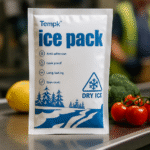
| Es kering (jika diperbolehkan) | Kebutuhan yang sangat beku | Aturan keselamatan | Kuat, tapi tangani dengan hati-hati |
Kiat Praktis yang Dapat Anda Gunakan Hari Ini
-
Pilih paket yang lebih sedikit: dua paket yang divalidasi mengalahkan delapan opsi "agak berhasil"..
-
Prakondisi kereta api: banyak kegagalan berasal dari paket yang tidak dikondisikan dengan benar.
-
Beri label pada kemasannya: membuat “apa yang terjadi di mana” menjadi jelas dengan sekali pandang.
Contoh dunia nyata: Merek peralatan makan mengurangi pengembalian dengan beralih dari “paket es ekstra” ke desain pengirim tunggal yang tervalidasi dan diagram pengepakan yang ketat.
Bagaimana Anda memantaunya, dokumen, dan membuktikan manajemen rantai dingin untuk transportasi makanan beku?
Jika Anda tidak dapat membuktikannya, Anda akhirnya akan berdebat tentang hal itu. Manajemen rantai dingin untuk transportasi makanan beku memerlukan pemantauan yang konsisten, dapat dibaca, dan terikat pada tindakan. Codex merekomendasikan pemeriksaan suhu produk sesuai kebutuhan pada saat penerimaan/pengiriman dan menyimpan catatan untuk jangka waktu yang melebihi umur simpan. Rumah FAO
Praktik terbaik GCCA juga menekankan pemeliharaan catatan agar dapat ditelusuri, termasuk suhu produk, suhu kendaraan (tekanan yang dikehendaki dan aktual), dan detail pengiriman. Aliansi Rantai Dingin Global
Pemantauan bukan tentang mengumpulkan “grafik keren”. Ini tentang mencegah pengulangan.
Apa yang harus disertakan dalam “paket bukti” Anda??
Jaga agar tetap kecil dan ramah audit:
-
Rencana jalur: suhu target dan ambang batas peringatan
-
Konfirmasi pra-pendinginan: diberi cap waktu
-
Memuat daftar periksa: kebersihan + kontrol pintu terbuka Aliansi Rantai Dingin Global
-
Catatan suhu: ringkasan logger atau telematika
-
Tindakan korektif: apa yang Anda lakukan saat peringatan terjadi
| Barang bukti | Apa yang ditanyakan auditor | Apa yang ditanyakan pelanggan | Makna praktis untuk Anda |
|---|---|---|---|
| Kebijakan titik setel | “Apa spesifikasimu??” | “Apa yang kamu jalankan?” | Menghentikan kebingungan sejak dini |
| Catatan kalibrasi | “Apakah sensornya dapat diandalkan?” | “Dapatkah saya mempercayai data ini?” | Mencegah perselisihan data |
| Log pengecualian | "Apa yang telah terjadi, dan mengapa?” | “Apakah hal itu akan terjadi lagi?” | Membangun kepercayaan dengan cepat |
Kiat Praktis yang Dapat Anda Gunakan Hari Ini
-
Tetapkan satu aturan peringatan: terlalu banyak ambang batas membuat alarm diabaikan.
-
Pengecualian log, tidak semuanya: menyimpan data rutin, tapi soroti penyimpangan.
-
Gunakan bahasa yang sederhana: “Pintu terbuka 14 menit karena penundaan teluk” mengalahkan jargon.
Contoh dunia nyata: Pengirim daging beku mempersingkat waktu perselisihan pelanggan dengan melampirkan satu halaman “paket bukti” untuk setiap muatan bernilai tinggi.
Yang 2025 peraturan paling penting dalam manajemen rantai dingin untuk transportasi makanan beku?
Peraturan berbeda-beda di setiap negara, tapi temanya konsisten: mencegah praktik yang tidak aman, mengontrol suhu, menjaga peralatan tetap bersih, dan mendokumentasikan apa yang Anda lakukan. Di AS, Aturan transportasi sanitasi FDA bertujuan untuk mencegah praktik yang menimbulkan risiko keamanan pangan, termasuk kegagalan untuk mendinginkan makanan dengan benar dan pembersihan yang tidak memadai di antara muatan. KITA. Administrasi Makanan dan Obat -obatan
Untuk pengangkutan internasional di banyak negara, itu perjanjian ATP menetapkan ekspektasi persetujuan kendaraan/peralatan dan persyaratan suhu pengangkutan.
Pemerintah Inggris mencatat bahwa perjanjian ATP mencakup pengangkutan makanan beku dan makanan beku ke banyak negara, dan mengangkut secara internasional tanpa dokumentasi persetujuan yang benar bisa jadi ilegal. Pemerintah Inggris
USDA AMS menjelaskan ATP mengatur pengangkutan makanan beku melalui pendingin darat terutama antar negara-negara Eropa dan bahwa AMS dapat memberikan sertifikasi untuk AS. peralatan diekspor ke pasar tersebut. Layanan Pemasaran Pertanian USDA
Seperti apa “kepatuhan” dalam operasional sehari-hari?
Kepatuhan biasanya bukan merupakan satu dokumen besar. Itu banyak kebiasaan kecil:
-
Bersihkan peralatan dan cegah kontaminasi silang Aliansi Rantai Dingin Global
-
Gunakan prosedur kontrol suhu yang sesuai dengan risiko produk Anda
-
Simpan catatan yang menunjukkan proses Anda berhasil Rumah FAO+1
Realitas penting: pembekuan mengurangi pertumbuhan mikroba, namun hal ini tidak menghilangkan kebutuhan akan kebersihan dan pemikiran HACCP. Lembaga Penelitian Makanan Laut
Bagaimana Anda dapat mengurangi biaya dan emisi dalam manajemen rantai dingin untuk transportasi makanan beku?
Anda dapat mengurangi limbah dan emisi tanpa bertaruh pada pencairan. UNEP melaporkan rantai pendingin makanan bertanggung jawab atas hal ini sekitar 4% dari total emisi gas rumah kaca global ketika Anda memasukkan teknologi rantai dingin dan hilangnya makanan karena kurangnya pendinginan. UNEP – Program Lingkungan PBB
FAO juga menyoroti kehilangan dan limbah pangan sebagai penyebab utama emisi secara keseluruhan, dan menguranginya akan menciptakan “keuntungan yang sama-sama menguntungkan” bagi ketahanan pangan dan iklim. Rumah FAO
Jalan yang praktis adalah: kurangi kunjungan dulu, lalu mengoptimalkan energi.
Tiga gerakan “tanpa penyesalan”.
-
Mengurangi waktu tunggu dermaga: ini melindungi kualitas dan menghemat energi dengan menghindari siklus pemulihan. Rumah FAO
-
Memperbaiki pola aliran udara beban: aliran udara yang tersumbat menciptakan titik panas, yang mendorong pendinginan berlebih di tempat lain.
-
Uji coba setpoint cerdas dengan hati-hati: tren seperti -15°C dapat membantu, tetapi hanya setelah validasi berdasarkan produk. situs web keamanan pangan
Contoh dunia nyata: Operator penyimpanan dingin mengurangi penggunaan energi setelah memperbaiki manajemen pintu terlebih dahulu, lalu menguji perubahan setpoint suhu pada set SKU terbatas.
2025 tren dalam manajemen rantai dingin untuk transportasi makanan beku
Pada tahun 2024–2025, dua kekuatan sedang terbentuk manajemen rantai dingin untuk transportasi makanan beku: tekanan keberlanjutan dan alat visibilitas yang lebih baik. Salah satu gerakan yang terlihat adalah dorongan untuk mengubah titik setel penyimpanan/transportasi beku -18° C hingga -15 ° C. untuk beberapa produk, bertujuan untuk pengurangan energi dan emisi. situs web keamanan pangan
Pada saat yang sama, organisasi sistem pangan menekankan rantai dingin yang lebih cerdas untuk mengurangi kerugian sekaligus meningkatkan kinerja energi. UNEP – Program Lingkungan PBB+1
Kemajuan terbaru sekilas
-
Inovasi titik setel: uji coba tervalidasi yang mengeksplorasi suhu -15°C jika toleransi produk memungkinkan. situs web keamanan pangan
-
Waktu nyata + pemantauan berbasis pengecualian: lebih sedikit dasbor, peringatan yang lebih dapat ditindaklanjuti.
-
Investasi yang berfokus pada kerugian: penelitian memperkirakan infrastruktur rantai dingin yang buruk dapat menyebabkan hilangnya pangan dalam jumlah besar dan emisi terkait, mendorong peningkatan yang lebih bertarget. Institut Pendinginan Internasional
Wawasan pasar yang dapat Anda tindak lanjuti
Pelanggan tidak hanya membeli barang beku. Mereka membeli prediktabilitas. Jika proses Anda dapat membuktikan stabilitas suhu dan tindakan perbaikan yang cepat, Anda memenangkan perpanjangan.
Pertanyaan yang sering diajukan
Q1: Apa target terbaik manajemen rantai dingin untuk transportasi makanan beku?
Target yang umum adalah -18°C atau lebih dingin untuk makanan beku cepat, dengan pemanasan di atas -18°C diminimalkan dan kemasan terhangat tidak lebih hangat dari -12°C untuk kualitas. Rumah FAO
Q2: Bagaimana cara mencegah perubahan suhu selama pemuatan?
Dinginkan trailernya terlebih dahulu, palet panggung di daerah dingin, dan meminimalkan waktu buka pintu. Codex memanggil kontrol pra-pendinginan dan pembukaan pintu secara langsung. Rumah FAO
Q3: Apakah reefer “membekukan kembali” produk jika memanas?
Mereka dapat menjaga suhu dengan baik, tetapi pull-down terbatas. Jika produk hangat saat memuat, Anda mungkin tidak pulih dalam perjalanan. Aliansi Rantai Dingin Global
Q4: Dokumen apa yang membantu membuktikan manajemen rantai dingin untuk transportasi makanan beku?
Gunakan “paket bukti” kecil: konfirmasi pra-dingin, memuat daftar periksa, catatan suhu, dan tindakan korektif. Codex dan GCCA merupakan catatan tekanan dan ketertelusuran. Rumah FAO+1
Q5: Yang mana standar internasional sering menjadi acuan untuk alat angkut makanan beku?
Perjanjian ATP direferensikan secara luas untuk pengangkutan internasional di banyak negara dan mencakup persetujuan peralatan dan ekspektasi dokumentasi. Pemerintah Inggris+1
Q6: Bisakah saya mengirimkan makanan beku pada suhu -15°C, bukan -18°C?
Beberapa 2024 uji coba menunjukkan manfaat untuk produk tertentu, tetapi Anda harus memvalidasi berdasarkan SKU, jalur, dan penerimaan pelanggan sebelum mengubah standar. situs web keamanan pangan
Ringkasan dan Rekomendasi
Manajemen rantai dingin untuk transportasi makanan beku menjadi sederhana ketika Anda fokus pada lima hal: mulai dingin, memuat dengan cepat, tutup pintunya, memantau apa yang penting, dan mendokumentasikan pengecualian. Panduan Codex memperkuat -18°C atau lebih dingin sebagai target ideal dan menyoroti pra-pendinginan, disiplin bongkar, dan pencatatan.
Jika Anda memperbaiki perilaku dok dan bukti dokumentasi terlebih dahulu, Anda sering kali mengurangi klaim lebih cepat dibandingkan pembelian teknologi apa pun.
Langkah selanjutnya (hapus CTA)
-
Tulis kebijakan suhu satu halaman untuk jalur teratas Anda (target + peringatan + menolak).
-
Terapkan “pra-pendinginan + panggung + seal” rutin untuk setiap muatan.
-
Mulai gunakan paket bukti satu halaman untuk pengiriman bernilai tinggi.
-
Jika Anda ingin mengurangi energi, memvalidasi perubahan (seperti -15°C) pada SKU terbatas terlebih dahulu