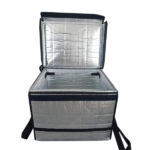
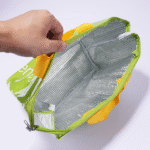
Choosing a cooler bag manufacturer in 2026 is not about finding a factory that can produce a sample. It is about finding a factory that can repeat the result, document the process, and support your product as market expectations rise. Buyers now expect stronger OEM support, clearer material claims, better compliance visibility, and more realistic advice on whether a bag should be custom developed or adapted from an existing design.
This matters because cooler bags are layered, use-case-driven products. Small production differences can change durability, konsistensi suhu, and customer perception. The right manufacturer therefore has to manage process as carefully as product.
Artikel ini akan membantu Anda menjawabnya:
- What capabilities matter most in a cooler bag manufacturer
- How to compare OEM, ODM, and private-label factory routes
- Which factory controls protect repeat-order quality
- What documents and standards help serious buyers reduce risk
- Bagaimana 2026 sustainability and market trends are changing factory selection
What should a strong cooler bag manufacturer do well?
A strong manufacturer controls materials, metode, and changes. It should be able to lock approved fabrics, busa, liner, trims, and reinforcement methods; turn approved samples into production instructions; inspect critical steps during manufacturing; and communicate clearly when a change is proposed.
That is especially important for insulated bags because much of the real risk is hidden inside the product. Uneven insulation, a weaker liner bond, or a simplified handle stitch can pass visual review but fail in daily use. A strong factory reduces these risks before the carton is sealed.
Core factory capabilities
| Kemampuan | What strong factories show | Mengapa itu penting |
|---|---|---|
| Material discipline | Approved materials and change control | Protects consistency |
| Sample management | Clear revision flow | Reduces launch errors |
| Process control | Defined sewing and reinforcement methods | Improves durability |
| Inspection logic | Inline and final checkpoints | Lowers defect escape |
| Problem solving | Fast root-cause feedback | Improves future orders |
OEM, ODM, or private label: which manufacturing path is best?
The best path depends on how specific your bag must be. If your application is unusual and you already know the required structure, OEM is often the best fit. If you want a faster route based on an existing body style, ODM can save time. If you only need branding on a proven bag, private label may be the smartest option.
Many buyers make better decisions once they separate “must be custom” from “would be nice to customize.” That alone can shorten lead time and reduce cost without hurting performance.
Simple decision guide
- Choose OEM when the route, memuat, or product shape requires a tailored structure
- Choose ODM when an existing body can be adapted quickly
- Choose private label when speed and lower development risk matter most
Which process controls reduce factory risk the most?
Pre-production control is usually the biggest risk reducer. Before bulk output begins, you should confirm the approved sample, approved materials, dimensi kunci, reinforcement points, and inspection plan. This is more powerful than relying only on final inspection later.
A useful factory review also checks how the approved sample becomes bulk instructions. Is there a golden sample? Are reinforcement points documented? Are material substitutions controlled? These questions often predict order success better than the quote itself.
Practical pre-production checklist
- Golden sample confirmed
- All core materials locked
- Dimensions confirmed under realistic loading
- Handle reinforcement method recorded
- Zipper and closure method approved
- Packaging method confirmed
- Inline and final inspection checkpoints agreed
Catatan praktis: Many “factory problems” are actually approval problems. The clearer the pre-production agreement, the smoother the order.
Which standards and documents should buyers review?
Good documentation supports repeatability and claim accuracy. ISO menjelaskan ISO 9001 as a globally recognized quality-management standard, which makes it useful when you want evidence of process discipline. amfori BSCI is useful when buyers want visibility into social-risk management. For textile-based bags, OEKO-TEX helps with harmful-substance questions, and GRS supports verified recycled-content claims. If food-contact layers are involved, FDA and EU rules require more specific review of intended-contact materials. (Organisasi Internasional untuk Standardisasi)
Buyers may also use EN 12546 as a useful reference point when discussing insulated bags and boxes. It is not a magic answer to every project, but it can provide a recognized frame for technical discussion. (iTeh Standards)
Document checklist for 2026
| Document or reference | What it helps with | When it matters most |
|---|---|---|
| Iso 9001 | Process control confidence | Repeat-order programs |
| amfori BSCI | Social-risk visibility | Retail and brand projects |
| OEKO-TEX | Textile safety questions | Reusable and consumer-facing bags |
| GRS | Recycled-content claims | Sustainability-led projects |
| Food-contact declaration | Intended-contact suitability | Food-related applications |
| DI DALAM 12546 reference | Technical discussion benchmark | Insulated bag evaluation |
Bagaimana 2026 trends changing cooler bag manufacturers?
Manufacturers are being pushed toward more transparent, more adaptable, and more sustainability-aware operations. EU packaging rules raise attention around packaging sustainability and labeling, while buyers are asking more often about recycled polyester and longer-life reuse logic. Pada saat yang sama, market growth in cold-chain packaging continues to attract more projects and more competition. (EUR-Lex)
That means the factories most likely to stand out are those that can do three things well: guide the buyer honestly, control the process carefully, and document claims clearly. A fast sample is still useful, but a fast sample with weak repeatability is not.
Perkembangan terbaru sekilas
- Buyers want more route-based product advice
- Recycled-material questions appear earlier in projects
- Documentation is increasingly part of the commercial offer
- Factories are judged more on repeatability, not just initial speed
- Common questions about cooler bag manufacturers
What is the best sign of a strong factory?
A clear process for managing materials, sample revisions, and production controls.
- Do I always need a full OEM project?
TIDAK. Many strong products can be built from adapted existing bodies.
- Is one great sample enough?
- TIDAK. You also need to know how the factory will repeat it in bulk.
Why do documentation and standards matter?
They help buyers reduce risk, support claims, and compare factories more fairly.
What is the smartest first step?
Define the use case, then choose the simplest manufacturing route that still meets the performance need.
Ringkasan dan Rekomendasi
The right cooler bag manufacturer in 2026 combines process control, product understanding, and documentation clarity. That mix protects your repeat orders, your brand, and your commercial flexibility far better than a low price alone.
The best next step is to create a factory review sheet with five sections: capability, sample control, production control, dokumentasi, dan komunikasi. Then use it with every factory you compare. That will give you a stronger basis for selecting a manufacturer that can truly scale with you.
Tentang tempk
Tempk develops insulated bag solutions with a strong focus on application fit, production discipline, and sourcing clarity. We help buyers move from broad factory searches to practical manufacturing decisions that make sense in real cold-chain and last-mile use.
That helps your cooler bag manufacturer selection become more structured, lebih hemat, and more dependable over time.