Pengiriman Internasional Gel Brick: Build a Border-Ready System
batu bata gel international shipping is feasible on many routes, but the coolant cannot be assessed separately from the commodity, pembawa, proses kepabeanan, and thermal packout. A priority flight may be short while export acceptance, keamanan, transfer, izin, and last-mile delivery take much longer. The package must cover the complete door-to-door interval, and every organization at a handoff needs accurate instructions. Before ordering bricks, confirm that the product is admissible, the exact coolant and monitoring device are accepted, and the final configuration can meet product-specific criteria under credible route conditions.
International readiness is therefore both a packaging task and an information-control task.
Establish what is permitted before solving the thermal problem
Mulailah dengan muatannya. Makanan, obat, bahan diagnostik, biological substances, bahan kimia, tanaman, animal products, and devices containing batteries can trigger different export, impor, kemasan, dokumentasi, atau persyaratan operator. Confirm the commodity description, klasifikasi, kuantitas, primary and secondary containment, destination permissions, and consignee authorization with the responsible regulatory, barang berbahaya, and trade specialists.
Then assess the coolant. “Gel brick” describes a format, not a transport classification. Water-rich gels, salt mixtures, and other phase-change formulations may not have identical properties or regulatory status. Obtain current product-specific safety and transport information from the supplier. If the filling, kerang, or production specification changes, review both classification and thermal implications.
Akhirnya, verify the route and service. Udara, jalan, laut, pos, and express networks apply different legal frameworks and operator restrictions. National or airline variations may be more restrictive than a general rule. Written acceptance should cover the exact product, pendingin, kuantitas, kemasan, perangkat pemantauan, asal, tujuan, and transit points rather than a generic assurance that gel packs are allowed.
Keep gel bricks and dry ice in separate decisions
Es kering is solid carbon dioxide and is identified as UN 1845 in air-transport dangerous-goods rules. Its package must permit gas release, and applicable marking, kuantitas, dokumentasi, penanganan, and operator provisions need to be followed. It also produces a much colder environment than a conventional chilled gel brick.
A gel brick normally does not rely on carbon-dioxide sublimation, but that difference is not proof that every formulation or completed shipment is unrestricted. Sebaliknya, a gel brick is not an alternative when the product genuinely requires frozen or deep-cold conditions. Let product stability and current transport review determine the refrigerant category.
Make one cross-border release record
International failures often occur between functions. Quality approves the shipper, logistics books the route, trade compliance prepares an invoice, a broker waits for arrival, and the consignee expects delivery without seeing the final instructions. A single destination record makes those dependencies visible.
| Release area | Required confirmation | Accountable party | Recheck when |
|---|---|---|---|
| Komoditi | Clear description, klasifikasi, izin, containment and import eligibility | Product and trade specialists | Produk, kuantitas, market or rule changes |
| Coolant and devices | Exact gel-brick documentation, logger battery or radio acceptance, jumlah | Dangerous-goods and carrier contacts | Pemasok, perumusan, device or carrier changes |
| Thermal packout | Wadah, brick identity and state, jangkauan muatan, duration and acceptance | Kemasan dan kualitas | Komponen, musim, payload or route changes |
| Mengangkut | Booked handling condition, stasiun, connections, storage and exception service | Logistics provider | Schedule, bandara, forwarder or service changes |
| Bea cukai | Invoice, daftar pengepakan, nilai, asal, izin, importer and broker pre-alert | Trade compliance and broker | Destination or clearance-process changes |
| Kuitansi | Named contact, opening hours, penyimpanan, inspeksi, logger retrieval and quarantine | Consignee and quality | Lokasi, personnel or local holiday changes |
| Contingency | Time-zone coverage, hold options, escalation and disposition authority | Logistik dan kualitas | Incident learning or lane review |
Keep the record controlled and current. A route can change hubs, a direct service can become seasonal, and an importer’s authorization can lapse. Reusing last year’s file without confirmation can consume more thermal reserve than any insulation improvement saves.
Convert the itinerary into a thermal budget
Start timing when product or coolant leaves its controlled preparation environment and stop only when the receiver has transferred the goods to appropriate storage. Termasuk pengepakan, internal release, pickup wait, export screening, tempat tinggal terminal, uplift, transfer, penanganan impor, customs examination, destination sort, pengiriman, dan membongkar.
Use route evidence to establish a contingency rather than adding an arbitrary extra period. Review booking-to-delivery history, koneksi yang terlewat, clearance variability, akhir pekan, local holidays, document queries, pengiriman jarak jauh, and intervention capability. The package should cover justified operating variability. Events beyond that boundary need a defined escalation and product-disposition response.
International journeys can cross climates within hours. A hot origin, cold transfer hub, and warm destination may challenge different surfaces of the same package. Select external profiles that represent the route, not merely origin and destination averages. ISTA 7E provides parcel-distribution thermal profiles that can support development, while route history and monitored trials help determine whether additional or different challenges are appropriate.
Heat is only one concern. Deeply conditioned coolant can create a cold point against a freeze-sensitive payload, particularly when the destination or transfer environment is also cold. European GDP guidance for medicinal products advises arranging cool-packs to avoid direct contact where freezing could occur. Treat dividers, keadaan pengkondisian, and brick position as controlled parts of the design.
Qualify a package that can survive inspection and handling
A qualified international shipper is a defined configuration, not a branded box or a frozen component. The bill of materials should identify the insulation, karton luar, bagian dan kuantitas bata gel, metode pengkondisian, pemisah, liner, pita muatan, logger, penutup, Label, and assembly sequence.
Controlled testing needs product-specific acceptance criteria, justified hot and cold profiles, the planned door-to-door duration, muatan yang ekstrem, and relevant process tolerances. Standar ISTA 20 supplies a structured process for insulated-shipping-container design and qualification. A standard method supports evidence; it does not guarantee every airport, penundaan bea cukai, or commercial lane.
Mechanical protection belongs in the plan. International parcels experience compression, getaran, dampak, perubahan orientasi, and puncture opportunities. A leaking brick can wet labels, damage corrugated material, contaminate secondary packaging, and alter heat transfer. If mechanical conditioning can move coolant or damage insulation, evaluate the thermal effect on the final assembly.
Customs and security authorities may lawfully open a package. Make correct handling easier without obstructing inspection. Submit import documents through the accepted external and electronic channels rather than burying them inside the insulation. Place a concise layer diagram and reclosure instruction where an inspector or consignee can find it. Use tamper evidence where appropriate, and define how an opened or incorrectly reclosed shipper will be assessed at receipt.
A useful route trial tests people as well as insulation
After controlled development, representative monitored shipments can show whether the booking, serah terima, broker response, and receiving process match assumptions. Use commercial-intent components and trained routine staff. Reconcile temperature data with tracking, flight or transfer events, customs status, pemeriksaan paket, and unpacking time.
Misalnya, a laboratory exporting chilled kits may have a fast itinerary but unreliable weekend broker coverage. An early-week dispatch, reviewed commodity description, consignee pre-alert, and realistic clearance allowance can reduce risk without adding coolant. The packout still requires appropriate evidence, but operational readiness preserves its capacity for delays that cannot be prevented.
Align labels, dokumen, pemesanan, dan menangani
Every instruction should describe the same shipment. A waybill requesting one handling condition while a label or quality agreement shows another creates ambiguity at the station. Align the carrier booking, dokumen komersial, applicable declarations, tanda paket, instruksi suhu, broker pre-alert, and receiver procedure.
Alat pengambilan keputusan yang berguna
Periksa detailnya sebelum Anda memilih kemasan
Alat cepat ini dapat membantu Anda membandingkan risiko rute, kebutuhan ukuran, pilihan pendingin, dan detail kemasan sebelum Anda meminta penawaran.
Pemilih Kemasan
Bandingkan opsi kemasan berinsulasi berdasarkan produk, rute, dan kebutuhan suhu.
Temukan kemasannyaKetahanan Jatuh Bahan Isolasi
Tinjau ketahanan jatuh dan faktor penanganan sebelum memilih bahan insulasi.
Periksa resistensiPelapis Kotak & Ukuran Penutup Palet
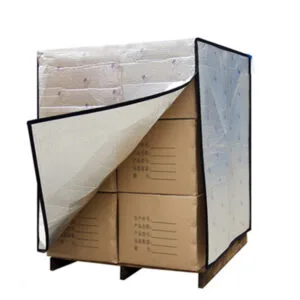
Centang kotak logika ukuran penutup palet dan liner untuk proyek pengemasan berinsulasi.
Perkiraan ukuranIATA’s Time and Temperature Sensitive label is used for healthcare cargo booked as time- and temperature-sensitive and communicates the permitted external transportation range. It is not evidence that the product inside remained within its own acceptance range, and applying the label alone does not qualify a pengirim pasif. Confirm the current labeling and acceptance rules with the airline or forwarder.
Use clear commodity wording. Vague terms such as “samples” or “cool pack” can invite queries because they do not explain what customs or the carrier is accepting. The invoice, daftar pengepakan, izin, and waybill should use consistent, accurate descriptions appropriate to their purpose.
If intervention is offered, define it technically. A local station should not open the shipper and exchange bricks with visually similar stock unless the procedure, bagian, kondisi awal, posisi, dokumentasi, and authority have been approved. Often the safer response is to move the closed package into an appropriate controlled environment and expedite it.
Monitoring must lead to a receipt decision
A data logger records exposure; itu tidak melindungi suhu. Select it for the required measurement range, ketepatan, recording needs, status kalibrasi, lamanya, and data-access process. Confirm carrier acceptance of its battery and any radio transmission. A connected device may not communicate at every airport or destination even when it continues to record.
Define activation, identifier linkage, penempatan, clock basis, pengambilan, tinjauan, dan retensi data. A logger touching a frozen brick reports an interface that may not represent the payload. A device hidden in the most stable central position may miss edge risk. Use development mapping to justify routine placement.
Di tempat tujuan, the consignee should record delivery and unpacking times, periksa kartonnya, isolasi, segel, batu bata, and product packaging, stop or retrieve the monitor as instructed, and transfer goods promptly. When an alarm or deviation occurs, preserve the evidence and follow the approved quarantine and excursion process. Product stability information, durasi pemaparan, measurement context, and quality authority determine disposition; appearance or a generic alarm does not decide it alone.
Source and budget for the whole international system
International procurement requires precision across repeat orders. Specify nominal filled dimensions and tolerances, massa, konstruksi luar, deskripsi pendingin, desain segel, instruksi pengkondisian, label and lot identity, paket kasus, tempat produksi, penyimpanan, dan mengubah pemberitahuan. Production-intent samples should come from the specification and site expected to serve commercial orders.
Request current safety, bahan, mengangkut, and other application documents needed for your product and destinations. Confirm the scope and exact item. A food-contact statement does not establish a hold time, a quality-system certificate does not classify a coolant, and a thermal report from a different container does not qualify your packout.
Ask how the supplier controls fill, ukuran, segel, kebocoran, pelabelan, nonconforming stock, dan perubahan. Commercial review should cover order quantities, asumsi waktu tunggu, custom geometry or printing, case and pallet format, transportasi masuk, and contingency supply. If a formulation, kerang, lokasi, atau proses perubahan, your team should assess documents, bugar, klasifikasi, and thermal evidence before the revised product enters a controlled packout.
Landed cost and recovery follow the network
Compare landed cost rather than coolant price. Include insulation, pengkondisian, mengemas tenaga kerja, pemantauan, freight mass and cube, dokumentasi ekspor, pialang, duties or taxes where applicable, penanganan tujuan, delay investigation, paparan kehilangan produk, and disposal or returns.
Cross-border reuse can work between facilities with regular backhaul. It needs ownership, consolidated return transport, customs review where relevant, pembersihan, inspeksi, identifikasi, rekondisi, loss tracking, dan pensiun. A physically reusable brick sent to scattered one-way recipients does not create such a system. Returning it individually may add more cost and transport than it avoids.
End-of-life instructions also need destination knowledge. Material accepted in one recovery system may not be accepted in another, particularly when gel residue or mixed construction is present. Ask for accurate material information and use market-specific guidance. Any sustainability-driven material or geometry change should pass change control and appropriate performance review; reduced packaging that increases product loss is not a sound outcome.
Pertanyaan yang sering diajukan
Are gel bricks accepted in international air cargo?
They often are, but acceptance depends on the exact filling, kuantitas, muatan, rute, operator, and national rules. Give the carrier or forwarder current product-specific documentation and complete shipment details. Do not generalize from a past shipment, a similar-looking brick, or the coolant name alone.
Does a gel brick require dangerous-goods paperwork?
That conclusion requires classification of the actual formulation and complete shipment. The payload may also trigger requirements independently of the coolant. Obtain current supplier information and use competent dangerous-goods review. Do not copy dry-ice documentation onto gel coolant, and do not claim unrestricted status without checking the applicable lane and operator.
How much customs delay should the packout cover?
Tidak ada margin universal. Base the design allowance on route history, permit readiness, broker coverage, akhir pekan, hari libur, inspection risk, consignee response, dan opsi pemulihan. Challenge the selected duration under appropriate profiles and define escalation for events beyond it. Preventable documentation delays should be corrected rather than absorbed with more coolant.
Can customs open a qualified temperature-controlled package?
Authorities may inspect it. Make documents accessible, provide clear handling and reclosure information, and use appropriate tamper evidence. Saat diterima, document the opening, seal and packout condition, dan catatan suhu. If inspection changed coolant placement or closure, follow the quality procedure instead of assuming the original evidence still applies unchanged.
Is a logger mandatory in every international shipment?
Persyaratan bervariasi menurut produk, pasar, perjanjian kualitas, program, dan risiko. Some shipments may require monitoring, while others use a qualified system with a defined verification strategy. Decide with the responsible quality and regulatory teams. Whatever frequency is chosen, the device must be placed correctly and its result connected to action.
Make the border visible in the packout plan
Reliable gel brick international shipping aligns four systems: product and transport classification, door-to-door thermal design, carrier and customs execution, and controlled receipt. Confirm the exact materials, build around realistic clearance and seasonal exposure, qualify the commercial configuration, and keep labels and documents consistent. Review the lane whenever a route, pemasok, komponen, melayani, or destination process changes.
Tentang tempk
Dan Tempk, kami menawarkan Gel Ice Packs Dan kemasan terisolasi pilihan untuk makanan, medis, and other temperature-sensitive uses. We can discuss brick format, ukuran, pengkondisian, isolasi cocok, and available product information using the commodity and route details you provide. Our component input can support development, but carrier acceptance, import requirements, product compliance, and complete-system qualification remain specific to your shipment and destination.
CTA: Share your commodity, asal, tujuan, moda transportasi, jangkauan muatan, kondisi yang diperlukan, waktu rute, clearance history, dan kebutuhan dokumentasi dengan Tempk. We can help identify candidate gel-brick and insulated-packaging formats for evaluation before launch.