How Do Vacuum Insulated Boxes Deliver High Performance Insulation?
Efficient cold chain logistics depend on equipment that can maintain precise temperatures for longer periods without excessive refrigerant or energy. A kotak terisolasi vakum achieves this feat by combining high performance vacuum insulation panels (VIP) with phase change materials (PCMS) and durable shells, allowing perishable goods or temperature sensitive pharmaceuticals to stay within tight temperature ranges for days. Dalam panduan ini Anda akan belajar how vacuum insulated boxes work, why they are superior to conventional coolers, dan inovasi apa yang muncul 2025. Menurut laporan industri, vacuum insulation panels reduce thermal conductivity to 2–4 W/(m·K), enabling thin yet powerful insulation. Some integrated boxes maintain cold temperatures for over 120 hours across ranges from –30 °C to 80 ° C.. We’ll translate these technical details into practical guidance so you can choose the right solution.

What is a vacuum insulated box and how does it work? – Explains the structure and science behind vacuum insulation panels and phase change materials.
How does a vacuum insulated box compare to foam or rotomolded coolers? – Discusses thermal performance, daya tahan, berat dan biaya.
Which innovations and trends are shaping vacuum insulated boxes in 2025? – Covers smart sensors, bahan berkelanjutan, AI enabled tracking and advanced insulation.
How do phase change materials enhance performance? – Shows how PCMs extend duration and enable precise temperature ranges.
How can you choose and use a vacuum insulated box effectively? – Provides tips, use scenarios and maintenance guidance.
What Is a Vacuum Insulated Box and How Does It Work?
A vacuum insulated box uses vacuum insulation panels (VIP) to drastically slow down heat transfer. Unlike ordinary foam coolers, VIPs consist of a rigid porous core sealed inside a gas tight envelope from which air is evacuated. By eliminating air, conduction and convection are largely suppressed. Thermtest explains that a vacuum panel contains a highly porous core and thin envelope; during installation the air is evacuated, creating a tight internal vacuum. The outer film is impermeable to gas and water vapour, because penetration would shorten the panel’s life and reduce insulation. VIPs achieve thermal conductivities as low as 2–4 W/(m·K), far below that of polystyrene or polyurethane foam.
Understanding the Vacuum Insulation Panel (VIP)
VIPs contain a rigid core (silika yang sering berasap, fiberglass atau aerogel) supported by a vacuum tight envelope made from multilayer films. NASA’s Tech Briefs describe a nearly seamless vacuum insulated box concept where flexible polymer modified silica aerogel forms the core; this material retains thickness under compression and resists collapse when evacuated. The envelope can be shaped to create a seamless five sided box, minimizing thermal bridges. Thermtest notes that thermal bridges along the panel’s perimeter can reduce thermal resistance by about 32 persen. Untuk menghindari hal ini, high quality VIPs employ meticulous sealing techniques and edge insulation.
| Komponen | Tujuan | Contoh Materi | Apa artinya bagimu |
| Inti | Provides structural support and resists compression under vacuum. | Fumed silica, silica aerogel, fiberglass. | Low density and high porosity deliver thermal conductivities around 2–4 W/(m·K), enabling thin insulation. |
| Envelope | Creates a gas tight vacuum and prevents gas/moisture ingress. | Metalized films, aluminum plastic laminates. | A durable envelope prolongs lifespan; damage or punctures can degrade performance by increasing conductivity to 20 Dengan/(m·K). |
| Getter/Desiccant | Absorbs residual gases and moisture to maintain vacuum over time. | Activated carbon, metal getters. | Maintains consistent insulation performance for years. |
| Cangkang Pelindung | Protects the VIP from mechanical damage and allows integration into shipping boxes. | Busa poliuretan, polipropilena, corrugated plastic. | Enhances durability but may add weight; integrated designs minimise thickness. |
Vacuum insulated boxes often integrate multiple VIP panels to form the walls, lid and base. The joint design minimises seam losses. NASA’s concept uses a cross shaped aerogel blanket folded into a box, eliminating most seams and leaving only the door seal. This design reduces heat leakage compared with assembling separate panels.
How Heat Transfer Is Minimized
Heat transfer occurs by conduction, konveksi dan radiasi. Zojirushi explains that in vacuum insulation, a man made vacuum between two panels isolates the temperature of fluids on each side. Removing air reduces conduction, while a thin reflective layer inside reflects radiant heat. Tight seals block convection. Bahkan sebuah 1 mm vacuum gap provides effective insulation. This technology originated in the 1890s with Dewar flasks and has been refined over decades. Modern VIPs maintain their performance for years but can lose effectiveness if punctured or if moisture enters.
Tip Praktis: Always handle vacuum insulated boxes carefully. Avoid puncturing the outer shell, and store them away from sharp objects. If your box includes a vacuum gauge or indicator, check it periodically to ensure the vacuum remains intact.
Contoh kasus: NASA’s Seamless Vacuum Insulated Box
NASA engineers proposed a nearly seamless vacuum insulated box that uses a polymer modified aerogel core to reduce heat leaks. The box is fabricated by folding a cross shaped aerogel blanket into a five sided structure, then sealing it in a vacuum bag. The core retains thickness under atmospheric pressure due to its mechanical strength, resulting in greater insulation performance compared with conventional aerogel or foam cores. Although the proposal dates from 2010, it illustrates the principle of minimizing seams and using high performance aerogels—principles that continue to influence 2025 desain.
Real World Uses of Vacuum Insulated Boxes
Vacuum insulated boxes have moved beyond laboratory concepts. High end coolers like the Qool Box (developed by Vac Q Tec) use vacuum insulation panels instead of foam. This construction reduces weight and external dimensions; the large Qool Box weighs about 17 lb (7.7 kg) compared with a 35 lb (16 kg) Yeti V Series cooler of similar volume. Because the walls, lid and floor are vacuum insulated, the cooler retains frozen temperatures below –15 °C for up to 3.6 days when paired with phase change elements. It can maintain 2 °C or below for 6.4 days and even retain ice for over 17 hari -hari. These consumer products showcase how VIP technology provides long term temperature control without power.
Why Choose Vacuum Insulated Boxes Over Traditional Coolers?
Traditional coolers use expanded polystyrene (EPS) atau busa poliuretan. While inexpensive, foam insulation typically offers thermal conductivities around 30–35 mW/(m·K) and requires thick walls to achieve extended performance. Vacuum insulated boxes offer several advantages:
Kinerja termal yang unggul
Extended Temperature Maintenance: Sofrigam explains that VIPs can maintain required temperature ranges for 7–10 days—two to three times longer than the best classic insulation. ThermoSafe’s VIP shippers combine a durable outer film and tight panel fit, far surpassing the thermal performance of conventional EPS boxes.
Wide Temperature Range: Supertech’s integrated vacuum insulated box offers an insulation range from –30 °C to 80 ° C., with durations exceeding 120 jam. Optional inserts support specific ranges (10–20 °C, 2–8 ° C., –1–3 °C and –15–25 °C).
Reduced Refrigerant and Weight: ThermoSafe notes that VIP panels do not require an external EPS protective shell and therefore enable smaller, lighter containers. Superior thermal performance reduces refrigerant requirements and supports extended shipping.
Durability and Design Flexibility
Integrated Molding: The Supertech integrated vacuum insulated box is molded with PU VIP foam, creating a stable and durable structure. This integration prevents delamination and improves impact resistance.
Seamless Construction: NASA’s seamless box concept shows that seamless construction reduces heat leaks by minimizing thermal bridges. Many modern commercial boxes follow similar principles.
Thin Walls and More Internal Volume: VIPs allow thinner walls because of their high insulation value. Sofrigam notes that VIPs reduce the thickness of box sides and reduce the volume of cold source needed.
Environmental and Operational Benefits
Jejak Karbon Lebih Rendah: VIP boxes require less refrigerant and energy, which lowers greenhouse gas emissions over the supply chain. Thermtest notes that vacuum insulation can significantly reduce heating and cooling energy.
Penghematan biaya: Although VIPs are initially more expensive, the reduction in freight weight, refrigerant use and spoilage can lead to lower total cost of ownership. ThermoSafe emphasises that smaller, lighter VIP shippers reduce freight costs.
Potential Drawbacks
Fragility and Cost: Sofrigam warns that VIPs can be fragile and often require protective materials, increasing thickness and cost. VIP panels are more expensive than foam.
Thermal Bridges: Improper sealing or punctures create thermal bridges, mengurangi efisiensi. Thermtest notes that damage can raise thermal conductivity to 20 Dengan/(m·K).
Tip: When comparing coolers, look beyond upfront price. Calculate total shipping cost, product value and risk of spoilage to determine if a vacuum insulated box offers better return on investment.
Performance Comparison Table
| Jenis Isolasi | Typical Thermal Conductivity | Wall Thickness for 72 h cold hold (kira-kira.) | Typical Duration without PCM | Catatan |
| Polystyrene yang diperluas (EPS) | ~30–35 mW/(m·K) | 40–50mm | 24–48 h | Biaya rendah, dinding tebal, heavy refrigerant requirement. |
| Busa Poliuretan (Pu) | ~25–30 mW/(m·K) | 30–40mm | 24–60 h | Moderate performance; still bulkier and heavier than VIP. |
| Panel Insulasi Vakum (VIP) | 2–4 W/(m·K) | 10–15 mm | 7–10 hari | Dinding tipis, highest insulation value; more expensive and fragile. |
How Do Phase Change Materials Enhance Vacuum Insulated Boxes?
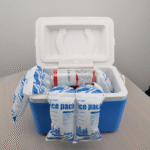
VIPs slow heat transfer, but they cannot maintain specific temperatures alone. Bahan perubahan fasa (PCMS) complement VIPs by absorbing or releasing latent heat at fixed temperatures. PCMs are sealed blocks filled with substances that melt or solidify at predetermined temperatures. The Qool Box relies on PCMs called “Temperature Elements,” which come in five temperature ranges from 18–25 °C down to –25 °C. Users freeze the elements and place them inside the cooler; as the PCMs melt, they absorb heat and maintain a consistent temperature for up to 10 hari -hari.
Benefits of PCMs in Vacuum Insulated Boxes
Kontrol Suhu Yang Tepat: PCMs enable boxes to maintain narrow ranges (MISALNYA., 2–8 °C for controlled fresh, –2–2 °C for meat). This is critical for vaccines and biologics that require tight tolerances.
Durasi yang Diperpanjang: Qool’s standard cool PCMs keep contents at or below 2 ° C untuk 6.4 hari -hari, while deep freeze PCMs maintain –15 °C for 3.6 hari -hari. Without PCMs the same cooler retains ice for 17–27 days.
Reduced Reliance on Ice: PCMs eliminate messy melting ice. They are reusable and chosen based on the required temperature range.
Compatibility with VIPs: Vacuum insulated walls reduce heat gain, allowing PCMs to last longer. Gabungan, they form a passive system that can rival powered refrigeration for short to medium durations.
Practical Advice for Choosing PCMs
Identify the Required Range: Select PCMs based on product requirements (MISALNYA., 2–8 °C untuk vaksin, –20 °C for ice cream). Supertech offers optional inserts covering common ranges (10–20 °C, 2–8 ° C., –1–3 °C, –15–25 °C).
Pre Condition Properly: Freeze PCMs for the recommended period (often 24–72 h) at the correct freezer temperature. Qool recommends one to three days depending on element type.
Position Strategically: Place PCMs on the sides and top of the box to ensure even cooling. Avoid covering ventilation holes or sensors.
Reuse Responsibly: Inspect PCMs for leaks or damage after each cycle. Replace damaged elements promptly.
What Are the Latest Innovations and Trends in Vacuum Insulated Boxes (20242025)?
Industri rantai dingin berkembang dengan cepat. Market analysts project the global temperature controlled packaging solutions market will reach about US$26.2 billion by 2030 dengan tingkat pertumbuhan tahunan gabungan di atas 11.2 %. For insulated shipping boxes specifically, Future Market Insights estimates that the industry will grow from US$3.8 billion in 2025 to US$8.5 billion by 2035. Several innovations are driving this growth:
Sensor Cerdas dan Integrasi IoT
Packaging no longer serves solely as a passive shell. Packaging Strategies highlights that smart sensors embedded in packaging materials will provide real time tracking of temperature, humidity and other parameters. This visibility reduces spoilage and offers greater control. ITB Packaging echoes this trend, mencatat itu IoT equipped packaging allows continuous monitoring and proactive risk mitigation.
Bahan isolasi lanjutan
2024 Dan 2025 are seeing rapid adoption of aerogel, advanced foams and VIPs, offering superior thermal performance while reducing weight. ITB Packaging points out that these advanced insulation technologies—including VIPs and PCMs—help companies reduce carbon footprints and operational costs. Di Eropa, researchers are developing polymer modified aerogels and seamless VIP designs to further improve durability.
Sustainable Packaging and Circular Materials
Environmental sustainability is a major driver. Packaging Strategies reports that cold chain providers are embracing kompos, recyclable and reusable materials, even exploring mushroom based packaging to replace wasteful materials. ITB Packaging similarly notes that companies adopt bahan yang dapat terbiodegradasi dan dapat dibuat kompos and emphasize reuse. For vacuum insulated boxes, manufacturers are experimenting with bio based aerogels and eco friendly vacuum envelopes. Future Market Insights also highlights the integration of recyclable materials and AI enabled temperature mapping to comply with sustainability and regulatory demands.
Robotika dan Otomasi
As e commerce and pharmaceutical distribution soar, packaging operations must scale efficiently. Robotics and automation are reshaping cold chain packaging, streamlining tasks such as sorting, palletizing and maintenance. Automated defect detection and AI based quality control help reduce waste and ensure consistent box quality.
Personalized and Modular Design
Packaging solutions are becoming more customizable. Packaging Strategies observes that cold chain boxes now come in tailored designs and sizes to meet specific product needs. Supertech offers ukuran yang dapat disesuaikan for integrated vacuum insulated boxes, while Qool offers different temperature element sets to match individual applications.
Trend Insight: Mengharapkan 2025 vacuum insulated boxes to integrate smart sensors, AI driven temperature control, dan bahan yang berkelanjutan. They will support digital traceability (MISALNYA., blockchain) and be designed for reuse or recycling, selaras dengan tujuan ekonomi sirkular.
Tips Praktis: Choosing and Using a Vacuum Insulated Box
Selecting the right vacuum insulated box depends on your product, durasi dan anggaran. Inilah cara membuat keputusan yang tepat:
1. Define Your Temperature Range and Duration
Determine the required temperature and hold time. Misalnya, vaksin seringkali memerlukan suhu 2–8 °C, while ice cream needs –20 °C. Supertech’s integrated box offers ranges from –25 °C up to 80 °C with durations exceeding 120 jam. Qool PCMs provide specific temperature ranges like –2–2 °C, –15–25 °C or 18–25 °C.
2. Consider Internal Volume vs External Size
VIPs enable thinner walls, yielding more internal volume for a given external size. ThermoSafe emphasises that VIP shippers don’t require an EPS protective shell, so boxes are smaller and lighter. Compare internal dimensions and payload capacity.
3. Evaluate Durability and Handling
Look for integrated molding or seamless designs to minimize weak points. Supertech’s boxes are integrally foamed and molded for stability. Consider protective outer shells or cases if shipping in rough environments.
4. Choose Compatible Phase Change Materials
Select PCMs based on your target temperature and duration. Understand the freezing time required and ensure you have adequate freezer capacity. Qool’s PCMs must be frozen for one to three days.
5. Factor in Cost of Ownership
While VIP boxes are more expensive up front, consider savings from reduced refrigerant, lower freight costs and decreased spoilage. ThermoSafe points out that superior insulation reduces freight weight and refrigerant needs.
6. Plan for End of Life and Sustainability
Opt for products that offer recycling or reuse programs. Some manufacturers offer returnable solutions or rental programmes to reduce waste. VIP boxes may integrate recyclable materials or replaceable VIP panels.
Real World Application Example
Skenario: You need to ship 50 vials of a biologic vaccine at 2–8 °C for five days during summer.
Choose an integrated vacuum insulated box with a 10 L internal volume and 2–8 °C PCM inserts. Supertech’s models support this range and maintain temperature for over 120 jam.
Pre condition the PCMs in a medical freezer at –20 °C for at least 48 jam.
Place the vials inside secondary packaging; surround them with PCM blocks and install a data logger for real time monitoring.
Seal the box and confirm the vacuum indicator is intact. Selama transit, monitor temperature via the IoT sensor (jika tersedia). You can achieve stable temperatures without dry ice or active refrigeration.
2025 Perkembangan dan Tren Masa Depan
The cold chain packaging sector’s future is shaped by technology, keberlanjutan dan tekanan peraturan. Oleh 2025, expect these developments:
Enhanced Thermal Materials
Polymer modified aerogels and nano structured insulation promise even lower thermal conductivity and longer lifespans. Research is exploring bio based aerogels to reduce environmental impact. Vacuum panels may incorporate aerogels reinforced with fibers for improved durability.
AI Enabled Temperature Mapping
Future Market Insights notes that AI enabled temperature mapping and RFID enabled tracking are being integrated into insulated shipping boxes. Artificial intelligence can predict temperature excursions and optimize PCM placement, while RFID tags provide traceability.
Sustainable Supply Chains
Companies are adopting closed loop systems where vacuum insulated boxes are rented, retrieved and refurbished. The emphasis on recyclable materials means more boxes will use easily separable components and modular panels.
Regulatory Compliance and Quality Standards
Praktek Distribusi yang Baik (PDB) guidelines require temperature monitoring and qualification standards. Sofrigam emphasises that VIP packaging helps meet strict requirements for pharmaceuticals. Expect stricter standards for temperature control and data integrity.
Consumer Applications
Vacuum insulated boxes aren’t limited to industrial logistics. Consumers are adopting high end coolers like Qool for camping and outdoor events, benefiting from days of ice retention and precise temperature control. As prices decline and sustainability becomes a priority, consumer adoption will increase.
Pertanyaan yang sering diajukan
- How long can a vacuum insulated box maintain its temperature?
A well designed vacuum insulated box using VIPs and PCMs can maintain target temperatures for 7–10 days. Integrated boxes with advanced VIPs and PCM inserts can hold specific ranges (MISALNYA., –15 °C) for 3–6 days and maintain ice for up to 17–27 days.
- What makes a vacuum insulated box different from a traditional foam cooler?
Foam coolers use EPS or PU foam and rely on thick walls and ice. Vacuum insulated boxes use VIPs that have thermal conductivities around 2–4 W/(m·K), enabling thinner walls and longer duration. They often integrate phase change materials to provide precise temperature control. Foam coolers typically maintain cold for 1–2 days, while VIP boxes can last a week or more.
- Are vacuum insulated boxes environmentally friendly?
VIP boxes reduce refrigerant use and lower freight weight, resulting in lower carbon emissions. Manufacturers are increasingly using recyclable and bio based materials. Namun, VIPs can be more difficult to recycle due to mixed materials, so choose suppliers with take back programmes.
- Can a vacuum insulated box be used for both hot and cold items?
Ya. The high insulation value works in both directions. Supertech’s integrated boxes provide an insulation range from –30 °C up to 80 ° C.. Selecting appropriate PCM inserts or leaving them out allows the box to maintain hot or cold contents.
- How should I clean and maintain a vacuum insulated box?
Wipe the interior with a mild detergent and avoid abrasive cleaners. Check the vacuum indicator or seal for damage; punctures can degrade performance. Store PCMs separately and ensure they are dry before reuse.
Ringkasan dan Rekomendasi
Vacuum insulated boxes leverage vacuum insulation panels and phase change materials to deliver unmatched thermal performance, maintaining precise temperature ranges for days. VIP technology offers low thermal conductivity (2–4 W/(m·K)), enabling thin walls, reduced weight and extended hold times. Combined with PCMs, these boxes can keep contents frozen or refrigerated for up to 10 hari -hari. Inovasi di 2025 termasuk sensor pintar, AI enabled temperature mapping, sustainable materials and seamless integrated designs. When choosing a vacuum insulated box, tentukan kisaran suhu Anda, evaluate internal volume, consider durability and select compatible PCMs. Although VIP boxes have higher upfront costs and require careful handling, their superior performance and sustainability benefits make them a compelling investment for both industrial and consumer use.
Langkah yang dapat ditindaklanjuti
Nilai Kebutuhan Anda: List the temperature range, duration and product value for each shipment or use case.
Compare Models: Evaluate different vacuum insulated boxes based on internal volume, insulation range, berat dan biaya. Look for integrated molding or seamless designs for durability.
Pilih PCM: Choose phase change materials matching your temperature requirements and pre condition them properly.
Melaksanakan Pemantauan: If shipping high value goods, add data loggers or IoT sensors for real time temperature tracking.
Plan for Sustainability: Prefer suppliers offering recyclable materials and take back programmes.
Tentang tempk
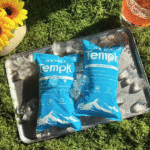
Tempk is a cold chain packaging specialist focused on delivering high performance insulation solutions. We design and manufacture vacuum insulated boxes, phase change materials and gel packs that ensure your temperature sensitive products arrive safely. Our products combine durable outer shells with advanced VIPs and customizable PCM inserts to meet diverse temperature requirements—from frozen biologics to warm prepared meals. Dengan pengalaman puluhan tahun dan komitmen terhadap keberlanjutan, we provide solutions that reduce shipping weight, lower refrigerant needs and support reuse and recycling. Our engineering team continually innovates, incorporating smart sensors and AI based temperature mapping to keep you ahead of industry trends.
Panggilan untuk bertindak: To discuss your cold chain challenges or request a product demonstration, contact our experts at Tempk today. We’re here to help you choose the right vacuum insulated box for high performance insulation and optimize your cold chain operations.