Setiap menit berarti ketika barang yang mudah rusak melakukan perjalanan jarak jauh. Kotak EPP besares—wadah berinsulasi yang terbuat dari polipropilena yang diperluas—membantu menjaga kondisi rantai dingin selama berhari-hari dengan menggabungkan kekuatan ringan dengan insulasi unggul. Mereka menjaga konten pada suhu target dari –40°C hingga +110°C dan tahan terhadap benturan tanpa retak. Panduan ini menjelaskan mengapa memilih kotak EPP yang besar dapat mengoptimalkan rantai pasokan Anda 2025 dan seterusnya, menggunakan contoh-contoh praktis dan data pasar terkini. Anda akan mendapatkan kriteria seleksi yang jelas, tips penanganan dan gambaran tren terkini dalam logistik rantai dingin.
Mengapa kotak EPP besar unggul dalam isolasi termal dan penyerapan guncangan
Perbandingan EPP dengan busa lain seperti EPS dan EPE
Bagaimana memilih ukuran dan desain kotak EPP yang tepat untuk kargo Anda
Praktik pemeliharaan untuk memaksimalkan umur dan kebersihan
2025 tren: Keberlanjutan, Pemantauan IoT dan perubahan peraturan membentuk pengemasan rantai dingin
Apa Itu EPP Box dan Mengapa Memilih Ukuran Besar?
Kotak EPP besar adalah wadah cetakan yang terbuat dari polipropilen yang diperluas, busa sel tertutup dengan struktur sarang lebah yang memadukan manik-manik individu tanpa perekat. EPP menggabungkan bobot ringan dan ketahanan, menawarkan penyerapan dampak tinggi dan isolasi termal namun tetap dapat didaur ulang sepenuhnya. Sel sarang lebah memerangkap kantong udara yang memperlambat perpindahan panas, memungkinkan kotak untuk menyimpan makanan, obat-obatan dan biologi pada suhu stabil selama transit. Karena kotak EPP ringan, pekerja dapat menangani kontainer besar tanpa ketegangan, mengurangi risiko cedera dan biaya pengiriman.
EPP vs. Bahan Busa Lainnya
EPP mengungguli polistiren yang diperluas (EPS) dan polietilen yang diperluas (EPE) dalam beberapa cara. Menurut spesialis polimer, Kepadatan EPP berkisar antara 15–100kg/m³, memungkinkan bobot yang lebih rendah tanpa mengorbankan kekuatan. Struktur sel tertutupnya memberikan pemulihan elastis yang sangat baik dan penyerapan energi yang tinggi; EPS menunjukkan pemulihan yang buruk dan penyerapan energi yang moderat, sementara EPE hanya memberikan bantalan yang moderat. EPP juga tahan suhu dari –40°C hingga +110°C serta tahan terhadap minyak dan bahan kimia, sehingga cocok untuk aplikasi rantai pembekuan dan panas. Sebaliknya, EPS dan EPE menurun akibat dampak berulang dan siklus suhu, membatasi penggunaannya kembali.
| Bahan Busa | Kepadatan Khas (kg/m³) | Pemulihan Elastis | Apa artinya bagimu |
| EPP | 15–100 | Bagus sekali | Kotak tetap ringan namun tahan lama, memungkinkan banyak siklus penggunaan kembali tanpa deformasi. |
| EPS | 10–50 | Miskin | Kotak mudah retak dan memberikan penyerapan guncangan yang terbatas; sebagian besar cocok untuk sekali pakai. |
| EPE | 20–80 | Sedang | Menawarkan beberapa bantalan tetapi berubah bentuk seiring waktu, mengurangi efisiensi isolasi. |
Keuntungan Memperbesar Ukuran Kotak
Kotak EPP yang besar memberikan keuntungan logistik dan ekonomi dibandingkan kontainer yang lebih kecil:
Muatan lebih tinggi: Volume internal yang lebih besar menampung lebih banyak produk atau item yang lebih besar, mengurangi jumlah pengiriman yang diperlukan.
Peningkatan inersia termal: Sejumlah besar barang dingin dan cairan pendingin memperlambat perubahan suhu. Ketika dikombinasikan dengan konduktivitas termal EPP yang rendah, ini membantu mempertahankan kisaran suhu target lebih lama.
Mengurangi limbah kemasan: Satu kotak besar mengurangi kebutuhan akan beberapa kotak kecil, yang mengurangi keseluruhan bahan kemasan dan menggabungkan pelabelan dan dokumen.
Ergonomi yang lebih baik: Pegangan terintegrasi dan desain tutup khusus memungkinkan penanganan beban berat dengan aman, sementara busanya yang ringan meminimalkan ketegangan.
Bagaimana Kotak EPP Besar Menjaga Suhu Rantai Dingin?
Kunci kinerja termal kotak EPP terletak pada struktur sel tertutup dan konduktivitas termal yang rendah. Setiap manik mengandung kantong kecil udara yang memperlambat perpindahan panas; ketika digabungkan ke dalam kotak cetakan, mereka menciptakan dinding isolasi terus menerus tanpa retak atau jahitan. Produsen juga menyesuaikan kepadatan busa; kepadatan yang lebih tinggi meningkatkan isolasi dan kekuatan struktural, sedangkan kepadatan yang lebih rendah memprioritaskan pengurangan berat.
Mekanisme Pengendalian Suhu
Isolasi sel tertutup: Sel busa memerangkap udara, mengurangi konduksi. Konduktivitas termal EPP jauh lebih rendah dibandingkan plastik padat, menjaga suhu tetap stabil di dalam kotak.
Massa termal: Sebuah kotak besar menampung lebih banyak cairan pendingin (seperti paket gel atau bahan pengubah fasa) dan massa produk. Hal ini meningkatkan inersia termal, menunda penyimpangan suhu.
Ketahanan di bawah suhu ekstrem: EPP mempertahankan kinerja dari –40°C hingga +110°C. Hal ini memungkinkan kotak yang sama digunakan untuk vaksin beku dan pengiriman makanan hangat, mengurangi persediaan aset.
Ketahanan terhadap kelembaban dan bahan kimia: Karena EPP tidak berpori dan tahan air, itu tidak menyerap kelembapan atau menampung bakteri. Ini melindungi lapisan isolasi dan membuat kotak mudah dibersihkan.
Pertimbangan Pengguna
Untuk memaksimalkan kinerja termal, kemas kotak EPP besar Anda secara efektif:
Pendingin prasyarat: Bekukan kemasan gel atau ubah fasa bahan ke suhu yang diinginkan sebelum dimasukkan.
Hilangkan ruang kosong: Gunakan bahan pembagi atau pengisi untuk meminimalkan kantong udara yang menyebabkan gradien suhu.
Gunakan penutup yang rapat: Kotak EPP dapat didesain dengan fitting flush, tutup bertumpuk atau berengsel; pilih desain yang memastikan segel rapat untuk aplikasi Anda.
Pantau dengan sensor: Operasi rantai dingin modern sering kali memasukkan pencatat suhu nirkabel untuk melacak kondisi dan memastikan kepatuhan.
Kasus aktual: Distributor vaksin beralih dari EPS ke kotak EPP besar untuk pengiriman antarbenua. Berkat peningkatan isolasi EPP, perusahaan mempertahankan suhu 2–8°C selama 72 jam dengan kemasan gel yang lebih sedikit, mengurangi penggunaan es kering dan menurunkan berat pengiriman. Sebagai akibat, biaya per pengiriman turun 18% sementara kepatuhan meningkat.
Memilih Ukuran dan Desain Kotak EPP yang Tepat untuk Kebutuhan Anda
Memilih kotak EPP besar yang benar melibatkan penyeimbangan kapasitas, berat, persyaratan penanganan dan peraturan. Mulailah dengan menilai volume produk Anda, kisaran suhu dan durasi transit. Kotak yang lebih besar sesuai dengan muatan palet dan pengangkutan jarak jauh, sedangkan kotak berukuran sedang ideal untuk pengiriman semalam dan distribusi jarak jauh. Pertimbangkan faktor-faktor ini:
Volume dan berat muatan: Hitung dimensi produk Anda dan cairan pendingin. Pastikan dimensi internal memberikan jarak yang cukup sekaligus meminimalkan ruang yang tidak terpakai. Kotak yang terlalu besar membuang-buang cairan pendingin dan meningkatkan biaya pengiriman.
Durasi transit: Rute yang lebih panjang membutuhkan lebih banyak cairan pendingin. Kotak yang lebih besar memiliki lebih banyak ruang untuk massa termal, tetapi Anda mungkin perlu menggunakan bahan pengubah fase atau panel vakum untuk pengiriman yang melebihi 72 jam. Peraturan untuk bidang farmasi (MISALNYA., FDA 21 CFR 600.15) memerlukan pemeliharaan suhu yang tervalidasi.
Tingkat kepadatan dan isolasi: Produsen menawarkan kotak EPP dalam berbagai kepadatan. Kepadatan yang lebih tinggi meningkatkan isolasi dan kekuatan mekanik; kepadatan yang lebih rendah mengurangi bobot untuk perjalanan jarak pendek.
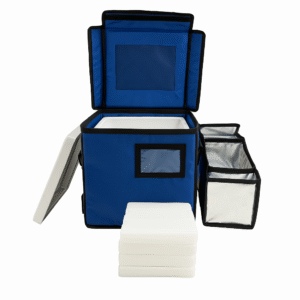
Desain tutup dan pegangan: Pilih tutup berengsel untuk akses yang sering atau tutup yang pas untuk pengangkutan jarak jauh yang aman. Pegangan ergonomis mengurangi ketegangan dan memudahkan penumpukan.
Kustomisasi: Banyak pemasok menyediakan ukuran khusus, warna dan merek. Sisipan busa khusus dapat mengamankan botol atau barang rapuh selama transit.
| Jenis Pengiriman | Ukuran Kotak yang Direkomendasikan (Volume Dalaman) | Strategi Pendingin Ideal | Manfaat Pengguna |
| Pengiriman makanan mil terakhir | 15–30 liter | Paket gel atau piring eutektik; kotak yang sudah didinginkan sebelumnya | Kotak ringan mudah dibawa dan menjaga makanan tetap panas atau dingin selama 3–4 jam. |
| Pengiriman farmasi semalaman | 40–80 liter | Bahan perubahan fasa (PCM) disetel ke 2–8 °C; Data Loggers | Memastikan kepatuhan terhadap rentang suhu yang ketat dan memungkinkan dokumentasi untuk regulator. |
| Transportasi biologis beberapa hari | 80–200 liter | Kombinasi panel PCM dan isolasi vakum (VIP) | Menjaga stabilitas selama 48–72 jam dengan es kering minimal; mengurangi limbah kemasan. |
| Distribusi bahan makanan atau makanan laut dalam jumlah besar | >200 L | Paket gel dengan es atau es kering; kompartemen tertutup | Mendukung muatan palet dan mengurangi perjalanan, menghemat bahan bakar dan tenaga kerja. |
Tips Praktis Menentukan Ukuran
Gunakan kalkulator kapasitas: Banyak pemasok menawarkan alat online tempat Anda memasukkan dimensi produk, berat dan durasi yang dibutuhkan. Ini dapat membantu memilih kotak yang tepat tanpa ukurannya berlebih atau terlalu kecil.
Rencanakan logistik pengembalian: Jika Anda mengoperasikan program yang dapat digunakan kembali, pastikan fasilitas Anda dapat membersihkan dan menyimpan kotak yang dikembalikan. Ukuran standar meningkatkan manajemen inventaris.
Pertimbangkan kemampuan menumpuk: Kotak EPP berukuran besar dengan tutup atau kaki yang saling bertautan dapat ditumpuk dengan aman di atas palet, memaksimalkan ruang trailer atau kontainer.
Praktik Terbaik untuk Menggunakan dan Memelihara Kotak EPP Besar
Kotak EPP berukuran besar dapat bertahan hingga ratusan siklus pengiriman jika dirawat dengan baik. Untuk mencapai umur panjang dan kebersihan, ikuti praktik pemeliharaan ini:
Pembersihan dan sanitasi: Setelah setiap penggunaan, cuci kotak dengan deterjen lembut dan air hangat. Karena EPP tidak berpori dan tidak menyerap air, itu cepat kering. Hindari pelarut keras yang dapat merusak busa.
Memeriksa kerusakan: Periksa potongannya, tusukan atau area yang melengkung. Ketahanan EPP memungkinkannya kembali ke bentuk semula setelah terkena dampak, namun pemotongan yang dalam dapat mengganggu insulasi.
Menyimpan dengan benar: Jauhkan kotak kosong dari sinar matahari langsung dan benda tajam. Jika kotak tidak akan digunakan dalam jangka waktu lama, susun dengan bersih, area kering.
Menghindari kelebihan muatan: Hormati peringkat berat maksimum. Kelebihan beban dapat merusak bentuk dasar dan mengurangi efisiensi insulasi.
Pelabelan dan pelacakan: Gunakan kode batang atau tag RFID untuk melacak penggunaan setiap kotak. Hal ini memudahkan jadwal pemeliharaan dan memastikan kotak diputar dengan benar.
Kasus aktual: Sebuah perusahaan katering menerapkan program pemeliharaan untuk kotak pengangkutan makanan EPP berukuran besar. Mereka membersihkan kotak-kotak setelah digunakan dan mencatat kerusakan. Lebih 12 bulan, mereka mencapai rata-rata 180 siklus per kotak sebelum pensiun, mengurangi pengeluaran pengemasan sebesar 35% dibandingkan dengan alternatif sekali pakai.
Perkembangan dan Tren Terkini Kotak EPP dan Kemasan Rantai Dingin di 2025
Industri rantai dingin terus berkembang pesat. Menurut Intelijen Mordor, pasar pengemasan rantai dingin bernilai USD 32.29 miliar masuk 2025 dan diproyeksikan mencapai USD 48.93 miliar oleh 2030, tumbuh pada suatu 8.67% CAGR. Ekspansi ini didorong oleh meningkatnya volume produk biologis, pemenuhan bahan makanan e-commerce dan program vaksin global. Beberapa tren menentukan seberapa besar kotak EPP akan digunakan 2025:
Keberlanjutan dan Penggunaan Kembali
Format yang dapat digunakan kembali: Perusahaan beralih dari pengirim EPS sekali pakai ke kontainer EPP yang dapat digunakan kembali untuk memenuhi tujuan keberlanjutan perusahaan dan mengurangi limbah. Solusi yang dapat digunakan kembali diproyeksikan akan tumbuh sebesar 9.43% CAGR ke 2030.
Mandat ekonomi sirkular: Peraturan Pengemasan dan Limbah Pengemasan Uni Eropa mensyaratkan adanya daur ulang penuh 2030, mendorong adopsi bahan seperti EPP yang mudah didaur ulang. Larangan busa plastik terhadap EPS di beberapa negara bagian mendorong dunia usaha untuk beralih ke EPP.
Pendingin berbasis bio dan dapat didaur ulang: Bahan pengubah fasa baru yang berasal dari minyak nabati atau garam mengurangi ketergantungan pada gel berbahan dasar minyak bumi.
Digitalisasi dan Pemantauan IoT
Pelacakan waktu nyata: Regulator sekarang mengharapkan pemantauan suhu terus menerus. Sensor IoT mengirimkan data ke platform cloud, memungkinkan intervensi proaktif selama perjalanan suhu. Kotak EPP pintar mengintegrasikan kantong untuk sensor dan pencatat data.
Analisis prediktif: Alat AI menganalisis data rute, prakiraan cuaca dan pembacaan sensor untuk mengoptimalkan jadwal pengemasan dan pengiriman. Hal ini mengurangi penggunaan energi dan mencegah pembusukan.
Blockchain untuk ketertelusuran: Beberapa rantai pasokan memanfaatkan blockchain untuk memverifikasi riwayat suhu dan mencegah pemalsuan. Setiap kotak EPP dapat membawa kembaran digital pada buku besar.
Perluasan Terapi Biologis dan mRNA
Produk biofarmasi yang memerlukan kondisi rantai dingin yang ketat semakin banyak jumlahnya. Pasar kemasan rantai dingin farmasi bernilai US$ 28.9 miliar masuk 2025 dan diperkirakan mencapai US$ 75.0 miliar oleh 2032. Biologis yang kompleks, Vaksin mRNA dan terapi gen memerlukan pengirim terisolasi yang mampu bertahan pada suhu sangat rendah (–70 °C hingga –80 °C). Kotak EPP besar, bila dikombinasikan dengan es kering dan panel vakum, menyediakan isolasi yang diperlukan untuk terapi premium ini.
Bangkitnya E-commerce dan Pengiriman Meal Kit
Layanan belanjaan dan perlengkapan makan online terus berkembang. Pengiriman jarak jauh membutuhkan bobot yang ringan, wadah yang dapat digunakan kembali untuk melindungi barang segar dan beku. Bobot dan ketahanan kotak EPP yang ringan membuatnya ideal untuk distribusi gaya kurir. Banyak perusahaan menawarkan kotak EPP berkode warna atau bermerek untuk membangun pengakuan pelanggan sekaligus mempromosikan keberlanjutan.
Penggerak dan Standar Peraturan
Kerangka peraturan, seperti Amerika. FDA 21 CFR 600.15 dan pedoman PDB Uni Eropa, mengamanatkan kinerja pengemasan yang divalidasi. Standar-standar ini memerlukan bukti pemeliharaan suhu sepanjang perjalanan, mendorong perusahaan untuk mengadopsi container yang mampu memberikan kinerja yang konsisten dan mengintegrasikan pencatatan data. Standar tambahan termasuk ISO 23412 untuk kendaraan jalan termal dan Kinerja WHO, Kualitas dan Keamanan (PQS) pedoman pengangkutan vaksin.
Prospek Pasar dan Implikasinya
Pembagian materi: Polystyrene yang diperluas memiliki bagian material terbesar (40.43%) di pasar pengemasan rantai dingin di 2024, namun porsinya menurun karena pembatasan lingkungan. Busa plastik seperti EPP semakin populer karena dapat digunakan kembali dan didaur ulang.
Campuran produk: Kontainer terisolasi bertanggung jawab 35.53% pendapatan. Kotak EPP berukuran besar termasuk dalam kategori ini dan diperkirakan akan mempertahankan permintaan yang kuat.
Geografi: Eropa memimpin pasar pengemasan rantai dingin 38.96% berbagi 2024, sementara Asia Pasifik akan tumbuh pada 12.02% CAGR. Memahami peraturan regional dan dinamika rantai pasokan membantu bisnis merencanakan ekspansi.
Pertanyaan dan Jawaban Umum
Q1: Apa sebenarnya polipropilen yang diperluas itu? (EPP)?
Polipropilena yang diperluas adalah busa manik sel tertutup yang dibentuk dari resin polipropilen. Ini memiliki ketahanan dampak yang luar biasa, kekuatan tarik tinggi dan isolasi termal yang sangat baik. Struktur sarang lebah busa membuatnya ringan namun tahan lama dan dapat didaur ulang sepenuhnya.
Q2: Apakah kotak EPP berukuran besar dapat digunakan kembali dan didaur ulang?
Ya. Daya tahan EPP memungkinkan kotak menahan ratusan siklus pengiriman tanpa mengalami deformasi. Di akhir kehidupan, EPP dapat didaur ulang menjadi produk baru karena merupakan bahan polimer tunggal.
Q3: Berapa lama kotak EPP yang besar dapat mempertahankan suhu?
Durasinya tergantung ukuran kotak, jenis pendingin dan kondisi sekitar. Kotak EPP besar yang dikemas dengan benar dapat mempertahankan suhu 2–8°C selama 48–72 jam bila digunakan dengan bahan pengubah fasa atau kemasan gel, seperti yang ditunjukkan dalam studi kasus. Ketahanan termal dari –40°C hingga +110°C berarti mereka juga mengakomodasi pengiriman beku dan hangat.
Q4: Bagaimana cara membersihkan dan merawat kotak EPP?
Cuci kotak dengan deterjen lembut dan air hangat. Hindari pembersih yang bersifat abrasif dan panas tinggi. Periksa apakah ada luka atau tusukan sebelum digunakan kembali dan simpan kotak di tempat yang bersih, tempat kering jauh dari sinar matahari langsung.
Q5: Apa perbedaan EPP dengan polistiren yang diperluas (EPS)?
EPP memiliki pemulihan elastis dan penyerapan energi yang lebih tinggi dibandingkan EPS. Ini tahan terhadap benturan berulang tanpa retak dan mendukung penggunaan kembali. EPS lebih rapuh dan cocok terutama untuk aplikasi sekali pakai. EPP juga menawarkan ketahanan kimia yang lebih baik dan kisaran suhu pengoperasian yang lebih tinggi.
Ringkasan dan Rekomendasi
Di dalam 2025, kotak EPP berukuran besar mewakili salah satu solusi paling serbaguna dan berkelanjutan untuk logistik rantai dingin. Isolasi sel tertutup mereka, bobot yang ringan dan ketahanan menghasilkan kontrol suhu yang andal dari –40 °C hingga +110 ° C. sambil menahan guncangan dan kelembapan. Berbeda dengan EPS dan EPE, Kotak EPP menawarkan potensi penggunaan kembali yang unggul dan kemampuan daur ulang penuh. Mereka membantu perusahaan mengurangi limbah kemasan, menurunkan biaya pengiriman dan memenuhi persyaratan peraturan yang semakin ketat. Perkiraan pasar menunjukkan pertumbuhan yang kuat dalam pengemasan rantai dingin, didorong oleh faktor biologis, e-commerce dan mandat keberlanjutan. Dengan memilih ukuran kotak yang tepat, metode pengepakan dan rutinitas perawatan, dunia usaha dapat melindungi produknya, meningkatkan citra merek dan meningkatkan efisiensi operasional.
Langkah selanjutnya yang dapat ditindaklanjuti
Kaji kebutuhan rantai dingin Anda: Evaluasi volume produk, persyaratan suhu dan durasi transit untuk menentukan ukuran kotak dan tingkat insulasi yang optimal.
Kembangkan strategi penggunaan kembali: Tetapkan protokol pembersihan dan pelacakan untuk memaksimalkan masa pakai kotak. Jelajahi logistik pengembalian dan kemampuan penyimpanan.
Menerapkan pemantauan cerdas: Integrasikan sensor IoT dan pencatat data untuk memastikan kepatuhan terhadap peraturan dan mendapatkan visibilitas waktu nyata.
Tetap terinformasi tentang peraturan: Pantau perubahan pedoman FDA dan UE untuk memastikan kemasan Anda memenuhi standar yang terus berkembang.
Hubungi ahlinya: Untuk solusi yang disesuaikan, konsultasikan dengan pemasok seperti Tempk untuk merancang kotak EPP besar yang disesuaikan dengan kebutuhan produk Anda.
Tentang tempk
Tempk berspesialisasi dalam solusi pengemasan makanan yang dikontrol suhu, farmasi dan bioteknologi. Kami merancang dan memproduksi wadah EPP yang dapat digunakan kembali dengan bobot yang ringan, daya tahan dan kinerja termal. Tim teknik kami selalu mengikuti standar industri dan mengintegrasikan fitur seperti sisipan khusus, pegangan ergonomis dan kompatibilitas sensor IoT. Dengan memilih Tempk, klien mendapat manfaat dari keahlian rantai dingin selama puluhan tahun, dukungan pelanggan yang responsif dan komitmen terhadap keberlanjutan.
Langkah selanjutnya
Siap mengoptimalkan rantai dingin Anda? Hubungi spesialis Tempk hari ini untuk mendiskusikan bagaimana kotak EPP berukuran besar dapat memenuhi tantangan logistik spesifik Anda dan membantu bisnis Anda berkembang.