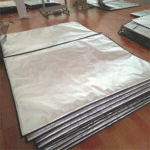
A paper insulated box liner factory can help you build a more recyclable and operationally practical cold-chain packaging program, but only if the factory understands thermal design, converting precision, and real warehouse use. The best factory is not simply the one that says “paper.” It is the one that turns paper structure into repeatable shipping performance.
Artikel ini akan membantu Anda menjawabnya:
- What a paper insulated box liner factory should deliver beyond manufacturing
- How paper liner structure creates insulation and where it can fail
- Which converting, kualitas, and compliance checks matter most
- How to compare factories on total cost, kegunaan, and supply stability
- Yang 2026 sustainability and market trends are shaping factory selection
What should a paper insulated box liner factory provide?
A strong paper insulated box liner factory should provide three things at once: a workable liner structure, reliable converting quality, and support for scale-up. That means it should understand your box sizes, kecepatan pengepakan, refrigerant layout, and shipping duration before recommending a design. It should also be able to explain how the paper structure creates air space and how that air space is protected during folding, sedang mengemas, dan transportasi.
This matters because paper-based thermal packaging is highly design dependent. A paper liner can work very well when the geometry is sound and the dimensions are controlled. It can also fail quickly if the folds distort, the panel thickness varies too much, or the liner becomes awkward for the packing team.
What factory capability looks like in practice
- You should expect the factory to discuss:
- The paper structure used to create insulation
- Dimensional tolerance and fold consistency
- Pilot quantities and sample lead times
- Storage and humidity recommendations
- Forecast support for regular production
- If the factory cannot explain those basics clearly, it is harder to trust it with a scaled program.
How does paper insulation work, and what makes it succeed?
A paper insulated box liner factory usually creates insulation through structure, not chemistry. Layered paper, trapped air channels, corrugated forms, or engineered folds slow heat transfer by holding air and creating depth between the carton wall and the payload. Secara sederhana, paper becomes useful when it is shaped correctly.
That is why design is everything. Too much stiffness can make the liner hard to place. Too little stiffness can collapse the structure. Poor scoring can cause spring-back. Weak corners can reduce effective coverage. The best factory balances thermal intent with packing ease. That is a practical engineering job, not a marketing exercise.
A useful way to think about paper liners
Think of the liner as a paper-built air structure. The more stable that structure stays during storage and use, the more consistent the result. If the structure buckles or softens, the benefit falls. A reliable paper insulated box liner factory knows that and designs around it.
Which quality controls should you insist on?
Quality control should start with incoming paper verification and continue through converting and finished-goods review. A strong paper insulated box liner factory checks material consistency, cut accuracy, fold quality, and final dimensions. If the design includes bonded or assembled layers, that process should also be controlled and reviewed.
You should also ask how complaints are investigated. A professional factory should be able to trace finished goods back to incoming paper and conversion settings. That protects you when results drift and keeps problem-solving fast.
The most useful factory review questions
- How do you control score depth and fold repeatability?
- How do you store paper before converting?
- What finished-size tolerance do you hold?
- Can you provide pilot runs before annual volume?
- How do you handle material or design changes?
- These questions help you separate disciplined factories from simple converters.
Which tests and compliance topics matter?
Paper-specific testing often uses TAPPI-related measures such as grammage, ketebalan, kadar air, tarik, meletus, kompresi, and puncture-related checks. Those tests help the factory understand material stability and converting suitability. Broader packaging validation often uses ASTM references such as D4169, D4332, and D5276 to understand how a package behaves through conditioning, shipping stresses, dan jatuh. (Keystone Package Testing)
For food applications, FDA guidance indicates packaging manufacturers are not generally subject to the same preventive control subparts as food processors, but cold-chain buyers still need packaging that supports controlled distribution and repeatable temperature management. For healthcare applications, WHO guidance keeps temperature and humidity control, pemantauan, and qualified distribution systems in focus. That means a paper insulated box liner factory should still be strong on documentation, konsistensi, and change communication. (KITA. Administrasi Makanan dan Obat -obatan)
How do you compare cost the right way?
Do not compare factories on unit price alone. The better comparison is total program cost. That includes liner price, pack-out labor, fit consistency, ruang penyimpanan, angkutan masuk, potential damage risk, and ease of scaling multiple sizes. A paper insulated box liner factory with slightly higher price may still deliver lower total cost if it reduces packing delays and avoids fit-related complaints.
Paper structures can also create hidden cost if usability is poor. If the liner catches on the carton, springs open unexpectedly, or needs too much training, labor cost rises quickly. Jadi, always include operator feedback in the approval process.
A simple buyer scorecard
- Rate each factory from 1 ke 5 pada:
- Structure logic
- Converting precision
- Pack-out usability
- Kualitas dokumentasi
- Lead-time reliability
Factories that score evenly across these points usually outperform low-price factories that only look strong on quotation day.
2026 perkembangan dan tren terkini
Itu 2026 market favors paper-forward thermal packaging where it can be justified without sacrificing product protection. EU packaging rules continue to increase attention on life-cycle sustainability, pelabelan, penggunaan kembali, dan kemampuan daur ulang. EPA data supports ongoing interest in paper and paperboard packaging because recycling performance remains comparatively strong in that material family. (EUR-Lex)
Tetap, the market is not choosing paper for its own sake. McKinsey’s 2025 KITA. research shows food safety and shelf life remain the most important packaging priorities. That means the best paper insulated box liner factory is the one that can prove a paper-based design works operationally and thermally, not just environmentally. (McKinsey & Perusahaan)
Perkembangan terbaru sekilas
- More buyers are trialing paper-based thermal structures.
- Factory converting precision is becoming a bigger differentiator.
- Sustainability language now needs fit, tes, and usability proof.
- Paper thermal liner design basics
- How to test a recyclable cold-chain package
- Box size optimization for insulated liner fit
- Cold chain packaging quality checklist
- Paper vs mixed-material shipping insulation guide
Pertanyaan yang sering diajukan
What is the most important factor in choosing a paper insulated box liner factory?
The factory’s ability to turn paper structure into repeatable fit and pack-out performance is usually the deciding factor.
Do paper liners always lower total cost?
Tidak selalu. They lower total cost only when the structure is easy to pack, scales reliably, and protects the shipment well enough.
Why is converting precision so important?
Because paper structures are less forgiving when dimensions drift. Small errors can create big usability problems.
Should a buyer run humid-condition testing?
Ya. Humidity can affect stiffness and fold behavior, so it is worth checking when the route or storage conditions make that relevant.
Ringkasan dan Rekomendasi
The best paper insulated box liner factory in 2026 combines sustainability potential with technical discipline. You should evaluate factories on structure design, converting control, quality transparency, kegunaan, and supply planning. That combination protects both product quality and operational efficiency.
For your next project, shortlist factories that can explain how the liner works, show how they control it, and support you through pilot runs before scale. That is the most reliable path to a successful paper-based thermal packaging program.
Tentang tempk
Tempk develops cold chain packaging solutions with a practical view of what works in real shipping operations. We help customers assess paper-based insulation structures alongside other options so the final design fits the lane, produk, and the packing environment. Our focus is clear: make protection repeatable, make operations manageable, and avoid unnecessary complexity.
If you are comparing paper liner factories now, choose the one that can prove performance with clarity and scale it with confidence.