Pengiriman Ekspres dengan Suhu Terkendali untuk Makanan?
Pengiriman ekspres makanan dengan pengatur suhu hanya berfungsi saat Anda mengontrol suhu, waktu, dan serah terima sebagai satu sistem. Di 40°F–140°F zona bahaya, kuman dapat berkembang dengan cepat, dan beberapa pelatihan mencatat bahwa bakteri dapat berlipat ganda hanya dengan 20 menit. Panduan konsumen juga memperingatkan agar tidak membuang barang-barang yang mudah rusak lebih 2 jam (atau 1 jam di atas 90°F). Bangun proses Anda agar tetap stabil, bahkan pada rute hari buruk.
Artikel ini akan menjawabnya untuk Anda
-
Bagaimana pengiriman ekspres makanan dengan pengatur suhu mengurangi pembusukan dan tolak bayar dengan aturan jalur sederhana
-
Cara mengatur target suhu untuk pengiriman makanan ekspres (dinginkan, beku, panas, dan dicampur)
-
A daftar periksa pengemasan untuk pengiriman makanan ekspres dengan suhu yang dikontrol Anda dapat melakukan standarisasi
-
Kapan harus digunakan paket gel vs PCM untuk pengiriman makanan dingin (dan bagaimana mengkondisikan paket dengan benar)
-
Bagaimana membuktikan kinerja dengan pemantauan suhu waktu untuk pengiriman makanan tanpa memperlambat tim Anda
-
Alat pengambilan keputusan untuk diukur pengiriman ekspres makanan dengan pengatur suhu dengan lebih sedikit kejutan
Mengapa pengiriman makanan ekspres dengan suhu yang dikontrol tidak dapat dinegosiasikan?
Jawaban Langsung: Pengiriman makanan ekspres dengan suhu yang dikontrol tidak dapat dinegosiasikan karena kecepatan tidak memperbaiki penyalahgunaan suhu. Setelah makanan menjadi terlalu hangat, mencicipi, tekstur, dan risiko keselamatan berubah dengan cepat. “Kualitas yang hilang” itu tidak dapat diperbaiki lagi nanti dengan lebih banyak es.
Penjelasan yang diperluas: Bayangkan suhu produk seperti baterai ponsel. Anda mulai kenyang ketika makanan sudah didinginkan atau dibekukan dengan benar, maka setiap menit hangat akan menguras “baterai berkualitas”. Jika Anda kehabisan, Anda tidak dapat mengisi ulang di depan pintu pelanggan. Itulah sebabnya pengiriman makanan ekspres dengan suhu yang dikontrol harus dilakukan berencana, bukan “diharapkan”.
Empat titik kegagalan yang mematahkan pengiriman makanan ekspres yang dikontrol suhu
| Titik kegagalan | Apa yang terjadi | Mengapa ini berisiko | Apa artinya bagimu |
|---|---|---|---|
| Keterlambatan pengepakan | Produk dihangatkan sebelum disegel | Drift dimulai lebih awal | Jendela aman yang lebih pendek |
| Isolasi yang lemah | Panas masuk lebih cepat | Pendingin menjadi kewalahan | Lebih banyak pembusukan |
| Rute multi-stop | Pembukaan pintu berulang kali | Lonjakan suhu | Hasil yang tidak konsisten |
| Tunggu di depan pintu | Pelanggan terlambat mengambil | Paparan sekitar | Lebih banyak keluhan |
Tips praktis yang bisa Anda terapkan hari ini
-
Kemas barang-barang dingin terakhir: kurangi waktu bangku sebelum menyegel.
-
Tutup dengan cepat, label dengan cepat, memuat dengan cepat: melindungi jam pertama.
-
Buat “aturan hari panas”: tambahkan cairan pendingin atau perpendek rute alih-alih berimprovisasi.
Contoh dunia nyata: Sebuah merek pengiriman makanan memotong pengembalian dana mingguan setelah menerapkan satu aturan: “Barang dingin dikemas terakhir, dimuat terlebih dahulu.”
Berapa target suhu yang harus dilakukan pengiriman ekspres dengan suhu yang dikontrol untuk penggunaan makanan?
Jawaban Langsung: Pengiriman makanan ekspres dengan pengatur suhu harus digunakan target yang jelas berdasarkan jalur: dinginkan, beku, panas, dan dicampur. Banyak tim berlatih dengan santai 0–4 ° C. (32–40°F) dan membeku di sekitar -18° C. (0° f) atau lebih dingin. Pelatihan jasa makanan sering digunakan ≤41°F untuk penahan dingin dan ≥135°F untuk penahan panas.
Penjelasan yang diperluas: Target Anda harus sesuai dengan momen makan pelanggan, bukan preferensi gudang Anda. Sebuah salad, kue keju, dan pangsit beku gagal dengan cara yang berbeda. Pengiriman makanan ekspres dengan suhu yang dikontrol menjadi dapat diprediksi ketika setiap SKU memiliki label jalur: Dinginkan, Beku, Panas, atau Campur aduk.
Panduan target sederhana yang dapat Anda latih dalam hitungan menit
| Jalur | Sasaran praktis | Risiko terbesar | Apa artinya bagimu |
|---|---|---|---|
| Dinginkan | 0–4 ° C. / 32–40°F | Arus hangat + waktu | Lindungi kesegaran dan tekstur |
| Beku | ≤ -18°C / 0° f | Pencairan sebagian | Hindari siklus pencairan-pembekuan ulang |
| Panas | ≥ 57°C / 135° f | Kehilangan panas | Simpan barang-barang panas bersama-sama |
| Campur aduk | Dua zona | Bekukan silang atau hangatkan silang | Gunakan pembagi atau pisahkan pengiriman |
Tip dan rekomendasi praktis
-
Pilih satu standar dingin: jangan mencampur “40°F” dan “41°F” dalam latihan.
-
Rencanakan di depan pintu: bahan makanan dingin gagal di teras, bukan gudang.
-
Blokir kontak silang: hentikan kompres dingin agar tidak menyentuh makanan panas.
Contoh dunia nyata: Tim kurir meningkatkan kontrol suhu dengan membagi panas dan dingin ke dalam kantong terpisah setiap kali berlari.
Bagaimana Anda memilih jalur dingin vs beku dalam pengiriman makanan ekspres yang suhunya dikontrol?
Jawaban Langsung: Pengiriman makanan ekspres dengan suhu terkontrol dimulai dengan keputusan jalur: dinginkan, beku, panas, atau dicampur. Setiap jalur membutuhkan resep paketnya sendiri, karena satu resep untuk semuanya biasanya gagal.
Penjelasan yang diperluas: Kejelasan jalur membuat biaya tetap terkendali. Saat Anda melewatkan keputusan jalur, Anda “mengemas secara berlebihan” setiap pesanan agar aman. Hal ini meningkatkan biaya, meningkatkan kesalahan, dan masih tidak menjamin kualitas.
60-pemilih jalur kedua (interaktif)
Jawab pertanyaan-pertanyaan ini:
-
Apakah produk tersebut dimaksudkan untuk dimakan panas, dingin, atau beku?
-
Akankah rutenya terlampaui 2 jam dari pintu ke pintu (termasuk pengepakan dan menunggu)?
-
Apakah pesanan akan disimpan di luar setelah pengiriman?
-
Apakah Anda menjalankan rute multi-stop dengan pintu yang sering terbuka?
Jika Anda menjawab “ya” untuk rute panjang atau menunggu di luar ruangan, meningkatkan jalur. Itu adalah salah satu cara tercepat untuk meningkatkan pengiriman makanan ekspres dengan suhu terkontrol tanpa membeli teknologi mewah.
Aturan jalur yang mencegah kegagalan pesanan campuran yang mahal
-
Gunakan a jalur musim panas dan a jalur musim dingin.
-
Definisikan a aturan penjemputan terlambat: berpindah jalur, tambahkan cairan pendingin, atau batalkan.
-
Perlakukan pesanan campuran sebagai dua pengiriman ketika pengembalian uang lebih mahal daripada pemisahan.
Tumpukan kemasan apa yang berfungsi untuk pengiriman makanan ekspres dengan suhu yang dikontrol?
Jawaban Langsung: Pengiriman ekspres makanan dengan pengatur suhu yang paling andal menggunakan a tumpukan tiga lapis: pengirim luar, lapisan isolasi, dan penghalang dalam yang aman untuk makanan. Kemudian Anda menambahkan zat pendingin atau sumber panas. Tujuannya adalah untuk memperlambat perubahan suhu, bukan untuk “membuat makanan menjadi dingin”.
Penjelasan yang diperluas: Pengemasan adalah mesin pengiriman makanan ekspres yang dikontrol suhu karena mengontrol seberapa cepat panas masuk ke pengiriman. Transit ekspres mengurangi waktu pemaparan, namun pengemasan mengendalikan dampak paparan.
Daftar periksa pengemasan untuk pengiriman makanan ekspres dengan suhu yang dikontrol
-
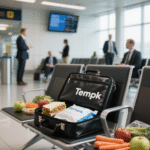
Isolasi: pengirim terisolasi, liner, atau kotak yang dapat digunakan kembali sesuai ukuran pesanan
-
Penahanan: liner yang aman untuk makanan + penyerap (untuk daging/makanan laut), ditambah tas sekunder
-
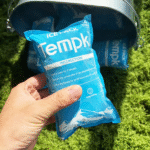
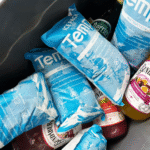
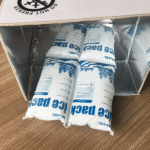
Sumber pendingin/panas: paket gel atau PCM (dinginkan), es kering (beku), paket panas (panas)
-
Tata Letak: berkemas atas + sisi (dan bawah jika diperlukan), tidak acak
-
Kontrol celah udara: pengisi atau pembagi untuk mengurangi ruang kosong
-
Perlindungan pangan: zat pendingin tidak boleh menyentuh makanan siap saji secara langsung
Paket gel untuk pengiriman makanan vs es kering untuk pengiriman makanan beku
Paket gel populer karena lebih bersih dan mudah digunakan kembali. Es kering sangat ampuh untuk jalur yang beku, tapi itu menghasilkan gas karbon dioksida dan harus dibuang. Beberapa panduan menyatakan bahwa paket es kering tidak boleh kedap udara, harus memungkinkan ventilasi, dan seringkali memerlukan penandaan yang jelas (termasuk kuantitas bersih).
| Pendingin | Terbaik untuk | Kekuatan | Hati-Hati | Apa artinya bagimu |
|---|---|---|---|---|
| Paket gel | Pengiriman dingin | Bersih dan dapat diulang | Membutuhkan validasi jalur | Risiko kekacauan lebih rendah |
| Es basah | Rute dingin yang pendek | Efek mendekati 32°F | Kontrol air leleh | Tambahkan liner + penyerap |
| Es kering | Pengiriman beku | Kekuatan pembekuan yang kuat | Ventilasi + tanda | Buatlah daftar periksa es kering |
| Paket panas | Memegang panas | Menambah kehangatan | Terbatas waktu | Gunakan untuk jendela pendek |
Skor kesulitan rute cepat untuk memilih kekuatan kemasan
Skor kesulitan rute (0–8):
-
Waktu rute: 0 (<4H), 1 (4–12 jam), 2 (12- 24 jam)
-
Panas sekitar: 0 (Dingin), 1 (lembut), 2 (panas)
-
Serah terima: 0 (langsung), 1 (satu hub), 2 (beberapa handoff)
-
Risiko di depan pintu: 0 (rumah), 1 (mungkin), 2 (tidak dikenal)
| Pita skor | Kekuatan kemasan | Tingkat pemantauan | Apa artinya bagimu |
|---|---|---|---|
| 0–2 | Isolasi standar | Pemeriksaan tempat | Stabilitas berbiaya rendah |
| 3–5 | Isolasi yang lebih baik + paket lebih banyak | Tes jalur | Lebih sedikit kegagalan musiman |
| 6–8 | Isolasi premium + SOP yang ketat | Prioritas tinggi | Melindungi pesanan bernilai tinggi |
Tip dan rekomendasi praktis
-
Ukuran yang tepat terlebih dahulu: ruang udara kosong adalah isolasi yang terbuang.
-
Paket pra-kondisi: kemasan yang setengah beku berperilaku seperti baterai yang terisi setengahnya.
-
Mengandung kebocoran: kebocoran menghancurkan kepercayaan lebih cepat daripada kehangatan.
Kasus praktis: Sebuah merek makanan penutup meningkatkan kinerja makanan beku setelah menambahkan daftar periksa es kering dan beralih ke kemasan berventilasi.
Paket gel vs PCM: apa yang harus dilakukan pengiriman ekspres dengan suhu terkontrol untuk penggunaan makanan?
Jawaban Langsung: Untuk banyak kategori dingin, Kemasan PCM dapat memiliki rentang suhu yang lebih stabil dibandingkan kemasan gel generik dalam pengiriman makanan ekspres yang suhunya dikontrol. Paket gel lebih sederhana, namun hasil menjadi tidak dapat diprediksi bila pengondisian tidak konsisten.
Penjelasan yang diperluas: PCM (bahan perubahan fase) dirancang untuk meleleh dan “menahan” pada suhu yang dipilih. Bayangkan PCM sebagai es batu yang ramah termostat. Paket gel seperti batu bata dingin yang bisa menjadi terlalu kuat atau terlalu lemah tergantung bagaimana Anda membekukannya.
Pengkondisian pendingin: langkah yang membuat atau menghancurkan hasil
| Masalah pengkondisian | Apa yang kamu lihat | Perbaikan SOP sederhana | Makna praktis untuk Anda |
|---|---|---|---|
| Paket terlalu hangat | Waktu tunggu yang singkat | Bekukan lebih lama, verifikasi suhu freezer | Lebih sedikit tiket “tiba hangat”. |
| Paket terlalu dingin | Tepi beku | Temper dikemas dalam chiller | Tekstur dan penampilan lebih baik |
| Paket yang tidak konsisten | Hasil acak | Pelabelan batch + rotasi | Kinerja yang dapat diprediksi |
Tip dan rekomendasi praktis
-
Makanan siap saji: PCM sering kali mengurangi “sudut es” dalam saus.
-
Makanan penutup: hindari kontak langsung antara bungkusan agresif dan barang-barang halus.
-
Daging/makanan laut: pisahkan bahan mentah dan tambahkan lapisan penyerap.
Bagaimana perutean dan serah terima menghentikan pengiriman makanan ekspres yang dikontrol suhu?
Jawaban Langsung: Pengiriman makanan ekspres dengan suhu yang dikontrol lebih merupakan masalah jarak jauh dibandingkan masalah gudang. Kebanyakan kegagalan terjadi karena serah terima: memanggungkan, antrian penjemputan, naik lift, dan ambang pintu. Oleh karena itu diperlukan aturan operasional, bukan hanya kemasan yang lebih baik.
Penjelasan yang diperluas: Rute dua jam dengan 15 bukaan pintu bisa lebih berisiko dibandingkan rute tiga jam dengan lima bukaan. Pengiriman makanan ekspres dengan pengatur suhu yang baik mengurangi “menit hangat” dan mengurangi perubahan dengan mengontrol pementasan, waktu penjemputan, dan jendela pengiriman.
Daftar periksa kontrol handoff (cepat, terukur)
-
Area pementasan cukup dingin atau panas untuk jalur.
-
Pesanan disegel hanya jika kurir sudah dekat.
-
Pengemudi memiliki zona terpisah untuk panas dan dingin.
-
Pengantaran dijadwalkan, tidak acak.
-
Pelanggan mendapat satu instruksi: “Segera bawa masuk.”
Bangun peta “menit hangat” Anda (lembar kerja interaktif)
-
Menit pengepakan (produk keluar dari cold storage)
-
Menit pementasan (menunggu penjemputan)
-
Menit transit (waktu kendaraan)
-
Menit pengantaran (tinggal di ambang pintu)
Saat Anda memotong menit hangat, pengiriman makanan ekspres dengan pengatur suhu menjadi lebih baik tanpa membeli kemasan baru.
Bagaimana Anda memantau pengiriman makanan ekspres dengan suhu yang dikontrol tanpa memperlambat tim Anda?
Jawaban Langsung: Pemantauan membuat pengiriman makanan ekspres yang dikontrol suhu dapat diukur dan diulang. Anda tidak perlu memantau setiap pengiriman. Mulailah dengan tes jalur, perbaiki lonjakan terbesar, lalu skala.
Penjelasan yang diperluas: Dalam banyak operasi, lonjakan terbesar terjadi selama pementasan, tidak mengemudi. Itulah sebabnya pengujian jalur sering kali merupakan langkah pertama Anda yang menghasilkan keuntungan tertinggi.
Tabel validasi dapat Anda gunakan untuk setiap jalur
| Jalur | Apa yang Anda ukur | Contoh aturan lulus | Apa artinya bagimu |
|---|---|---|---|
| Jalur dingin | Waktu di atas target | Waktu hangat minimal | Lebih sedikit klaim pembusukan |
| Jalur beku | Waktu di atas titik beku | Tidak ada lonjakan pencairan | Tekstur yang lebih baik |
| Jalur panas | Waktu di bawah target panas | Hanya penurunan singkat | Kualitas makan yang lebih baik |
| Jalur campuran | Penyimpangan lintas zona | Zona tetap terpisah | Lebih sedikit pesanan yang “rusak”. |
Rencana pemantauan sederhana yang dapat Anda mulai minggu ini
-
Pilih jalur dengan volume tertinggi.
-
Jalankan tiga pengiriman: hari yang sejuk, hari yang panas, dan "tes penundaan".
-
Catat waktu pengepakan, waktu penjemputan, waktu pengiriman, dan kondisi sekitar.
-
Kunci SOP saat jalur melintas, lalu tinjau secara musiman.
Apa 2025 kebiasaan kepatuhan melindungi pengiriman makanan ekspres yang dikontrol suhu?
Jawaban Langsung: Pengiriman makanan ekspres dengan suhu terkendali yang paling aman bergantung pada kebiasaan sederhana: pra-dinginkan, berkemas dengan cepat, segel rapat, dan mendokumentasikan pengecualian. Ketika proses Anda mudah diikuti, keamanan pangan meningkat pada hari-hari sibuk.
Penjelasan yang diperluas: Pengiriman makanan ekspres dengan suhu yang dikontrol bukan hanya soal rasa. Ini juga tentang transportasi sanitasi dan pengendalian yang terdokumentasi. Meskipun Anda bukan pengirim barang besar, disiplin yang sama membantu: peralatan bersih, mengontrol suhu, dan mendokumentasikan apa yang Anda lakukan.
Transportasi sanitasi FSMA: apa yang harus didokumentasikan (kumpulan rekor sederhana)
Jaga agar catatan ini tetap sederhana:
-
Definisi jalur (apa arti “ekspres” dalam hitungan menit dan mil)
-
Daftar paket kemasan (apa yang masuk ke setiap jalur)
-
Target suhu (dingin, panas, beku)
-
Daftar periksa pembersihan untuk tempat sampah dan kendaraan
-
Tindakan korektif (apa yang Anda lakukan ketika terjadi kesalahan)
“Waktu sebagai pengendali kesehatan masyarakat” (TPHC): ketika waktu menggantikan suhu
Beberapa pelatihan Kode Makanan menggambarkan TPHC sebagai pendekatan yang memberikan waktu terbatas tanpa kontrol suhu ketika kondisi dan aturan penandaan terpenuhi. Gunakan hanya jika diizinkan, dan mendokumentasikan aturan pembuangan dengan jelas.
Tip dan rekomendasi praktis
-
Tulis target di satu tempat. Kebingungan menyebabkan tamasya.
-
Audit pada hari tersibuk Anda. Saat itulah sudut terpotong.
-
Perlakukan kurir sebagai bagian dari sistem. Jika mereka tidak terlatih, Anda masih menanggung risikonya.
2025 perkembangan dan tren terkini dalam pengiriman makanan ekspres yang dikontrol suhu
Tinjauan Tren: Di dalam 2025, pengiriman makanan ekspres dengan suhu yang dikontrol menjadi lebih terukur dan terstandarisasi. Badan-badan publik terus memperkuat aturan waktu-suhu yang sederhana, dan kelompok industri mendorong ekspektasi pemantauan suhu yang lebih jelas dalam rantai pasokan beku.
Cuplikan kemajuan terbaru
-
Lebih banyak sistem yang dapat digunakan kembali: putaran pengiriman semakin meluas di kawasan perkotaan yang padat.
-
Standardisasi yang lebih operasional: varian kemasan yang lebih sedikit untuk mengurangi kesalahan.
-
Lebih banyak transparansi: bukti suhu menjadi pembeda, bukan sebuah kemewahan.
Wawasan pasar: Banyak merek dapat mengirimkan dengan cepat. Lebih sedikit yang dapat mengirimkan dengan cepat dan andal dalam keadaan dingin. Kesenjangan itulah yang membuat Anda menang—lebih sedikit masalah, pengembalian dana yang lebih sedikit, retensi yang lebih kuat.
Kalkulator cepat: biaya per pengiriman dalam pengiriman makanan ekspres dengan suhu yang dikontrol
Gunakan alat mini ini untuk menghubungkan kualitas dengan uang dalam pengiriman makanan ekspres dengan suhu yang dikontrol.
Jika insulasi lebih baik mengurangi pengembalian uang, total biaya Anda bisa turun meskipun biaya pengemasannya lebih mahal.
Pertanyaan yang sering diajukan
Q1: Apa itu pengiriman ekspres makanan dengan pengatur suhu?
Pengiriman makanan ekspres yang dikontrol suhu berarti Anda menyimpan makanan dalam kisaran suhu yang direncanakan, untuk waktu yang direncanakan, dan Anda dapat menunjukkan bukti setelah melahirkan.
Q2: Apa yang dimaksud dengan “zona bahaya” dalam pengiriman makanan ekspres dengan suhu yang dikontrol?
Zona bahaya umumnya digambarkan sebagai 40°F hingga 140°F, dimana kuman dapat berkembang dengan cepat, jadi pengiriman makanan ekspres dengan suhu yang dikontrol harus meminimalkan waktu dalam kisaran tersebut.
Q3: Berapa lama makanan dapat disimpan selama pengiriman makanan ekspres dengan suhu yang dikontrol?
Beberapa panduan memperingatkan untuk tidak meninggalkan makanan yang mudah rusak 2 jam, atau 1 jam ketika suhu di atas 90°F.
Q4: Dapatkah saya menggunakan es kering untuk pengiriman makanan beku dengan suhu terkontrol?
Ya untuk jalur beku, namun kemasan harus mengeluarkan udara dan mungkin memerlukan penandaan khusus seperti “Es kering” atau “Karbon dioksida, padat” ditambah kuantitas bersih.
Q5: Apakah saya memerlukan sensor untuk setiap pengiriman ekspres dengan pengatur suhu untuk pesanan makanan?
Tidak pada awalnya. Mulailah dengan pengambilan sampel pada rute-rute utama untuk menemukan titik kegagalan, lalu perluas pemantauan setelah kinerja stabil.
Q6: Apa cara tercepat untuk meningkatkan hasil tanpa kemasan baru?
Mengurangi waktu pementasan dan meningkatkan handoff. Memotong menit-menit hangat sering kali lebih baik daripada menambahkan lebih banyak zat pendingin.
Ringkasan dan Rekomendasi
Kunci takeaways: Pengiriman makanan ekspres dengan pengatur suhu yang hebat dibuat dalam lima gerakan berulang: menetapkan target yang jelas, standarisasi tumpukan kemasan, mengkondisikan refrigeran secara konsisten, mengurangi menit-menit hangat dalam pementasan dan penyampaian, dan pantau jalur untuk belajar dengan cepat.
Rencana aksi (Berikutnya 7 hari -hari):
-
Pilih satu jalur produk (dingin atau beku) dan satu zona kota.
-
Tentukan satu rentang target dan satu tata letak pengepakan.
-
Jalankan tes tiga jalur dalam kondisi nyata (menyertakan rute “hari buruk”.).
-
Kunci resepnya, melatih tim, dan meninjau secara musiman.
Jika Anda ingin lebih sedikit kejutan, perlakukan pengiriman makanan ekspres dengan suhu yang dikontrol sebagai sistem yang dapat Anda ukur dan tingkatkan—bukan janji yang Anda harapkan menjadi kenyataan.
Tentang tempk
Dan Tempk, kami membantu tim merancang sistem praktis untuk pengiriman makanan ekspres dengan suhu yang dikontrol. Kami fokus pada kit pengemasan pasif, metode validasi jalur, dan opsi pemantauan yang sesuai dengan alur kerja jarak jauh yang sebenarnya. Kami juga membantu Anda menulis SOP sederhana yang dapat diikuti oleh pengemudi dan pengepakan di bawah tekanan.
Langkah selanjutnya (CTA): Bagikan profil jalur Anda (jenis produk, jam, rentang cuaca, dan metode pengiriman). Kami akan memetakan paket dan rencana validasi yang dapat Anda jalankan segera.