Bulk Dry Ice Pack for Flowers Shipping: A Six-Gate Procurement System
Um volume pacote de gelo seco for flowers shipping should be released only after six questions have clear owners and evidence. What refrigerant is it? What does the flower tolerate? Can the packing station condition it consistently? Does the complete carton control both warm and cold points? Can volume production match the sample? Do the route outcome and total cost justify the system? This sequence prevents two costly substitutions: treating solid carbon dioxide and a water-activated hydrate sheet as the same product, and treating all flowers as one refrigerated commodity. Living blooms can freeze in direct contact with a cold source, while tropical flowers may be injured at nonfreezing temperatures.
The six procurement gates
The gates can be used for a new supplier, a new pack format, or a change to an existing route.
| Portão | Decisão | Evidência necessária | Condição de parada |
|---|---|---|---|
| 0. Identidade do produto | What is the refrigerant and construction? | Technical name, descrição do material, informações de segurança, desenho, and lot code | “Dry ice pack” remains ambiguous |
| 1. Flower envelope | Que temperatura, umidade, etileno, and quality limits apply? | Approved species and cultivar specification with starting condition | One generic floral range covers incompatible species |
| 2. Facility readiness | Can the origin prepare the component at full rate? | Hidratação, freezer, têmpera, inspeção, trabalho, and safety capacity trial | Sample process cannot be repeated at peak volume |
| 3. Arquitetura de pacote | How will carton, isolamento, refrigerante, barreiras, flores, and airflow work together? | Fixed drawing, lista de materiais, instrução de carregamento, and physical trial | Coolant can move onto blooms or block vents |
| 4. Qualificação | Does the exact system survive seasonal and delay profiles? | Repeated hot- and cold-point data, verificações físicas, and flower-quality results | Average-only data or delayed injury is not assessed |
| 5. Scale and control | Will production, rota, and receiving remain equivalent? | First-production comparison, rastreabilidade, treinamento, controle de mudanças, e revisão de tendências | Materials or work methods can change without approval |
No gate is a paperwork exercise. Portão 0 protects safety and regulatory classification. Portão 1 protects the flowers. Portão 2 protects repeatability. Portão 3 converts a component into a configuration. Portão 4 provides evidence. Portão 5 preserves that evidence after purchasing volume increases.
Portão 0: name the refrigerant
O verdadeiro gelo seco é dióxido de carbono sólido, normally identified as carbon dioxide, sólido, UN1845 in applicable transport contexts. It sublimes at about −78.3°C. The package must permit gas release, carbon dioxide can accumulate in confined areas, and direct skin contact can cause cold injury. The same extreme temperature can freeze petals, foliage, caules, mangas, and wet-pack components.
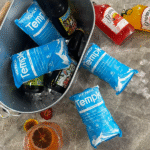
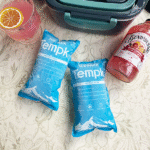
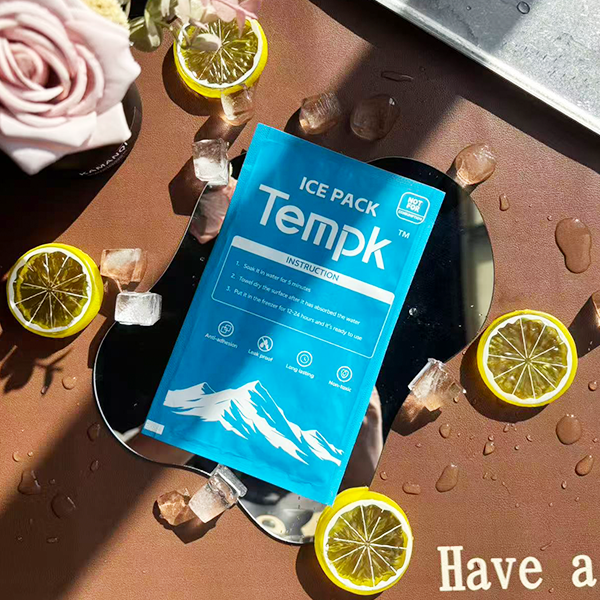
A hydrate cold sheet uses a water-absorbing structure that is activated and frozen. Tempk’s official hidratar gelo seco description identifies a permeable membrane, absorvente de polímero, e filme composto. It is not solid carbon dioxide and does not create a dry-ice gas stream. Its starting surface may still be below 0°C after freezer conditioning, so it needs a flower-specific barrier and layout.
Pré-preenchido pacotes de gel, tijolos rígidos, and PCM packs form other categories. Record the technical category in the approved bill of materials. Do not let a supplier or buyer substitute a product because the dimensions or marketing label look similar.
If true dry ice is being considered, involve the transport-compliance and safety teams at this gate. Sob os EUA. rules for aircraft or water, 49 Cfr 173.217 addresses packaging that releases carbon-dioxide gas to prevent pressure buildup. Air provisions include operator arrangements, marcação de massa líquida, and written information under specified conditions. Current IATA acceptance materials refer to Packing Instruction 954, ventilação, UN1845, o nome de envio adequado, party and package information, and net dry-ice quantity, subject to current operator and state variations.
Those requirements do not apply to a water sheet merely because a website calls it “dry ice pack.” Accurate naming avoids both under-compliance with solid carbon dioxide and unnecessary carrier confusion over ordinary pacotes frios.
Portão 1: approve the flower envelope
Create one specification per species group and route, not a generic flower sheet.
The envelope should identify species, cultivar where relevant, harvest maturity, dry or wet packing, target product temperature, upper and lower action limits, approved excursion logic, relative humidity or moisture approach, sensibilidade ao etileno, pretreatments owned by the flower team, arranjo de caixa, and required quality at receipt and after display.
Use authoritative postharvest references as inputs. UC Davis recommends roses and carnations near 0°C to 1°C under specified storage practices. It describes anthuriums as strongly chilling-sensitive below 10°C and gives a much warmer storage region. Heliconias should not be held below about 10°C to 12.5°C. USDA export compatibility groups similarly span near-freezing temperate flowers through warm tropical flowers.
These references illustrate the spread; they do not replace the grower’s cultivar data, exigência do cliente, or route validation. Some rose cultivars respond to ethylene differently. Harvest maturity changes carnation behavior. Wet versus dry packing changes the thermal load and moisture risk.
The lower limit should be treated as seriously as the upper limit. When a packout test is designed only to prevent warming, the team may add enough frozen mass to injure the flowers at the wall or lid. Portão 1 should define the symptoms that count as cold-side failure: water-soaked tissue, descoloração, murchando, bract or petal injury, failure to open, or loss of vase performance as applicable.
Portão 2: prove packing-station readiness
Bulk performance can fail before a carton closes.
Para lençóis de hidratação, map the workflow from dry case to line-side pack. Specify water quality if material, Mergulhe o tempo, método de drenagem, orientação da folha, acceptable hydrated condition, layout do rack, freezer batch size, espaçamento, conditioning endpoint, têmpera, inspeção, identificação do lote, and maximum prepared storage time. Measure throughput at the planned peak, not an average week.
For prefilled packs, confirm freezer loading, circulação de ar, pegada de armazenamento, rotação, separação de embalagens, and condition after repeated handling. A dense pallet of room-temperature gel packs can overload a freezer that handles a small trial easily.
True dry ice needs a separate receiving and storage process. Include local supply reliability, loss before packing, ventilação, gas monitoring where required by the safety assessment, insulated tools, equipamento de proteção, controlled weighing, disposição, e pessoal treinado. The net mass and package information used for transport must reflect the applicable rules and actual operation.
Temporary labor should participate in the capacity trial. Instructions need clear images and measurable endpoints. If two trained engineers are the only people who can hydrate sheets uniformly or place the barrier correctly, the system is not ready for a holiday flower program.
Establish line-side controls for packs that are too warm, muito frio, danificado, stuck together, incompletely hydrated, vazando, contaminado, or outside the approved mass. The disposition should be documented rather than decided by adding another pack.
Portão 3: freeze the packout architecture
The drawing should show the exact carton and internal structure. Include outer dimensions, dimensões internas utilizáveis, orifícios de ventilação, juntas de isolamento, forros, mangas, stem reservoirs, head protection, espaçadores, bolsas de refrigerante, barreiras, preenchimento vazio, encerramento, rótulos, e orientação da embalagem.
Flower geometry makes this important. Long stems have relatively low thermal mass compared with dense food payloads, and bloom heads can cluster at one end. A central air logger may miss a frozen petal interface. Flexible sheets can move around sleeves or sag into headspace. Rigid packs can damage stems under compression.
Protect carton strength. USDA export guidance notes the combined challenges of rough handling, vibração, compressão, e alta umidade. Vent patterns and handholds should not weaken the box beyond the pallet load. Wet liners, condensação, or leaking stem pouches can reduce corrugated strength. Test the carton after the thermal cycle, not only when it is dry and new.
Protect airflow. Forced-air precooling depends on aligned openings and a path through the load. During vehicle transport, stacking and bracing should maintain circulation and prevent movement. A sheet taped over the vent may improve one local cold reading while leaving the carton center warm.
Control moisture by design. Roses may be dry-packed in lined cartons, yet free water on petals can support Botrytis. Tropical blooms may use moist shredded material. Hydration sheets may have a damp surface after activation. Define what moisture is intended, where it may travel, and how it is contained.
Before testing, conduct vibration, manuseio, and inversion trials sufficient to reveal movement. Open the carton and confirm that packs, barreiras, caules, and heads remain in their assigned zones. Update the drawing before thermal qualification.
Portão 4: qualificar a rota, including delayed quality
Write the protocol before seeing the data.
Define the approved starting flower temperature and hydration state, payload and arrangement, materiais exatos, pack condition and mass, perfis ambientais, duração, manipulação de eventos, sensor models and calibration, intervalo de amostragem, mapa de sensores, flower-quality criteria, repete, e regras de desvio.
Use a summer profile to challenge heat entry and a winter profile to challenge overcooling. Add a justified delay or dock event. For air export, account for origin handling, rampa, voo, transferências, alfândega, e destino. A route profile should be conservative enough to support the business decision but should not be presented as universal.
Sensors should cover predicted hot and cold positions: near the lid, at outer walls, beside coolant barriers, among bloom heads, along stems, and in the center. Where practical, distinguish air from tissue or surface temperature. Secure probes so they do not move into an artificial contact point.
Evaluate the packaging after the run. Check pack leakage, barrier displacement, umidade da caixa, crush, bloqueio de ventilação, adesão de etiqueta, and stem-reservoir integrity.
Then evaluate the flowers. Species-specific checks may include petal or spathe discoloration, áreas encharcadas de água, murchando, leaf or petal drop, bent neck, crushed heads, Botrytis, odor, failure to open, and vase performance. Chilling injury can appear after rewarming, so define a post-arrival observation point.
Hypothetical tropical-flower trial
Imagine an exporter of anthuriums and heliconias receives a proposal for the same frozen sheet used in a rose parcel. The quote promises long cooling and uses a thick insulated carton.
No portão 0, the exporter confirms that the sheet is hydrated polymer, não é dióxido de carbono sólido. No portão 1, the quality team documents the warm storage needs and chilling limits of both tropical flowers. No portão 2, it confirms that the station can condition a PCM alternative at the intended starting state.
No portão 3, two prototypes are created: a PCM in fixed side channels and an insulation-only design for a tightly controlled air route. Neither places frozen water against the flowers. Moist shredded packing used for the species is included because it changes mass, transferência de calor, and carton humidity.
Ferramentas úteis de decisão
Verifique os detalhes antes de escolher a embalagem
Essas ferramentas rápidas podem ajudá-lo a comparar o risco da rota, necessidades de dimensionamento, escolhas de refrigerante, e detalhes da embalagem antes de solicitar um orçamento.
Seletor de embalagens
Compare opções de embalagens isoladas por produto, rota, e necessidade de temperatura.
Encontre embalagensRefrigerante & Referência PCM
Compare as opções de refrigerante e PCM quando uma rota precisar de suporte adicional de temperatura.
Comparar opçõesCalculadora de gelo seco
Estime as necessidades de gelo seco para remessas congeladas ou ultrafrias antes de embalar.
Estimar gelo secoPortão 4 applies hot-origin, cold-ramp, and delay exposures. Sensors map the side channels and central flowers. Quality inspections look for anthurium purpling or browning, heliconia injury, contusões, stem blockage, and post-arrival display. The decision can then compare two supported systems rather than asking whether a generic sheet “keeps flowers cold.”
The example does not assume a winner or invent a result. It shows how the flower envelope controls the experiment.
Portão 5: preserve equivalence at scale
Após aprovação, release an exact master configuration. Supplier controls should cover dimensions, massa, film or shell, absorbent or fill, selos, padrão de célula, impressão, rastreabilidade de lote, inspeção, não conformidade, e notificação de alteração.
Compare first production with approved samples. Check dimensional fit, massa condicionada, integridade física, hydration uniformity, flexibilidade de baixa temperatura, and packout performance as risk requires. A bulk lot is not accepted because one preproduction sheet passed.
The origin site should audit hydration, congelando, têmpera, contagem de pacotes, colocação, flower starting condition, e fechamento da caixa. The receiver should record damage, umidade, posição da embalagem, selected temperatures, flower defects, and missing logger data. Trend the results by supplier lot, mudança, rota, temporada, and species.
Definir gatilhos de requalificação. They may include a new cultivar, altered harvest maturity, wet-to-dry pack change, new sleeve, carton or vent change, insulation substitution, refrigerant reformulation, film or seal change, different manufacturing site, freezer upgrade, route or airline change, nova temporada, or longer duration.
Change control should be bilateral. The supplier notifies the buyer about critical component changes, and the buyer notifies the supplier when it changes payload or operating conditions. De outra forma, both parties can believe the old evidence still applies while the system has become different.
Assemble the bulk acceptance file
A practical acceptance file should be short enough to use and complete enough to reproduce:
approved flower and route specification;
product technical name, descrição do material, informações de segurança, and drawing;
supplier manufacturing specification, tolerâncias, inspeção, e rastreabilidade de lote;
pack activation, condicionamento, armazenar, and rejection instructions;
final carton bill of materials and packout drawing;
controlled test protocol, dados brutos, desvios, fotos, and quality observations;
lane-pilot summary and receiving feedback;
applicable transport and carrier acceptance documents for solid carbon dioxide;
packing-station capacity trial and training record;
first-production comparison;
change-notification agreement and requalification triggers;
total-cost assumptions and review date.
Avoid a file made entirely of certificates. A quality-management certificate may support supplier confidence, a material statement may support intended contact, and a thermal report may support one configuration. None substitutes for the flower envelope or the site’s ability to reproduce the packout.
Document ownership matters. Product quality owns biological limits. Packaging engineering owns the configuration and protocol. Operations owns conditioning and packing. Procurement owns commercial terms and supplier coordination. Safety and compliance own true-dry-ice handling and transport rules. Receiving supplies outcome data. Assign names before launch.
Price the program and its failure modes
Compare acquisition, preparação, distribuição, recuperação, and failure costs.
Acquisition includes sheets or packs, caixas isoladas, barreiras, forros, impressão, ferramentas, amostras, frete de entrada, inspeção, e inventário. Preparation includes hydration, água, prateleiras, drenagem, freezer and cold-room energy, trabalho, têmpera, armazenar, perda de gelo seco, equipamento de proteção, e treinamento.
Distribution includes outbound weight and volume, carrier charges, documentação, monitoramento, pallet space, e nível de serviço. Recovery includes return transport, classificação, limpeza, secagem, inspeção, reparar, renovando, perda de ativos, e descarte.
Failure includes downgraded stems, rejected cartons, event replacements, reivindicações, retrabalhar, shorter vase life, delayed chilling symptoms, investigações, e frete emergencial. Model cost per accepted stem or successful carton rather than per cold pack.
| Modo de falha | Early evidence | Likely mechanism to investigate | Controlled response |
|---|---|---|---|
| Discoloration next to coolant | Cold sensor or contact pattern | Pack too cold, missing barrier, or sheet movement | Hold product, restore approved layout, and requalify the change |
| Warm center with cold walls | Divergent sensor traces | Fluxo de ar bloqueado, excessive void, or poor distribution | Review vents, densidade de carga, isolamento, and pack position |
| Wet petals and carton | Condensation or leakage | Ciclagem de temperatura, hydrate-sheet surface water, stem reservoir, ou forro | Identify moisture source and redesign containment or handling |
| Petal drop or sleepiness | Species-specific quality decline | Exposição ao etileno, maturidade, or treatment gap | Investigate route source; do not add coolant as the default |
| Crushed heads | Carton deformation or shifted rigid pack | Wet-strength loss, empilhamento, or poor restraint | Review box specification, bracing, pack pocket, e padrão de paletes |
| Bulk lot differs from sample | Massa, selo, tamanho, or conditioning variation | Supplier or process change | Quarantine lot and use agreed nonconformance and change-control process |
| Air shipment rejected | Acceptance checklist failure | Incorrect dry-ice marking, documentação, ventilação, or operator arrangement | Correct with trained compliance personnel before tender |
The risk table keeps corrective actions tied to mechanisms. A warm center does not always require more refrigerant, and petal drop does not necessarily indicate a thermal failure. Root-cause work protects both flower quality and material efficiency.
Perguntas frequentes
Can the same hydrate sheet be approved for several flower species?
The physical component may be common, but conditioning, quantidade, colocação, barreira, and carton can differ. Approval should be by defined species group and route. Commonality is useful only where thermal and quality evidence supports it.
Does bulk purchasing require a supplier audit?
The level depends on risk and volume. Buyers should at least review how critical materials, dimensões, massa, selos, comportamento de hidratação, inspeção, rastreabilidade, não conformidade, and changes are controlled. Higher-risk programs may justify a remote or on-site audit under the buyer’s quality process.
What makes a route test representative?
It uses the approved flowers, condição inicial, Carton, isolamento, refrigerante, barreiras, sequência de pacotes, exposição sazonal, duração, transferências, e método de recebimento. It also records deviations. One successful shipment can support a pilot but rarely establishes broad seasonal repeatability alone.
Should a supplier guarantee a universal hold time?
Não. Hold time depends on the full system, carga útil, temperaturas iniciais, condicionamento, perfil ambiente, sensor and acceptance criteria, e manuseio. Ask for a tested configuration and conditions. A universal duration detached from those inputs is not a reliable purchasing specification.
When should a bulk packout be requalified?
Revisit it after changes to species, cultivar, harvest stage, temperatura do produto, moisture method, carga útil, Carton, aberturas, isolamento, refrigerante, barreira, equipamento de condicionamento, material do fornecedor, rota, operadora, temporada, or duration. Recurrent excursions or quality complaints are also triggers.
The release rule
Approve volume only when the organization can reproduce why the system is safe for the named flowers on the named route. The answer should identify the refrigerant, biological envelope, capacidade de condicionamento, fixed geometry, quente- and cold-point evidence, delayed quality outcome, controles de fornecedores, transport requirements, e custo total.
That rule often steers fresh flowers away from true dry ice. It may support hydrate sheets, pacotes de gel, PCM, transporte refrigerado, or insulation-only control in different applications. The method remains the same: qualificar a rota, não o nome do produto.
Sobre Tempk
Tempk offers water-activated hydrate cold sheets, pacotes de gel, tijolos de gelo, caixas isoladas, e relacionado embalagem da cadeia de frio componentes. Its hydrate dry ice pack is frozen after absorbing water and is distinct from solid carbon dioxide. We can work from a flower envelope, desenho de caixa, rota, peak throughput, and reuse plan to discuss candidate formats and trial inputs. Final release should rely on the buyer’s approved configuration, evidência, e controles operacionais.
CTA: Bring Tempk your current carton, species matrix, perfil de rota, peak-rate assumptions, and quality criteria to identify the next procurement gate and suitable samples.