A Flower-First Plan for a Supplier Dry Ice Pack for Flowers Delivery
Choosing a supplier pacote de gelo seco for flowers delivery should produce an operating plan, not just a purchase order. O "pacote de gelo seco" in this discussion is a hydration coolant sheet: it arrives dry, absorve água, e é congelado antes de usar. Não é dióxido de carbono sólido. Its value depends on what happens around it. Flowers must leave in suitable condition, coolant must be prepared consistently, insulation and separation must manage heat without freezing tissue, and the last-mile handoff must be controlled. The following framework moves from product identity to route evidence and then to daily execution.
Portão Um: Define What Must Arrive
Start at the receiving end. Describe acceptable flowers in terms that operations can observe. Temperature may be part of the specification, but arrival quality also includes hydration, petal appearance, stem strength, comportamento de abertura, limpeza, umidade, odor, e livre de esmagamento.
Build the requirement around the actual assortment. A standard rose bouquet, a mixed seasonal arrangement, and a tropical design can require different handling. Even within one flower type, cultivar, maturidade, pré-tratamento, prior storage, and route duration influence tolerance. The quality team should identify the most vulnerable elements of a mixed arrangement and decide whether they can travel together.
This is where universal coolant recommendations break down. A seller can describe a sheet and provide handling guidance, but cannot infer the safe conditions for an unnamed flower mix. Give suppliers a structured requirement:
- flower species or commercial assortment;
- wet or dry handling method;
- departure condition and precooling process;
- packaging orientation and physical protection;
- expected route and delay conditions;
- acceptable arrival-quality criteria;
- temperature or monitoring expectations defined by your specialists;
- recipient handling and recovery process.
Se essas entradas forem desconhecidas, resolve them before asking how many sheets to order.
Portão Dois: Confirm the Coolant You Are Buying
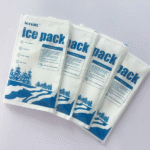
Procurement documents should use an unambiguous product description. A hydration sheet contains an absorbent structure and requires water activation and freezing. UM Pacote de gel is supplied with a contained coolant. A phase-change pack uses a selected formulation. Solid carbon dioxide is a different material with distinct hazards and transport controls.
A palavra "seco" may describe the hydration sheet's supplied state, not its use temperature or chemical identity. Request a specification that explains the construction and work sequence. It should support training without relying on marketing terminology.
No mínimo, confirmar:
- dry dimensions and cell layout;
- activation method and acceptable water source;
- drainage and handling instructions;
- freezer orientation and storage guidance;
- permitted trimming locations, se houver;
- signs of damage or incomplete preparation;
- identificação do lote;
- intended disposal or controlled-reuse instructions;
- change-notification process.
Keep this product definition consistent across purchasing, recebendo, warehouse work instructions, registros de embalagem, and recipient information. Correct identity prevents solid-dry-ice procedures from being applied to a water-based sheet and prevents the sheet from being misrepresented to carriers or customers.
Portão Três: Map Heat, Tempo, e manuseio
A route is a sequence of exposures, not a line between two addresses. Walk through a normal order.
Flowers leave armazenamento refrigerado and enter assembly. They wait for quality release. A worker packs the arrangement and adds a frozen sheet. The closed parcel queues for dispatch. A driver loads it into a vehicle that may already contain warm returns or other cargo. Portas abrem repetidamente. The package is carried to a building, perhaps through sun or rain, and handed to reception. The recipient opens it later.
Para cada etapa, note duration, controle ambiental, orientação do pacote, and responsible person. Mark the points where the parcel is open, where cooling can be lost, and where a delay is plausible. Also identify nearby ethylene sources such as ripening produce or combustion. A coolant sheet cannot offset ethylene exposure.
Then group routes with similar patterns. A direct refrigerated run may need a different solution from a third-party parcel lane. Route grouping lets you validate a manageable set of packouts without pretending every delivery is identical.
| Route question | Why it changes the packout | Evidências para coletar |
|---|---|---|
| Are flowers fully precooled? | Warm payload consumes coolant capacity early | Departure condition and pack-close observation |
| How long is uncontrolled staging? | Heat enters before vehicle movement begins | Time stamps and staging-location review |
| Does vehicle air reach the parcel? | Carton position and door openings create different exposure | Load map and route observation |
| Can the sheet move? | Shift can cause cold contact or crushing | Post-route position and package inspection |
| Is unattended delivery allowed? | Doorstep exposure may dominate the route | Delivery event and recipient timing |
| Are flowers mixed with ethylene sources? | Cooling does not prevent gas-related injury | Storage and vehicle segregation review |
The table directs testing toward operational unknowns. It also helps separate packaging failures from scheduling or handoff failures, so corrective action addresses the real cause.
Portão Quatro: Design Around Both Hot and Cold Failure
Embalagem térmica for flowers has two edges. Too little cooling can accelerate deterioration and water loss. Too much local cooling can injure petals or stems. The objective is a suitable distribution, not the lowest reading.
Place the sheet where it can absorb incoming heat without resting on delicate tissue. Use um separador, manga, retention feature, or controlled air space as needed. Remember that a thicker barrier may reduce cold contact but also reduce cooling. Test the trade-off.
Review the packout in three dimensions. Long flower cartons can develop a warm end away from the coolant. A sheet placed on top may shift when a driver carries the box vertically. A tightly filled arrangement may block airflow and transmit sheet weight to flower heads. An underfilled carton may allow the bouquet and coolant to collide.
Moisture needs its own path. Condensation or thaw water should not collect on blooms, weaken corrugated material, detach labels, or make unpacking messy. Liners and absorbent elements can help in some designs, but they may also trap moisture or change heat flow.
Monitor likely extremes during development. A sensor beside the coolant is a cold-point check, not proof for the rest of the flowers. Include plausible warm zones near closures or distant ends. Pair temperature with flower inspection after an appropriate recovery period, because some injuries are easier to see after unpacking.
Portão Cinco: Prove the Workflow, Not Just the Prototype
Early prototypes are often prepared carefully by a small technical team. Daily orders are prepared under schedule pressure by different shifts. The trial should eventually include normal operators and normal equipment.
Hidratação
Translate supplier guidance into a local method. Define the clean preparation area, manuseio de água, sheet loading, drenagem, activation acceptance, and reject criteria. Observe variation across operators and batches. If the procedure depends on personal judgment, create a clear visual standard or another appropriate check.
Congelando
Determine how sheets will be arranged so freezer airflow is not blocked. Review the heat load created by batch activation, especially during peaks. Establish a release rule based on your equipment and process evidence. Do not equate freezer residence with readiness without confirmation.
Embalagem
Use a controlled bill of materials and a packout image. Verify separator, sheet location, bouquet orientation, insulation closure, e etiqueta. Record the coolant lot and packout version where traceability is needed.
Ferramentas úteis de decisão
Verifique os detalhes antes de escolher a embalagem
Essas ferramentas rápidas podem ajudá-lo a comparar o risco da rota, necessidades de dimensionamento, escolhas de refrigerante, e detalhes da embalagem antes de solicitar um orçamento.
Seletor de embalagens
Compare opções de embalagens isoladas por produto, rota, e necessidade de temperatura.
Encontre embalagensForro de caixa & Dimensionamento da cobertura de paletes
Verifique a lógica de dimensionamento do forro da caixa e da tampa do palete para projetos de embalagens isoladas.
Dimensionamento estimadoVerificador de risco de rota
Revise as condições da pista antes de selecionar a embalagem para requisitos operacionais reais.
Verifique o risco da rotaDispatch and delivery
Protect closed parcels from unnecessary staging. Give drivers loading, orientação, and unattended-delivery rules. Capture delays or substitutions. A driver should not improvise sheet quantity or placement unless a reviewed procedure authorizes it.
Recebendo
Tell recipients to unpack promptly and remove the sheet carefully. Define what condition feedback is useful and where an exception should be reported. For business deliveries, identify who owns the handoff after reception signs.
A packout is ready to scale only when this end-to-end workflow is repeatable.
Portão Seis: Evaluate the Supplier Behind the Sample
The sample answers, "Can this item be considered?" The supplier review asks, "Can this specification remain controlled?"
Compare suppliers on evidence and communication, não adjetivos. Ask for the conditions behind any duration or performance statement. The complete test description should identify the insulation, carga útil, preparação de folhas, quantidade, colocação, exposição ambiental, localizações dos sensores, e critérios de aceitação. If those conditions differ from your delivery, treat the report as background rather than route approval.
Revise a consistência da amostra até a produção. Agree on critical characteristics such as dimensions, layout de célula, integridade da costura, comportamento de ativação, and outer construction. Ask how lots are identified and how changes will be communicated. Establish incoming inspection appropriate to the risk.
Discuss problem investigation before a problem occurs. Determine what records, fotografias, amostras, and timeline the supplier would need. Clarify response ownership. A disciplined complaint process is more useful than a broad promise of "quality assurance."
Commercial comparison should include operating effects:
- warehouse space for dry and frozen sheets;
- hydration labor and water handling;
- freezer capacity and peak loading;
- separadores, forros, e isolamento;
- rejects and damaged-sheet handling;
- parcel weight and pack time;
- flower damage and replacement delivery;
- retornar, limpeza, or disposal if applicable.
This view can change which quotation is genuinely economical.
Portão Sete: Control Changes and Learn from Deliveries
Once released, the packout needs ownership. Define who may change the flower mix, folha, quantidade, separador, isolamento, Carton, família de rota, ou recebendo instruções. Small substitutions can change temperature distribution or mechanical behavior.
Ownership should extend to temporary changes. Peak demand, freezer maintenance, replacement vehicles, and supplier shortages can tempt teams to improvise. Create a deviation path that identifies who evaluates the risk, what temporary controls are required, and whether representative confirmation is needed before the substitute is used broadly. Record the start and end of the deviation so the temporary method does not become an undocumented standard. This keeps operational flexibility without losing the evidence behind the released packout.
Also define the conditions for withdrawing a packout. Repeated direct-contact injury, inability to prepare sheets consistently, unexplained supplier variation, or a route change outside the assessed profile may justify a temporary stop rather than another informal adjustment. Identify who can pause use and what evidence is needed for release. A controlled stop protects flowers and gives the investigation a clean boundary. When the packout returns, record whether the remedy changed the component, preparação, colocação, vehicle process, or receiving instruction so future reviews understand why the current version differs.
Track a limited set of indicators that lead to action. Examples include hydration rejects, freezer release issues, desvios de embalagem, encenação quente, missed recipients, movimento de folha, condensação, petal injury, murchando, e entrega de reposição. Link trends to flower type, rota, temporada, versão do pacote, and supplier lot when possible.
When a problem appears, resist the urge to add coolant immediately. Use the symptom to form a cause hypothesis:
- warm far-side flowers may indicate insufficient distribution, insulation weakness, ou atraso;
- cold marks near the sheet may indicate contact or excessive local cooling;
- wilt with acceptable temperature may point to poor hydration or humidity management;
- wet petals may indicate condensation control failure;
- crushing may come from sheet movement or poor structural support;
- petal or leaf drop may require an ethylene review.
Corrective action can then be targeted and retested. This learning loop is how a delivery packout stays useful as routes and assortments evolve.
Perguntas frequentes
What should a supplier know before recommending a sheet?
Provide flower species or assortment, departure condition, package and insulation, route sequence, provável exposição ambiental, exceções de entrega, proteção física, e recebendo expectativas. The supplier also needs to know whether flowers are shipped wet or dry and where frozen material can be safely retained.
Can a water-activated sheet replace a refrigerated vehicle?
It should not be treated as an automatic replacement. A passive insulated packout and a conditioned vehicle manage different parts of the thermal problem. Any change in transport method requires route-specific evaluation with representative flowers and handling.
How should sheet performance be compared between suppliers?
Compare equivalent constructions and test conditions. Review hydration method, frozen mass or activation consistency, pacote completo, perfil ambiente, carga útil, colocação, monitoring points, e critérios de aceitação. A headline duration without those conditions is not a fair comparison.
What is the safest way to prevent freezing contact?
There is no universal separator. Use a designed layer or gap that retains the sheet and protects flowers, then test both the closest cold location and the remote warm location. Mechanical protection and condensation behavior should be reviewed at the same time.
When does a packout need reevaluation?
Review it when flower assortment, material do fornecedor, dimensões da folha, quantidade de refrigerante, Carton, isolamento, separador, rota, veículo, encenação, temporada, or receiving process changes in a way that could affect performance. Your quality process should define which changes trigger documentation review or retesting.
Conclusão
A reliable floral delivery plan passes seven gates: arrival requirement, identidade do refrigerante, mapa de rotas, pacote balanceado, repeatable workflow, controle de fornecedores, e gerenciamento de mudanças. None can be replaced by a generic "duradouro" alegar. Confirm that the product is a water-activated frozen sheet, protect flowers from direct cold and moisture, challenge the actual last mile, and keep the tested configuration stable. That is the practical foundation for choosing and using a supplier dry ice pack for flowers delivery.
Sobre Tempk
For flower-delivery inquiries, Tempk discusses water-activated coolant sheets with embalagem da cadeia de frio buyers in the context of a defined route and packout. We can help clarify the product format, fluxo de trabalho de preparação, colocação de folhas, and supplier information needed for a representative floral trial. We keep the discussion tied to the buyer's flower assortment, isolamento, delivery pattern, and receiving criteria because those conditions determine whether a configuration is appropriate. Final acceptance should come from the buyer's own quality and operational review.
Send Tempk your route map, mistura de flores, carton and insulation details, and current pain points to plan a focused sample-to-delivery assessment.