Heat insulating expanded polypropylene box: how it transforms cold chain logistics
Atualizado em dezembro 2025 – As a cold chain professional, you know that delivering temperature sensitive products requires more than gel packs and careful scheduling. UM heat insulating expanded polypropylene box é um leve, reusable container built to maintain stable temperatures for days, even under rough handling. With global demand for durable, recyclable packaging soaring to around USD 1.17 bilhão em 2024 e espera-se que alcance USD 1.82 bilhão por 2032 em um 6.5 % Cagr, mastering this advanced box will help you lead the cold chain revolution.
What makes a heat insulating expanded polypropylene box unique? Discover how its closed cell structure traps air to slow heat transfer and why it can be reused hundreds of times.
How can you design and customize the right EPP box? Learn the step by step process for selecting foam density, choosing refrigerants and integrating smart sensors.
Which industries benefit most from these boxes? Explore applications from meal delivery to pharmaceuticals and seafood.
Quais são os 2025 tendências e inovações do mercado? Get the latest insights on the booming EPP insulation box market, including IoT enabled packaging, recycled materials and hybrid insulation.
Frequently asked questions answered. Find clear, concise answers to common questions about performance, recyclability and safety.
What makes heat insulating expanded polypropylene boxes unique?
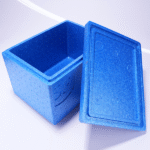
A heat insulating expanded polypropylene (PPE) box is a rugged, closed cell foam container that offers exceptional insulation, shock absorption and reusability. Rigid EPP foam is molded under heat and pressure, forming a lattice that traps air pockets and slows heat transfer. When paired with gel packs or eutectic plates, a well designed EPP box can maintain safe temperatures for 24–72 horas e, with phase change plates, até 96 horas. Ao contrário do poliestireno expandido frágil (EPS), EPP rebounds from dents and withstands drops of about 1.5 m, and it remains stable across a wide temperature range of –40 °C a +110 °C. Its dark color hides stains and allows the box to look presentable after repeated reuse, making it both practical and professional.
EPP’s versatility extends beyond insulation. The foam absorbs less than 5 % água, resists chemicals and oils and can be recycled or remolded into new boxes. Because of its strength to weight ratio, manufacturers can tailor densities (15–100 kg/m³) to support heavy loads while keeping the box light. High density variants handle bulk seafood or medical supplies, whereas low density versions suit meal kits or consumer electronics. These characteristics make EPP boxes ideal for return and reuse programs, reducing packaging waste and total cost of ownership.
Comparing EPP boxes to other foam containers
EPP competes with foams like EPS (poliestireno expandido), EPE (polietileno expandido) e poliuretano (PU) em embalagem de cadeia fria. The table below summarizes key differences and why they matter for your operation.
| Propriedade | Caixa EPP | EPS/EPE/PU foams | O que isso significa para você |
| Densidade (kg/m³) | 15–100 (personalizável) | 15–30 (EPS) and varied for EPE/PUR | Higher densities improve insulation and load support; you can choose the right density for seafood crates or vaccine vials. |
| Condutividade térmica (S/m·K) | ≈ 0.25–0.26 | 0.034–0.04 for EPS/EPE | Although EPP’s conductivity is higher, thick walls and air pockets give 24–96 hours of temperature control. |
| Resistência ao impacto | High – rebounds after compression | Baixo a moderado | As caixas EPP sobrevivem a quedas e manuseio brusco, reducing product loss and claims. |
| Absorção de água | < 5 % | 2–4 % para EPS | Low moisture uptake prevents mould, simplifies cleaning and maintains insulation integrity. |
| Faixa de temperatura | –40 °C a +110 °C | –30 °C a +70 °C (EPS) or –60 °C to +80 °C (EPE/PUR) | EPP handles deep frozen vaccines, chilled meals and warm deliveries within one container. |
| Reutilização | 500+ ciclos | Uso único ou limitado | High reuse counts cut long term costs and support sustainability initiatives. |
| Reciclabilidade | 100 % reciclável | Reciclagem difícil ou limitada | EPP fits circular economy programs and meets regulations on packaging waste. |
Dicas e sugestões práticas
Pré-condicionamento com refrigerante: Always chill gel packs or eutectic plates alongside your EPP box before packing. Preconditioning can add several hours of cold retention, ensuring your shipment remains within target temperatures.
Carregue com eficiência: Fill void spaces with inserts or dividers. Excess air increases temperature fluctuations.
Seal properly: Use caixas com ranhuras e clipes; proper sealing improves insulation by até 30 %.
Monitorar temperaturas: Integrate IoT sensors or data loggers to track internal conditions in real time. These alerts let you reroute shipments before temperature excursions jeopardize quality.
Limpar e higienizar: Após cada uso, wash your EPP box with mild detergent and let it dry. Low water absorption makes cleaning easy.
Caso do mundo real: In a European pilot program, consumer electronics were shipped in reusable EPP packaging. Devices experienced significantly less damage and the boxes were easier to handle. Although the initial costs were higher, the study showed that reusability and reduced product loss made EPP more economical.
How can you design and customize a heat insulating EPP box?
Designing your own heat insulating EPP box starts with understanding your product’s dimensions, peso, faixa de temperatura desejada e duração do trânsito. Regulatory guidelines for pharmaceuticals (such as maintaining 2–8 °C) or food safety need to be considered. Customization goes far beyond printing a logo; it encompasses dimensions, inserções, tampas, densidade de espuma, color and smart features. Because EPP is molded rather than cut, manufacturers can create slim cases for vaccine vials, large bins for seafood or multi compartment boxes for laboratory samples. The material’s stability from –40 °C a +110 °C means a single design can serve frozen, chilled and warm applications.
Step by step customization guide
Definir requisitos: Write down product dimensions, peso, faixa de temperatura alvo, shipping duration and regulatory requirements. Decide whether inserts or compartments are needed for separation.
Selecione a densidade da espuma e a estratégia de isolamento: EPP densities range from 15 kg/m³ para 100 kg/m³. Higher densities enhance strength and insulation but add weight; lower densities save weight. Escolha elementos de resfriamento – pacotes de gel, placas eutéticas, phase change materials or dry ice—based on temperature needs. Por exemplo, eutectic plates with EPP keep shipments cold for 72–96 horas, while dry ice enables ultra low temperatures for frozen goods.
Integre recursos inteligentes: Modern cold chain packaging often includes IoT sensors, RFID tags or temperature loggers. Esses dispositivos monitoram a temperatura, umidade e localização em tempo real, providing proof of compliance and alerting you to deviations.
Protótipo, testar e refinar: Produce prototypes with your supplier, then conduct thermal tests by preconditioning the box and coolant, loading with simulated payloads and monitoring interior temperatures over the expected duration. Realize testes de queda (1.5 m altura) to assess resilience. Ajustar a espessura da parede, foam density or lid design based on results and repeat until performance targets are met.
Finalizar a estética e os elementos da marca: Mold logos or labels into the foam and choose colors that align with your brand. For consumer facing boxes, consider matte finishes and ergonomic handles; para produtos farmacêuticos, select tamper evident seals.
Implementar e monitorar: Treine a equipe sobre pré-condicionamento, packing and sealing procedures. Monitor shipments using sensors and adjust logistics if deviations occur. Maintain boxes by cleaning after each trip.
Which industries benefit most from these boxes?
Heat insulating expanded polypropylene boxes support a broad spectrum of industries by preserving temperature, absorbing shocks and enabling reuse. Food and meal delivery companies rely on consistent temperatures to preserve freshness and meet regulatory requirements; the food sector accounts for around 60 % do mercado de caixas de isolamento EPP. A mid density EPP box with hinged lids and bright colors can keep ingredients fresh for 72 horas and be returned for reuse, lowering packaging waste and cost.
Em produtos farmacêuticos e biotecnologia, EPP’s ability to maintain 2 °C a 8 °C and absorb shocks makes it a preferred material. Espuma de alta densidade, tamper evident closures and compartments for vials or syringes protect sensitive vaccines and biologics. Built in sensors track temperature for regulatory compliance. Because EPP boxes can be reused over 500 ciclos, pharmaceutical companies save packaging costs while meeting sustainability mandates.
Instrumentos eletrônicos e de precisão benefit from EPP’s shock absorption and thermal stability. Custom inserts hold devices securely, and IoT sensors monitor conditions. Many electronics suppliers implement return loops so customers return the box after receiving products, allowing each container to be used hundreds of times and reducing environmental impact.
Para seafood and perishable exports, EPP boxes withstand –40ºC and resist moisture. Larger sizes and high density foam keep products frozen for long international shipments, while reusable containers support traceability via QR codes or RFID tags.
Beyond these core sectors, specialty applications include chemical transport, organ transplantation and high end cosmetics. EPP is chemically inert and resists oils and solvents, protecting the integrity of sensitive contents. Cosmetic companies use compartments and colors matching their brand to transport delicate skincare lines.
Real world benefits at a glance
Entrega de alimentos: Temperature stability ensures freshness; hinged lids enable easy packing; boxes return for reuse, cortando resíduos.
Produtos farmacêuticos: Compartments and tamper seals protect vials; sensors provide compliance data; reusability lowers cost.
Eletrônica: Shock absorbing foam prevents damage; reusable loops reduce carbon footprint.
Exportações de frutos do mar: High density foam keeps products frozen; moisture resistance maintains quality.
Specialty goods: Chemical inertness and customizable designs meet unique needs.
2025 market growth and innovations in EPP insulation
O global expanded polypropylene (PPE) mercado de caixas de isolamento está crescendo. Market analysis estimates the industry to be worth sobre USD 2 bilhão em 2025 com uma projeção 7 % taxa composta de crescimento anual através 2033. Várias forças impulsionam esta expansão:
E commerce and cold chain logistics: The surge in online grocery deliveries and direct to consumer pharmaceuticals has led to higher demand for durable, embalagem reutilizável.
Mandatos de sustentabilidade: As regulamentações e as expectativas dos consumidores empurram as empresas para a reutilização, embalagens recicláveis. PPE 100 % recyclability and long life support these goals.
Inovação e personalização: A capacidade de moldar EPP em vários formatos, integrar sensores inteligentes e ajustar densidades incentiva a adoção em todos os setores.
Crescimento regional: North America and Europe hold significant market share, while Asia Pacific is the fastest growing region due to expanding middle classes and cold chain infrastructure.
2025 percepções
Food sector dominance: Food accounts for around 60 % of EPP insulation box consumption; pharmaceuticals represent about 25 %.
Volume: Aproximadamente 150 milhões de unidades of EPP insulation boxes are produced annually, com concentração na América do Norte e Europa.
Innovation focus: Research aims to improve insulation, adopt recycled materials and optimize designs such as stackable or collapsible boxes.
Momento regulatório: Stringent food safety and pharmaceutical transport regulations accelerate adoption because EPP outperforms alternatives in insulation and recyclability.
Últimas inovações e tendências
IoT e embalagens orientadas por dados: Boxes now embed temperature and location sensors that connect to cloud platforms, providing real time alerts and analytics for supply chain optimization.
EPP reciclado e de base biológica: Manufacturers incorporate recycled polypropylene or bio based resins to reduce carbon footprints while maintaining performance.
Designs empilháveis e dobráveis: Interlocking lids and collapsible walls save space on return trips, reducing back haul costs and encouraging reuse.
Isolamento híbrido: Combinando EPP com painéis de isolamento a vácuo (VIPs) or phase change materials extends cold retention beyond 96 horas, enabling ultra long shipments.
Personalização: Color matched boxes, molded logos and QR codes turn logistics packaging into a customer experience touchpoint.
To visualize the market growth, the following bar chart illustrates the rising value of the global EPP market from 2024 através 2032.
Perguntas frequentes
Q1: What is the difference between EPP, EPS e EPE? EPP é uma espuma de polipropileno de célula fechada que recupera após compressão e pode ser reutilizada 500 ciclos, whereas EPS and EPE are lighter but brittle and generally single use. A resiliência do EPP significa menos quebras e uma vida útil mais longa.
Q2: How long can a heat insulating expanded polypropylene box keep contents cold? Com pacotes de gel, uma caixa EPP mantém temperaturas estáveis para 24–72 horas; adding eutectic plates or hybrid insulation extends hold time to 72–96 horas.
Q3: As caixas EPP são seguras para entregas quentes?? Sim. O EPP permanece estável desde –40 °C a +110 °C, allowing one box to transport frozen vaccines, frutos do mar resfriados e refeições quentes sem deformação.
Q4: Can EPP boxes be recycled? Absolutamente. PPE é 100 % reciclável. Muitos fabricantes oferecem programas de devolução que trituram e remodelam caixas em novos produtos, apoiando objetivos de economia circular.
Q5: How do I choose the right EPP box size and density? Meça seu produto e o refrigerante necessário, em seguida, selecione uma caixa com espaço vazio mínimo. Considere a duração do envio, temperature target and whether the box will be reused. Os fornecedores podem ajudar a adequar a densidade e a espessura do isolamento às suas necessidades.
Q6: Que manutenção as caixas EPP reutilizáveis exigem? Após cada uso, lave a caixa com detergente neutro e deixe secar. Low water absorption simplifies cleaning and prevents mould.
Sugestão
Takeaways -chave: A heat insulating expanded polypropylene box is a robust, reusable container that provides 24–96 horas of temperature control with the right coolant. Its high impact resistance and dimensional stability protect sensitive products from drops. PPE < 5 % water absorption e –40 °C a +110 °C stability support a wide range of applications. With recyclability and reuse across 500+ ciclos, the box aligns with sustainability mandates and reduces long term costs. Market growth and innovations—from IoT sensors to recycled materials—make EPP boxes a future proof investment.
Sugestões acionáveis:
Evaluate your product needs. Determine dimensions, peso, temperature requirements and regulatory conditions to specify your custom EPP box.
Invest in customization. Choose foam density, inserções, lids and smart features to match your product’s journey. A tailored box improves thermal efficiency and brand recognition.
Implementar programas de retorno. Adopt a closed loop model where customers return boxes for reuse. This cuts packaging costs and supports sustainability.
Fique à frente das tendências. Integrate IoT sensors for real time monitoring; explore recycled or bio based EPP variants; and consider stackable or collapsible designs for space savings.
Eduque sua equipe. Treine a equipe sobre pré-condicionamento, packing and cleaning procedures to maximize performance and extend the life of each box.
Sobre Tempk
Tempk is a leading cold chain packaging company specializing in advanced insulation solutions. Nós design and manufacture heat insulating expanded polypropylene boxes and other eco friendly packaging to help businesses maintain product quality, reduzir o desperdício e atender aos requisitos regulatórios. Nosso R&D team continuously explores innovations such as recycled materials, IoT enabled packaging and hybrid insulation to deliver superior performance. Com décadas de experiência, we support clients across food, farmacêutico, medical and technology sectors, ensuring that every shipment arrives safely and sustainably.
Entre em contato: Contact our experts to discuss customized EPP boxes for your specific application and learn how Tempk can help you optimize your cold chain logistics.